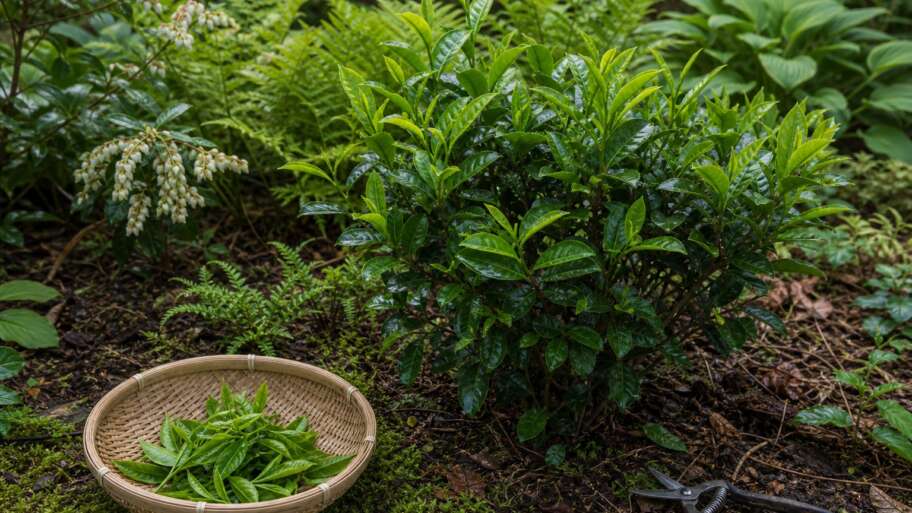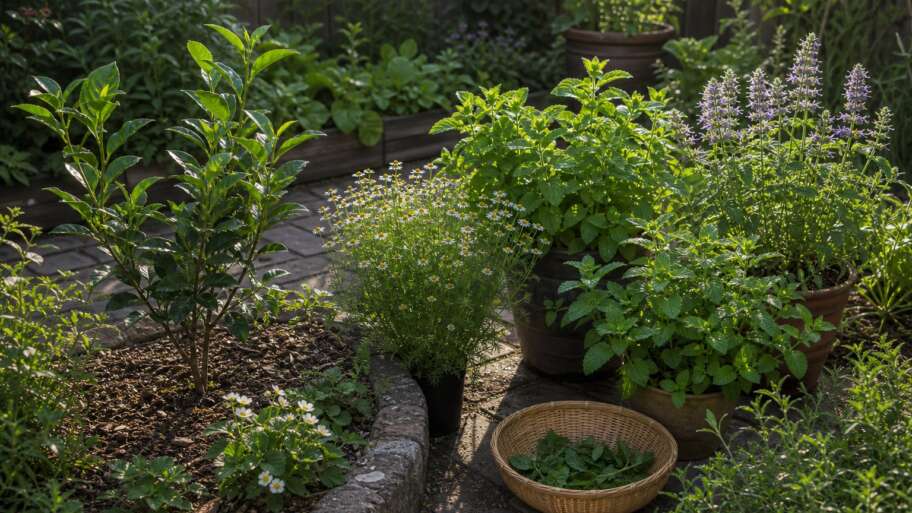

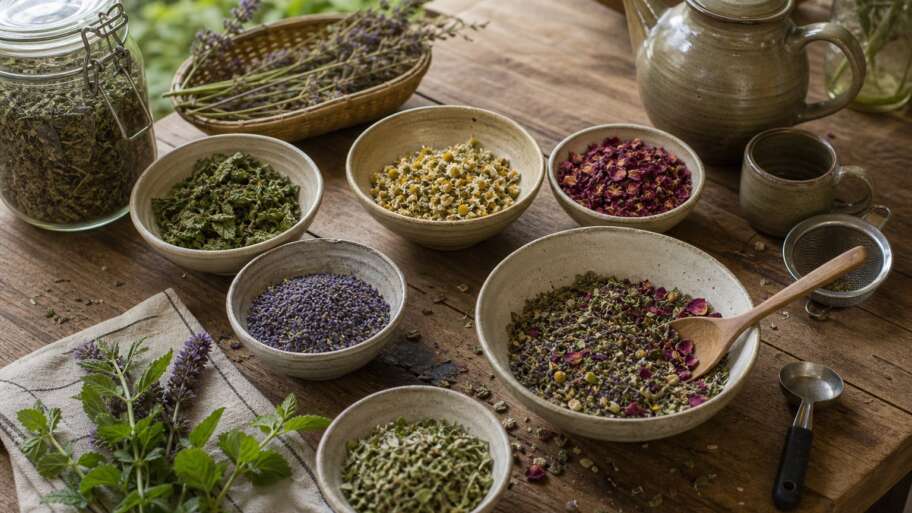
Blending garden tea is more like composing a small border than emptying jars into a bowl. One plant should lead. Another should soften. A third can lift the fragrance. Too many ingredients, especially strong ones, make a cup that tastes like a cupboard. It helps to name things accurately. True tea, including green, black, white, and oolong tea, comes from…
green tea
A tea garden can mean two different things. It can be a garden of herbs for infusions: mint, chamomile, lemon balm, anise hyssop, and lemon verbena. Or it can mean growing the actual tea plant, Camellia sinensis, whose leaves become green, black, white, and oolong tea. The two overlap in the cup, but not in the garden. Camellia sinensis is…
A homegrown tea garden begins with a useful distinction. Tea is one species. Herbal tea is many plants. The leaves of Camellia sinensis become green, black, oolong, white, and other true teas. Mint, chamomile, lemon balm, tulsi, and lavender make infusions, often called herbal teas, but they are not the same crop. UF/IFAS makes the same botanical distinction: traditional green,…
Read more about The homegrown tea garden, built from real plants