
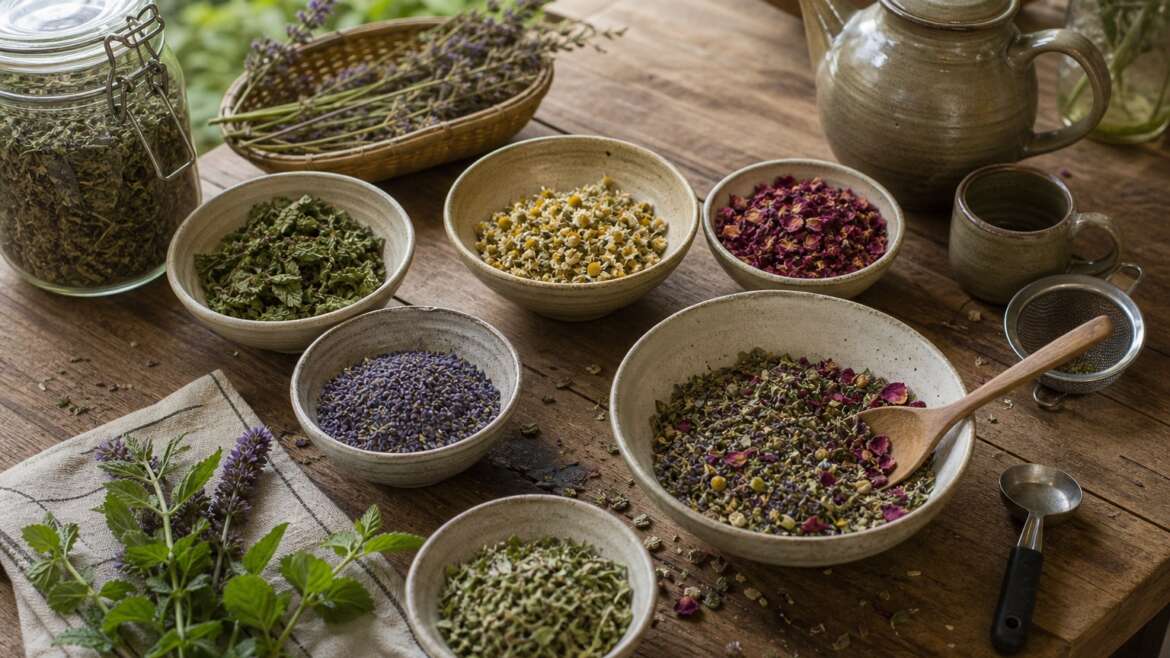
Blending garden tea is more like composing a small border than emptying jars into a bowl. One plant should lead. Another should soften. A third can lift the fragrance. Too many ingredients, especially strong ones, make a cup that tastes like a cupboard.
It helps to name things accurately. True tea, including green, black, white, and oolong tea, comes from Camellia sinensis. Herbal teas are more precisely tisanes, made from other leaves, flowers, seeds, roots, peels, or spices. UF/IFAS Gardening Solutions makes that distinction when discussing homegrown teas and herbal infusions.1 The distinction is not snobbery; it helps with caffeine, safety, and expectations.
Build the blend in layers
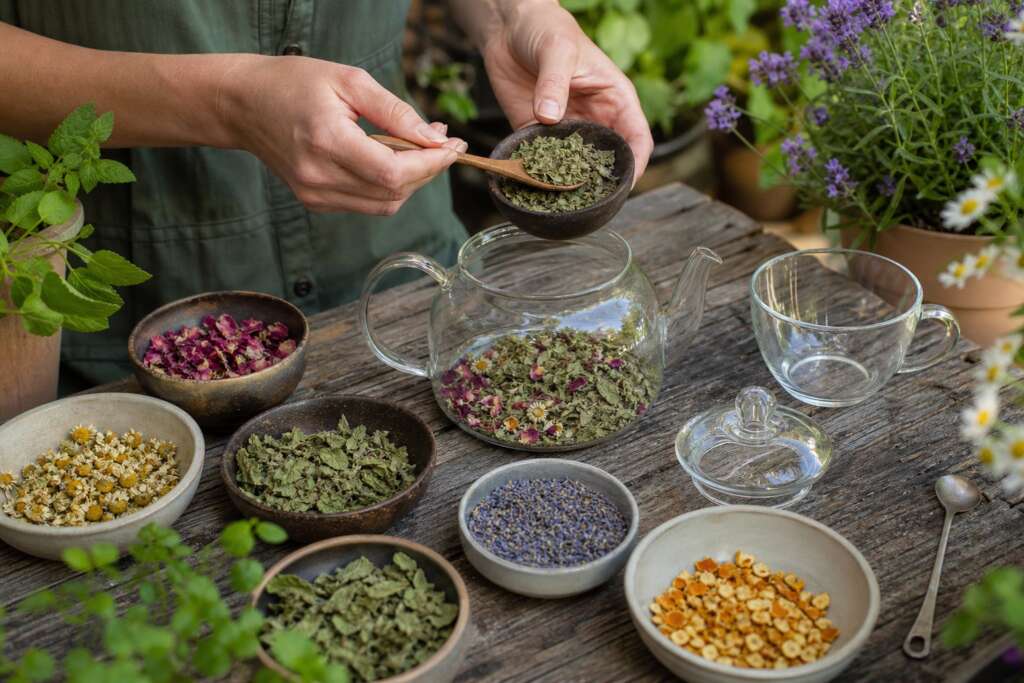
Start with a base herb that tastes pleasant in quantity. Mint, lemon balm, lemongrass, raspberry leaf, nettle leaf, or tulsi can play that role depending on your garden and your body. Add a middle note for roundness: chamomile, rose petals, calendula, fennel seed, anise hyssop, or dried apple peel. Add a top note in a smaller amount: lavender, citrus peel, rosemary, sage, or a little spice.
A practical first ratio is three parts base, one part middle note, and a pinch to half-part accent. Brew it, taste it, and adjust. Lavender is beautiful but easily becomes soap. Rosemary can turn medicinal. Mint can bully everything. Chamomile can go bitter if steeped too long or too hot. A small test cup teaches faster than a quart jar of overconfident blend.
Harvest for flavor, not bulk
Pick herbs when they are clean, dry, and aromatic. Morning after dew has dried is often better than the heat of the day. Choose healthy leaves and flowers, not tired stems swept into a basket for volume. If a plant is flowering and the leaves have turned coarse or bitter, harvest the part that still tastes good or wait for fresh growth.
Dry plant material in thin layers with airflow, away from harsh sun. Store only when fully dry; trapped moisture is an invitation to mold. Label jars with plant, date, and any cultivar or location notes. Lemon balm from a shaded pot in May may taste different from lemon balm cut hard in August.
Keep safety in the cup
A tea garden should be as careful as an edible garden. Use only plants you can identify with confidence. Avoid herbs sprayed with pesticides not labeled for edible crops. Keep ornamentals and medicinals separate if there is any chance of confusion. Do not assume a plant is safe because it smells pleasant or has a folk history.
NCCIH cautions that herbal and dietary supplements can interact with medications, pose risks for people with certain medical conditions, and may not be well tested in pregnant people, nursing people, or children.3 A mild cup of homegrown mint is not the same as a concentrated supplement, but the principle still matters: herbs have chemistry. If you are pregnant, nursing, taking medication, managing a medical condition, or serving children, check reliable guidance first.
Some common garden plants are poor tea choices despite being natural. Do not experiment with foxglove, lily-of-the-valley, monkshood, castor bean, comfrey root, unknown mushrooms, unidentified berries, or random evergreen clippings. If you cannot explain exactly what the plant is and why it is safe in a cup, do not drink it.
Three simple blends
For a calm evening cup, try lemon balm as the base, chamomile as the middle note, and a very small amount of lavender. For a bright after-garden cup, use mint, lemon verbena or lemon balm, and a strip of dried citrus peel. For a winter cup, use dried apple peel, rose hips from unsprayed plants, and a little cinnamon or fennel seed.
Treat those as sketches, not prescriptions. Your soil, weather, harvest timing, and drying method will change the flavor. Write down the blend by parts, not vague handfuls, so the next good cup is findable.
Brew with restraint
Most dried leafy herbs do well with a covered steep of several minutes, then a taste. Flowers often need less time than roots or seeds. Seeds such as fennel release more flavor if lightly crushed. Roots and tougher materials may need a decoction rather than a simple infusion, but that is a different process and should be researched plant by plant.
The best garden tea tastes like a place you know. It does not need twenty ingredients. It needs clean plants, careful drying, honest labels, and enough restraint to let one good flavor speak.