
A garden sanctuary succeeds when it is usable on an ordinary difficult day. The seat is dry enough to sit on, the path is clear, shade arrives when it is needed, and the plants offer something specific to notice. Nothing has to look ceremonial. The space earns its calm through practical details.
Research gives this idea support, but not a guarantee. A meta-analysis of 22 gardening studies found an overall positive association with several health and well-being outcomes, while also reporting substantial differences among the studies and evidence of publication bias.1 It did not identify one garden style that reliably changes every visitor’s mood. Design can lower barriers to pausing; it cannot order the mind to feel peaceful.
Design from the visit you will actually make
Begin with a real use rather than an image. Perhaps you want a place for ten minutes with morning tea, somewhere to cool down after weeding, or a chair from which to watch birds at dusk. Note when that visit happens, where the sun and wind come from, and what usually prevents it. A beautiful bench beyond a wet lawn may remain empty; a plain chair beside the back door may become part of every evening.
Walk the route carrying what you normally bring. Can you open the door, manage the step, turn with a watering can, and reach the seat without moving tools? Is the return route visible after dark? Oregon State University Extension’s accessible-garden guidance favors smooth, level, uncluttered paths and reminds designers to consider stamina, balance, range of motion, mobility aids, and changing abilities.2 Those are useful questions in every private garden, whatever the gardener’s current mobility.
Make the path remove effort, not add drama
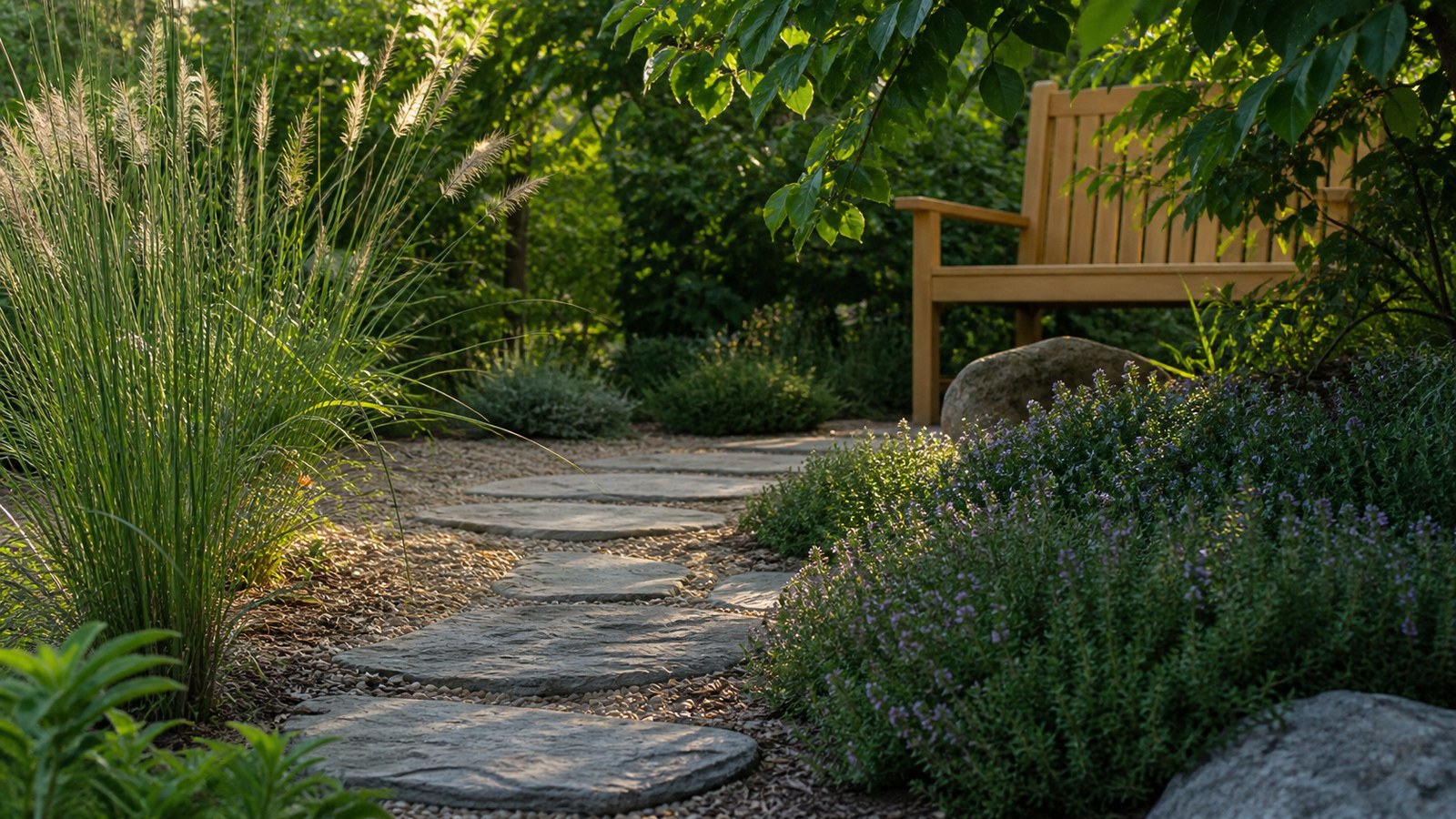
A route can curve, but it should not become a puzzle. Keep surfaces firm and predictable, repair rocking slabs, and prevent gravel or mulch from migrating onto steps. Move hoses, low ornaments, and trailing stems out of the travel line. If wheels or a walking aid are part of the garden, test the actual surface in wet weather and provide enough width and turning room for the user rather than relying on a decorative plan.
Place useful plants within reach of the route: thyme at hand height, a fragrant shrub near the seat, or berries where they can be seen before birds take them. Raised beds, vertical supports, and containers can bring plants closer, but dimensions must fit the particular person. A bed is not accessible merely because it is tall. Reach to the center, knee clearance, edge comfort, watering, drainage, and the weight of filled containers all matter.2
Let the seat answer the climate
Sit in the proposed spot before building around it. Afternoon shade may be welcome in July and chilly in October. Dense enclosure can block a harsh wind or trap heat and insects. A deciduous canopy can give summer shade while admitting winter light, but its mature roots, branches, and leaf fall belong in the plan. On a balcony, reflected heat and wind may be more decisive than the compass direction; our guide to reading a balcony’s microclimate explains how quickly those conditions change over a few metres.
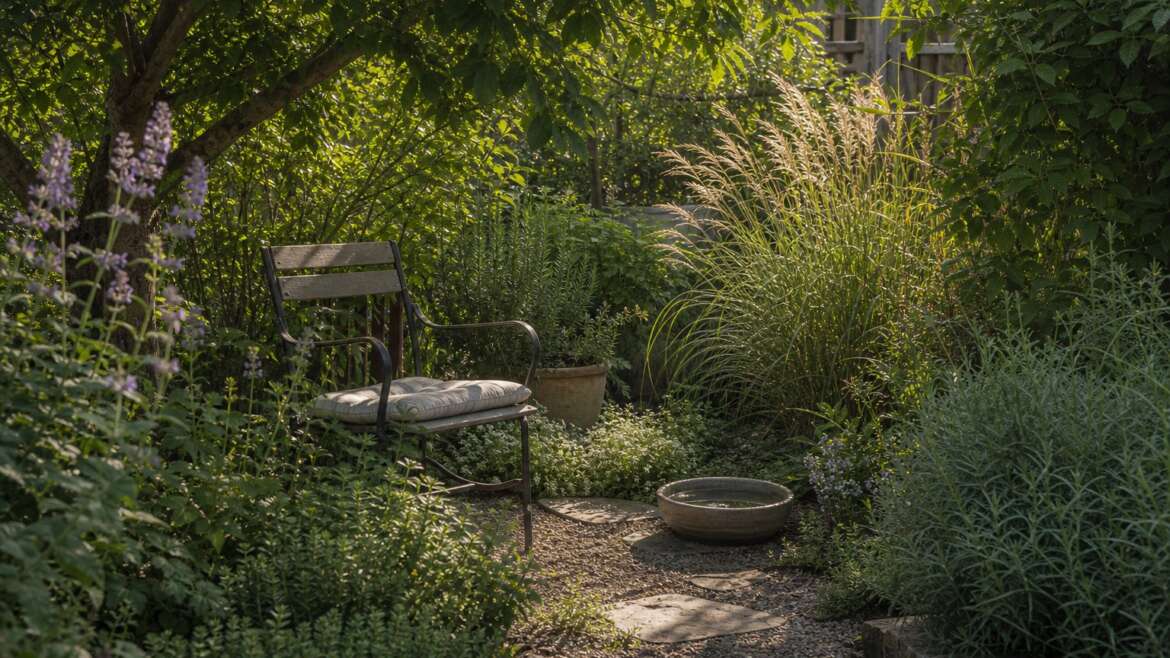
Choose a chair with the support and height the user prefers, then give it stable footing. Armrests can help some people stand. A small table keeps a drink, notebook, or phone off the ground. Add a dry place for a cushion and a clear view of the path. Comfort that requires carrying six objects from the house is unlikely to become routine.
Give the senses one clear thing at a time
Sensory planting works best when it is specific. The RHS describes plants as offering experiences through scent, touch, sound, taste, movement, and color.3 Choose the experiences the intended user actually enjoys: rosemary warmed by sun, the papery rustle of a grass, smooth bark, evening fragrance, or seed heads catching low light. More stimulation is not automatically better, and a smell that evokes comfort for one person may trigger headache, nausea, or allergy for another.
Put tactile plants where they can be reached without leaning across thorns, but do not invite touching or tasting unless the plant is positively identified and safe for that use. Avoid placing strongly scented plants, bee-busy flowers, spines, or irritating sap beside a narrow passage if they make the route unpleasant. Listen before adding a fountain: water can mask traffic, create maintenance, attract mosquitoes if it stagnates, or become slippery where it splashes. The existing soundscape may already contain leaves, rain, and birds.
Choose plants that will not turn rest into rescue
Plant fit is part of the sanctuary. Match climate, light, soil, drainage, water supply, mature size, and circulation before choosing a palette; “right plant, right place” reduces the repeated intervention needed to keep a plant alive.4 A thirsty container collection can become a daily alarm in hot weather. A fast-spreading mint can leave a path slick and crowded. A shrub that outgrows its corner can erase the view and demand annual correction.
Maintenance does not have to disappear. It needs a scale and rhythm that suit the gardener. Group containers near water, use mulch where it fits the plants, store a light tool within reach, and leave room to prune without standing in the bed. Keep one small task available—deadhead three stems, fill a bird bath, harvest herbs for dinner—but allow the seat to remain useful when no work is done. For a less performative way to use attention in the garden, see mindful gardening without the performance.
Keep support separate from treatment claims
A personal garden may support routine, movement, curiosity, company, or a needed pause. It is still different from formal horticultural therapy. The American Horticultural Therapy Association defines that practice as horticultural activity facilitated by a registered horticultural therapist toward goals in an established treatment, rehabilitation, or vocational plan.5 A home sanctuary can matter deeply without borrowing a clinical label.
Likewise, mindfulness practices are generally considered low risk, but safety research is limited and some participants report negative experiences.6 A garden should not become a test of whether someone can relax correctly. If quiet attention increases distress, change the activity, invite company, go inside, or seek appropriate support. Gardening should not replace or postpone professional care when mental or physical symptoms need it.
Audit the sanctuary in bad weather
Review the space after rain, during the hottest week, and when leaves fall. Does water collect under the chair? Has a grass narrowed the path? Is the shade still where the body needs it? Can the seat be reached with less energy than it takes to use? Small corrections—a firmer stone, a pruned branch, a second handhold, a lighter watering can—often matter more than adding another symbolic plant.
Begin with one dependable route, one comfortable seat, and one living detail worth returning to. Let the enclosure and planting grow only after the place has proved that it works. A sanctuary is not a style. It is a garden that makes arrival easier than avoidance.
References
- Soga, Gaston, and Yamaura: Gardening is beneficial for health—a meta-analysis
- Oregon State University Extension: Gardens are for everyone
- Royal Horticultural Society: Sensory gardens
- University of Florida IFAS Extension: Right Plant, Right Place
- American Horticultural Therapy Association: Definitions and Positions
- National Center for Complementary and Integrative Health: Meditation and Mindfulness—Effectiveness and Safety