
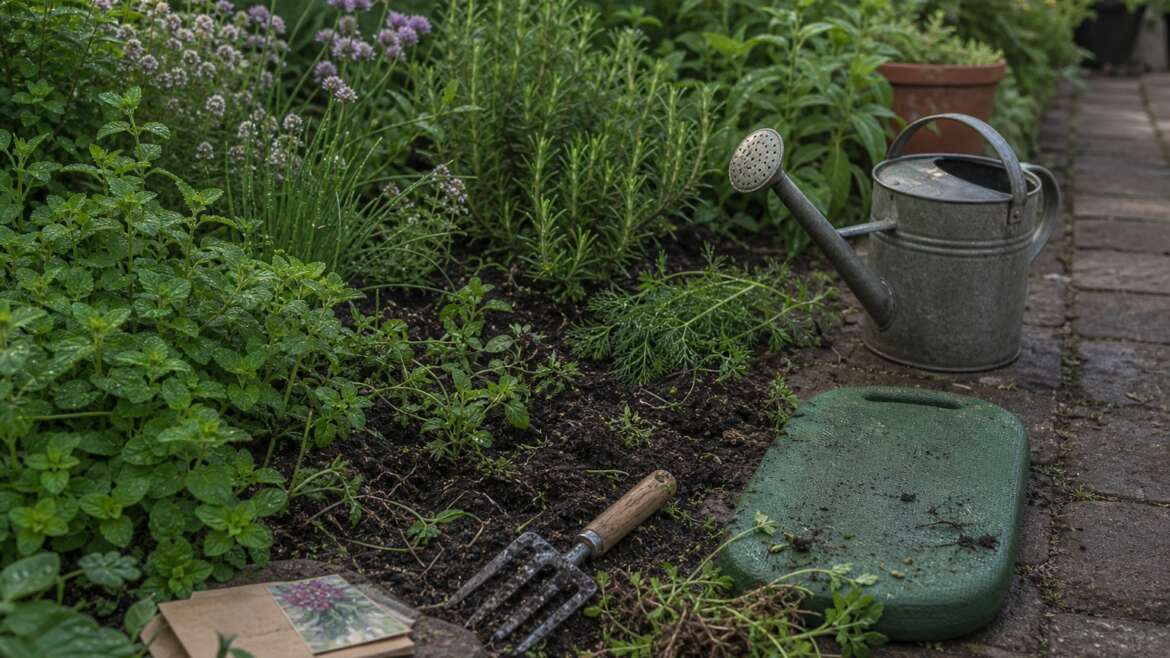
Mindful gardening begins when the task becomes small enough to feel. Not the whole garden. Not the whole season. Just the next seedling, the next breath, the weight of the watering can, the sound of water entering dry soil.
Mindfulness is often described as keeping attention on the present moment without judging what appears.1 In a garden, that can be very ordinary: notice the dry pot before building a story about being neglectful; see the slug damage before declaring the whole crop ruined. This is an informal way to practise attention, not a substitute for a taught mindfulness programme or mental-health care.
Keep the promise smaller than the evidence
Gardening and well-being are linked, but the honest claim is modest. A 2017 meta-analysis found an overall positive effect across 22 case studies, while also reporting substantial differences between studies and evidence of publication bias.2 Those studies covered many kinds of gardening, participants, and health measures. They did not test one universal “mindful gardening” method.
A 2025 review restricted to controlled gardening interventions for adults with chronic conditions found small-to-medium trends, high variation, and confidence intervals that crossed zero in its main pooled analyses.3 This does not make gardening worthless. It means a garden can be one useful support without being asked to cure anxiety, depression, grief, or exhaustion. Our deeper look at what a garden can and cannot do for a tired mind keeps that boundary in view.
One small randomized field experiment gives a more concrete clue. Thirty allotment gardeners completed a stressful task, then spent 30 minutes either gardening outdoors or reading indoors. Both groups showed falling cortisol during recovery, but the gardening group had the larger decrease and recovered positive mood while the reading group did not.4 Interesting, certainly; a guarantee that every garden session will feel calm, no.
Choose one task with visible edges
Give the session a boundary you can see. Weed one square foot. Water one group of pots. Thin one row. Harvest one bowl of herbs. Tie three tomato stems. A defined task offers somewhere for attention to return when it wanders, and it lets you finish without turning the whole garden into a campaign.
Before starting, choose one horticultural question. Is the mix dry below the surface or only pale on top? Are the aphids confined to new growth? Which seedlings are crowding their neighbours? Does water soak into the bed or run along the path? The question keeps observation useful. Mindfulness need not float above the work; it can improve the next practical decision.
Use the senses as instruments. Feel the difference between damp and dry potting mix. Smell tomato foliage on your fingers. Listen for bees before cutting flowers. Turn over a leaf before assuming a plant is fine. These are not decorative instructions for performing serenity. They are how a gardener catches the small change before it becomes a large problem.
Use an anchor that does not demand calm
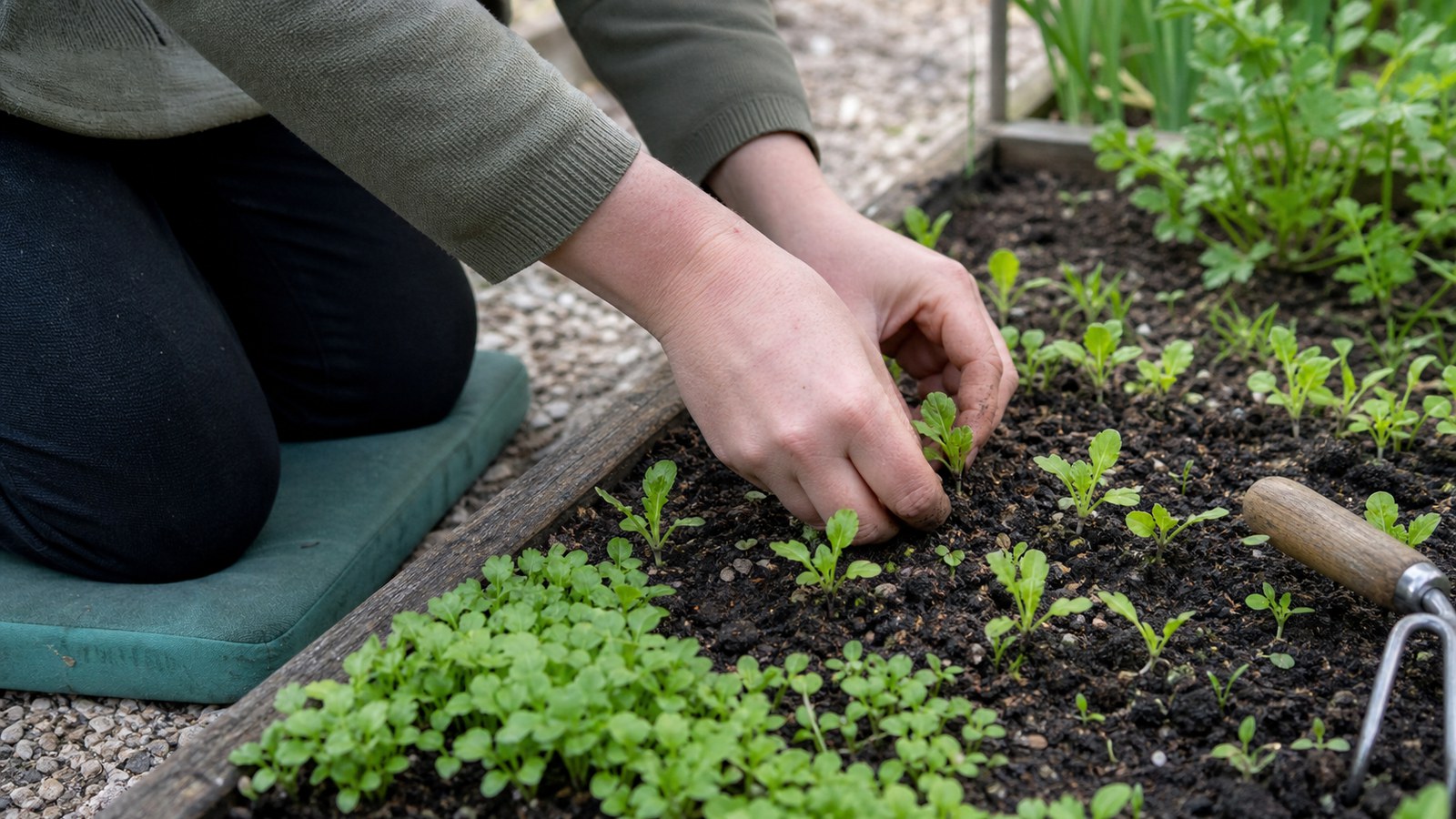
A simple arrival can help. Put down the tools, feel both feet or a knee pad against the ground, and notice one breath without trying to make it deep or slow. Then name the task: “I am thinning this row.” When attention jumps to tomorrow’s weather, the untidy shed, or ten unfinished beds, return to the seedling in your hand.
Breath is not the only anchor. If focusing on it feels uncomfortable, use the weight of a trowel, the contact of your feet, birdsong, or the colour of the plant you are tending. Mindfulness practices are generally considered low risk, but safety research is limited and some people report negative experiences.1 There is no prize for forcing a method that makes you feel worse.
Let repetition show what changed
A mindful practice does not need to be novel. Repetition is the point. The same pot checked each morning becomes a record of heat, wind, root growth, and your own tendency to water by habit. The same path walked after dinner reveals the first open flower, a new chew mark, or the day a seed head begins to loosen.
Try returning to one named plant for a season. Record only the date and one visible event: bud break, first flower, ripe fruit, leaf colour, or dormancy. That is enough to turn a private pause into a small phenology record. If you want a more systematic version, our guide to using seasonal plant events as a garden calendar explains how repeated observations become more useful than a date alone.
Work with the body you have today
Attention includes the gardener. Notice a clenched grip, a twisted reach, a hot path, or the moment kneeling stops being comfortable. Change posture, move into shade, raise the pot, sit for the next task, or stop. A practice that treats pain, dizziness, heat, or fatigue as a test of character has stopped paying attention to the most immediate living thing in the garden.
Keep awareness proportional to the tool. Slow observation belongs beside hand-weeding and watering; it does not require closing your eyes while using pruners or losing track of who is nearby. Gloves, sun protection, stable footing, and the label directions for any garden product remain part of the task. Mindfulness does not make ordinary hazards disappear.
Protect the practice from perfection
Perfection ruins this kind of gardening quickly. A weed is not a moral failure. A dead plant is not a verdict. A missed watering is information. The garden is a living system, and living systems include loss.
Some days the practice will feel steady; other days you will remain distracted, sad, irritated, or tired. The task can still be worthwhile. Do not use the garden to grade your mood, and do not ask it to replace professional help when distress is persistent or daily life is becoming hard to manage. Support is not failure, and neither is leaving the trowel where it is.
Close with one observation
End by naming one thing that changed, without polishing it into a lesson. A new leaf. A dry pocket under the mulch. A spent flower. A hoverfly holding its place in the air. If useful, note one next action—water tomorrow, stake the stem, leave the seed head—and then stop. The small ending prevents observation from becoming another endless list.
Over time, attention becomes less like effort and more like weather you know how to read. The garden remains unfinished, as gardens do, but you leave knowing what was actually in front of you.
References
- National Center for Complementary and Integrative Health: Meditation and Mindfulness—Effectiveness and Safety
- Soga, Gaston, and Yamaura: Gardening is beneficial for health—a meta-analysis
- Wang and Boros: Effect of gardening activities on domains of health—a systematic review and meta-analysis
- Van den Berg and Custers: Gardening promotes neuroendocrine and affective restoration from stress