
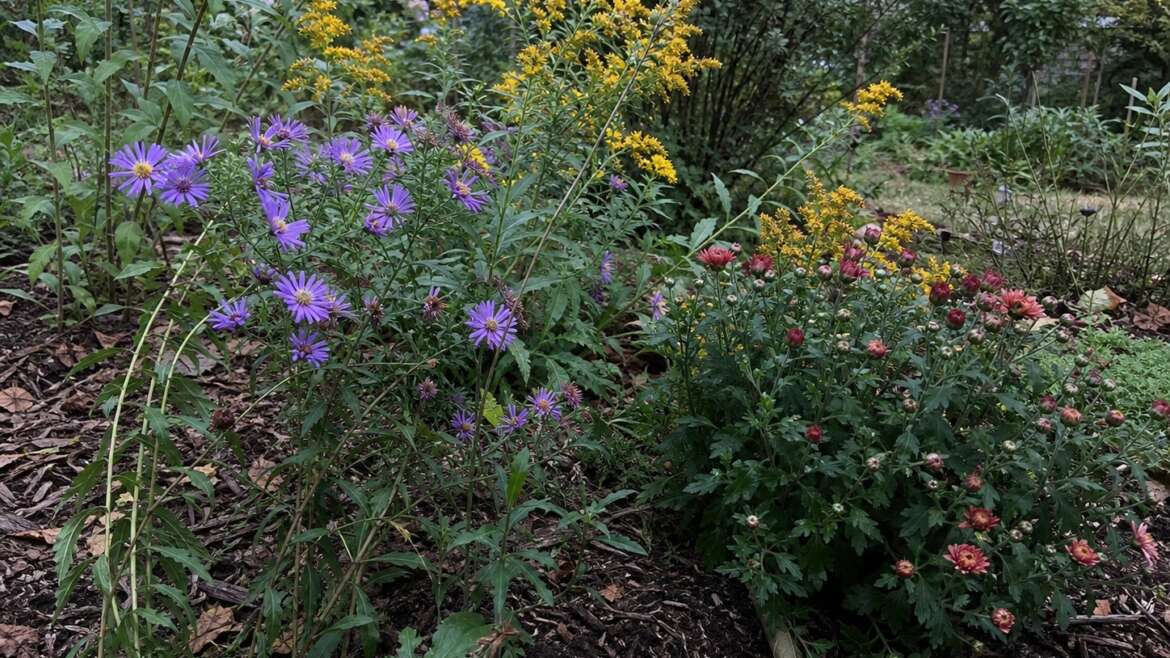
In many temperate Northern Hemisphere gardens, early September can seem to be making two decisions at once. Tomatoes are still softening on the vine, basil still wants one more pinch, and the soil still holds summer warmth. Yet at the edge of the border, the late flowers have begun to listen to a different instruction. Asters gather their purple buds. Garden mums tighten into green domes. Goldenrod lifts yellow plumes just when many summer annuals are beginning to look tired.
Cooler weather is part of this seasonal shift; temperature certainly matters. For photoperiod-sensitive plants such as many garden mums and asters, changing day length is another important cue, and the response differs by species and cultivar.1 The plant reads the changing balance of light and dark with a precision that is easy to miss because the shift happens slowly, a few minutes at a time.
That is the quiet trick of the September border. Some plants do not simply bloom because they are mature enough, watered enough, or fed enough. They bloom because the season has crossed a threshold in light and dark. The calendar is not hanging on the shed wall. It is being measured in the leaves.
The calendar is in the leaves
Photoperiodism is the plant’s response to the relative lengths of light and dark in a 24-hour cycle. Michigan State University Extension describes short-day plants as those that flower when day length is below a critical length, long-day plants as those that flower when day length is above a critical length, and day-neutral plants as those that flower regardless of day length.1 The names are useful, but they can make the process sound simpler than it is.
A plant does not watch the sun. In several well-studied plants, photoperiodic time measurement occurs in leaves through interactions between light signaling and the circadian clock. A scientific review describes day-length-specific activation of FLOWERING LOCUS T (FT), whose product functions as florigen, a mobile flowering signal that helps tell a shoot tip to become a flower-producing structure.2 In ordinary garden language, the leaf notices the season and sends the message onward.
One of the famous parts of this system is phytochrome, a plant protein that responds to red and far-red light. The USDA Agricultural Research Service describes phytochrome as a two-form light switch involved in whether a plant starts or postpones flowering, and in other seasonal decisions such as seed germination.3 This is why a plant can be affected by light that seems weak to us. It is not trying to read a book by that light. It is only deciding whether the night has been interrupted.
Short-day really means long-night
Gardeners often call chrysanthemums short-day plants, but that phrase hides the more useful truth. Iowa State University Extension explains that mums bloom in response to short days and long nights, and that interruptions in night length can delay flowering or prevent it altogether.4 For flowering, the uninterrupted dark period is the more useful measure.
This is why an autumn mum can feel almost theatrical in its timing. It spends much of summer building stems, leaves, and branches. Then, as nights lengthen in late summer, the plant begins to shift toward bud formation. Purdue Extension notes that chrysanthemum flowering is determined by both day length and temperature, with many garden cultivars beginning flower bud development when days are less than 12 hours long and flowering several weeks after that development begins.5
Asters participate in the same seasonal drama. Illinois Extension describes asters as short-day plants like mums, needing long periods of darkness to initiate flower buds, and notes that they begin blooming as days shorten in late summer to early fall.6 That helps explain why the border can look green and undecided for weeks, then suddenly find its color. The decision was made earlier, in the dark, before the flowers were obvious.
Why porch lights can confuse the message
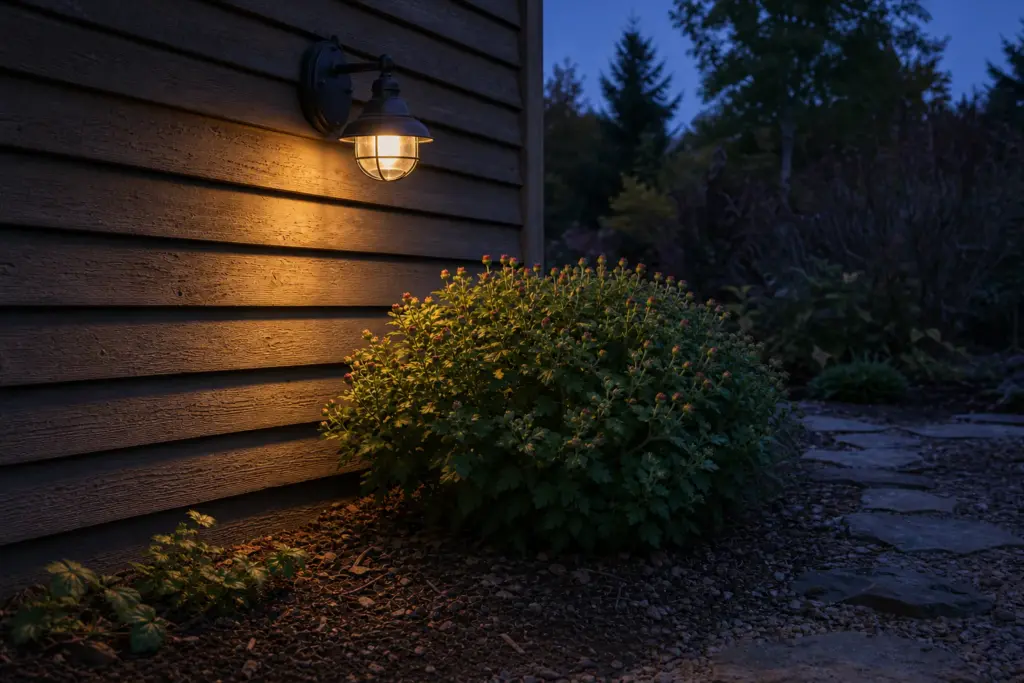
Once you understand that the uninterrupted night is part of the signal, a few garden mysteries become less mysterious. A mum planted near a porch light may grow well all summer, yet set buds late or unevenly. A plant beside a bright security lamp may receive enough nighttime light to blur the seasonal message. The plant is not offended by the lamp. It is misreading the night.
Commercial growers use this sensitivity deliberately. MSU Extension notes that growers can create short days under naturally long days by covering plants with black cloth, and that many use blackcloth to induce flowering in poinsettias, chrysanthemums, and other short-day plants. The same source warns that plants can perceive very low light levels and that light pollution from nearby greenhouses, street lights, or other sources can affect growth and flowering.7
In a home garden, this does not mean every lamp must be removed. It means placement matters. If a hardy mum or late aster has a history of leafy reluctance, look at it after dark. If it sits in a wash of light from the porch, driveway, garage, greenhouse, or kitchen window, the solution may be as simple as moving the plant, changing the timer, or shielding the light so the bed receives a real night.
The practical side of waiting
Autumn flowers reward patience, but they do not reward neglect. A plant still has to arrive at September with enough stored energy, enough roots, and enough healthy foliage to respond when the night signal comes. The best fall mum is usually made much earlier than fall.
For garden mums, Iowa State recommends at least six hours of direct sun, a site away from outdoor lighting, moist but well-drained soil, and regular watering during prolonged dry periods.4 These recommendations should not be carried wholesale to every late-season perennial: asters and goldenrods vary by species, climate, soil, and site.
Pinching is the other part of the bargain. Left alone, many mums become lanky, open plants with flowers mostly at the tips. Pinching removes the soft growing tip and encourages branching, which creates a denser plant with more flowering points. Iowa State, writing for Iowa, advises pinching garden mums two or three times in spring and early summer, then stopping by early July because later pinching can delay flowering.4 Purdue’s Indiana guide gives a similar method but places the second pinch around mid-July, when lateral branches reach 6 to 8 inches.5 These dates are regional guides, not a universal calendar; the cultivar and local growing season determine how early pinching must stop.
By September, the gardener’s job changes. Stop shaping. Avoid overfertilizing, which can produce lanky, floppy mums, and water deeply during dry weather instead of giving frequent shallow sprinkles.45 Let the plant finish what the lengthening nights have started. A late mum or aster is not being slow in the way a forgotten chore is slow. It is waiting for permission from the season.
Goldenrod belongs in the same hour
Goldenrod is not usually discussed by gardeners with the same photoperiod language as mums, but it belongs in the same late-season conversation. It flowers when the garden needs color and when insects need food. Illinois Extension describes goldenrods and asters as two hard-to-miss late-blooming groups that support pollinators late in the year, especially when many home gardens have few floral resources left.8
This is one reason the classic purple-and-gold pairing feels so satisfying: the color harmony also brings two late floral resources into the same border. Pollinating insects use these flowers near the end of the growing season. Some, including monarch butterflies, are preparing for migration; bumblebee queens are storing resources for overwintering; others are feeding before the next stage of a short life.8
Goldenrod also deserves a careful defense. Its showy yellow flowers often get blamed for autumn allergies because they bloom at the same time as ragweed. Illinois Extension notes that goldenrod’s relatively heavy, sticky pollen is carried mainly by insects, while ragweed releases abundant windborne pollen.9 A study of European goldenrod (Solidago virgaurea) found that species was not an airborne allergen but could be an occupational sensitizer, a reminder that low airborne importance does not mean no one can react on close exposure.10 The conspicuous plant is therefore a poor visual proxy for the pollen behind someone’s symptoms.
Designing with darkness
A garden designed to tell seasonal time should not treat September as an afterthought. Leave space for plants that spend much of summer looking modest. Give asters and mums room to build structure before they bloom. Use goldenrod where its energy suits the space, and choose less aggressive species or cultivars in smaller borders. Illinois Extension notes that some goldenrods and asters can be vigorous, but also points to more restrained choices such as showy goldenrod, stiff goldenrod, and smooth blue aster.8
Think in layers rather than isolated clumps. Aster flowers are often most beautiful when they rise through grasses, seed heads, and fading summer foliage. Goldenrod can carry the middle distance. Mums can be useful near paths, steps, and entrances, where their rounded habit reads clearly and where you can notice the buds swelling day by day. The important thing is not to make the fall garden look like a separate display dropped into place. Let it grow out of the summer garden.
It also helps to leave some imperfection. Lower aster leaves may brown by the time the plant is in full bloom, and tall stems may lean after rain. Tuck them behind sturdier neighbors or use unobtrusive staking, but preserve enough air circulation to reduce conditions favorable to powdery mildew.6 Resist the urge to strip the whole border clean the moment flowers fade. Seed heads and standing stems can give winter structure, while old stems and leaf litter provide nesting or shelter for some insects; remove diseased material rather than leaving it in place.11
A small seasonal contract
The late flowers ask for a different kind of attention than the urgent crops of high summer. They do not shout when they begin. For weeks, they are all green preparation: roots, stems, buds, and stored energy. Then the nights lengthen, the light changes, and a border that looked as if it were winding down opens a second vocabulary.
That is why autumn bloom feels so generous. It is not an accident added to the end of the season. It is a timed response to a reliable pattern older than gardening itself. Match the plants to the site, meet their light, drainage, and moisture needs, and protect photoperiod-sensitive cultivars from unnecessary nighttime light. Under suitable conditions, their flowering can make the September shift visible before we notice it.
References
- Michigan State University Extension: Light and flowering of bedding plants
- Annual Review of Plant Biology: Photoperiodic flowering: time measurement mechanisms in leaves
- USDA Agricultural Research Service: Tripping the light switch fantastic
- Iowa State University Extension: Growing Chrysanthemums in Iowa
- Purdue Extension: Chrysanthemums
- Illinois Extension: Plant asters for unique display of fall color
- Michigan State University Extension: Grower 101: Controlling photoperiod
- Illinois Extension: Goldenrods and asters are the stars of fall
- Illinois Extension: Autumn allergies: don’t blame goldenrod
- Journal of Investigational Allergology and Clinical Immunology: Goldenrod and latex cross-sensitization
- Illinois Extension: Consider pollinators during fall garden cleanup