
A spice-route garden sounds like a passport stamped in cinnamon, cardamom, saffron, ginger, pepper, coriander, and turmeric. The real garden is more useful than that fantasy. Some spice plants are ordinary annual herbs that will happily ripen seed in a temperate back yard. Some are rhizomes that need a long, warm season. Some are tropical forest plants that may survive in a pot but are unlikely to fill your pantry.
That honesty does not make the project smaller. It makes it more botanical. A good spice garden begins by asking three questions: which part of the plant gives the flavor, what climate the plant expects, and whether the home harvest will be worth the space. Once those questions are clear, the old spice-route idea becomes less of a costume and more of a living map.
Start with plant parts, not romance
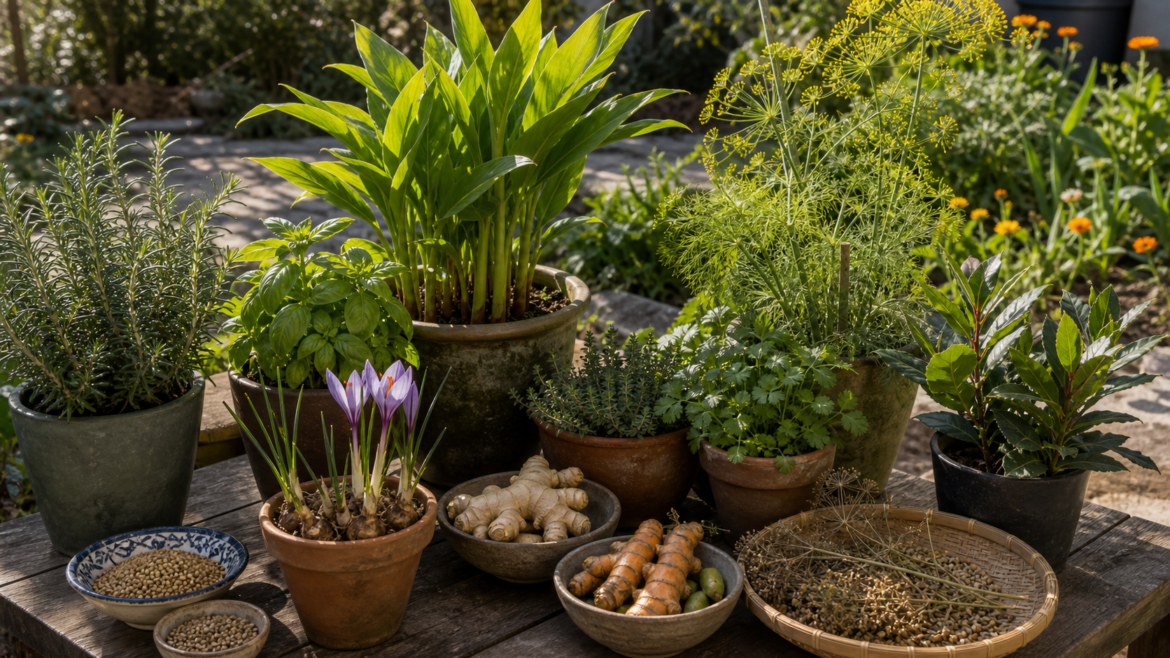
The word spice hides a whole anatomy lesson. Cilantro leaves are an herb, while coriander seed is a spice. Ginger and turmeric are rhizomes. Saffron is the dried stigma and style of a fall-blooming crocus. Black pepper is a dried fruit. Cinnamon is bark. Fennel can be grown for feathery leaves, pollen, seed, or the swollen leaf bases of Florence fennel. These plants do not want the same soil, season, or harvest method just because they sit near each other in the kitchen cupboard.
So group them by care. Mediterranean-style herbs such as thyme, oregano, rosemary, sage, and lavender want sun, leaner soil, and sharp drainage. Seed spices such as coriander, dill, fennel, anise, and caraway need enough time to flower, form seed, and dry before wet weather ruins the crop. Rhizomes such as ginger and turmeric want warmth, moisture, and a long growing season. Tropical woody spices need a sheltered, humid life that most outdoor gardens cannot provide.
The easy route is seeds and leaves
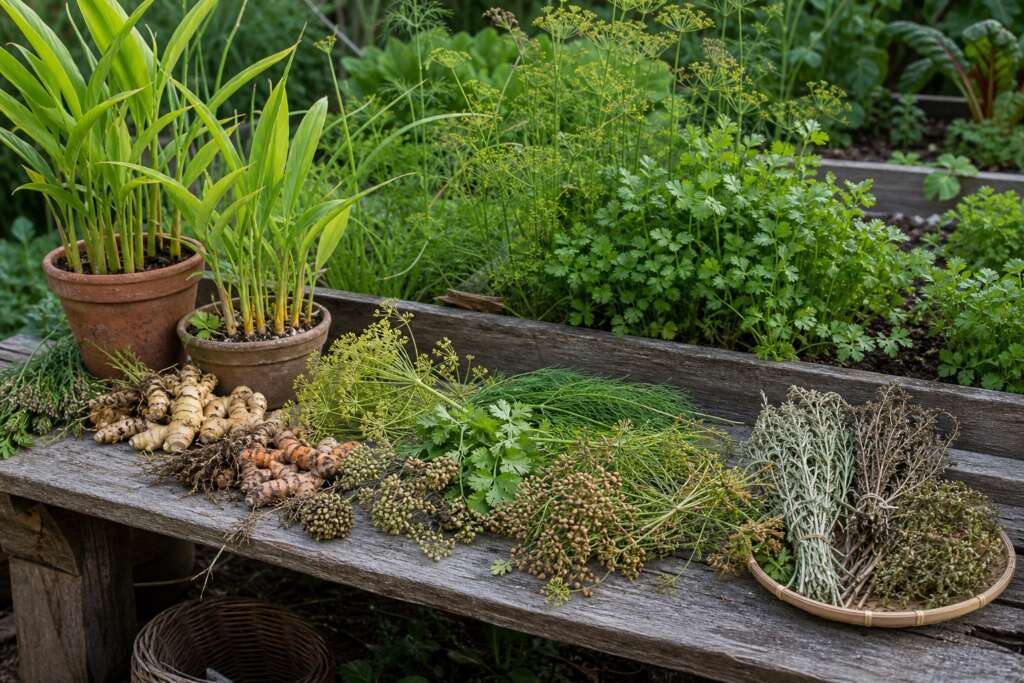
For many gardeners, the most satisfying spice-route bed is not full of rare plants. It is full of familiar plants harvested at the right stage. University of Maryland Extension notes that most herbs prefer at least six hours of sun and well-drained soil, and it specifically recommends direct sowing anise, coriander, dill, and fennel because they do not transplant well.1 That is practical advice, not a limitation. Those plants give you both green growth and seed heads, and they make the garden visibly change as flowers turn into flavor.
This is also where design matters. A low, dry edge can hold thyme and oregano. A deeper pocket can carry parsley, cilantro, and dill. A taller back row can take fennel or coriander left to bloom for hoverflies, bees, and seed. If you want a broader plant-by-climate menu before buying anything unusual, How to grow spices by matching plant to climate is the natural companion to this article.
Warm pots are for rhizomes
Ginger is a better container experiment than many so-called exotic spices because the useful part is underground. University of Florida Gardening Solutions describes edible ginger as a perennial grown for its rhizomes, with a preference for organically enriched, well-drained soil and usefulness in containers.2 In cool climates, the container is not a consolation prize. It is the way you give the plant a longer, warmer season and the option of indoor protection.
Turmeric asks for a similar kind of realism. NC State Extension describes common turmeric as a rhizomatous perennial that grows best in hot, humid conditions, with morning sun, afternoon shade, and medium-to-wet moisture; outside its hardiness range, the rhizomes can be lifted in fall and stored dry.3 That makes turmeric a seasonal crop in many gardens, closer to dahlias than to hardy kitchen sage.
Saffron is possible, but not casual
Saffron is one of the rare famous spices that can make sense in a small temperate garden. The plant is Crocus sativus, a fall-blooming crocus grown from corms, not seed. NC State Extension notes that the flowers appear for only one to two weeks in fall, and that the orange stigmas and styles are removed fresh or dried and stored.4 The yield is tiny, but the pleasure is real: a few autumn flowers, a careful harvest, and a pinch of spice that you actually met while it was alive.
The caution is moisture. Saffron crocus needs full sun and well-drained soil, and wet conditions can invite fungal disease or root rot.4 It belongs in a raised bed, gravelly border, or container where winter and autumn water will not sit around the corms.
The famous tropicals deserve caveats
Black pepper, cardamom, and cinnamon are the plants that make spice-route gardening sound glamorous. They are also the plants most likely to expose wishful thinking. Black pepper, Piper nigrum, is a woody tropical vine of moist forest conditions; black, white, and green peppercorns all come from its fruits, processed at different stages.5 In a cool-climate home it is usually an ornamental greenhouse or houseplant project, not a reliable peppercorn crop.
Cardamom is even more demanding. NC State Extension describes true cardamom as needing stable tropical rainforest conditions, warm temperatures, high humidity, consistent moisture, and protection from direct sun and sudden environmental changes.6 It can be grown under glass or in a very warm, humid room, but home growers should enjoy the foliage and treat seed pods as a bonus rather than a promise.
Cinnamon is a tropical evergreen tree, not a hardy shrub. True cinnamon, Cinnamomum verum, needs warm, wet conditions and winter protection in cooler places; NC State notes that it is not likely to grow well in North Carolina because of cold winter temperatures.7 A conservatory tree may be beautiful and fragrant, but harvesting bark is a serious intervention, not the same as clipping thyme for dinner.
Harvest timing is the whole trick
The best homegrown spices are not necessarily the rarest. They are the ones harvested when their chemistry is strongest. NC State Extension advises harvesting foliage herbs before flowering, seed herbs as pods change color but before they shatter, and flowers just before full bloom.8 That turns a spice bed into a calendar. Leaves are a spring and early summer crop. Flowers are brief. Seeds ask for patience. Rhizomes wait until the plant has fed them.
After harvest, storage decides whether the flavor survives. Dry seed heads need airflow. Leaves need gentle drying away from harsh light. Rhizomes may be used fresh, frozen, dried, or replanted. For the kitchen end of the process, Harvesting and storing homegrown spices without losing their character goes deeper into the point where gardening becomes pantry work.
Build a garden that admits its limits
A good spice-route garden does not pretend that a patio pot replaces a tropical agroecosystem. It lets the easy plants be easy, gives the borderline plants containers and shelter, and leaves the truly tropical crops to growers whose climate can actually support them. That is not less romantic. It is more respectful of the plants, the places they come from, and the human histories that moved them around the world.
Start with coriander, dill, fennel, thyme, oregano, rosemary, basil, ginger, turmeric, or saffron. Add one difficult plant only if you want the challenge more than the harvest. The reward is not a miniature empire of spices. It is a garden that teaches why flavor has geography.
References
- University of Maryland Extension: Care of Herbs and Starting Herbs from Seed
- University of Florida Gardening Solutions: Ginger
- NC State Extension Gardener Plant Toolbox: Curcuma longa
- NC State Extension Gardener Plant Toolbox: Crocus sativus
- University of Arkansas Cooperative Extension: Pepper, Black
- NC State Extension Gardener Plant Toolbox: Elettaria cardamomum
- NC State Extension Gardener Plant Toolbox: Cinnamomum verum
- NC State Extension: Harvesting and Preserving Herbs for the Home Gardener