
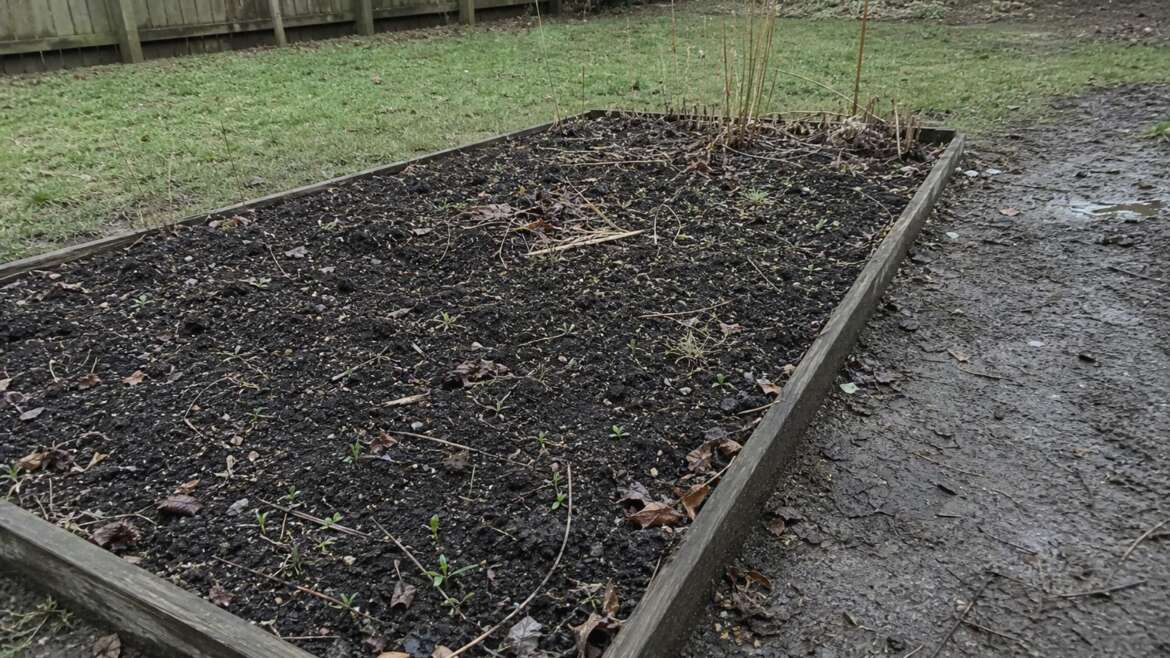
On December 31, a garden can look finished in the most convincing way. The beds are low, the paths are damp, the seed catalogs are beginning to arrive, and the year’s failures have softened into mulch and memory. It is tempting to think the next garden begins when we open a fresh packet in spring.
The soil knows better. Under the winter surface is a quieter calendar: seeds left by last summer’s weeds, seeds blown in from the lane, seeds carried by birds, seeds shaken from compost, and perhaps a few welcome volunteers from plants you meant to let wander. Weed scientists call this reserve the weed seed bank, and Montana State University Extension describes it as the store of viable weed seeds on the soil surface and through the soil profile.1
That makes the last day of the year a useful moment for a gardener. Not for grand resolutions, necessarily. The garden rarely improves because we promise to become a different person by March. It improves because we learn what the soil is likely to offer back, then adjust the small habits that decide which seeds are invited into the new year.
A bank that keeps strange accounts
The seed bank is not a tidy savings account. It is more like an archive, a waiting room, and a trouble ledger all at once. A single garden bed can hold seeds from several past seasons, each with a different tolerance for cold, darkness, burial, drying, disturbance, and time. Michigan State University Extension notes that agricultural soils can contain thousands of weed seeds per square foot, although the exact number varies enormously with site history and management.2
Most of those seeds will not become plants this year. Some will rot. Some will be eaten by beetles, birds, rodents, ants, or other soil life. Some will germinate at the wrong time and die. Some will simply wait. Montana State describes dormancy as a way that weeds disperse through time, not just across distance.1 That phrase is worth keeping. A dandelion seed floats across the fence. A common lambsquarters seed may be buried by cultivation, then return to the shallow germination zone years later.
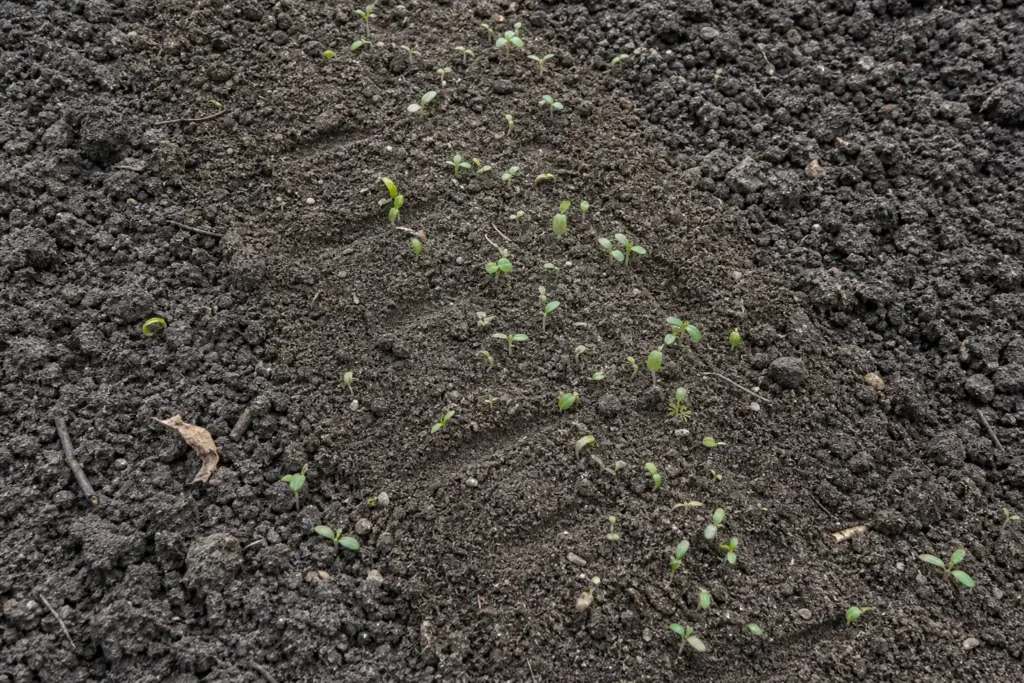
This is why a newly cleared bed can feel haunted. You remove the visible plants, turn the soil, admire the open ground, and then a green mist appears after rain. The bed was not empty. It was full of instructions waiting for the right conditions.
Why winter does not erase the problem
Winter kills some seeds, but it does not sterilize a garden. Many weed seeds are built for delay. Their coats, chemistry, and dormancy cycles help them avoid sprouting into the first mild week that might be followed by ice. Michigan State notes that less than ten percent of most weed species in a seed bank germinate each year, which is exactly why weeds can reappear after several seasons of decent control.2
For gardeners, this changes the emotional tone of weeding. A flush of chickweed, bittercress, galinsoga, lambsquarters, or purslane is not always evidence that you failed recently. It may be evidence that the bed is spending an old balance. The better question is whether the garden is making new deposits.
The most expensive deposits are mature seeds. UC IPM puts prevention at the center of weed management: do not let weeds develop seed and perpetuate the problem.7 eOrganic makes the same point in the language of banking, advising growers to minimize deposits and maximize withdrawals from the weed seed bank.3 A small weed pulled before flowering is almost ordinary maintenance. The same plant after seed set may be next spring’s workload multiplied.
The tiny alarms that wake seeds
A seed in soil is not asleep in the way a stone is asleep. Its readiness changes as dormancy cycles. For a non-dormant seed, moisture, temperature, light, burial depth, and species-specific biology help determine whether germination and emergence follow.1
That is why cultivating a bed can seem to create weeds. It did not create the seeds. It changed their room. Montana State describes tillage as a major force in the vertical distribution of weed seeds, with no-till systems leaving many seeds near the surface and plowed systems burying many deeper in the profile.1 The practical twist is that many small-seeded weeds emerge most readily from shallow depths. For species whose germination is promoted by light, bringing buried seeds back toward the surface can restart the conversation; the guide to why some seeds need light to wake explains that signal in detail.
This does not mean never dig. Gardens are not museum pieces. Compacted soil may need diagnosis and targeted repair, perennial weeds may need a fork, and new beds sometimes require rough work. It does mean that deep disturbance can have a seed-bank cost. It may solve an immediate problem—lifting perennial roots, opening a new bed, or relieving a verified compaction layer—while also moving old seeds into a better position to germinate. Repeated intensive tillage can itself break soil aggregates and contribute to compaction over time.5
A New Year’s audit for the bed
The most useful winter weed work is often observational. Walk the garden with the frankness of an accountant. Which bed was weediest after midsummer rain? Where did purslane keep returning? Where did a few tall plants escape behind the tomatoes? Which corner of the compost area produced a suspicious fringe of seedlings? The point is not guilt. The point is memory before spring enthusiasm blurs it.
Seedheads deserve special attention. Illinois Extension warns gardeners not to create a future seed bank during fall cleanup, especially when flowering or seeding weeds are tossed into cold compost that will not reliably destroy seed.4 If a weed has already made mature seed, separate seedheads from soft green growth. Follow local waste rules; use a municipal composting program only if it explicitly accepts seeding weeds, or keep the seedheads out of compost that will return to garden beds.
There is also a kinder audit to make. Not every seedling is a problem. Calendula, borage, dill, cilantro, parsley, violas, poppies, feverfew, and many annual flowers can self-sow in useful ways. A vegetable garden with no volunteers at all can feel efficient but oddly mute. The trick is to distinguish welcome repetition from weed debt. Mark the plants you are happy to let seed, and be more severe with the ones that charge interest.
The stale seedbed is patience made practical
One of the most elegant ways to spend down the seed bank is the stale seedbed. The idea is simple: prepare a bed before planting, give weed seeds enough moisture and time to germinate, then kill the seedlings shallowly before sowing or transplanting the crop. University of Minnesota Extension describes this as letting the first flush of weeds emerge over one to three weeks, then removing them before planting.5
For a home garden, this can be as modest as raking a carrot bed two weeks early, watering if the weather is dry, waiting for the green haze, then slicing the seedlings off with a sharp hoe on a dry day. The key is restraint. If you cultivate deeply again, you bring up a new layer of seeds and begin the process over. The final pass should be shallow, almost surgical.
Tarps can turn the same idea into a quieter operation. University of Maine Cooperative Extension explains that stale seedbedding encourages weed seeds to germinate, then kills emerged weeds before planting; tarps can enhance the method by blocking light or changing soil temperature and moisture.6 In a small garden, a reusable tarp or an opaque cover can be useful for a weedy bed that needs to wait, but it is still a tool with tradeoffs. Plastic must be secured, stored, reused long enough to justify itself, and kept from breaking into the soil.
Mulch is a kind of darkness
Seeds near the surface often need light, temperature swings, and good contact with moist soil. Mulch interferes with that. UC IPM notes that organic mulches suppress annual weeds by covering the soil surface and preventing weed seed germination and establishment, with finer materials sometimes needing only two to three inches to block light.7 Illinois Extension gives similar garden-scale advice, describing mulch as a way to keep seeds in the dark and recommending a settled depth of two to three inches in landscape beds.8
Mulch is not magic. Perennial weeds with strong roots can push through it. Weed seeds can land on top of it, and mulch should be kept away from plant crowns and stems.8 But used well, mulch changes the seed bank’s access to the world. It turns a bare invitation into a shaded, buffered surface where many small seeds fail to get the message they were waiting for.
Winter is a good time to think about where the garden should be covered by spring. Leaves, straw that is genuinely seed-free, composted wood chips on paths, chopped stems, and cover crop residues all have different personalities. The best mulch is not only the one that stops weeds. It is the one you can obtain responsibly, apply at the right depth, and keep away from the tender places where plants need air.
What to resolve on December 31
If the garden needs a New Year’s resolution, let it be small enough to keep. Pull weeds before flowers become seed. Do not compost mature seedheads in a cool pile. Prepare one difficult bed early enough to use a stale seedbed. Mulch bare soil where mulch makes sense. Disturb deeply only when the benefit is worth the seed-bank cost. Watch which seedlings return, because they are giving you the garden’s history in real time.
There is something pleasing about ending the year this way. Not with a fantasy of a perfect garden, but with attention to the hidden one already present. The seed bank under a winter bed is both nuisance and wonder. It is evidence of mistakes, weather, birds, compost, wind, survival, and chance. It is last year refusing to vanish completely.
Stand beside the bed on a cold morning and you can almost see the bargain. The garden will not start clean. It never does. But it can start better: fewer new deposits, wiser disturbances, more covered soil, and a gardener who has learned to treat the first green haze of the year not as an ambush, but as information.
References
- Montana State University Extension: Weed Seedbank Dynamics and Integrated Management of Agricultural Weeds
- Michigan State University Extension: Weed Seedbank Dynamics
- eOrganic: Manage the Weed Seed Bank, Minimize Deposits and Maximize Withdrawals
- Illinois Extension: Fall cleanup continues, beware of weed seeds
- University of Minnesota Extension: Reducing tillage in vegetable crops
- University of Maine Cooperative Extension: Tarping in the Northeast, Tarping Practices
- UC IPM: General Methods of Weed Management
- Illinois Extension: Weeds in All the Beds