
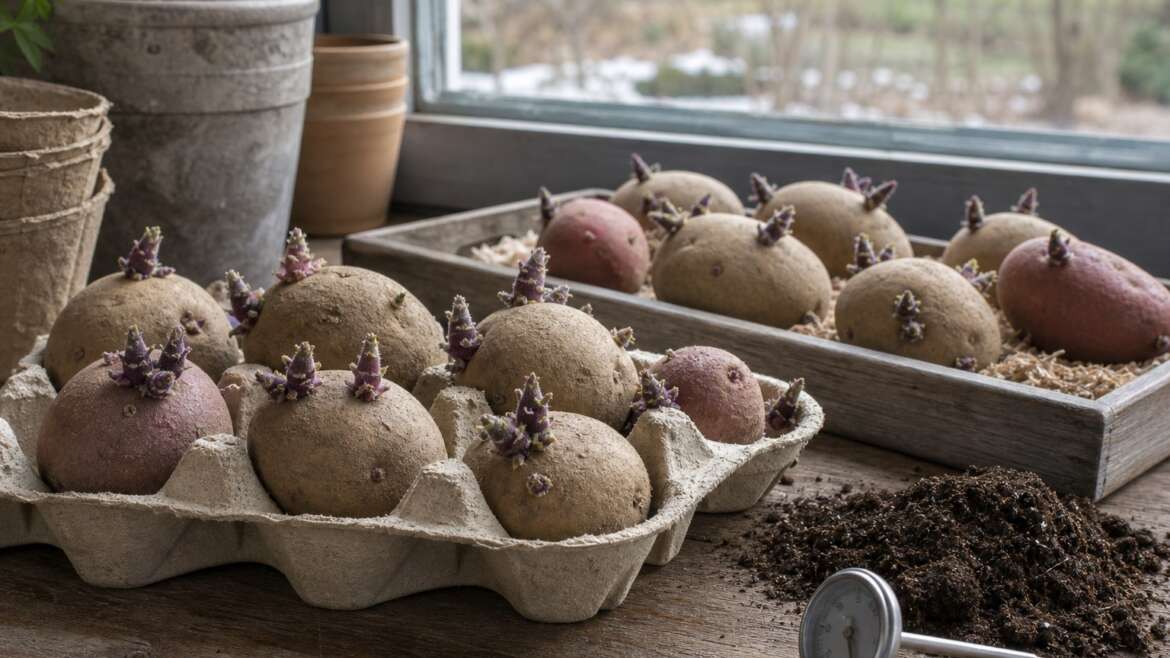
A seed potato in February looks like a small argument against winter. It sits in a carton on a cool windowsill, still mostly tuber, but with blunt purple nubs beginning to rise from its eyes. Outside, the soil may be wet, cold, and not remotely ready. Inside the potato, spring has already begun negotiating.
This quiet pre-sprouting is often called chitting or green sprouting. Gardeners do it to give potatoes a head start before planting, especially where spring is short, soil warms slowly, or the first early crop is worth a little extra attention. It is not magic, and it is not required for every potato crop. It is simply a way of waking a tuber carefully before asking it to wake in the ground.
Potatoes make this possible because the “seed” is not a seed in the botanical sense. It is a tuber, a swollen underground stem. Each eye is a bud. Given the right cues, those buds can become shoots, then stems, then leaves, then the plant that feeds the next crop underground.
The eye is a bud
A potato tuber is stored energy with growing points built into it. University of Maine Cooperative Extension explains that potatoes are propagated from seed pieces, each with at least one eye, rather than from true botanical seed in most home garden situations.1 That detail changes how the crop behaves. You are not waiting for a tiny embryo to unfold from a dry seed coat. You are planting a living storage organ that already has buds and food reserves.
Those reserves are why a seed potato can sprout in a carton without soil. It is not yet feeding through roots. It is spending stored starch and sugars to push buds into shoots. The gardener’s job is to keep that first spending sensible. Short, sturdy, colored sprouts are useful. Long, pale, tangled pantry sprouts are a sign that the tuber has been reaching in the dark for too long.
Light is part of the difference. A potato left in a warm cupboard tends to make weak white shoots. A seed potato held in a cool, bright place tends to make shorter, tougher sprouts that are easier to plant without snapping. Johnny’s Selected Seeds, in its greensprouting instructions, describes holding seed potatoes in light so they produce sturdy green sprouts before planting.2
Why certified seed matters
The word “seed” can make any sprouting potato seem suitable, but the safest garden start is certified seed potato stock. Clemson Cooperative Extension recommends certified seed tubers to reduce disease problems.3 University of Georgia Extension also advises against grocery-store potatoes because they may have been treated with a growth inhibitor.5
This matters because potatoes can move trouble from one season into the next. A tuber is not only food for a new plant. It can also carry pathogens. Saving your own seed potatoes can work in some gardens, but it asks for discipline: healthy plants, clean storage, no suspicious rot, and a willingness to discard anything questionable. Bought certified seed is not glamorous. It is the quietest form of crop insurance.
There is also a size question. Small seed potatoes can often be planted whole. Larger ones are commonly cut into pieces, but each piece needs at least one good eye and enough tuber tissue to support early growth. University of Maine’s guidance on selecting, cutting, and handling potato seed emphasizes proper seed-piece size and handling to support emergence and reduce decay.4
Chitting is timing, not force
Chitting should not turn February into a greenhouse race. The aim is not to grow long shoots indoors. The aim is to show the tuber where spring is heading, then plant it while the sprouts are still compact. Think of it as sharpening the starting line.
Set seed potatoes in a shallow tray, egg carton, or open crate with the end carrying the most eyes facing upward if that is easy to see. Keep them cool, bright, and frost-free. Do not seal them in a plastic bag. Do not cook them in a hot window. Do not mist them into softness. The ideal sprout is stocky enough to survive planting and short enough that it has not spent too much of the tuber’s stored energy.
In climates with mild springs, the advantage may be modest. In a cool garden where planting is delayed by cold soil, heavy rain, or a short growing season, pre-sprouting can make the first aboveground growth feel less hesitant. It does not remove the need for good planting conditions. It only gives the tuber a more awake beginning.
Cut pieces need time to seal
If you cut seed potatoes, you create wounds. Those wounds need time to dry and form a protective surface before they go into cool soil. University of Georgia Extension recommends that each piece have at least two eyes and be allowed to dry and heal for a day before planting.5
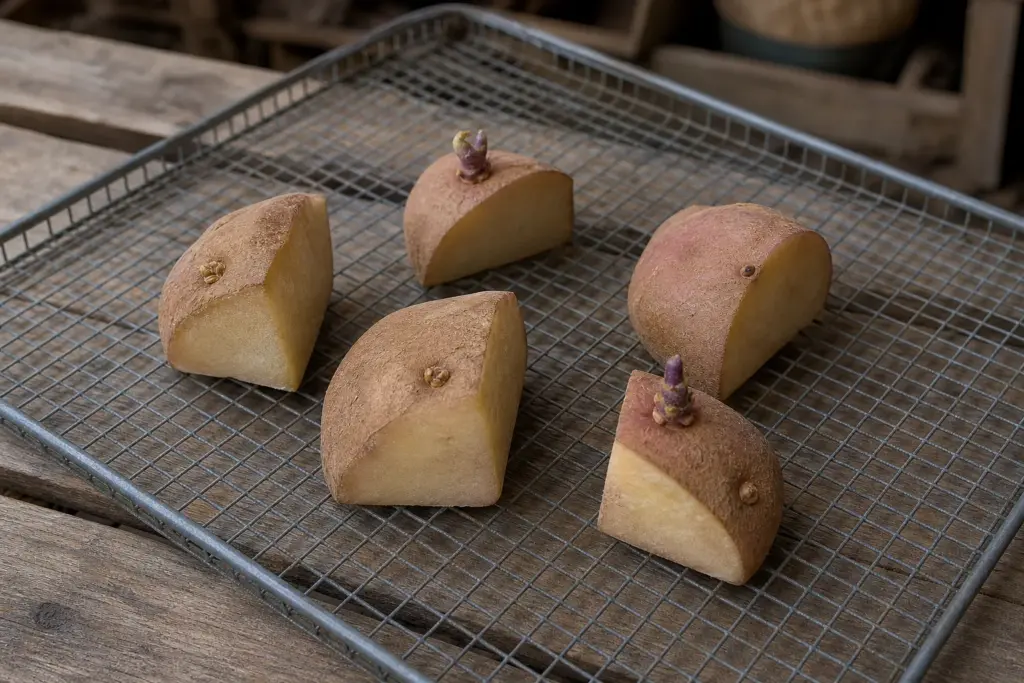
This waiting period is easy to underestimate. University of Maine Extension notes that freshly cut seed in soil that is too cold or wet may fail to heal and become infected by decay organisms.4 A healed piece is still not invincible, but it has a better chance. The cut surface should look dry and slightly corky rather than wet. Give the pieces air circulation without letting them shrivel. The knife should be clean. Anything soft, smelly, or suspicious should be discarded rather than planted; do not compost it if disease is a concern.
Cutting is not always necessary. Small whole seed potatoes avoid the wound problem entirely. If the price and variety choices make whole small seed practical, that is often the simplest route for a home garden.
Do not plant the calendar
Potatoes tolerate cool weather better than tomatoes or beans, but they still ask for workable soil. Cold mud is not a good nursery. University of Maine Extension says seed can be planted once the soil reaches about 50°F (10°C); seed planted earlier may emerge slightly sooner, but sitting in cold, wet soil raises the risk of decay.1
A soil thermometer is helpful because February and March can lie. Air can feel springlike for three days while the bed remains cold and saturated below. Planting a sprouted seed potato too early can waste the advantage of chitting. The sprout is ready, but the bed is not. If a handful of soil smears into a cold paste, wait.
Once planted, the tuber should be covered well enough to protect the sprout and keep developing tubers away from light. As the plant grows, soil or mulch is gradually drawn up around the stems. This hilling does not create potatoes from nothing. It protects the developing tubers, reduces greening,6 and gives the crop a better underground envelope.
Green is useful for seed, not for supper
Seed potatoes exposed to light during chitting may green slightly. For planting stock, that is not usually a problem. For eating potatoes, green is a warning. North Dakota State University Extension explains that green areas on potatoes indicate chlorophyll formation and can be associated with higher glycoalkaloids, bitter compounds that can be toxic in sufficient amounts.6
This is one reason the seed-potato tray should not be confused with the kitchen basket. Seed potatoes are for planting. Food potatoes are for eating. North Dakota State University Extension advises cutting away small green areas but discarding tubers with extensive greening or green flesh beneath the skin; sprouts should be removed before cooking.6 Oregon State University Extension adds that potatoes with pronounced greening or damage should not be eaten and links both light exposure and sprouting with higher glycoalkaloid concern.7
The garden version of this lesson continues after planting. Keep tubers covered as they develop. Sunlight on swelling tubers can green them in the ground, especially if soil cracks, hills wash down, or plants are grown too shallowly in containers.
Useful seed potato supplies
A small potato crop does not need much equipment, but a few tools make timing and handling easier.
- REOTEMP soil and compost thermometer for checking whether the bed is actually warming, not just the air.
- VIVOSUN fabric grow bags for trying a small potato crop where garden soil is limited or heavy.
- Carson MicroBrite Plus pocket microscope for looking closely at potato eyes, sprout tips, and early root initials.
A potato is a promise with reserves
The charm of chitting potatoes is that it makes a hidden process visible. You can see which eyes are waking. You can see whether the sprouts are stout or weak. You can sort the doubtful tubers before they are buried. You can remember, in the most practical way, that a potato plant begins as stored summer energy waiting for the right season to spend itself.
Do not rush the spending. Give the tuber light, coolness, and air. Give cut pieces time to seal. Give the soil time to become workable. Then plant with the sprouts facing upward and the patience to hill as growth appears.
February does not need to be full spring to begin a potato crop. It only needs a tray, a window, and a gardener willing to let the crop wake slowly, eye by eye.
References
- University of Maine Cooperative Extension: Growing Potatoes in the Home Garden
- Johnny’s Selected Seeds: Instructions for Chitting Potatoes (Greensprouting)
- Clemson Cooperative Extension: Potato
- University of Maine Cooperative Extension: Selecting, Cutting and Handling Potato Seed
- University of Georgia Extension: Home Garden Potatoes
- North Dakota State University Extension: My Potatoes Turned Green, Now What?
- Oregon State University Extension: Glycoalkaloids in Potato Tubers