
There is a particular kind of winter gardening that happens with a vase instead of a spade. You walk through the quiet garden with pruners in hand, choose a few sleeping twigs, bring them indoors, and let the warmth of the house persuade them to reveal what they have been holding since last year.
Forcing flowering branches is not a trick in the cheap sense. It is closer to eavesdropping on a plant’s calendar. Spring-flowering shrubs and trees usually form their flower buds during the previous growing season, then carry those buds through winter. Purdue Extension notes that after several months of cold, often by mid-January, many branches can be cut and encouraged to bloom indoors.1
That makes a vase of forsythia or pussy willow feel more interesting than a bought bouquet. It is not imported spring. It is spring that was already in the wood.
The Cold Clock Inside a Bud
Woody plants do not simply fall asleep in autumn and wake whenever the weather turns pleasant. Many enter a deeper kind of dormancy that prevents growth during a stray warm week in December. Michigan State University Extension explains that plants track chilling during winter, and that chilling requirements vary by species and variety.2
Once enough cold has accumulated, warmth becomes a meaningful signal. The branch does not need roots to open the flower buds it already made. It needs water, moderate indoor temperatures, light, and time. The gardener’s role is to move the branch gently from winter storage into a believable imitation of early spring.
Branches Worth Bringing Indoors
The easiest branches are usually the earliest outdoor bloomers. Forsythia is the classic because it opens quickly and generously, but it is only the beginning. Pussy willow, flowering quince, witch hazel, cornelian cherry dogwood, redbud, serviceberry, crabapple, apple, cherry, magnolia, lilac, and viburnum can all be used with varying degrees of patience. Iowa State University Extension recommends starting when buds begin to swell, with forsythia and pussy willow among the earliest and crabapple, magnolia, and redbud generally easier later in the season.3
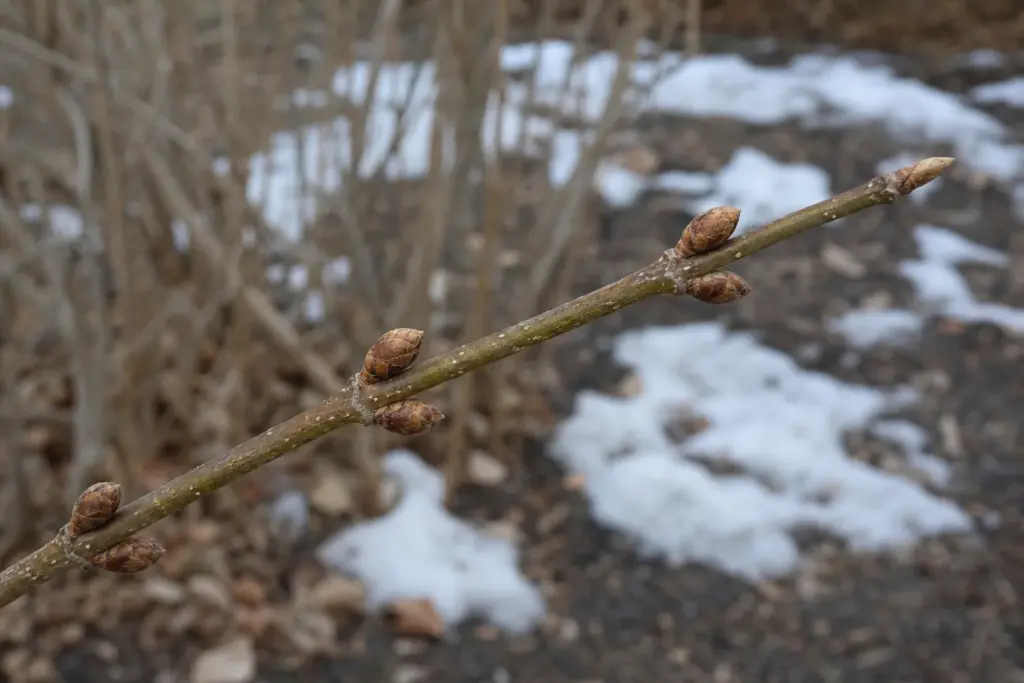
Look closely before cutting. Flower buds tend to be rounder, plumper, and more promising than leaf buds, which are often narrow and pointed. If every bud on a twig looks tight and spear-like, the branch may leaf out prettily but never flower. That can still be useful in an arrangement, but it is not the same small miracle as a vase of bloom.
Cut Like a Gardener, Not a Forager
A forced branch is also a pruning cut, so choose with the shrub’s shape in mind. Do not shear a row of twigs from the front face of a plant. Instead, thin lightly from crowded places, remove crossing stems, or borrow a few branches from the back and sides. Penn State Extension’s pruning guidance for flowering shrubs is a useful reminder that spring bloomers generally flower on old wood, so winter cuts remove some of the coming display.4
Cut on a day above freezing when the branches are not locked in ice. University of Illinois Extension suggests selecting branches with many flower buds, cutting pieces about 6 to 18 inches long, and using proper pruning technique.5 For a tall vase, you can go longer, but stay selective. The goal is a handful of branches, not a wounded shrub.
Use sharp bypass pruners and make clean cuts just above a bud or at a natural branch junction. If a stem is beyond the pruners’ rated capacity or requires force, switch to loppers or a small folding saw rather than crushing it with undersized blades.
Waking the Branches
Once indoors, give the branches a fresh diagonal cut and remove buds or side twigs that would sit below the waterline. Some gardeners split the bottom inch of woody stems, but a fresh cut and clean water are more important than violence. If the branches are very dry from wind or cold, soak them in a tub of lukewarm water for several hours or overnight.
Then place them upright in a bucket or vase of water somewhere cool and bright but out of direct sun. Illinois Extension recommends a cool, partially shaded location around 60 to 70 degrees F and changing the water every few days to reduce bacterial buildup.5 Chicago Botanic Garden gives similar advice: begin in a cool room, keep the branches out of direct sunlight, change the water every other day, and move them to display when color or foliage begins to show.6
Warmth speeds the show, but speed is not always beauty. Branches forced too hot can open weakly, dry at the bud tips, or rush from tight bud to tired flower in a few days. Cool rooms make better bloom.
Designing With Bare Wood
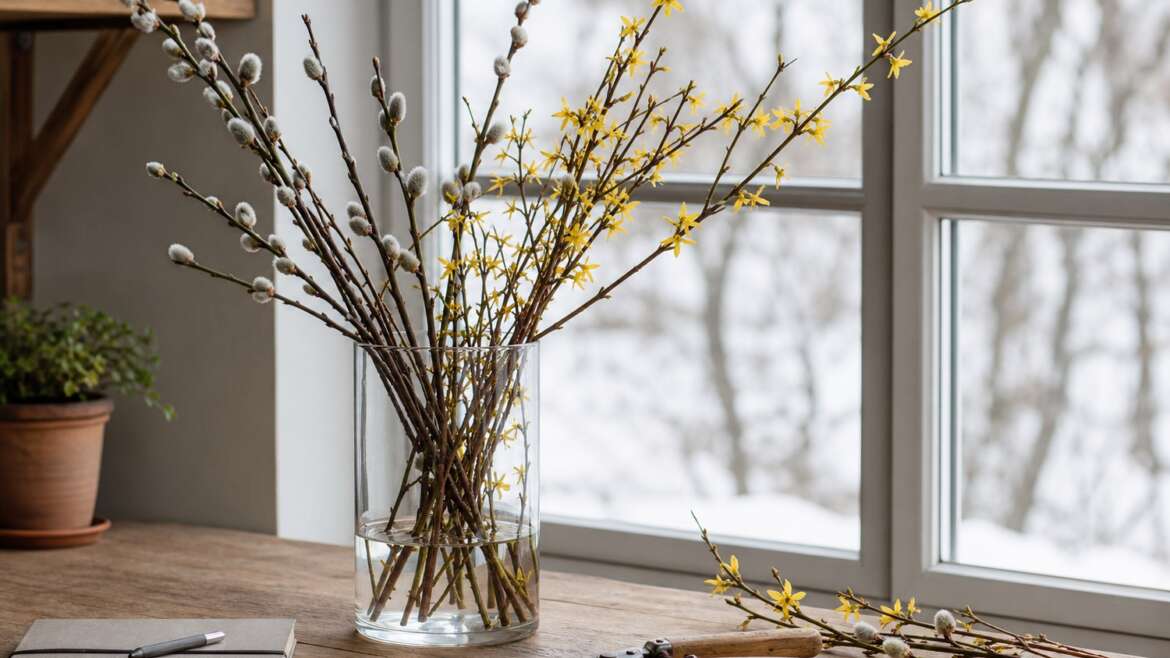
Forced branches are most graceful when you let them behave like branches. A tall, clear cylinder vase shows the crossing stems and gives weight to the arrangement. Place the heaviest pieces first, then add smaller twigs at angles so the shape rises unevenly, like a shrub rather than a florist’s dome.
Do not overfill the vase on the first day. Dormant stems are visually quiet, and it is tempting to add too many. Once the buds swell, the arrangement gains volume. Forsythia can turn from brown lines to yellow sparks almost overnight. Pussy willow opens more softly, each catkin catching the light like frost that decided to stay beautiful.
You can also stagger batches. Cut a few branches one week, then another handful ten days later. By the time the first vase is fading, the second may be swelling. This creates a slow indoor spring instead of a single dramatic burst.
If Nothing Happens
A silent vase usually means one of four things: the branches were cut too early, they did not have enough chilling, they carried mostly leaf buds, or they dried out before the buds could open. Cloudy water can also shorten the display, especially in warm rooms. Recut stems when you change the water, rinse the vase, and keep the arrangement away from heat vents.
Some branches need more patience than others. Forsythia may bloom in a week or two once conditions are right. Magnolia and crabapple often take longer, and the flowers can be more temperamental indoors. If you are new to forcing, begin with forsythia, pussy willow, or quince. They are generous teachers.
Useful Branch-Forcing Supplies
- Fiskars bypass pruning shears: sharp, simple pruners for clean cuts on pencil-thick twigs and young shrub growth.
- CYS Excel 12-inch clear glass cylinder vase: a stable, transparent vase that suits upright woody stems and shows the architecture of the branches.
- Floralife Crystal Clear flower food packets: optional, but useful if you often keep cut branches or flowers indoors and want cleaner vase water.
Final Thoughts
Forcing branches is one of the gentlest ways to garden in winter. It asks for observation before action: Which buds are fat? Which branches can be spared? Has the shrub had enough cold? Where in the house is cool enough for slow opening?
The reward is not only bloom. It is the strange pleasure of seeing time folded. Outside, the garden may still be iron-hard and quiet. Inside, a few twigs in water begin to confess what the plant already knew: winter is not empty. It is full of unfinished flowers.
References
- Purdue Extension: Forced Branches Bring Spring Indoors
- Michigan State University Extension: Winter Dormancy and Chilling in Woody Plants
- Iowa State University Extension: How to Force Branches of Spring-Flowering Trees and Shrubs
- Penn State Extension: Pruning Flowering Shrubs
- University of Illinois Extension: Start Spring Early by Forcing Branches to Bloom Indoors
- Chicago Botanic Garden: Forcing Branches to Bloom Indoors