

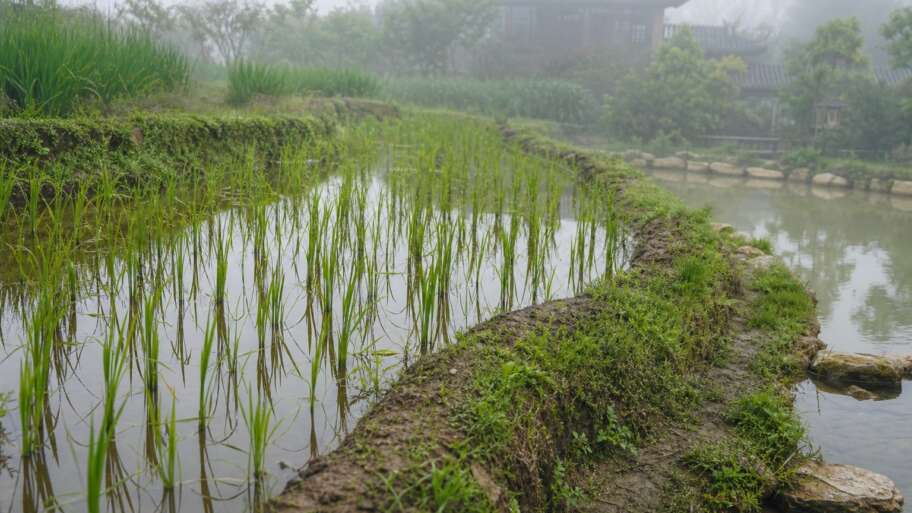
Rice is easy to picture as a bowl of grain and harder to picture as a landscape. In a lowland field, the crop is inseparable from edges and levels: a raised bund, a shallow basin, a channel that admits water, and another route that lets it leave. The striking part is not permanent flooding. It is control. That distinction matters…
Latest articles
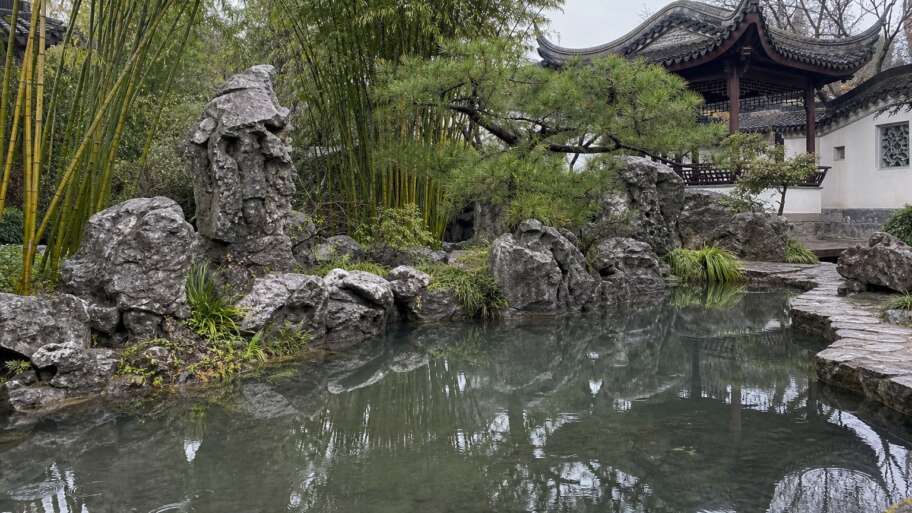
“Classical Chinese garden” is useful shorthand only when its limits are clear. This article focuses on the urban private-garden tradition associated with Jiangnan and Suzhou, not on every garden in China. Imperial parks, temple grounds, farms, village plots, and modern public landscapes had different owners and purposes. The surviving Suzhou gardens are a particularly refined branch of a much larger…
Read more about Chinese gardens, built as landscapes for the mind
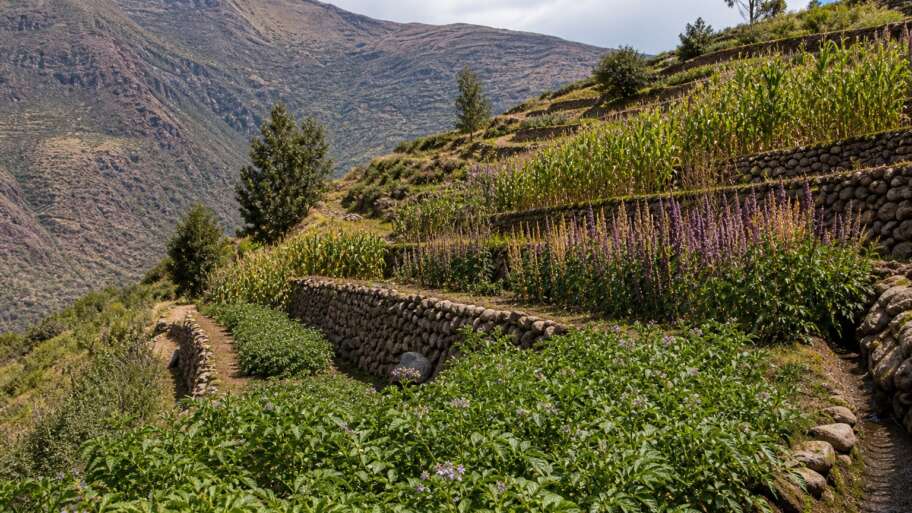
Inca terrace farming begins with a simple problem that still defeats many hillside gardens: water moves downhill faster than soil can hold it. The Andean answer was not one invention but a whole way of reading a mountain. A slope became a set of shelves, drains, paths, walls, planting pockets, and microclimates. It is more accurate to call this an…

The Andean pantry is a lesson in edible insurance. It does not bet everything on one staple, one elevation, or one season. Potatoes, oca, ulluco, mashua, quinoa, kaniwa, maize, beans, peppers, lupines, and fruit from warmer valleys all belong to a food system shaped by thin air, frost, sun, slope, and distance. The potato is the obvious star, but a…
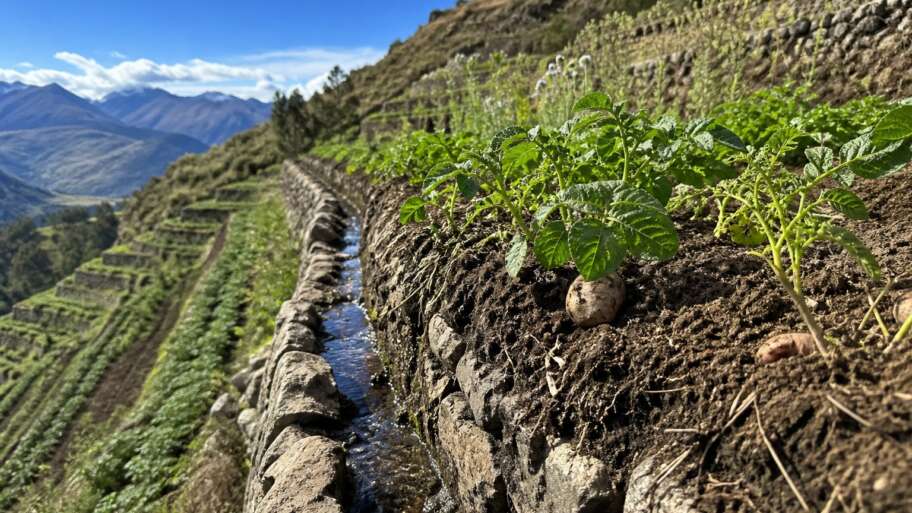
A terrace is sometimes described as a flat field cut into a hill. That is true in the same way a garden is a patch of dirt: technically correct, but not very helpful. A working terrace changes the route of water, breaks a long slope into shorter segments, deepens the usable soil, and gives people safer access. It can also…
Read more about How Andean terraces make steep land farmable
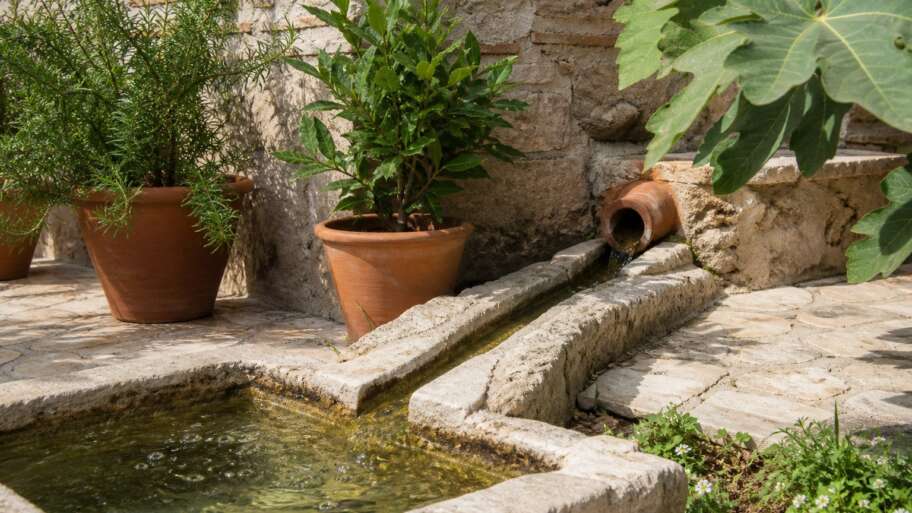
Roman water engineering is easy to remember as a row of arches crossing a valley. Those arches were dramatic, but they were only exposed fragments of a much longer route. Water had to be found, surveyed, carried at a workable level, protected from contamination, distributed under rules, and repeatedly cleaned and repaired before it could reach a street basin, bath,…
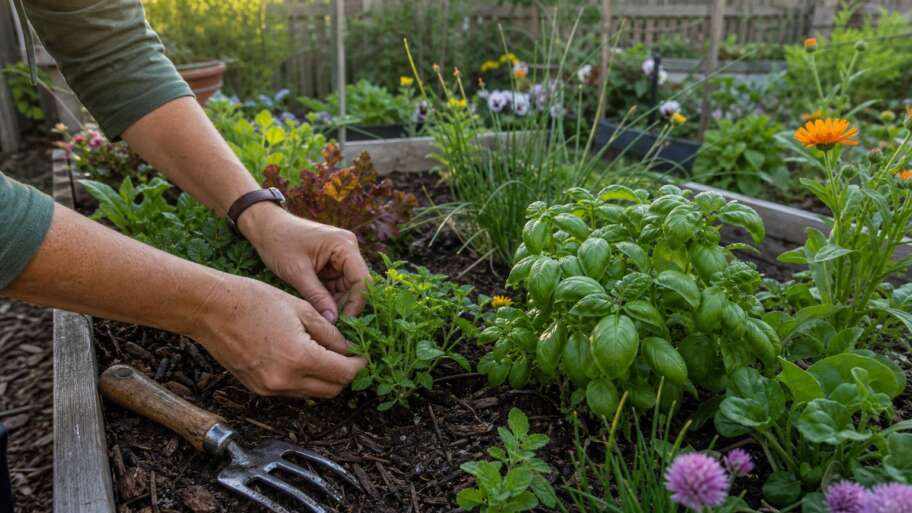
Roman Mediterranean gardening did not happen in a postcard climate of endless lavender and polished stone. It happened in heat, winter rain, dust, trade, food production, household display, and unequal access to land, water, and labour. There was no single Roman garden style: a farm villa, an urban vineyard, a shop-house plot, and a wealthy peristyle court did different work.12…
Read more about Roman Mediterranean gardening without the myth
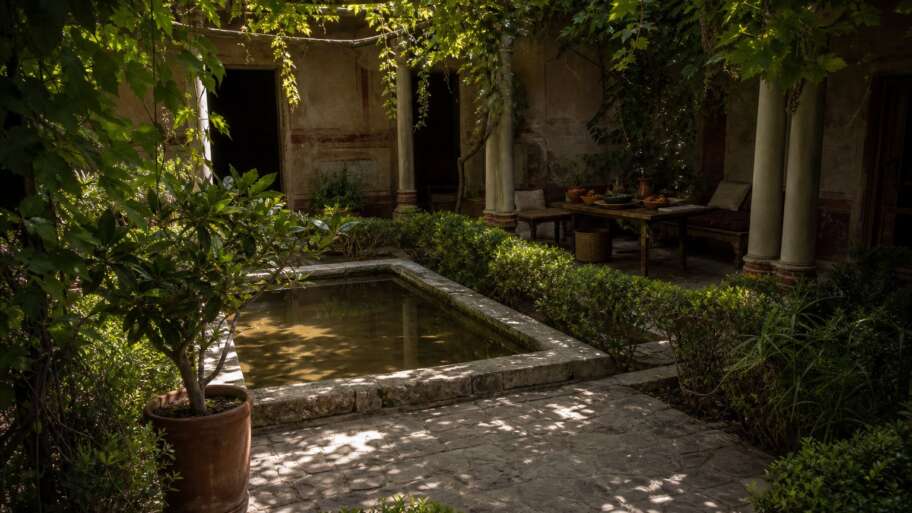
A Roman garden could be a room without a roof—but only one kind of Roman garden. In some town houses, a colonnaded peristyle framed an open court where planting, water, shade, and doorways worked together. Elsewhere a hortus was a productive plot, while an open court might support circulation, storage, craft, dining, or very little planting. The evidence resists a…
Read more about Ancient Roman gardens, built for shade, status, and supper
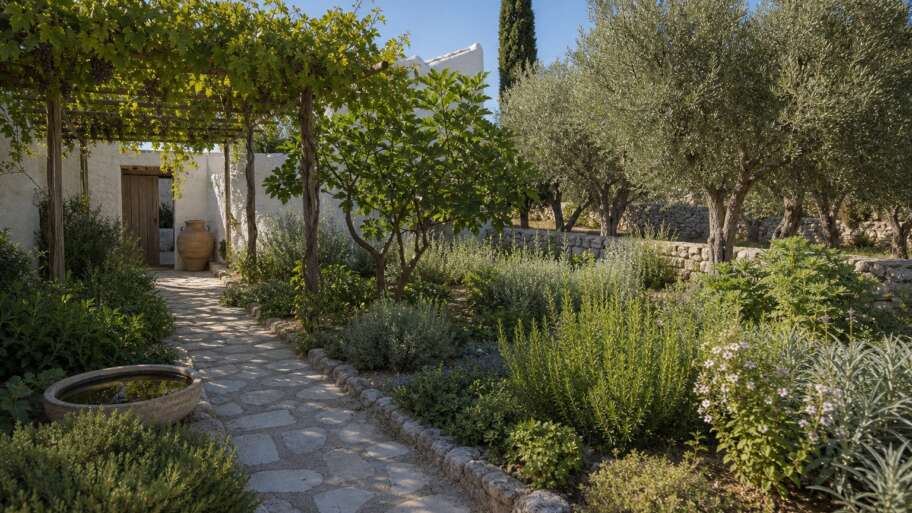
Ancient Greek garden design is easy to misread if we begin with clipped lawns, symmetrical borders, and a row of replica statues. Plant meaning in Greek life occupied many kinds of ground: sacred precincts, groves, orchards, market plots, courtyards, gymnasia, roadsides, springs, and agricultural estates. The grove, rather than the lawn, is the more revealing starting point. Even that phrase…
Read more about Ancient Greek garden design, where the grove mattered more than the lawn
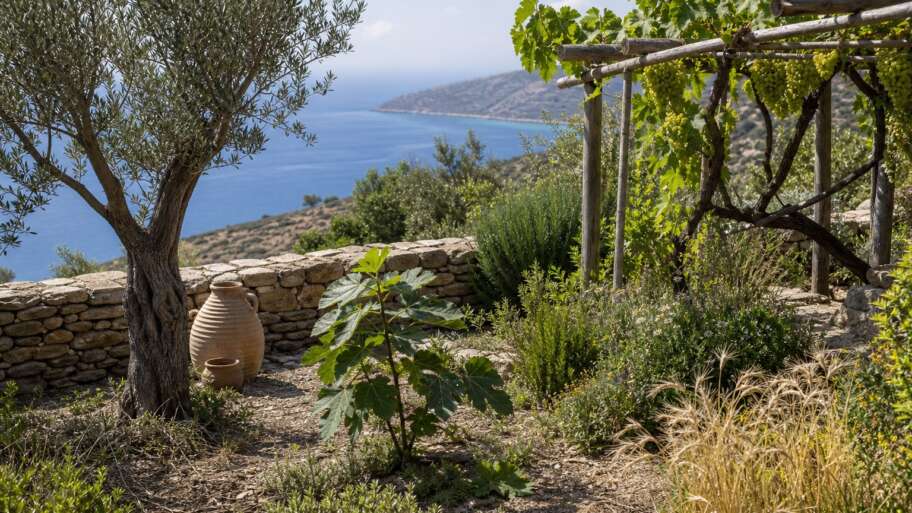
Olives and grapes can become so symbolic that their horticulture disappears. In ancient Greek stories and art, the olive may stand for Athena, victory, or peace, while the vine evokes Dionysus and wine. On actual cultivated ground, both were perennial woody plants. Someone had to establish them, prune them, judge a harvest, move the crop, and turn bitter fruit or…