

Skip to content

Latest articles

Keeping a rooftop garden alive above the street

Keeping a rooftop garden alive above the street

A rooftop garden lives in a harsher garden climate than the address suggests. Wind dries leaves and loosens anything light enough to move. Containers heat and cool quickly. Water must reach the roots without wandering toward doors, walls, or drains. The maintenance plan has to answer those pressures, not borrow a backyard routine unchanged. That does not make a roof…

Read more about Keeping a rooftop garden alive above the street

Designing a rooftop garden before buying the containers

Designing a rooftop garden before buying the containers

The most important rooftop garden decisions happen before the first planter is purchased. A roof is not a patio that happens to be higher. It has load limits, drainage paths, waterproofing, wind exposure, access issues, and safety edges. Design begins with those facts, then moves toward plants. That order can feel frustrating when herbs, grasses, and flowering perennials are the…

Read more about Designing a rooftop garden before buying the containers

Rooftop gardens start with structure, wind, and water

Rooftop gardens start with structure, wind, and water

Rooftop gardens are seductive because they seem to create land out of air. A bare roof becomes herbs, grasses, tomatoes, sedums, shade, and a place to sit above the street. The transformation is real, but the roof is still a roof. Structure, wind, water, drainage, and access decide what kind of garden is possible. A well-designed vegetated roof can slow…

Read more about Rooftop gardens start with structure, wind, and water

Monastic herbs, kitchen plants, and the medieval medicine bed

Monastic herbs, kitchen plants, and the medieval medicine bed

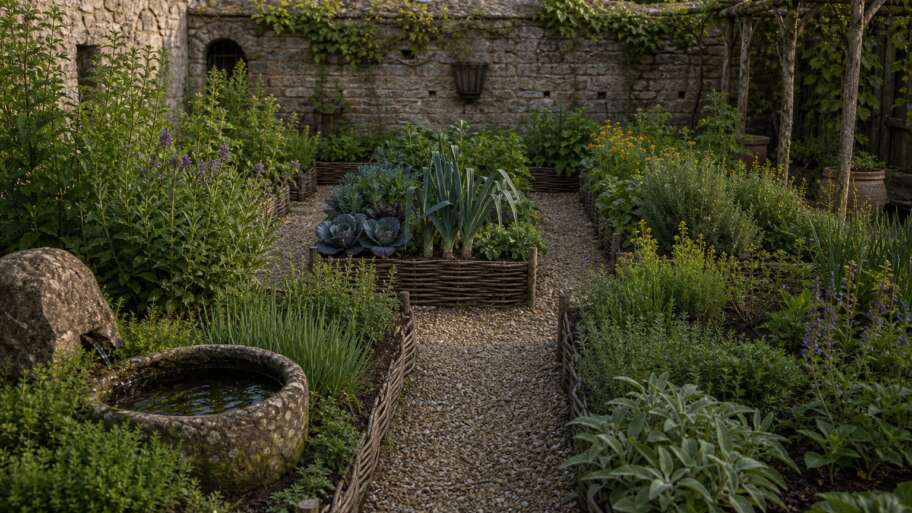
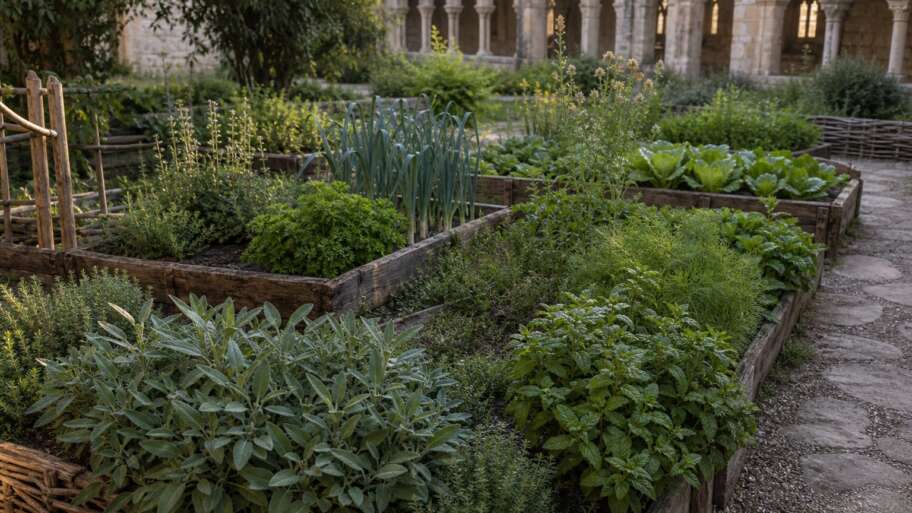
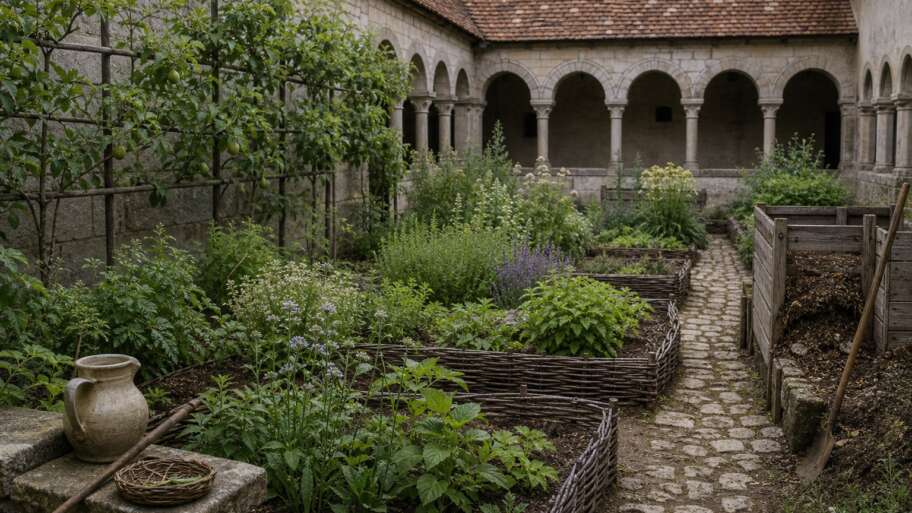
A monastic herb garden was not a quaint collection of scented plants. It could serve the kitchen, infirmary, storeroom, and classroom, while also providing fragrance and beauty. Monks, nuns, and other workers needed to recognize plants, tend them, harvest the right part, and keep one bundle distinct from another. The same sage or fennel might enter food, household work, and…

Read more about Monastic herbs, kitchen plants, and the medieval medicine bed

Monastic gardens and the careful keeping of useful plants

Monastic gardens and the careful keeping of useful plants

Monastic gardens matter because they remind us that gardening is also a form of record keeping. A religious community needed food, materials, places for reflection, and care for sick members. Beds, orchards, and enclosed courts brought some of those needs into a landscape that had to be weeded, watered, harvested, and renewed. In unsettled centuries, the quiet continuity of that…

Read more about Monastic gardens and the careful keeping of useful plants

Maya gardening lessons from the milpa

Maya gardening lessons from the milpa

A milpa is easy to flatten into a diagram: maize in the middle, beans climbing its stems, squash spreading below. The real lesson is less tidy and more useful. Maya farmers have worked with different soils, rainfall patterns, elevations, crop varieties, forest stages, household needs, and markets. The planting is one moment in a system shaped by observation and labor.…

Read more about Maya gardening lessons from the milpa

Maya horticulture, the milpa, and the forest edge

Maya horticulture, the milpa, and the forest edge

Maya horticulture is often reduced to a picture of maize in a clearing, but the better word is relationship. A milpa was not simply a field carved out of forest and then forgotten. It was part of a cycle of annual crops, useful trees, managed regrowth, soil memory, and household knowledge. The forest edge was not the opposite of the…

Read more about Maya horticulture, the milpa, and the forest edge

Sacred gardens in India, from grove to courtyard

Sacred gardens in India, from grove to courtyard

India does not have one sacred-garden tradition. The phrase can point to a community-protected forest patch, a Mughal garden-tomb, a temple enclosure, or a planted domestic courtyard. Those places arose in different regions, religions, political histories, and climates. Treating them as one decorative “Indian style” erases the distinctions that make each landscape worth understanding. There is still a useful thread…

Read more about Sacred gardens in India, from grove to courtyard