
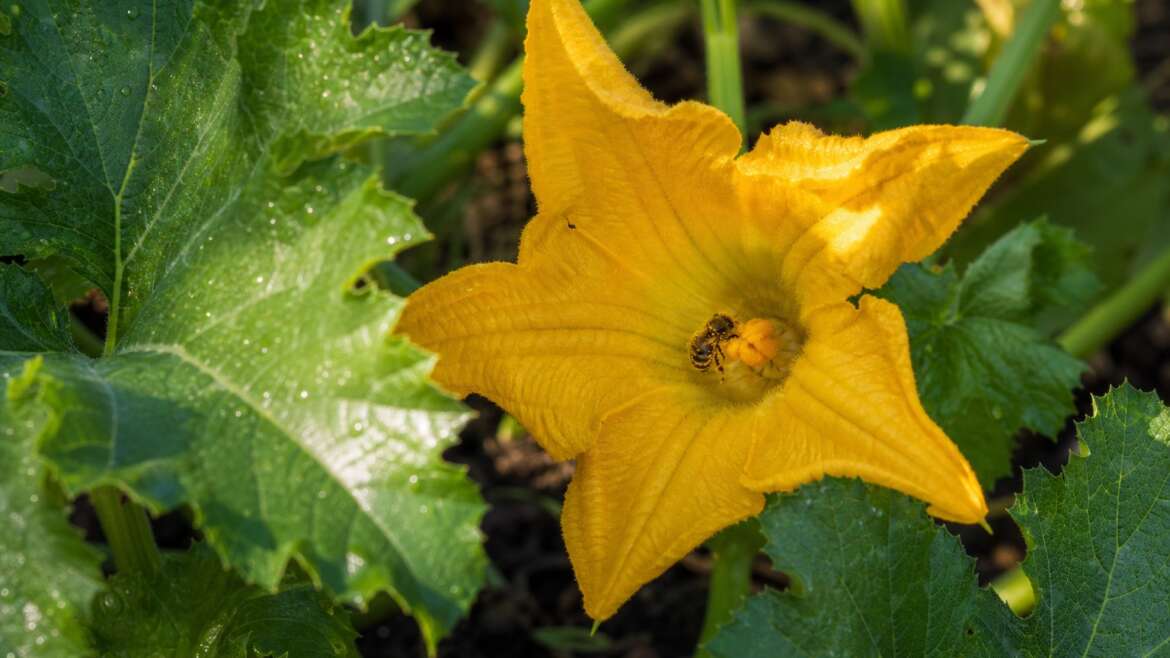
A squash blossom is not a flower that lingers. It opens like a little lantern in the cool part of the morning, spends its best hours in the company of bees, and by afternoon begins to fold, soften, and give itself back to the plant. If you walk the vegetable garden at breakfast, the flowers look generous. If you wait until late day, the same plant can seem to have changed its mind.
That briefness is the point. Squash, zucchini, pumpkins, gourds, and many of their relatives have flowers built around timing. Pollination is not a vague summer wish. It is an appointment. The flower opens, pollen is ready, insects arrive, and the pollen moved during that window helps determine whether the ovary keeps enlarging and whether the fruit develops evenly.
For gardeners, this is useful knowledge. It explains why a plant can be covered in yellow flowers and still make almost no squash. It explains why the first blossoms often fall off without drama. It also explains why the best time to notice, harvest, hand-pollinate, or simply admire squash flowers is not when the garden happens to fit your schedule. It is when the flowers fit theirs.
A flower with a clock
Oregon State University Extension notes that squash flowers begin opening early in the morning and rapidly close and wither as the sun heats up, typically by midmorning.1 This is why a squash bed can feel so alive before the day gets hot. The flowers are not simply open. They are available.
The timing has consequences. Pollen has to be moved while the male and female flowers are both fresh. Bees need a window of workable weather. A cool or wet morning can matter more than a whole mild afternoon, because by afternoon many squash blossoms are already past their best work.5
There is something elegant in that narrowness. The squash plant does not keep every possibility open. It makes a daily offering: a bright cup of nectar and pollen, a few hours of access, then a closing. The gardener who learns that rhythm stops asking, late in the day, why all the flowers look tired. They were not made for late in the day.
Male flowers, female flowers, and the tiny fruit question
Most garden squash are monoecious, which means a single plant makes separate male and female flowers. Purdue Extension explains the practical difference plainly: female flowers have what looks like a miniature fruit just below the petals, while male flowers have a slender stalk.2
That little swelling under a female flower is the ovary: the structure that can become the squash you harvest. Pollen must reach the stigma so ovules inside can be fertilized. When too few are fertilized, the ovary may develop unevenly, remain misshapen, yellow, shrivel, or drop.5 What looks like a tiny successful fruit is better read as a promise still waiting to be kept.
Male flowers often arrive first. This can worry new gardeners, especially when a young zucchini plant seems to be throwing a parade of blossoms and no fruit at all. In most cases, the plant is not failing. It is setting the stage. Purdue notes that an early flush of male flowers commonly falls after pollen is shed, and that later flushes should include both male and female flowers.2
Once you know the difference, the plant becomes easier to read. A long-stemmed flower is part of the pollen supply. A flower with a small squash at its base is the one that must receive pollen. A morning with both open at once is the morning that counts.
Why the right bee at the right hour matters
Cucurbit pollen is not built for drifting around the garden on a breeze. NC State Extension describes squash yield as dependent on insect pollinators because the male and female parts are in separate flowers and the pollen is too heavy to be wind-dispersed.3 In other words, the garden needs a courier.
Honey bees and bumble bees can do the job, but squash has an especially interesting partner in the squash bee. The eastern cucurbit bee, Eucera (Peponapis) pruinosa, specializes in pollen from Cucurbita flowers. NC State Extension notes that squash flowers open near dawn, squash bees begin foraging around the same time, and a female squash flower may be fully pollinated after only 6 to 10 squash-bee visits.3
The U.S. Forest Service gives the relationship an almost storybook image: look during the first few hours after sunrise, and male squash bees may be darting between flowers; by noon, they may be asleep in the withered blossoms.4 The detail is charming and useful because it shows how closely the insect and flower schedules match.
This is one reason a vegetable garden should not be judged only by whether it has flowers for bees in a general sense. Squash benefits from pollinators that are active early, comfortable with large open blossoms, and able to move pollen quickly before the flower closes its window.
When a squash seems to start and then quit
A small squash that yellows at the tip, grows crooked, or collapses after the blossom fades is often telling a pollination story. University of Maryland Extension explains that cucurbits produce separate male and female flowers, and that insufficient pollination can result in twisted or deformed squash.5
This does not mean every imperfect squash is a moral failure of the gardener. Weather can interrupt the process. Cool, wet mornings can keep bees grounded. Very high temperatures can injure flowers, reduce pollen production, or contribute to flower and small-fruit drop. University of Maryland Extension also notes that heat stress and low bee activity can play a role in poor summer squash pollination, and suggests good plant care, pollinator-friendly flowers, and hand pollination where needed.6
There is also the simple matter of sequence. If the plant is young and only making male flowers, wait. If it has both male and female flowers but the mornings have been rainy, watch the next clear day. If the plant is boxed under insect netting after flowering begins, remember that the netting may be excluding the very visitors the flowers require.
Row covers and insect netting are useful tools before bloom, especially when cucumber beetles or squash vine borers are part of the local summer. But for ordinary seeded squash varieties, they need to come off or be opened when flowers need insect pollination. University of Maryland Extension makes the exception clear: parthenocarpic varieties can fruit without pollination and may remain covered, but other cultivars need pollinator access once flowering begins.6
How to hand-pollinate without making a ceremony of it
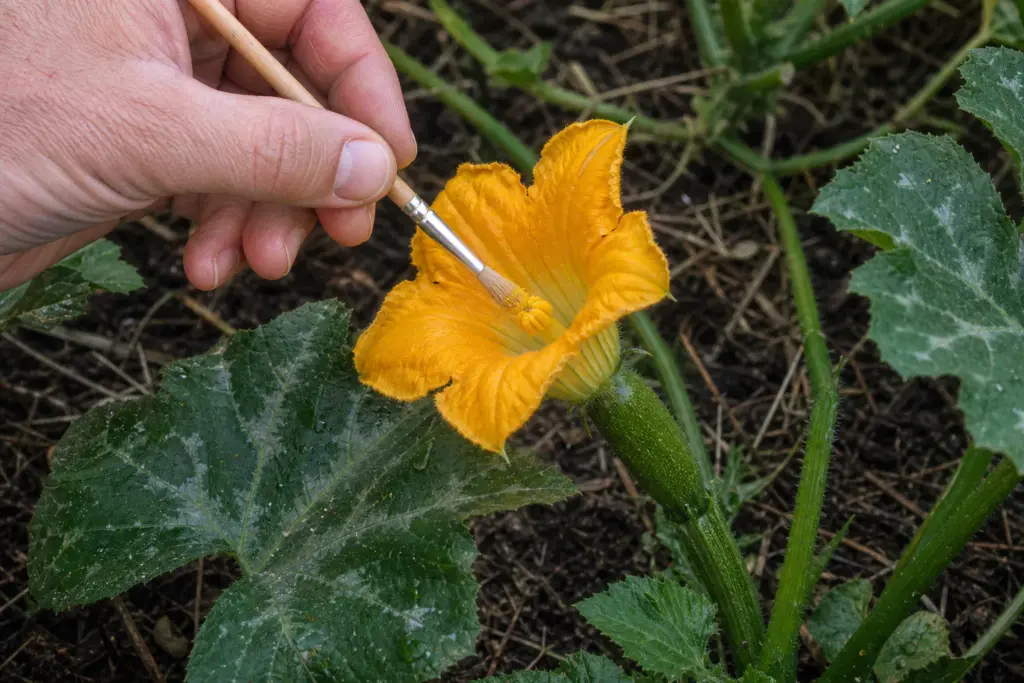
Hand pollination sounds fussy until you do it once. The plant has already made the parts large enough for clumsy mammals to understand. The male flower offers a pollen-covered anther. The female flower waits with a receptive stigma above its miniature squash. You are only filling in for a bee that did not arrive.
The best time is early morning, when the flowers are fresh and open. Choose a male flower, peel back or remove the petals if you want easier access, and touch the pollen-bearing anther to the stigma in the center of an open female flower. A small, clean, soft paintbrush reserved for pollination—or a cotton swab—can move the pollen instead. West Virginia University Extension describes both methods.7
Do not turn the process into surgery. Touch pollen lightly across the receptive surfaces of the stigma without crushing them. The goal is not to pack the flower full of pollen, bruise the petals, or pollinate every blossom on the plant. It is to help a female flower that happens to be open on a morning when insect traffic looks thin.
If you are saving seed from open-pollinated squash, the work becomes more exacting because compatible cultivars within the same species can cross. That crossing does not change the squash already growing, but offspring raised from the saved seed may differ from either parent.8 For everyday fruit production, though, the home gardener’s version is simple: find one fresh male, find one fresh female, move pollen while the day is still young.
Harvesting blossoms without stealing the crop
Squash blossoms are edible, and they are one of the best arguments for growing more summer squash than you strictly need. Their flavor is delicate, green, and faintly squash-like, with a texture that wilts quickly into eggs, pasta, rice, quesadillas, soups, or the classic batter-and-fry treatment. Use only correctly identified blossoms from squash grown as food, with a treatment history you know; the same rule applies whenever you serve edible flowers safely.
The harvest rule is simple: take mostly male flowers, and leave some males behind. Illinois Extension notes that squash blossoms are edible raw or cooked, and recommends harvesting only male blossoms unless the goal is to reduce production. It also advises leaving a few male flowers on the vine for pollination.8
This is where knowing the plant’s anatomy becomes deliciously practical. A male flower on a slim stem can go to the kitchen without costing you a fruit directly. A female flower with a tiny squash behind it is the fruit in its earliest visible form. You may harvest female blossoms too, especially if you want the attached baby squash, but understand what you are choosing.
Pick blossoms the day they open. Clip rather than yank, leaving a short stem as a handle. Shake gently for insects, rinse carefully if needed, and use them soon. Illinois Extension suggests cutting blossoms at midday when petals are open, rinsing gently, and storing them cold for only a short time.8 In practice, squash blossoms are happiest when the distance between garden and pan is measured in hours, not days.
Designing the bed for morning pollinators
A squash bed that serves pollinators does not need to look wild or neglected. It needs to offer access, shelter, and restraint. Access means flowers are not sealed under netting once they need visitors. Shelter means the garden is not a bare, sprayed, frequently tilled surface from fence to fence. Restraint means avoiding insecticides during bloom and being thoughtful even with products labeled for garden use.
Squash bees make the soil part of the story. NC State Extension explains that these solitary bees nest in the ground, often under squash plants, with nest cells 6 to 12 inches below the surface. Tillage and pesticides can disturb or expose nests, although the extension’s review notes that research on tillage effects is mixed and evidence about mulch depth is limited.3
For a home gardener, the practical response is modest. Where drainage and weed pressure allow, leave some soil near squash plantings undisturbed and lightly mulched or bare rather than repeatedly cultivated. Grow nearby flowers that support bumble bees and other pollinators across the season, not only during the brief squash bloom window. If pest pressure forces a choice, use only products labeled for that crop and pest, follow every pollinator warning, and do not spray open blossoms or active bees. Remember that some systemic insecticides applied before bloom can still expose pollinators later.3
A good squash bed is not only a place where vegetables happen. It is a timed exchange among roots, flowers, insects, weather, and the gardener’s attention. The more you understand that exchange, the less mysterious the crop becomes.
Useful squash blossom supplies
- Blue Squid watercolor paint brush set: reserve a new, clean, soft brush for moving pollen from a male blossom to a female blossom without tearing the flower.
- Gardeness stainless steel pruning snips: clean snips make it easier to harvest blossoms with a short stem and cut tender summer squash without wrenching the plant.
- Agfabric garden insect netting: useful for excluding pests before bloom, but remove or open it at flowering unless you are growing parthenocarpic squash or hand-pollinating every female flower deliberately.
Final thoughts
The squash blossom is a small lesson in paying attention at the right hour. By noon, the most important part of its day may already be over. The pollen has moved or it has not. The bee has visited or it has not. The ovary beneath the flower may have received enough pollen for continued, even growth, or it may quietly let go.
That could make the plant seem demanding, but it is really just specific. Walk the garden early. Learn the difference between the flowers. Leave enough male blossoms for the bees. Help by hand when weather or netting interrupts the system. Harvest a few blossoms for the kitchen when the plant is generous. The reward is not only more squash. It is a better sense of the morning life of the garden, when the work is brief, bright, and easy to miss.
References
- Oregon State University Extension: The great Oregon squash bee hunt!
- Purdue Extension: Squash blossoms drop, and sometimes that’s normal
- NC State Extension: Squash Bees in the Home Garden
- U.S. Forest Service: Squash Bees
- University of Maryland Extension: Pollination Problems of Vegetables
- University of Maryland Extension: Pollination of Vegetable Crops in a Changing Climate
- West Virginia University Extension: Be a Pollinator
- Illinois Extension: Summer Squash