
Powdery mildew often arrives looking almost harmless. A squash leaf that was green yesterday appears dusted with flour. A phlox stem has a pale bloom on its upper leaves. The cucumber patch still looks productive, the zinnias are still bright, and yet the garden has acquired a strange white weather of its own.
The first instinct is usually to blame dampness. That is reasonable. Many fungal diseases love wet leaves, crowded beds, and long periods of rain. Powdery mildew is more peculiar. It can become a problem when the air is humid but the leaf surface is not actually wet. It likes the protected stillness inside a crowded canopy, then uses dry air and wind to move its spores onward.
That odd combination is what makes powdery mildew such a useful disease to understand. It is not just a stain on the garden. It is a small lesson in leaf surfaces, airflow, plant spacing, variety choice, and the difference between managing a living system and trying to polish every leaf back to perfection.
What the white powder really is
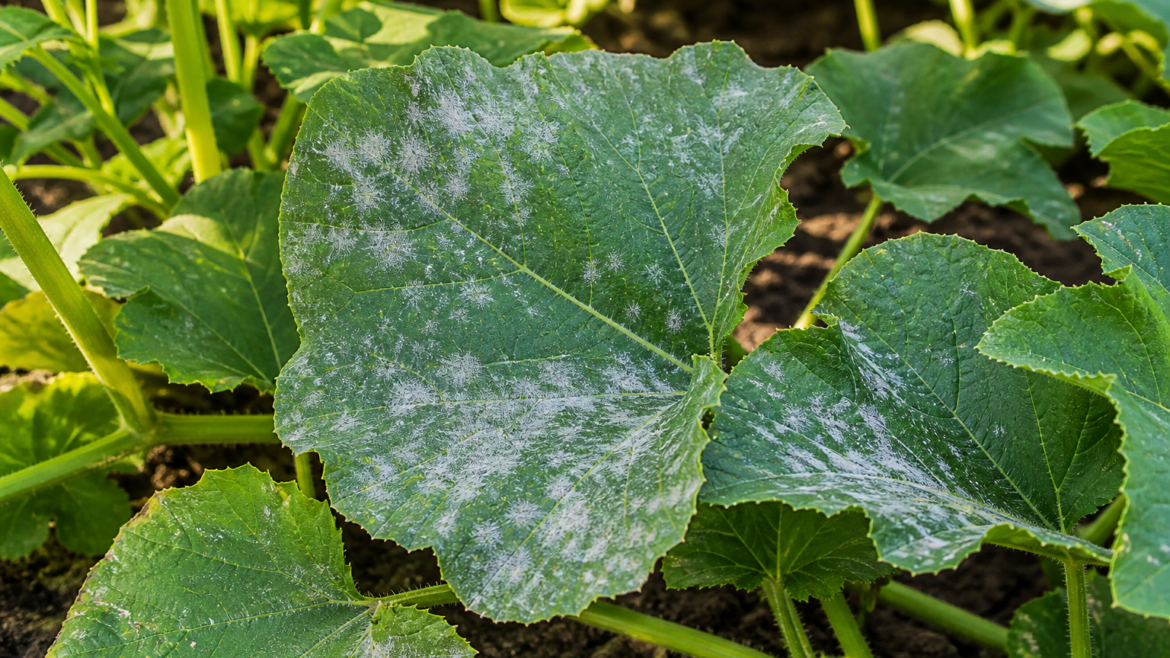
Powdery mildew is not one single organism. It is a group of related fungal diseases that create a similar sign: white to gray, powdery growth on leaves, stems, buds, and sometimes flowers. UC IPM describes white powdery growth on leaves and shoots as a sign of powdery mildew, with spots that can expand as infection grows.1 Clemson Extension notes that these diseases are caused by several closely related fungi, with a visible grayish-white mat on plant surfaces.2
The powder is not just residue sitting there after a windy day. It is fungal growth and spore production. On many plants it starts as small, pale, circular patches, often on older or lower leaves. If conditions favor it, those patches widen, merge, and give the leaf a dusty, cobwebbed, or felted look. Severe infections can yellow leaves, distort young growth, reduce flowering, and expose fruit to sunscald when leaves die back. Before calling every pale coating a disease, look at the tissue beneath it: the even, easily smudged powdery bloom on sound grapes and plums is a natural wax, not fungal growth.
The fungus lives mostly on the surface, but it is not superficial in its effect. Clemson explains that powdery mildew fungi develop structures that insert into plant cells to take up nutrients.2 That is why a leaf can look merely dusted at first, then gradually lose strength as the disease spreads.
Why it can appear in dry weather
Powdery mildew confuses gardeners because it does not behave like many other leaf diseases. Utah State University Extension notes that powdery mildew spores can spread and germinate without moisture, unlike many other fungi.4 Free water on the leaf is not the main invitation.
That is why mildew can show up after a stretch of warm days and humid nights. In a dense squash patch, the air inside the leaf canopy may stay moist and still even when the garden path feels dry. Utah State describes warm, dry weather with high evening humidity as favorable for rapid spread, especially among plants growing close together.4
Think of the plant canopy as a small room. If the room is crowded, shaded, and poorly ventilated, the fungus has a better chance. A wide-open leaf in moving air is a harder place to colonize than a lower leaf tucked beneath a green roof of vines.
Not every mildew threatens every plant
A white patch on one plant does not mean the whole garden is about to share the same disease. Powdery mildew fungi tend to have limited host ranges. Clemson makes the point plainly: powdery mildew on oak leaves should not automatically alarm a gardener about nearby zinnias.2 The symptom looks similar, but the fungus may be specialized.
That specialization is helpful in practice. If a lilac has a dusty film late in the season, nearby cucumbers are not necessarily infected by the same organism. If squash leaves turn white in July, the peony across the yard is not doomed by proximity alone. Good observation still matters, but panic spreads faster than spores.
Powdery mildew is common on many familiar garden plants: cucumbers, squash, pumpkins, roses, phlox, bee balm, zinnias, lilacs, dogwoods, and others. The pattern is broad, but the relationships are narrower than they first appear.
The cucurbit version
Vegetable gardeners often meet powdery mildew on cucurbits: squash, cucumbers, pumpkins, melons, gourds, and related vines. Utah State University Extension lists both Golovinomyces cichoracearum and Podosphaera xanthii among the powdery mildews of cucumbers, melons, summer squash, and winter squash. Older foliage is more susceptible and likely to be infected first.4
A mild amount of mildew late in the life of a summer squash is not always a crisis. By the time the oldest leaves are showing white patches, the plant may already have produced bowls of zucchini. But early or heavy infection is different. Heavily infected vegetable crops can lose enough photosynthetic leaf area to reduce yield and fruit size, while leaf dieback exposes fruit to sunscald.4
This is where the gardener’s response should be practical rather than dramatic. One leaf with early spots invites scouting and small corrections. A whole vine silvered over in white is telling you that next year’s plan should change: more space, more resistant varieties, better weed control around the vines, and less lush nitrogen-fed growth.
The garden mistakes that help it along
Powdery mildew is not proof that a gardener has failed. Spores travel easily, and a susceptible plant in the right weather may become infected despite decent care. Still, certain habits tilt the garden in the fungus’s favor.
Crowding is the common one. Plants that touch leaf to leaf create pockets of still air. Weeds around squash vines and roses do the same thing at ground level. Utah State recommends increasing plant spacing so that better air movement reduces humidity inside the canopy.4
Excess nitrogen is another quiet accomplice. It encourages soft, fast, young growth, which can be more vulnerable. Clemson cautions against over-fertilization with nitrogen because it stimulates succulent growth that is more susceptible to infection.2 A plant pushed into lushness is not always a stronger plant. Sometimes it is simply more tender.
Watering deserves nuance. Powdery mildew does not require wet leaves to infect, but overhead watering can raise humidity inside a dense canopy and keep the plant environment more favorable. Clemson recommends avoiding overhead irrigation because it raises relative humidity within the plant canopy.2 In a home garden, the simple version is this: water the soil, not the foliage, and do it early enough that plants do not sit in a humid tangle all night.
What to do when you first see it
Start by deciding whether the plant is worth intervention. A small amount of mildew on late-season foliage may be mostly cosmetic. For ornamentals, Utah State advises tolerating powdery mildew as an aesthetic problem; on a food crop, judge whether disease is reducing growth or exposing fruit.3
If infection is just beginning, remove the worst leaves if doing so will not strip the plant. Do not compost diseased leaves casually in a cool pile. Wisconsin Horticulture recommends removing and destroying infected plant debris at the end of the season because it can serve as a source of spores for the next year.5 In a small garden, the safest route is often the trash for badly infected material, especially if your compost never gets truly hot.
Then open the plant up. Prune lightly where appropriate. Move or tie stems so air can pass through. Pull weeds from under vines. Avoid splashing fertilizer around as a gesture of concern. A mildewed plant usually does not need encouragement to make more tender growth. It needs a less favorable microclimate for the fungus.
The limits of sprays
Sprays are where home garden advice often becomes too confident. A fungicide is not a magic eraser. Utah State advises applying fungicides when the first small white spots appear and notes that they become less effective once a whole leaf is colonized.3 An appropriate labeled product may protect healthy tissue or slow new infection when used early and correctly, but it will not make damaged tissue green again.
If you choose to use a fungicide, read the label, match it to the plant and disease, and follow timing, temperature, pollinator, and harvest restrictions. Clemson notes that fungicides are most effective when applied as soon as symptoms appear and that repeated sprays should rotate active ingredients to reduce resistance risk.2 That is especially important for powdery mildew because these fungi can adapt.
For many ornamental plants, accepting a little late-season mildew is wiser than entering a summer-long spray routine. For cucurbits that reliably lose productivity early, resistant varieties and better spacing are usually a more elegant first move than trying to rescue a crowded planting after the white film has taken hold.
Planning next year’s cleaner leaves
The best powdery mildew management often happens before the first white patch appears. Choose resistant or tolerant varieties where available. Cornell maintains disease-resistant vegetable variety lists, including cucurbit varieties marked for powdery mildew resistance.6 Resistance does not mean immunity, but it can reduce severity enough to keep the plant productive.
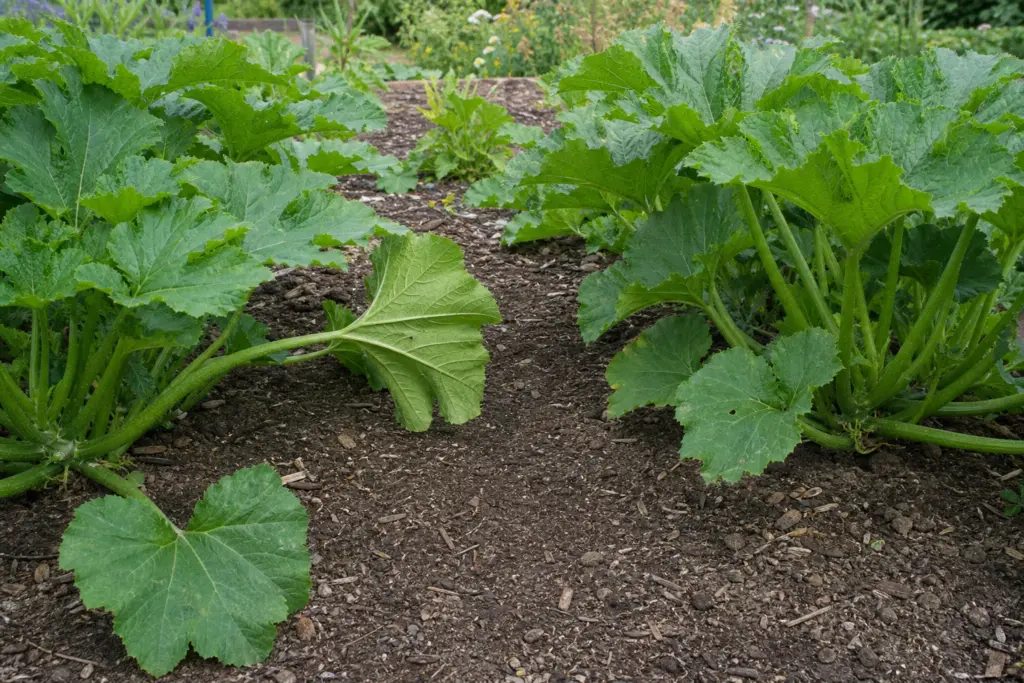
Give air room to work. A squash seedling looks lonely at transplanting, but a mature plant can become a green tent. Space for the adult plant, not the baby. Site mildew-prone plants where morning light reaches them and where hedges, fences, and walls do not hold still air around the foliage. Keep weeds from becoming a second canopy under the crop.
At the end of the season, clean up deliberately. Remove badly infected debris. Do not leave old mildewed vines draped over the bed all winter. If a particular variety was hit hard year after year, treat that as information. The plant has told you something about your garden’s microclimate and its own genetics.
Useful powdery mildew scouting supplies
- Carson MicroBrite Plus pocket microscope: useful for looking closely at surface texture when a pale leaf mark might be fungal growth, normal variegation, or dried residue; magnification alone cannot confirm the pathogen.
- Felco F-2 hand pruner: a durable bypass pruner for thinning crowded ornamentals, removing infected stems, and opening dense growth where airflow is poor.
- Dramm One Touch rain wand: a gentle watering wand that makes it easier to water at soil level around tender plants without blasting leaves or compacting the surface.
Final thoughts
Powdery mildew is easy to dislike because it makes a healthy garden look suddenly careless. But it is also readable. It marks places where air is still, where leaves are aging, where a variety is susceptible, where nitrogen may have pushed growth too soft, or where a planting has become denser than the gardener imagined in May.
The white dust is not a command to panic. It is a message written on the leaf surface. Sometimes the right answer is to remove a few leaves and improve airflow. Sometimes it is to tolerate the blemish and keep harvesting. Sometimes it is to make a note for next year: choose a better variety, plant farther apart, and let the summer garden breathe.
References
- UC IPM: Powdery Mildew on Vegetables
- Clemson Cooperative Extension HGIC: Powdery Mildew on Landscape and Garden Plants
- Utah State University Extension: Powdery Mildew
- Utah State University Extension: Powdery Mildew on Vegetables
- Wisconsin Horticulture Extension: Powdery Mildew, Vegetables
- Cornell Vegetables: Disease-resistant cucurbit varieties