
On a bright December afternoon, a young tree trunk can seem to be enjoying the only warm thing in the garden. The beds are flat, the hose is asleep, and the mulch is edged with frost, but the low sun lands on one side of the bark with surprising force. If there is snow on the ground, the light comes twice: once from the sky and again from below.
That winter light looks harmless. It is not a July heat wave. The air may still be below freezing. Yet for a thin-barked tree, especially a newly planted maple, linden, honeylocust, crabapple, cherry, pear, or young shade tree, this is one of the oddest ways winter can injure living tissue. The trunk can be warmed into activity by afternoon sun, then shocked by a fast freeze after sunset.
The result is often called sunscald, southwest injury, or winter sunscald. It sounds like sunburn, and that is close enough to make the idea memorable, but the actual damage happens under the bark. Living cells in the inner bark and cambium lose the hard winter stillness that was protecting them. Then the temperature drops, and those cells are killed. The split in the bark may not show itself until later. By then, the tree has already kept the receipt.
Why the southwest side matters
Winter sunscald has a favorite direction. University of Minnesota Extension describes it as injury to bark caused by the heating effect of winter sun, usually on the south or southwest side of the tree.1 PlantTalk Colorado uses the same plain name for the pattern: southwest injury, most common on young tree trunks.3
The reason is geometry. In December, the sun rides low. It does not pour down from overhead as it does in summer. It strikes the side of the trunk. The south and southwest faces catch the strongest afternoon light, especially in open yards where the young tree has not yet grown enough canopy to shade itself. Snow can amplify the effect by reflecting light back toward the bark.
Utah State University Extension notes that the south side of a tree can be much warmer than the north side on a cold winter day, and that warmed cells can become active, lose cold hardiness, then be injured when temperatures fall below freezing at night.2 That is the whole trap. The air temperature may not sound alarming. The bark temperature is telling a different story.
This is why the damage can look so one-sided. A tree may appear normal from the north and injured from the southwest. The plant did not choose one side to fail. One side was heated, awakened, and frozen more violently than the rest.
A bark problem that begins as a cell problem
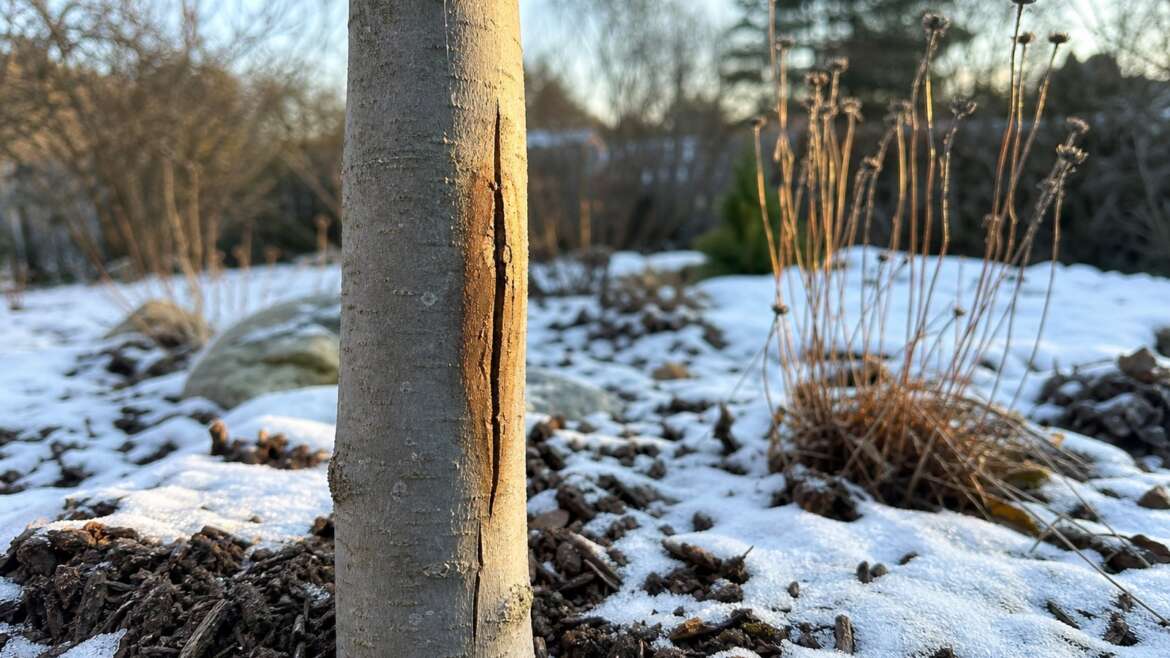
It is tempting to think of sunscald as a crack first. That is the part a gardener sees. But the crack is often the announcement, not the beginning. The first injury is to the cambium and inner bark, the living tissue that helps the tree grow outward and move resources around the trunk.
PlantTalk Colorado explains that intense winter sunlight can cause cells on the sunny side of a deciduous trunk to come out of dormancy and become active, after which a rapid temperature drop kills active cells and conductive tissue.3 Later, this may appear as sunken, discolored bark. Sometimes the bark splits vertically. Sometimes it loosens and sloughs away in plates. Sometimes the damage is not obvious until spring growth makes the dead patch more visible.
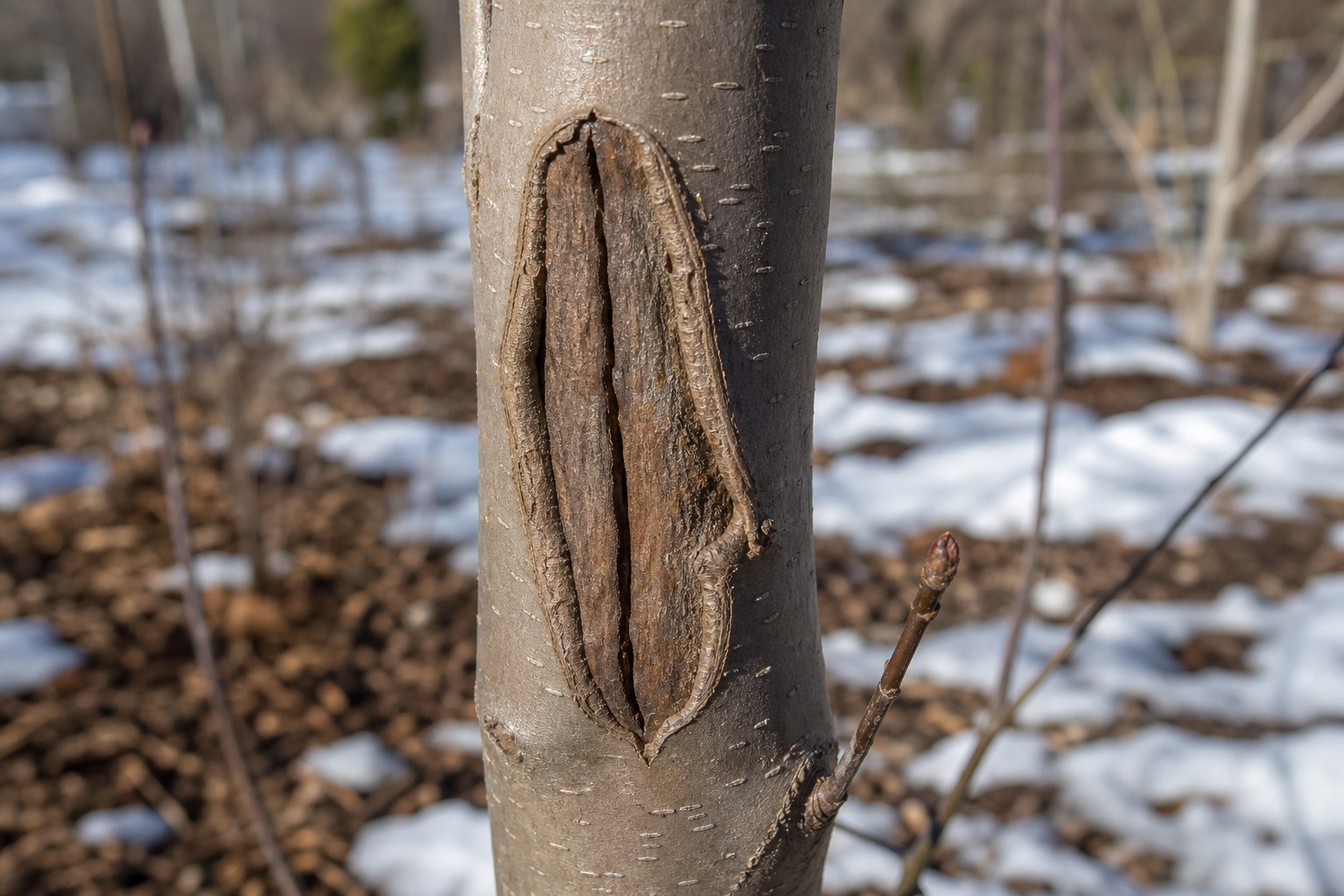
Frost cracks are related enough to be confusing. A frost crack is a long vertical split, often associated with rapid temperature changes and internal stress in the trunk. Sunscald can lead to the kind of dead, weakened strip where cracking later becomes obvious. In the home garden, the exact label matters less than the pattern: young or thin bark, winter sun, south or southwest exposure, and a vertical wound that tells you the trunk has been through a freeze-thaw argument.
Which trees are most likely to show it
Thin bark is beautiful until it has to be armor. Young trees have not yet developed thick, corky, shaded trunks. Many popular garden and street trees also have naturally smooth bark for years. University of Minnesota Extension specifically points to young and thin-barked trees as needing winter trunk protection, with species such as maples and honeylocusts sometimes needing protection for several years.4
Fruit trees deserve special attention. Apples, pears, cherries, peaches, and plums are often planted in open, sunny spots where winter light is strong and reflected from snow or pale mulch. A young fruit tree may also have a relatively small canopy, so the trunk is exposed just when it most needs shade. The same problem can show up on ornamental cherries, crabapples, lindens, young maples, and recently transplanted shade trees.
Stress does not help. A tree that went into winter thirsty, newly planted, root-damaged, over-mulched against the trunk, or pushed into soft late growth by excess nitrogen is less prepared for extremes. Sunscald is not a punishment for one missed chore. It is usually a meeting between vulnerable bark and a sharp winter microclimate.
What to look for before blaming pests
Sunscald can look dramatic enough to make gardeners suspect borers, disease, rabbits, or mysterious rot. Those are real possibilities, but the location is a useful clue. Look on the south and southwest side first. A sunken strip, discolored bark, a vertical fissure, or bark that begins to loosen along one side of a young trunk all fit the pattern.
Arkansas Cooperative Extension describes later-stage sunscald as a classic vertical fissure down to the interior wood, sometimes with healthy wound closure beginning along the margins.6 That wound closure is important. Trees do not heal like skin. They grow new tissue around injuries and isolate damage. If the margins are firm and rolling inward over time, the tree is trying to wall off the problem.
Do not ignore animal damage. Rabbits and voles can chew bark near snow level. Deer can rub trunks. String trimmers can leave a clean mechanical wound low on the trunk. The sunscald pattern tends to be vertical, one-sided, and tied to exposure. Animal and tool damage often has different edges. A careful look usually tells a better story than panic.
Prevention is much easier than repair
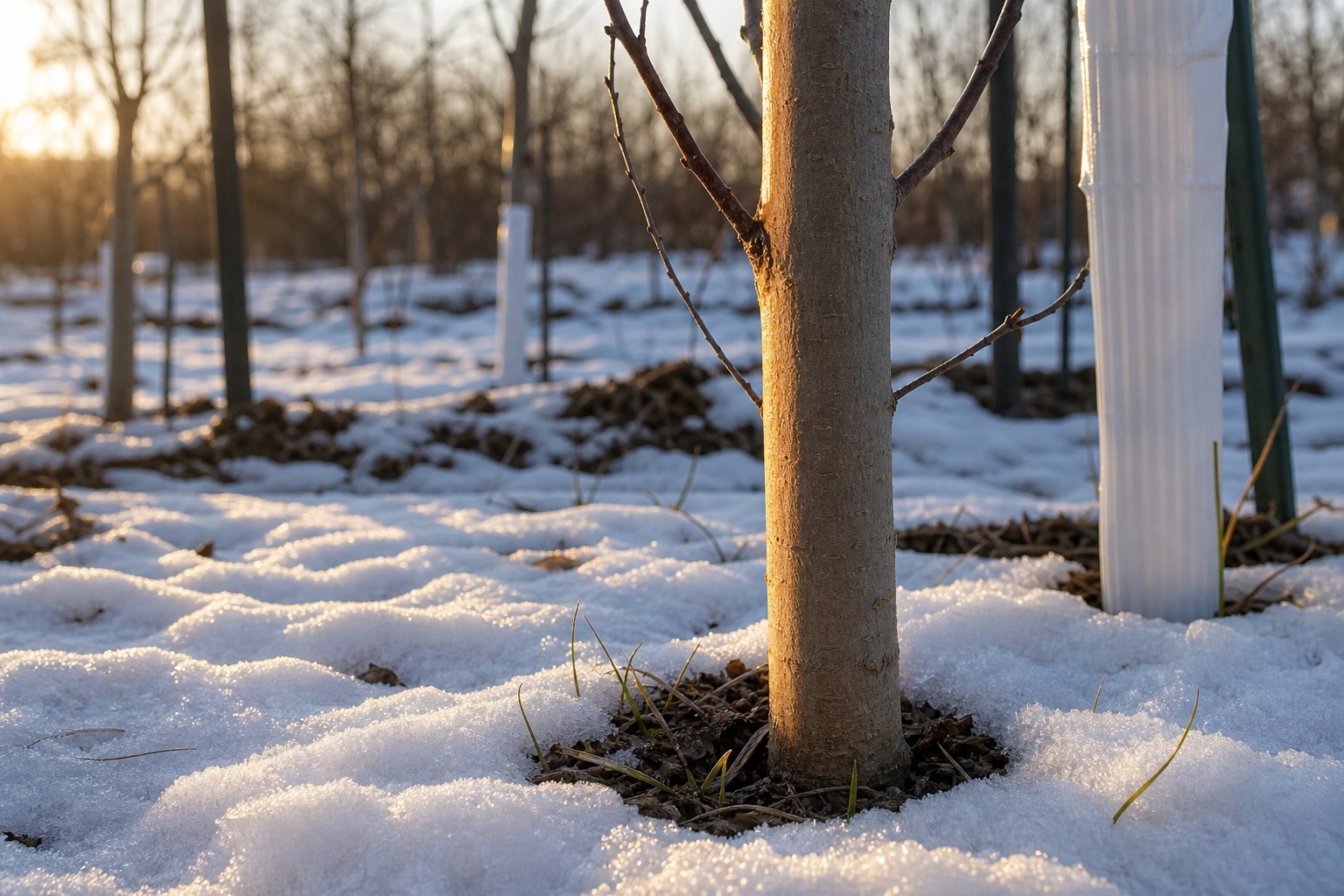
The cleanest solution is to keep the trunk from overheating in winter. University of Minnesota Extension recommends white commercial tree wrap or plastic tree guards to reflect sun and keep bark temperature more constant, with wraps applied in fall and removed in spring after the last frost.1 The color matters. White reflects. Dark material absorbs heat and can make the problem worse.
Wrap newly planted and young thin-barked trees from the soil line up to the first major branch. Overlap enough that light does not strike bare strips of bark, but do not bind the trunk tightly. A guard that becomes too tight can create a different injury by girdling the tree. Check it each year. A trunk expands quietly, and plastic does not always remember to be polite.
Timing matters because wraps are winter tools, not year-round decorations. Put them on after the tree is hardening off in fall. Remove them in spring. Leaving wraps on through warm, wet weather can hide insects, trap moisture, or simply prevent you from seeing what the trunk is doing. The goal is a seasonal shield, not a permanent sleeve.
Mulch helps, but only when used like mulch rather than architecture. A broad, shallow ring of wood chips can moderate soil temperature, reduce mower damage, and help conserve moisture. Keep it a few inches away from the trunk. A mulch volcano against young bark creates damp, sheltered conditions for rodents and decay organisms. The trunk flare should breathe.
What not to do once the trunk is damaged
Once a trunk has a sunscald wound, the gardener’s hands become dangerous. The urge to seal, paint, fill, tape, or trim the wound into neatness is strong. Resist most of it.
Purdue Extension explains that trees close wounds by forming wound wood at the edges and that wound dressings can slow closure rather than help it.5 Mississippi State University Extension makes the same point bluntly: tree wounds usually should be allowed to seal through the tree’s natural processes, and paint or tar-like products can interfere with callus formation and compartmentalization.7
If bark is loose and already dead, you can remove pieces that come away easily, but do not cut into healthy tissue trying to make a prettier edge. Do not pack the crack with anything. Do not bridge it with tape. Keep mulch away from the trunk, water during dry spells, and protect the tree from further injury. A small wound on a vigorous young tree may close gradually. A large wound that wraps far around the trunk, weeps badly, softens, or compromises structure deserves a qualified arborist’s opinion.
The December habit that saves trunks
By mid-December, the garden is quiet enough that trunks are easy to inspect. Walk the young trees before snow gets deep. Find the south and southwest sides. Look for existing injury, tight guards, mulch piled against bark, and rabbit access at expected snow height. If a tree needs protection and does not have it yet, a white guard or wrap can still be useful before the brightest late-winter days arrive.
This is not fussy gardening. It is a small adjustment to winter physics. The same sun that lifts your mood on a cold afternoon can wake a strip of bark too soon. The same snow that protects roots can reflect light into a young trunk. The same tree that looks dormant is still alive in layers.
A winter garden is full of hidden temperatures. Air, bark, snow, mulch, wood, and soil do not all agree with one another. Sunscald is what happens when that disagreement is written vertically on a young tree. Catch the pattern early, and the solution is wonderfully plain: shade the vulnerable bark, let the tree mature, and give winter one less way to leave a mark.
References
- University of Minnesota Extension: Protecting trees and shrubs in winter
- Utah State University Extension: Sunscald Injury or Southwest Winter Injury on Deciduous Trees
- PlantTalk Colorado: Sunscald of Trees
- University of Minnesota Extension: Planting and transplanting trees and shrubs
- Purdue Extension: Tree Wounds and Healing
- Arkansas Cooperative Extension Service: What is sunscald on trees?
- Mississippi State University Extension: Tree Wounds: Should They Be Repaired?