
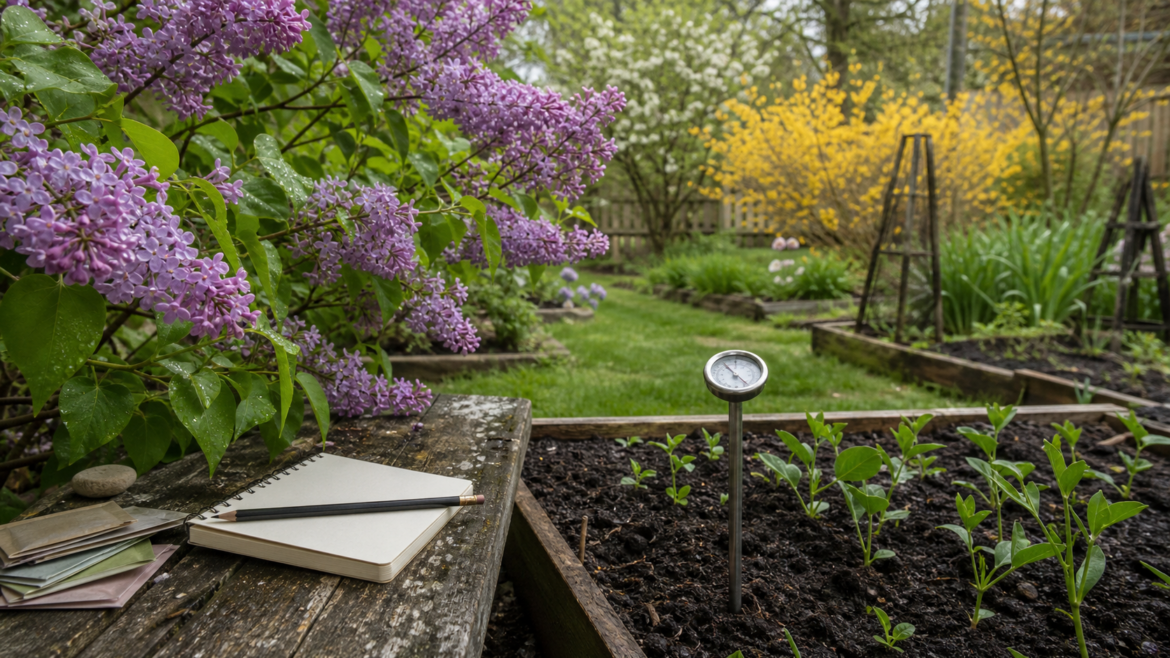
Every spring has two calendars. One hangs on the wall and moves forward one square at a time. The other opens unevenly in the garden: snowdrops first, then maple bloom, then forsythia, then the first lilac flowers, then the moment when peas stop sulking and beans begin to make sense.
Gardeners get into trouble when they trust only the first calendar. April 25 can be warm enough for shirtsleeves in one year and raw enough for numb fingers in the next. A planting date printed on a seed packet is useful, but it cannot know your slope, your shade, your brick wall, your wind, your wet clay, or the cold pocket at the bottom of the yard.
Phenology gives the gardener a better habit. It is the practice of watching recurring life events in relation to weather and season: bud break, flowering, insect emergence, bird migration, fruit ripening. The USA National Phenology Network defines phenology as the study of timing and cyclical patterns in the natural world, especially annual life-cycle events in plants, animals, and other living things.1 In a garden, that means the plants are not just decorations. They are clocks.
A calendar with roots
Phenology is old knowledge with modern instruments. Long before weather apps, people watched flowering, leafing, frost, insects, and animal behavior because those patterns mattered for planting, harvesting, hunting, travel, and ceremony. The USA National Phenology Network notes that phenology informs decisions such as when to plant, fertilize, and harvest crops, and that it helps researchers understand how living organisms respond to cues such as day length, temperature, and rainfall.1
That last phrase is important. Phenology is not folklore in opposition to science. It is observation sharpened by repetition. When forsythia blooms, it is not magically granting permission to do a garden chore. It is responding to conditions in that place, including accumulated warmth. The useful question is not, “What date is it?” but “What has the season actually done?”
This is why phenology feels so satisfying in spring. The garden stops being an anxious checklist and becomes a set of cues. If the soil is still cold, the calendar can wait. If the lilacs are opening early, look more closely. If the same bed warms faster than the rest of the yard every year, that is not trivia. That is local knowledge.
What lilacs and forsythia are really saying
Gardeners love old indicator sayings: plant potatoes when dandelions bloom, plant corn when oak leaves are the size of a squirrel’s ear, watch for crabgrass when forsythia fades. Some are more useful than others, and none should be treated as law across every climate. The better way to use them is as prompts for observation.
When forsythia flowers, ask what else is happening. Are weeds germinating in paths? Are maples shedding flowers? Are aphids appearing on tender growth? Is the vegetable bed warming or merely looking workable on top? One plant signal becomes more useful when it is joined to several others.
Professional pest managers use a more formal version of the same idea. University of Maryland Extension’s Pest Predictive Calendar uses plant phenological indicators and growing degree days to predict when vulnerable pest life stages are active, improving the timing of monitoring and management.2 A homeowner does not need to turn the garden into a spreadsheet, but the principle is worth borrowing: scout when the season says the pest is likely, not only when a calendar reminder appears.
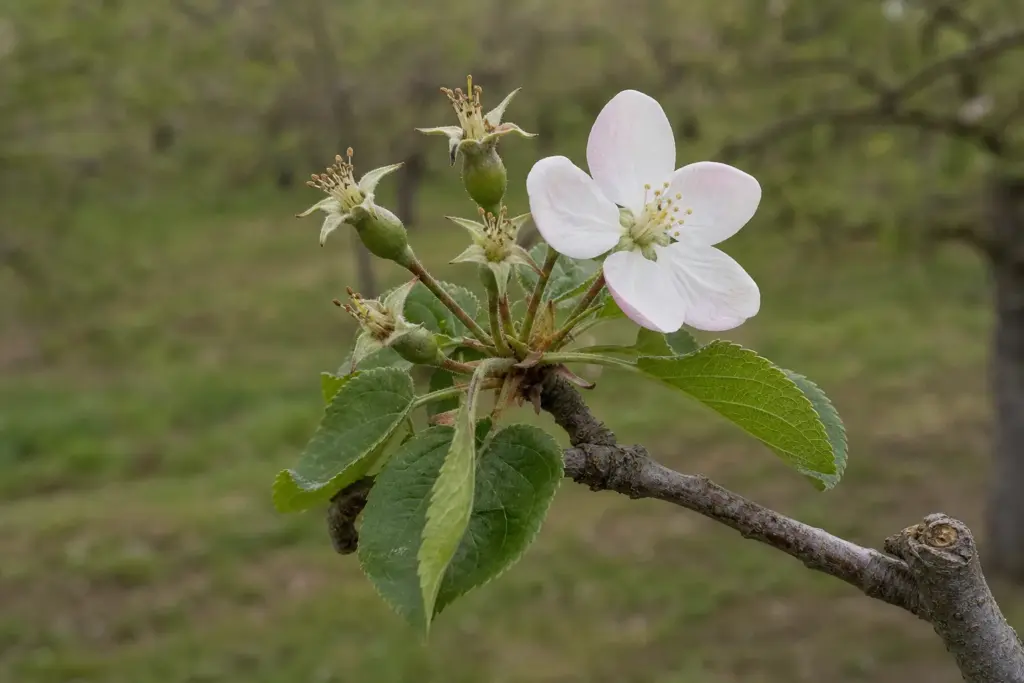
Lilacs are especially useful because they are conspicuous, familiar, and long observed. Record first leaf, first flower, full bloom, and petal fall for a shrub you pass often. After a few years, you will know how much that shrub’s spring timing varies at your site. Compare it with regional observations before calling the whole season early or late.
The hidden heat behind the cues
Phenological events often track accumulated warmth. That is where growing degree days, usually shortened to GDD, enter the picture. Iowa State University Extension describes growing degree days as a practical, science-based way to track plant and pest development, because temperature is one of the main drivers of biological growth.3
The basic idea is simple. A GDD model uses a lower temperature threshold—a base temperature—below which the modeled development is treated as slow or stopped. Because species differ, the base used for one crop or insect may not fit another.3 As daily temperatures rise above that base, heat units accumulate. Plants unfold leaves, insects move through life stages, and flowering sequences advance. University of Maryland Extension explains degree days as a measure of warmth accumulated above a threshold, used because insect development is closely tied to temperature.4
Gardeners do not have to calculate every value by hand. Many states and universities provide degree-day tools or pest calendars. Still, the concept helps even without a calculator. A week of sunny afternoons and cold nights does not equal a week of steady warmth. A south-facing bed can be far ahead of a shaded border. A city garden may wake earlier than a rural one nearby. The calendar sees one date. Plants feel accumulated conditions.
Soil temperature is part of the story
Air temperature seduces gardeners into mistakes. A warm afternoon makes beans, basil, tomatoes, and dahlias feel possible. The soil may disagree. Seeds do their first work underground, where cold, wet conditions can slow germination, encourage rot, and leave seedlings stressed before they ever see sunlight.6
Oregon State University Extension’s soil temperature table shows how strongly germination depends on temperature. Lettuce can germinate in cool soil, while beans, cucumbers, peppers, squash, and watermelons need much warmer conditions.5 In related guidance for Oregon, Weston Miller advises that cool-season vegetables can often be planted when soil reaches about 50 degrees F, while warm-weather plants generally need soil of at least 60 degrees F, with tomatoes preferring 65 to 70 degrees F. Treat those figures as regional starting points rather than guarantees; crop, site, drainage, forecast, and frost risk still matter.6
This is where phenology becomes practical instead of romantic. If lilacs are blooming but the bean bed is still cold and heavy, wait. If peas are up, chickweed is racing, and the soil thermometer says 50 degrees F in the morning, sowing cool-season crops is no longer just optimism. It is an informed bet.
How to keep a small phenology record
The best record is the one you will actually keep. A beautiful journal that demands a page a day is less useful than five repeated notes made in the same place every spring. Choose a few reliable markers in or near your garden: a lilac, a forsythia, a maple, a crabapple, a patch of dandelions, the first bumblebee on lungwort, the first cabbage white butterfly, the first asparagus spear, the first tomato transplant that does not sulk. If you want those notes to contribute beyond your yard, our guide to becoming a phenology observer explains defined phenophases and repeatable reporting.
Write the date, the cue, and one useful garden decision. “Forsythia full bloom. Weed seedlings visible in gravel path. Check mulch and hoe onion bed.” “Lilac first flower. Soil 54 degrees F at 9 a.m. Sow second row of peas.” “Apple petal fall. Begin weekly fruit inspection.” These notes become valuable because they are local and repetitive.
A photograph helps too. Stand in the same place and take one image each week from late winter through early summer. Over time, the sequence will show what memory blurs: which border wakes first, which tree flowers while frost still threatens, which bed stays wet, and which chores always arrive together.
Use cues without becoming superstitious
Phenology is not a replacement for judgment. A plant cue can be shifted by pruning, cultivar, disease, drought, irrigation, reflected heat, or a sheltered wall. A lilac in town may bloom before one on an exposed hillside. A forsythia against brick may not speak for the vegetable bed twenty yards away.
That is why the best gardening decisions combine three kinds of evidence: living cues, measured conditions, and memory. Living cues tell you where the season is. Measured conditions, such as soil temperature and rainfall, keep you honest. Memory tells you what happened last time you rushed.
Use phenology as a conversation with the garden, not a commandment. If a signal says “look now,” look. If the soil says “not yet,” listen. If a pest calendar says a vulnerable stage is likely, scout before spraying. The goal is not to control spring. It is to stop being surprised by the same spring patterns every year.
Useful phenology supplies
- AcuRite soil thermometer: useful for checking morning soil temperature before sowing beans, corn, basil, cucumbers, and other warm-season crops.
- Rite in the Rain pocket notebook: a compact weather-resistant notebook for recording first bloom, first leaf, soil temperature, pest sightings, and planting decisions.
- A 10x hand lens: helpful for checking buds, aphids, eggs, mite webbing, leaf undersides, and the small signs that make scouting useful.
Final thoughts
A garden phenology habit begins quietly. You notice the lilac, take the soil temperature, write down what you planted, and move on. The first year, it may feel like bookkeeping. By the third year, it starts to feel like fluency.
The reward is not perfect prediction. Spring will still make a fool of tidy plans. The reward is attention. The garden stops being a place where the calendar is imposed from outside and becomes a place where time is visible: in buds, roots, insects, warmth, scent, and the small green decisions that arrive before we are ready.
References
- USA National Phenology Network: Why phenology?
- University of Maryland Extension: Pest Predictive Calendar
- Iowa State University Extension: Using growing degree days to manage the home garden
- University of Maryland Extension: Growing degree days
- Oregon State University Extension: Soil temperature conditions for vegetable seed germination
- Oregon State University Extension: Patience pays off when planting vegetables