
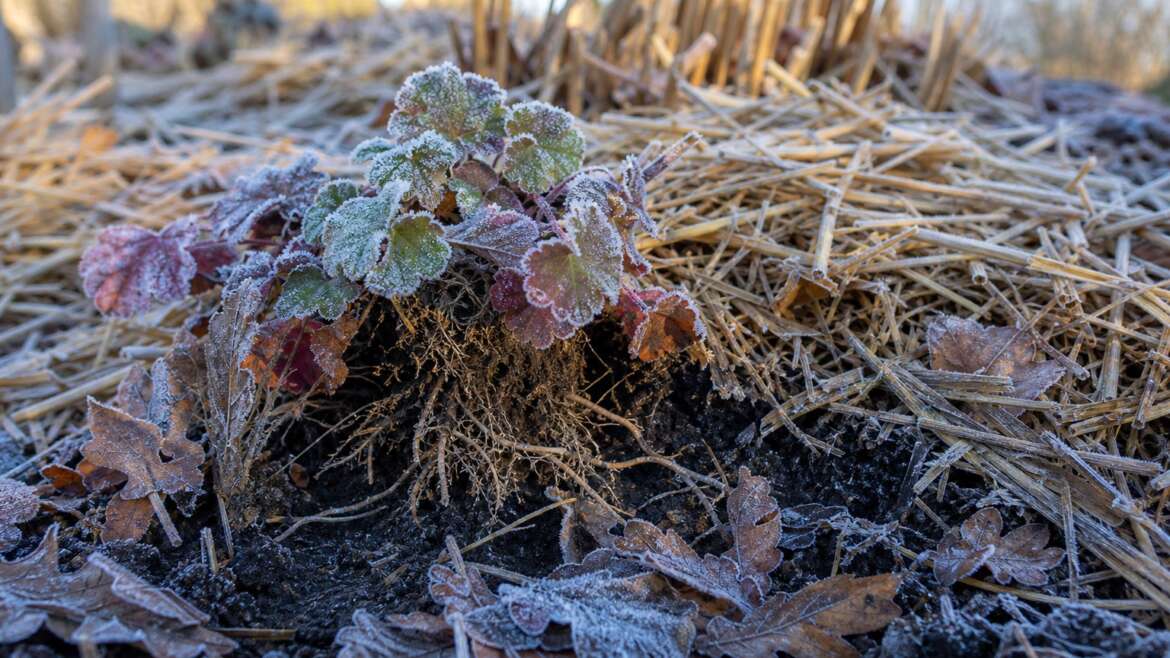
A late-autumn garden in a cold-winter climate can look settled after the first hard frosts. The stems have gone quiet. Leaves are pressed flat by rain. The soil darkens, firms, and seems to have closed the season. Then, one morning, a perennial appears to be sitting too high, its crown pushed above the bed as if the ground has exhaled underneath it.
This is frost heave. It is not a pest, not a disease, and not always the result of careless planting. It is soil movement. Repeated freezing and thawing can lift shallow-rooted plants upward, exposing crowns and roots to cold, dry air. A plant that was properly tucked in during autumn can be partly unseated later in winter.
The problem is easy to miss because it happens slowly. Winter does not always arrive as one clean freeze. It pulses. A freezing front moves down through the upper soil, thawing soil settles, and the ground freezes again. A small plant held inside that moving layer may travel with it. By spring, the gardener sees a crown perched above the soil and wonders who pulled it up. The answer is weather, water, soil, and time.
The ground is not still
Frost heave is not simply the expansion of water already trapped in soil pores. In frost-susceptible soil, liquid water can move from unfrozen ground toward the freezing front and collect as layers of segregated ice, often called ice lenses. As those lenses grow, they lift the soil above them. A U.S. Geological Survey account of frost heave explains that this upward movement is caused mostly by such ice segregation rather than by the expansion of in-place pore water alone.1
When the surface thaws, it does not always settle exactly where it was. Iowa State University Extension describes repeated freezing and thawing as a process that can lift perennials out of the ground, exposing crowns and roots to cold, dry air.2 Missouri Botanical Garden gives the same practical warning: shallow-rooted perennials and recent plantings are especially prone to being pushed upward before they have enough root mass to hold themselves in place.3
That is why the trouble often shows up around coral bells, garden mums, Shasta daisies, blanket flowers, strawberries, scabiosa, and young divisions. These plants are not weak. They are simply easier for winter to lever upward when their roots occupy the upper few inches of soil.
The injury is usually drying
It is tempting to think of winter injury as cold alone, but roots exposed by heaving often suffer from drying as well as freezing. Roots are not built to live in open air. Fine feeder roots can break as the plant is lifted, and the remaining exposed roots can dry in wind and sun. A heaved plant may look alive in early spring, leaf out weakly, and then collapse when the damaged root system cannot support new growth.
Purdue Extension notes that repeated freezing and thawing can force smaller plants upward, sometimes out of the soil altogether, and that exposed roots and shoots may dry after fine roots are broken.4 That delayed failure is what makes frost heave so frustrating. The plant can seem to have survived winter, then fail when spring asks it to grow.
Keep two moisture-related risks separate. Purdue reports that direct cold injury to roots is more likely in dry soil and can extend deeper in sandy soil, while frost heave itself requires a supply of water as well as freezing temperatures and susceptible soil.41 Saturating a bed is therefore not the answer. If autumn has been dry and the soil is still workable, water according to the plant’s needs; the aim is an evenly moist, freely draining root zone rather than either dust or standing water.
Winter mulch is about steadiness
Summer mulch is often discussed as a way to conserve water, suppress weeds, and keep soil cooler. Winter mulch has a different job. It is not simply a blanket for warmth: it buffers abrupt temperature changes in the upper soil, helps plants remain dormant, and can insulate them against severe cold.5
This timing matters. Purdue’s winter mulch guidance warns that applying mulch too early can smother plants and encourage disease. For its Midwestern audience, it recommends waiting until plants are dormant and temperatures are consistently below freezing before applying 2 to 4 inches of organic material.5
Iowa State gives a similar regional cue, suggesting about four inches of mulch over susceptible crowns after the ground freezes, typically by late November in much of Iowa.6 Missouri Botanical Garden recommends applying organic mulch after a hard frost and cautions against burying the plant’s crown as the mulch goes down.3 In milder or maritime climates, use dormancy and sustained local cold rather than an Iowa calendar date.
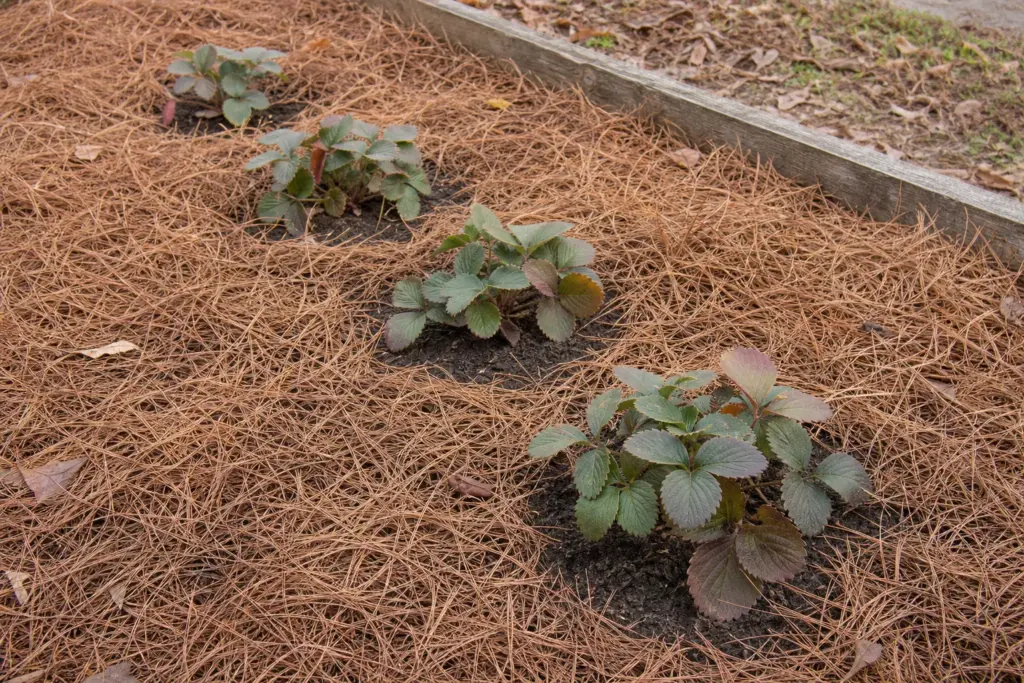
The goal is not to tuck the plant under a damp, airtight cap. It is to buffer the soil surface. Clean, weed-free straw, pine needles, or light bark chips can settle around susceptible plants while leaving crowns uncovered. Keep the layer loose and use only as much as local guidance and the plant’s winter hardiness call for.
Drainage matters before mulch does
Mulch helps, but it cannot rescue every site. Missouri Botanical Garden puts drainage first in frost-heave prevention and warns against pooled water in planted beds.3 Water supply is one ingredient in frost heave, but soil texture, pore structure, temperature, and drainage all shape what happens; a wet bed is not automatically a heaving bed.
This part of winter protection begins long before the first freeze. Low spots, compacted or fine-textured soil, and places where roof runoff spills into a border can keep the root zone wetter than the plants tolerate. Improve the cause rather than piling on more mulch: redirect runoff, avoid working wet soil, use raised planting where appropriate, or choose plants suited to the site’s drainage. A plant may be hardy enough for the climate but poorly matched to one wet pocket.
Planting depth also matters. A crown set too high is already exposed; one buried more deeply than the species tolerates may decay. Set a perennial at its recommended depth, spread its roots into firm soil, settle soil around the root ball without leaving large voids, and keep winter mulch loose rather than packed over the crown.
Which plants deserve a cold-season check
You do not need to winter-mulch every established perennial in a hardy, well-drained garden. Many plants are better left with their own stems, fallen leaves, and an insulating snow cover doing the work. The plants at greater biological risk are shallow-rooted, newly planted, recently divided, or borderline hardy for the site; you may also choose to watch a difficult-to-replace plant more closely.
Iowa State lists garden mums, Shasta daisies, painted daisies, and coral bells among perennials prone to heaving, and notes that late-summer or early-fall plantings are vulnerable because they have not developed extensive root systems.2 Missouri Botanical Garden also names strawberries, heuchera, scabiosa, leucanthemum, gaillardia, and bergenia as plants with shallow root systems that may be susceptible.3
Check those areas after major thaw-and-freeze swings and again as snow recedes. You are not looking for perfection. You are looking for plants that have lifted, tilted, or opened a gap between crown and soil. The earlier you notice, the easier the repair.
What to do if a plant has heaved
If the soil is thawed and workable, reset the plant gently at its original planting depth rather than pressing down on the crown. Firm loose soil around the root ball, cover exposed roots, and replace a light layer of mulch. If the ground is frozen hard, do not force the plant down or bend frozen roots. Shield exposed roots with loose soil if it is available, or with mulch as a temporary measure, and return when the ground softens.
Missouri Botanical Garden recommends monitoring susceptible plants because mulch can hide an exposed crown, and covering exposed roots with soil before reapplying mulch when a problem is found.3 The word “monitoring” sounds plain, but it is the real winter skill. The gardener who checks only once at the start of winter may miss the small repair that saves a plant.
In spring, remove excess winter mulch gradually as the top layer of soil thaws. Iowa State’s guidance for Iowa is to remove the extra mulch blanket when the surface layer thaws, typically around mid-March there.6 Treat that date as regional, not universal. Pull material back before emerging shoots are trapped; re-cover only a specifically frost-sensitive plant when a damaging freeze is forecast.
Optional frost-heave supplies, with caveats
Most gardeners can time winter mulch by watching plant dormancy and local weather. These products are optional conveniences, not requirements, and clean local mulch may be more practical than a shipped bag.
- REOTEMP soil and compost thermometer: a 12-inch probe for occasional checks as soil cools. Its advertised scale begins at 32°F, so it cannot measure subfreezing soil; sustained cold and plant dormancy are the more useful cues.
- HealthiStraw GardenStraw: cleaned wheat-straw mulch that can make a loose winter layer. A few wheat seeds may remain, and the material should stay away from crowns and stems.
- USA Pinestraw long-needle pine-straw mulch: packaged pine needles for a light layer that is easy to pull back in spring. Use only clean material and keep it loose around crowns.
Let winter be boring
The best winter protection is not dramatic. It is not a mound piled high over every crown or a garden wrapped so tightly that no air moves. It is steadiness: good drainage, plants set at the right depth, newly planted or drought-stressed plants watered as needed before the soil freezes, loose organic material added after sustained cold where it is needed, and a quiet check after weather swings.
There is a useful humility in this. We cannot make winter gentle, and we should not try to keep a hardy perennial in a false autumn. What we can do is moderate abrupt changes at the soil surface where the climate allows, keep roots covered, and avoid making a wet site wetter.
When a plant rises from the bed in winter, it is not being mysterious. It is showing you that the ground itself is part of the garden’s weather. Notice it, reset it when the soil allows, and make the surface a little steadier. Sometimes that is enough to carry a crown safely into spring.
References
- U.S. Geological Survey: Frost heaving of piles with examples from Fairbanks, Alaska
- Iowa State University Extension: Which perennials are most likely to be heaved up out of the ground in winter?
- Missouri Botanical Garden: Frost heaving
- Purdue Extension: Effects of Cold Weather on Horticultural Plants in Indiana
- Purdue Consumer Horticulture: Mulch for winter protection
- Iowa State University Extension: How should I prepare my perennial beds for winter?