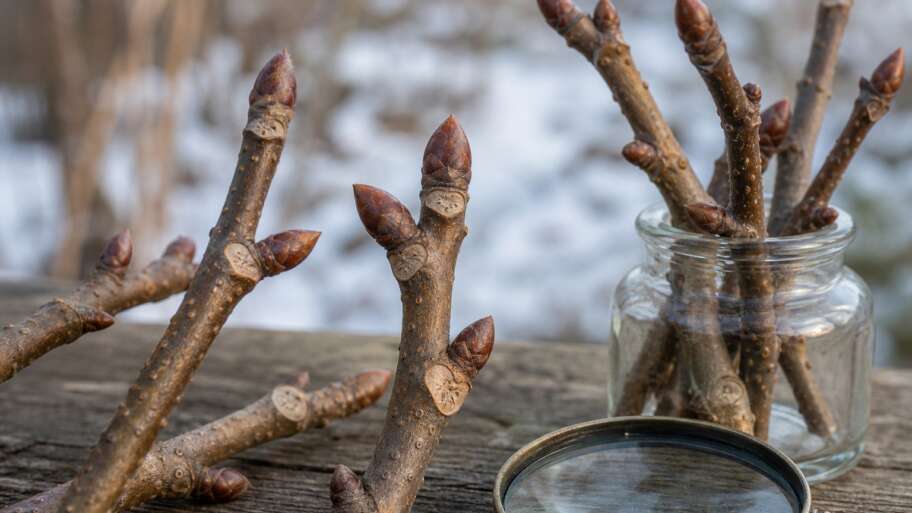

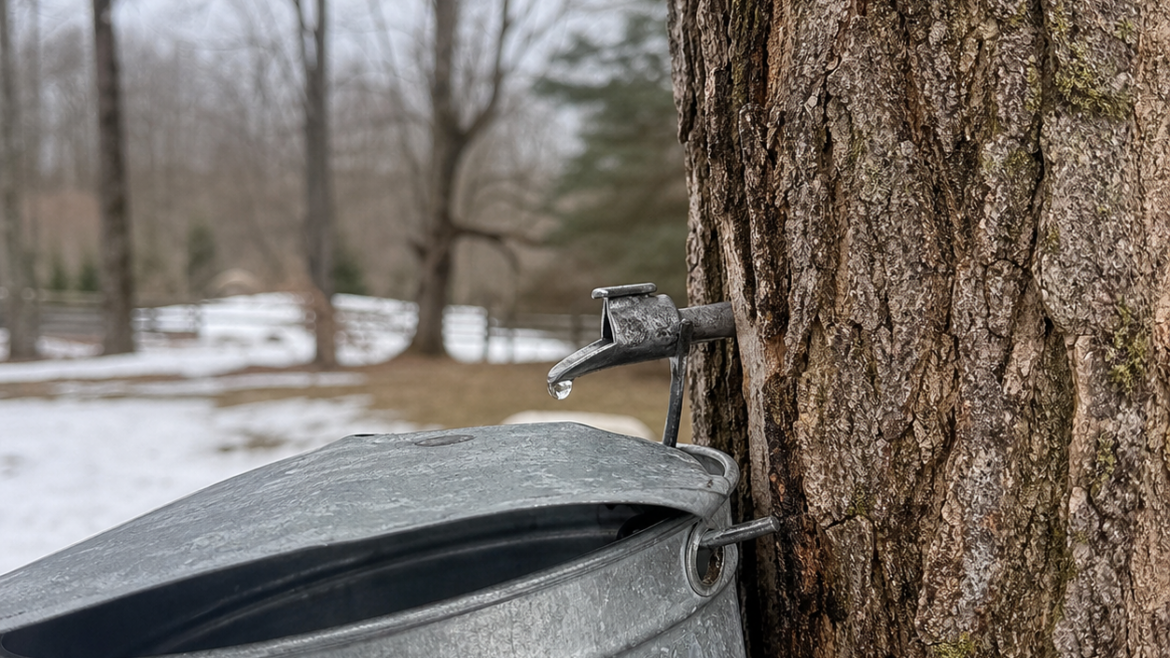
On a cold February morning, a maple with a bucket on it can sound more awake than the rest of the garden. The beds are still flat. The lawn is patched with old snow. The buds on the branches look tight and undecided. Then, from a small metal spout in the bark, a clear drop gathers, falls, and ticks against the bottom of the pail.
That drop is not syrup yet. It is barely sweet, almost watery, and easy to mistake for nothing important. But it is one of the better winter lessons a tree can offer. Before a maple has leaves, before the canopy has begun to shade the soil, the trunk can build pressure, move stored sugar, and send sap through wood that looked completely still the day before.
This is why maple season feels like a small contradiction. The tree is dormant enough to look asleep, but not inert. It is waiting inside a weather machine made of freezing nights, thawing days, stored starch, gas bubbles, living sapwood, and the old habit of trees to prepare for spring long before spring looks convincing.
A clear liquid, not syrup yet
Fresh maple sap does not look like the thing it becomes. It is usually clear, with a faint sweetness that can disappear if you taste it expecting pancake syrup. University of Maine Cooperative Extension notes that average maple sap may contain only about 1.5 to 3 percent sugar, and that it can take 10 to 15 gallons of sap to make one quart of syrup, depending on sugar content.1
That ratio is part of the wonder. A tree is not giving up a finished product. It is giving up a dilute transport fluid, and the syrup maker removes water until the concentration becomes something shelf-stable, fragrant, and amber. The finished syrup is not simply warmed sap. It is sap that has been concentrated to roughly 66 to 69 percent sugar, with heat transforming its flavor along the way.1
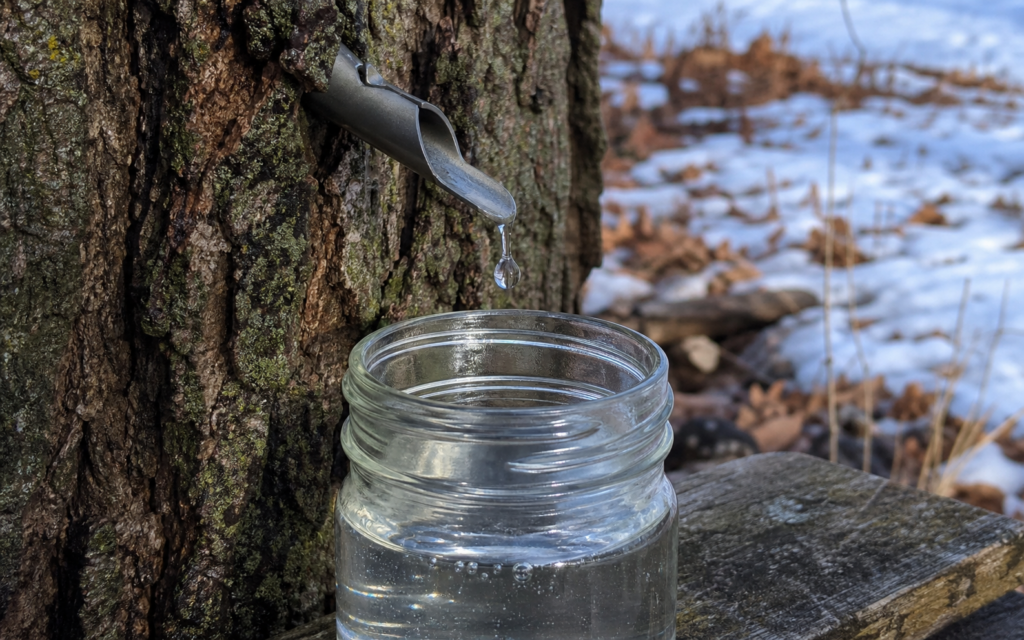
For a gardener, that difference matters. The bucket is not collecting a luxury ingredient as much as it is catching a moment in tree physiology. If you watch closely, maple sap teaches the same lesson as swelling buds or red peony shoots: a plant can be preparing hard while the human eye still sees winter.
The freeze-thaw pump
The usual shorthand is that maple sap runs when nights freeze and days thaw. That is true, but it is not just because warm weather melts something loose. Cornell Cooperative Extension describes the practical timing simply: sap flows when daytime temperatures rise above freezing and nighttime temperatures drop below freezing, and tapping too early can let a hole dry or plug before the best runs arrive.2
Inside the tree, the process is stranger. Maple sap moves in the xylem, the water-conducting wood beneath the bark. Cornell scientists have described the cycle this way: when maple wood freezes, gases are pushed out of the xylem and negative pressure develops. When the wood thaws, gases expand and dissolve back into the sap, creating positive pressure. If the tree has been tapped, the pressure inside the xylem becomes greater than the pressure outside, so sap flows out through the spout.3
The North American Maple Syrup Producers Manual gives the same basic rhythm from the producer’s point of view. Freezing periods create suction that helps draw water into the tree, while warm periods create positive pressure that pushes sap through a wound or taphole. Sap may keep running for a while after a thaw, but without another freeze to reset the system, the run fades.4
This is why a good maple day can feel oddly specific. A cold night by itself is not enough. A warm day by itself is not enough. The tree needs the alternation. It is less like turning on a faucet and more like winding a spring, then letting it release.
Why the sap is sweet at all
A maple does not put sugar in its sap for our benefit. It is managing its own reserves. During late summer and fall, maples store excess starch in the sapwood, especially in ray cells. University of Maine Cooperative Extension explains that when wood temperatures reach around 40 F, enzymes convert some of that stored starch into sugars, largely sucrose, and those sugars pass into the sap.1
That sugar is part of the tree’s spring budget. Before leaves can make new sugars through photosynthesis, the tree must expand buds, repair tissues, keep living cells supplied, and restart growth using what it stored from the previous growing season. The sap bucket is borrowing a small amount from that transition, not from a bottomless pantry.
This also explains why a healthy crown matters. A tree with many leaves in summer is better positioned to store energy for winter and early spring. A stressed, shaded, storm-damaged, or recently transplanted tree may be alive, but that does not make it a good candidate for tapping. The sweetness in February was earned the previous year.
A backyard tree, not a vending machine
Small-scale maple tapping can be a beautiful backyard project, but only if the tree is large and vigorous enough. University of Maine recommends tapping only trees at least 10 inches in diameter measured 4.5 feet above the ground, with one tap for trees 10 to 18 inches across, a second tap for larger trees, and no more than three taps even on very large healthy trees.1 Cornell Cooperative Extension gives similar guidance and emphasizes shallow, clean holes and gentle setting of the spout rather than hard hammering.2
That restraint is not decorative. A taphole is a wound. The tree can wall off the injured wood and grow new tissue over time, but it still has to spend living energy doing so. The manual for beginning maple producers advises drilling into sound sapwood, avoiding old tapholes and wounds, using a sharp bit, and letting tapholes close naturally after the season rather than plugging them.4
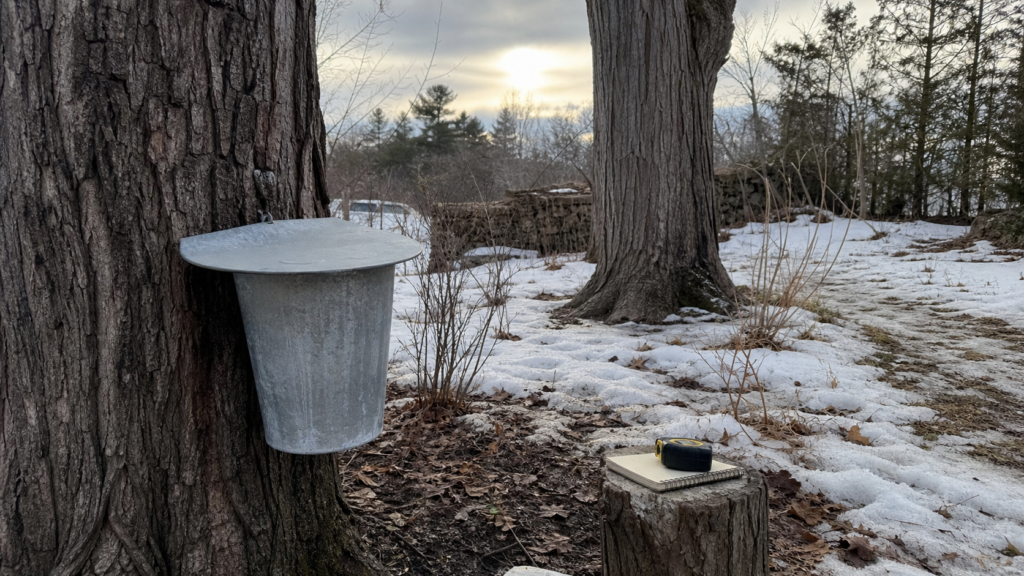
The most useful backyard habit is to be conservative. Mark maples in leaf if you are not confident identifying them in winter. Choose trees with full crowns and no obvious decline. Skip trees near roadsides, public land, treated lawns you do not control, or places where you do not have permission. Use food-grade containers. Keep buckets covered. Collect often. A clean, modest setup is better than an ambitious one that forgets the tree has to live with the mark after the bucket is gone.
The bucket is a clock
Fresh sap is perishable. It may look like water, but it contains sugars and nutrients that microorganisms can use. University of Maine puts it plainly: sap is like milk and will sour if left in sun or warm weather, so it should be kept cold and boiled as soon as practical.1
That gives the backyard sugaring season a different rhythm from ordinary garden harvests. You cannot tap a tree, wander away for a week, and expect the bucket to wait politely. A good run can fill more quickly than expected, especially after a cold night and warm day. A warm spell can also make sap spoil faster. The bucket is not just a container. It is a clock attached to weather.
If you boil sap, do most of the evaporation outside. The volume of steam is not romantic indoors. It is wet air looking for windows, walls, and cabinets. A small outdoor evaporating pan, a safe heat source, patience, and a thermometer are more sensible than trying to turn a kitchen into a sugarhouse for a day.
Why the season ends
Maple season is short because the tree’s winter balance is temporary. The USDA Climate Hubs notes that sap may continue to flow for 30 to 72 hours after a freeze-thaw event, that a season often lasts four to six weeks, and that it ends when temperatures remain above freezing and buds begin to break dormancy.5
Once buds swell and the tree moves fully toward leaf-out, the character of the sap changes. Producers call the late-season off flavor “buddy,” a reminder that the sap is part of a living transition, not a stable recipe. The same warmth that makes the garden feel generous also closes the sugaring window.
That timing is becoming less predictable in many maple regions. The U.S. Geological Survey notes that maple syrup production is vulnerable to warming temperatures, altered precipitation, and changes in freeze-thaw cycles, and that producers are already reporting earlier and more variable tapping seasons.6 For the small backyard observer, this means the calendar matters less than the pattern. Watch the nights. Watch the days. Watch the buds.
The lesson in the bucket
Even if you never boil a quart of syrup, a tapped maple changes how February looks. It turns a bare trunk into an instrument. It makes temperature visible. It shows that a dormant tree is not waiting passively for spring, but negotiating with it hour by hour.
There is also a useful humility in the process. The gardener does not make the sap run. The gardener only notices the conditions, drills carefully if the tree can spare it, keeps the bucket clean, and gets out of the way while physics and stored summer sunlight do their work.
That is the quiet charm of maple sap. It begins as clear drops from a winter tree, hardly sweet enough to brag about. Then it asks for attention: collect before it spoils, boil before it burns, stop before the buds open, and remember that every spoonful of syrup began as a leaf’s work in a previous season. In a garden, few things make the year feel more connected than that.
References
- University of Maine Cooperative Extension: Bulletin #7036, How to Tap Maple Trees and Make Maple Syrup
- Cornell Cooperative Extension Onondaga County: Maple Syrup Production
- Cornell Chronicle: In 100 years, maple sap will flow a month earlier
- North American Maple Syrup Producers Manual: Beginner Notebook, 1st Edition
- USDA Climate Hubs: Maple Syrup
- U.S. Geological Survey: Maple Syrup Industry Adapting to Climate Change