
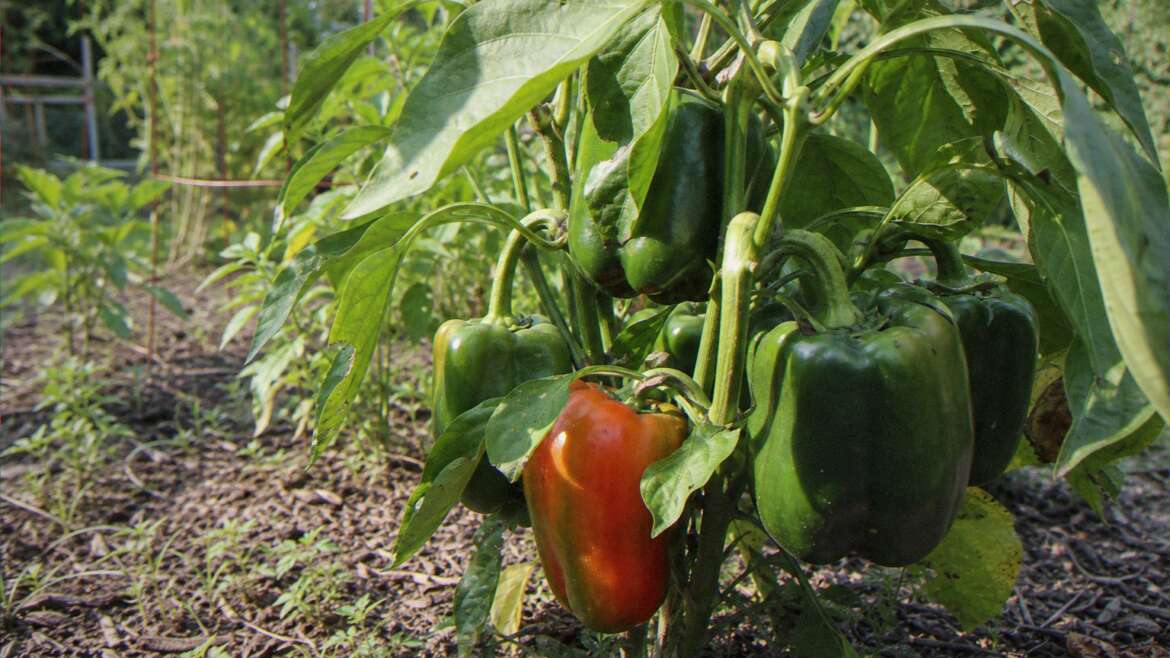
By August, a pepper plant can look as if it has misplaced its calendar. The fruit is full sized. The shoulders are glossy. The plant has done the hard work of flowering, setting fruit, and swelling those green walls into something that already feels like a harvest. Then the gardener waits for red, and the pepper seems to consider the request very slowly.
This waiting can feel personal if the seed packet promised red bells, orange lunchbox peppers, or yellow frying peppers. The fruit has reached the size you expected, yet it stays green for days, then weeks. One pepper begins to blush at the tip. Another turns unevenly along one side. A third remains stubbornly green until you start doing frost math in your head.
The useful truth is that green is not a failed color. In peppers, it is a real harvest stage. University of Maryland Extension notes that bell peppers may reach a mature green stage 70 to 80 days after transplanting, then need another two to three weeks to fully ripen.1 That extra time is the part gardeners feel most sharply in late summer.
A green pepper is not necessarily unready
Peppers complicate the word ripe. A green bell pepper can be mature enough to eat, cook, stuff, pickle, or chop into a late-summer salad. It is firm because the fruit wall has developed. It tastes grassy and clean because it is still at the green stage. It is not the same experience as a red pepper, but it is not a mistake.
Illinois Extension describes green bell peppers as usually picked when they are fully grown, firm, and green, while colored bell peppers may be left on the plant to develop fuller flavor and ripen to red, yellow, orange, or brown.2 That gives the gardener a choice rather than a single correct answer. Pick green for crunch and production. Wait for color when flavor, sweetness, and the pleasure of the mature color matter more.
This is why pepper harvest can feel less like picking and more like negotiation. Every fruit left to color is still drawing from the plant. Every fruit picked green removes a demand and may encourage the plant to keep flowering and setting more fruit while weather allows. The best harvest often includes both: some peppers taken green, a few left to finish, and no guilt about either decision.
Color is built, not painted on
The change from green to red, orange, or yellow is not a skin-deep blush. It is a slow rebuild inside the fruit tissue. Green peppers contain chlorophyll-rich plastids, the same broad category of plant structures that makes leaves green. During ripening, chlorophyll declines, and the fruit begins to reveal or manufacture other pigments.
A review of Capsicum carotenoids describes green pepper fruit as rich in chloroplasts and chlorophyll, with carotenoids partly masked at that stage. As the fruit ripens, chloroplasts differentiate into chromoplasts, and carotenoids accumulate to create the yellow, orange, red, and dark red colors that depend on cultivar genetics.3
That last phrase matters: cultivar genetics. A pepper does not become red because red is the universal finish line. Many do, but some mature yellow, orange, chocolate brown, cream, purple-red, or other shades. Some purple peppers are actually meant to be harvested before they turn red. Illinois Extension points out that certain white, light yellow, lilac, and purple peppers develop those colors while still immature and should be picked before they actually ripen to red.2
So the right question is not only, “Why is this pepper still green?” It is also, “What color is this variety supposed to be when I want to eat it?” A green-to-red bell pepper, a pale yellow wax pepper, a purple ornamental, and a chocolate sweet pepper are all following different instructions.
The plant pays for the sweeter pepper
A red sweet pepper usually tastes sweeter than its green version because it has spent longer attached to the plant. The fruit has continued to mature, pigments have changed, and flavor has moved away from sharp green freshness toward rounder sweetness. Iowa State University Extension notes that fully ripe bell peppers are slightly sweeter and have a higher vitamin content than immature green peppers.4
That improvement costs time. The plant is not merely holding a finished object on the branch. It is still supporting living tissue. Sugar arrives through the plant’s transport system. Pigment pathways are active. The fruit remains vulnerable to sunscald, insects, bacterial spots, and simple human impatience.
This is why a short-season gardener can have excellent pepper plants and still harvest mostly green fruit. The plant may have done nothing wrong. The variety may simply require more calendar than the garden can give. Illinois Extension notes that in northern Illinois, many sweet peppers never reach full maturity because the season is short.2 That sentence will sound familiar to gardeners far beyond Illinois.
Heat helps until it stops helping
Peppers are warm-season plants, but warm-season does not mean heatproof. They like warmth, sun, and settled soil. Iowa State lists 70 to 85 degrees F as the optimum daytime range for pepper growth.4 University of Maryland also emphasizes that peppers grow slowly in cool periods and need warm weather to move well.1
But full sun can become too much when summer overshoots the target. Very hot weather is especially hard on flowers and new fruit set. Maryland notes that very hot temperatures, especially evenings above 75 degrees F, can slow or stop pod production.1 Illinois Extension similarly points to hot, dry winds, dry soil, and warm nights as common reasons peppers fail to set fruit well later in the season.2
This distinction helps diagnose August plants. If the plant has large green peppers that are simply slow to color, the issue may be time and variety. If the plant has many flowers dropping and few new baby peppers, the issue may be heat stress, dry soil, or night temperatures. One problem is about finishing fruit. The other is about getting fruit started.
Water does not turn peppers red, but it keeps the plant capable
It is tempting to search for a single trick that makes peppers color faster. A fertilizer. A pruning cut. A dramatic withholding of water. Most of those tricks misunderstand the plant. Ripening is a developmental process, and the gardener’s job is mainly to keep the plant steady enough to finish it.
Consistent moisture is part of that steadiness. Iowa State recommends about an inch of water per week for peppers through the growing season and notes that mulch helps conserve soil moisture.4 Treat that as a starting point: weather, soil, mulch, plant size, and container volume all change how often a garden needs water. Maryland describes uniform soil moisture as the goal, warning that dry conditions can cause blossom drop, small fruit, and blossom end rot.1
That does not mean peppers want to sit wet. They want a well-drained root zone that does not swing wildly from dust to puddle. Mulch, drip irrigation, soaker hoses, and deep watering are less glamorous than ripening hacks, but they do the work. They keep leaves functioning, roots supplied, and the plant less likely to abandon small fruit during a hot week.
The harvest decision in late summer
If your pepper plant is carrying many full-sized green fruits in August, do not automatically leave every one for color. A heavily loaded plant can slow down. Picking some mature green peppers can keep the harvest moving and reduce the number of fruits competing for the plant’s resources.
For sweet peppers, a practical approach is to harvest the first flush green once the fruits are full sized and firm, then let selected later fruits color. For frying peppers and smaller snack peppers, the same logic applies, though the timing may be quicker. For hot peppers, the choice depends on the use. Green jalapenos are a kitchen category of their own. Fully ripe chiles may be sweeter and more aromatic, but ripening does not raise pungency uniformly across cultivars; use the variety and intended use, not color alone, as the guide.5
Use shears rather than yanking. Pepper branches can be brittle, especially when plants are carrying heavy fruit. Maryland recommends cutting pods instead of pulling them to avoid breaking branches.1 That small habit saves more peppers than it seems.
How to help more peppers reach color
The best way to get red peppers in August often begins months earlier. Choose varieties that match your season. A blocky bell bred for long, warm summers may be delicious but slow. Check whether a catalog’s days-to-maturity figure describes the mature-green stage or final color; for bell peppers, those stages can be two to three weeks apart.1 In short seasons, early-maturing cultivars matter more than wishful thinking.
Plant into warm soil, not just into a hopeful date. Peppers that sulk in cold spring soil lose time they may never fully regain. Keep plants evenly watered after fruit set. Mulch once the soil has warmed. Avoid overdoing nitrogen late in the season, since the goal is not a plant that keeps making leaves while the fruit waits.
Near the end of the season, be realistic about what can still finish. Utah State University Extension estimates 35 to 45 days from flowering to full color, depending on temperature and variety, so late flowers are unlikely to produce ripe peppers before an approaching frost.6 If frost is imminent, Maryland notes that whole plants can be pulled before a killing frost and hung upside down in a warmer place to help remaining peppers ripen.1
Do not expect a fully green pepper on the kitchen counter to become the same pepper it would have become on the plant. Bell peppers are nonclimacteric, produce very little ethylene, and respond very little to it. UC Davis notes that partially colored fruit can continue changing color at 68 to 77 degrees F, but that is not a reliable way to turn an immature green pepper into one with on-plant flavor and texture.7
What the color can and cannot tell you
Color can tell you about maturity only when you know the cultivar. A red hot pepper is often fully ripe, but redness is not the same as a universal heat meter. Illinois Extension notes that some chili peppers turn bright red as an indication of ripeness rather than hotness.2 The cultivar, the species, and the capsaicinoid profile matter more than the color alone.5
Color also cannot rescue a damaged fruit. A sunscalded pepper may continue changing color around the pale patch, but the damaged tissue will not become perfect. A pepper with bacterial spots, soft rot, or insect entry should not be left simply because you want red. The plant does not owe every fruit a dramatic finish.
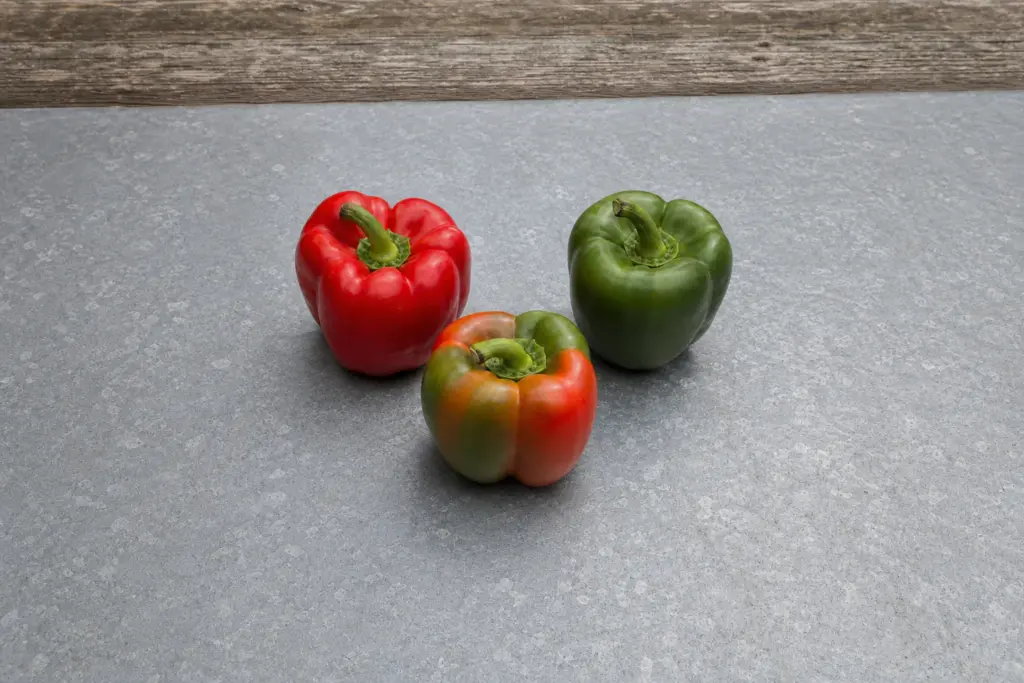
Still, there is a particular satisfaction in watching one pepper decide. Green gives way to olive, then a smoky brownish stage, then orange or red, often unevenly, often with one side far ahead of the other. It is not inefficient. It is visible biochemistry. The garden is letting you watch chlorophyll step back and carotenoids take the room.
Final thoughts
A red pepper is not simply a green pepper that waited politely. It is a fruit that stayed connected long enough to change its chemistry. The plant had to keep leaves working, roots supplied, and fruit protected while the season kept spending daylight.
So harvest with a little strategy. Pick some peppers green when they are full sized and useful. Leave a few of the best placed fruits to color where you can watch them. Keep the soil evenly moist, the plant supported, and your expectations tied to the variety and the season you actually have. The slow red pepper is not mocking you. It is just taking the expensive route to flavor.
References
- University of Maryland Extension: Growing peppers in a home garden
- Illinois Extension: Peppers
- Antioxidants: Carotenoids of Capsicum fruits
- Iowa State University Extension: Growing peppers in the home garden
- Plants: The effect of varietal type, ripening stage, and growing conditions on sugars and capsaicinoids in Capsicum peppers
- Utah State University Extension: How to grow peppers in your garden
- UC Agriculture and Natural Resources: Pepper postharvest fact sheet