
Gardeners are taught to chase sun. Six hours for tomatoes, full sun for peppers, the brightest bed for basil, the open border for flowers that sulk in shade. This is good advice until it is not. By midsummer, especially in a heat wave, full sun can stop being a gift and become an argument the plant is losing.
Shade cloth is a way to make that argument quieter. It does not turn a vegetable bed into a dark room, and it should not be used as a permanent roof over plants that need light. Used well, it trims the harshest edge from summer sun, lowers leaf stress, reduces sunscald on fruit, and gives roots and leaves a little more room to keep working.
The trick is to think of shade cloth as a temporary climate tool, not as a blanket. The goal is not to hide the garden from summer. The goal is to edit the hottest hours so the plants can continue doing the ordinary work of photosynthesis, transpiration, flowering, and fruit filling.
Heat stress is not just thirst
A wilted plant often sends gardeners running for the hose, and sometimes that is the right response. But heat stress is not always a simple water shortage. A plant can have moisture in the soil and still wilt in severe heat because the leaves are losing water faster than the roots can supply it. If the air is hot, dry, and windy, transpiration becomes a demanding bargain.
Oregon State University Extension describes temperature, light, water, humidity, and nutrition as environmental factors that shape plant growth, with high temperatures affecting photosynthesis, respiration, transpiration, and plant development.1 In the garden, those factors arrive together. A tomato leaf is not experiencing heat separately from sunlight, dry air, reflected warmth from paving, and the moisture held in the soil.
That is why shade can help even when irrigation is already sensible. It reduces the radiation load on leaves and fruit. It can slow water loss from plant tissue and soil surface. It gives the plant a less punishing afternoon, which may be the difference between temporary flagging and real damage.
What shade cloth actually does
Shade cloth is knitted or woven fabric sold with a nominal shade percentage. A 30 percent cloth is designed to reduce incoming light by roughly 30 percent; a 70 percent cloth reduces much more. The rating is useful, but the plant’s actual light and temperature also depend on cloth color, sun angle, airflow, height, and how long the cloth stays in place. Vegetables still need strong light, so more shade is not automatically more protection.
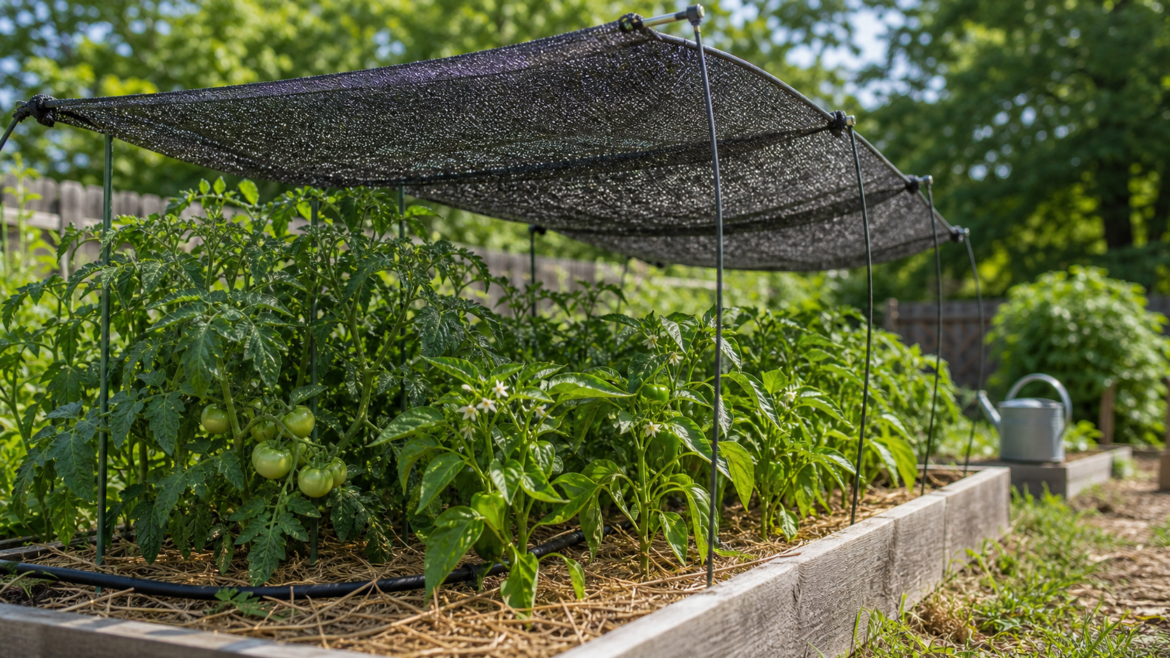
Oregon State University Extension recommends holding shade cloth above sensitive plants on a frame so air can move beneath it and reports that temperatures under the cloth can be up to 10°F cooler.2 The frame is not a minor detail: it preserves an air space and keeps moving fabric from rubbing tender growth.
Shade changes more than brightness. Utah State University Extension notes that it can lower daytime air and fruit-surface temperatures, raise relative humidity, reduce wind, and slow evaporation. Those changes can reduce water demand, but overly wet conditions under shade can favor fruit rot or fungal growth.3 The best setup behaves more like a porch roof than a wrapped package: shade above, air through the sides, and irrigation adjusted to the soil rather than the calendar.
The right percentage is usually modest
For fruiting vegetables in a hot, exposed site, moderate shade is usually the place to start. Utah State University Extension lists 20 to 40 percent shade as an ideal range for most fruits and vegetables, while UC Master Gardeners of Contra Costa County use 30 to 40 percent over vegetables and fruit trees in their hot-summer demonstration garden.34 Treat those figures as starting points, not a universal rule: crop, climate, cloth, installation, and hours of use all change the result.
This is where gardeners sometimes overcorrect. A plant with sunscald or curled leaves looks miserable, so the instinct is to create a heavy shelter. But long periods under very dense cloth reduce the light available for photosynthesis and can leave sun-loving crops pale, stretched, or less productive.1 The plant should look relieved, not dimmed.
Denser cloth has uses for plants that naturally prefer shade, propagation or nursery work, and short emergency protection, but its rating does not transfer automatically to a fruiting summer bed. Begin with less shade, watch new growth and flowering, and change one variable at a time.
Sunscald is about exposed tissue, especially fruit
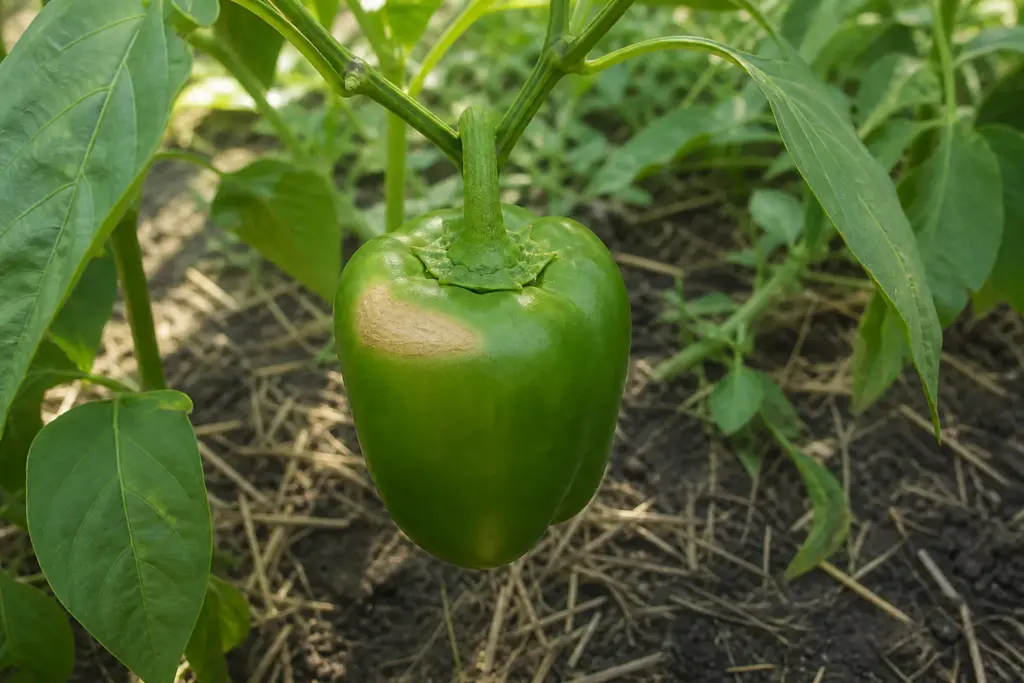
Sunscald is one of the clearest reasons to use shade cloth. UC Statewide IPM describes overexposed fruit as developing light-brown or leathery, sometimes sunken areas; leaves can scorch too.5 On tomatoes and peppers, injury often begins as a pale or bleached patch on the sun-exposed side. The damage is not merely cosmetic: injured tissue can become an entry point for rot organisms.3
Healthy leaf cover is the fruit’s first shade. UC Statewide IPM notes that practices that maintain sufficient leaf cover help limit sunscald.5 A modest cloth becomes especially useful when fruit is newly exposed because of pruning, disease, wind damage, broken branches, or a naturally open plant habit; it reduces the solar radiation reaching the fruit rather than repairing tissue that is already injured.3
Utah State University Extension summarizes a Utah red bell pepper trial in which 52 percent of unshaded fruit had sun injury, compared with 23 percent under vertical shade and none under horizontal shade.3 One production trial is not a promise for every backyard, but it shows why fruit exposure and shade orientation matter even while the plant itself remains alive and green.
Timing matters more than covering everything
Many gardens do not need shade cloth from sunrise to sunset. The punishing window is often late morning through late afternoon, depending on climate, exposure, and reflected heat. East-facing beds may tolerate morning sun beautifully and suffer only after noon. West-facing beds beside masonry can feel like ovens because heat arrives from both sky and hard surfaces.
Temporary systems are useful because they let you respond instead of committing the whole season to a fixed roof. Clip cloth to hoops before a heat wave. Drape it high over a tomato frame during the hottest week. Shade a lettuce nursery while seedlings establish, then remove the cloth when the weather softens. A good setup can be adjusted in minutes.
Watch the plant in the evening. Oregon State University Extension notes that plants which wilt in the hottest part of the day and recover by evening or early morning are likely showing heat stress, while the risk of lasting damage rises the longer wilting continues.6 Leaves that remain limp, scorch at the margins, or accompany repeated flower drop are telling you the bed needs a change. Shade cloth is one change. Mulch, deep watering guided by soil moisture, better spacing, and wind protection may be part of the same answer.
Build shade that breathes
The simplest structure is a set of hoops or stakes with cloth clipped over the top and sides left partly open. Keep the cloth above the foliage. Leave enough height for growth and enough side opening for air to move. Shade can raise relative humidity and reduce wind, so airflow and irrigation checks matter especially in humid climates; a persistently wet, still enclosure can favor fruit rot or fungal growth.3
Secure the cloth well. Loose fabric can whip in wind, abrade leaves, or tear against stakes. Utah State University Extension recommends sturdy, anchored supports and properly tensioned material because wind can rip cloth and damage the structure.3 For a small bed, use fasteners that hold reliably but can still be opened or removed without rebuilding the frame.
Color and material matter too, although percentage, placement, and structure are usually the clearer first decisions for a home bed. Shade fabrics may be black, white, colored, or woven with reflective strands; those choices alter how radiation is absorbed, reflected, or scattered, so no color is universally best.3 Do not substitute clear plastic for shade cloth in hot weather. Without generous ventilation, clear plastic admits solar energy and can turn a cover into a heat trap.
Which plants benefit most
Leafy greens are obvious candidates. High temperatures can induce bolting in cool-season vegetables, and Oregon State University Extension specifically lists cilantro, lettuce, and spinach among crops likely to decline in a heat wave; high temperatures can also make lettuce bitter.61 Shade cloth cannot make lettuce love midsummer in every climate, but temporary afternoon shade may extend a harvest window or help a late sowing establish.
Tomatoes and peppers are more complicated. They need strong light to produce well, yet their fruit can sunscald and prolonged high temperatures can interrupt flower and fruit set.16 A modest cloth during a heat wave can protect exposed fruit without turning the bed into deep shade. Newly transplanted seedlings are also good candidates because their root systems are still limited and their leaves may not be acclimated to full exposure.
Container gardens, raised beds, and exposed balconies may need attention sooner than a mulched in-ground bed. Their root zones can heat and dry quickly, while nearby walls or paving may add reflected light and warmth. Because a balcony garden is its own microclimate, map direct sun, wind, and reflected heat before choosing where to add temporary shade.2
Do not confuse shade with neglect
Shade cloth reduces stress, but it does not replace water or remove the need to check it. Plants still need moisture during the weather that prompted the shade, yet a shaded crop may use less water than an exposed one. Check the root zone rather than keeping the old schedule automatically. Mulch can slow evaporation and moderate soil temperature, while drip irrigation or careful watering at the soil line delivers water without assuming every hot day creates the same deficit.23
Shade also does not cure poor root development, compacted soil, or overcrowding. A cramped bed under cloth is still cramped. A container with a tiny soil volume is still vulnerable. A tomato stripped of leaves by disease will still need more than fabric to recover. Use shade cloth as part of plant care, not as a costume for a stressed garden.
The best test is growth. If the plants perk up, flowers continue setting, fruit avoids scald, and new leaves look sturdy rather than stretched, the shade is doing its work. If growth becomes pale and lanky, remove the cloth sooner, switch to a lower percentage, or use it only during the hottest part of the day.
Useful shade cloth supplies
- Agfabric 40 percent shade cloth: a moderate shade option for vegetables during heat waves, especially when held above the plants on hoops or stakes.
- Garden hoops for raised beds: useful for creating a light frame that keeps shade cloth off foliage and leaves room for airflow.
Final thoughts
Full sun is not a moral virtue. It is an exposure. In spring, it may be exactly what a plant needs. In midsummer, during a run of harsh afternoons, it may be more than the plant can use well. Shade cloth gives the gardener a way to be precise instead of dramatic.
Use it lightly, lift it above the leaves, and remove it when the weather allows. The point is not to make a weaker garden. It is to help a living garden pass through the kind of heat that arrives faster than roots, flowers, and fruit can adapt.
References
- Oregon State University Extension: Environmental factors affecting plant growth
- Oregon State University Extension: How to protect yourself and your plants during extreme heat
- Utah State University Extension: Using shade for fruit and vegetable production
- UC Master Gardeners of Contra Costa County: In the vegetable garden, when is full sun too much?
- UC Statewide IPM Program: Sunscald in vegetables
- Oregon State University Extension: Heat wave in the garden