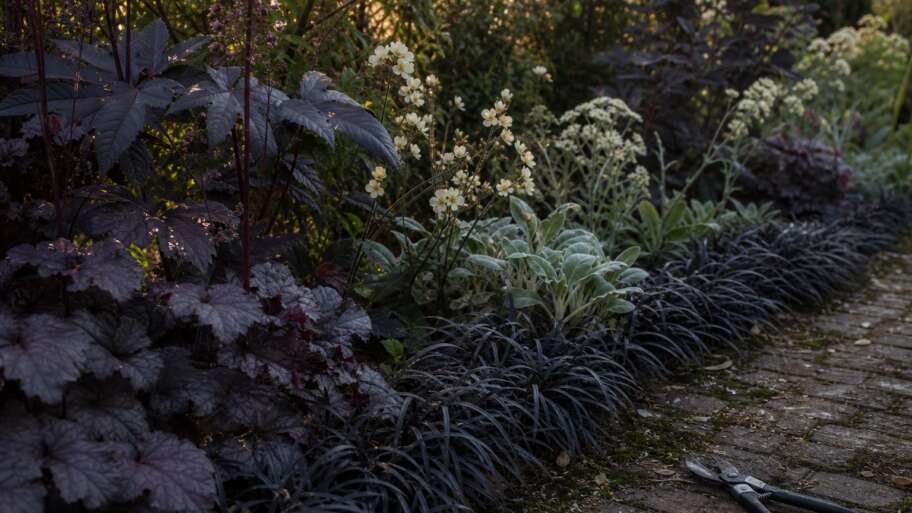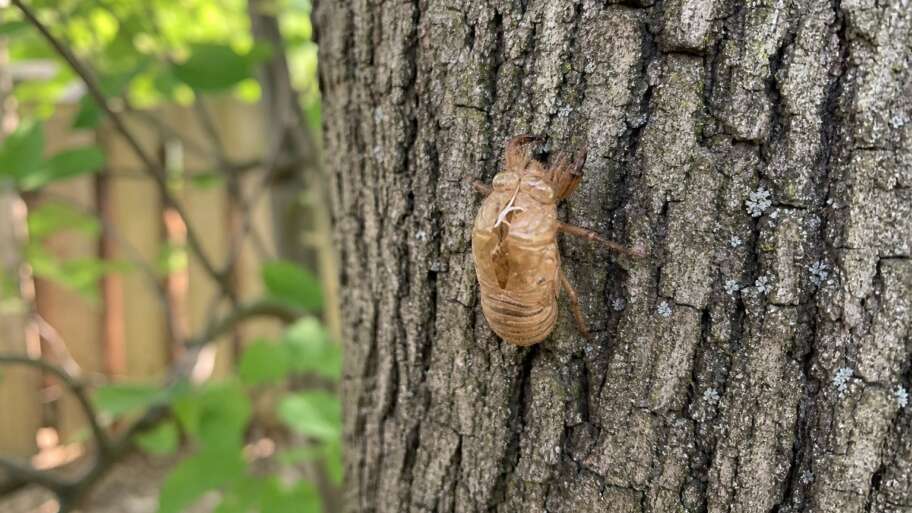

A spotless October garden has excellent public relations. The stems are gone. The leaves are bagged. The beds are shaved down to mulch and labels. From the sidewalk, it looks responsible, almost moral, as if the gardener has defeated decay itself and sent it away in kraft paper sacks.
Here is the irritating truth: a garden that clean is often not a healthier garden. It is just a quieter one because many of the things that would have used it through winter have been removed.
That does not mean fall cleanup is stupid. Diseased foliage, rotten vegetable debris, slippery paths, and stems flopping into walkways deserve attention. But the reflex to cut every perennial to the ground, rake every bed bare, and make October look like a real estate listing is one of the most overrated habits in gardening. It mistakes absence for care.
Dead-looking is not the same as useless
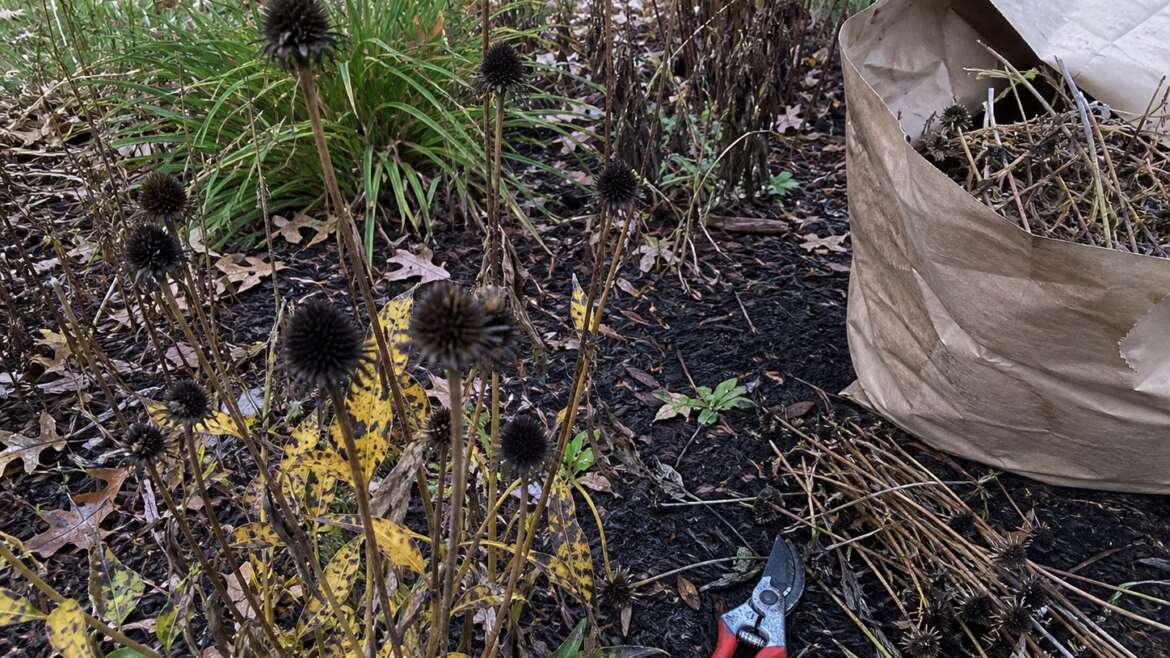
By October, a coneflower stem can look finished in the human sense. The petals are gone. The cone is dark. The leaves are yellowing or already collapsed. If your standard is summer prettiness, it has failed.
The plant is not using that stem the same way it did in July, but the garden may still be using it. Seed heads can feed birds. Hollow or pithy stems can become nesting or overwintering structure for small insects. Standing stems catch leaves and snow, breaking up wind at soil level. A ragged clump can be an anchor in the winter bed rather than evidence that someone has lost control.
Iowa State University Extension makes the sensible distinction in fall cleanup: leaves and plant material can be resources when moved where they help, while diseased material, thick mats on turf, and slippery paths need management.1 That is the point most tidy-garden arguments skip. The choice is not filth or discipline. The choice is whether you know what should be removed and what is still doing work.
The clean bed is mostly theater
The rage-inducing part is how often the clean bed wins applause. Bare mulch looks deliberate. Cut stems look efficient. A stack of filled yard-waste bags looks like effort made visible. The garden has been made legible to people who do not garden.
But soil, insects, birds, fungi, and next year’s seedlings do not care whether the border photographs neatly in October. They care about cover, texture, moisture, food, and shelter. A sterile bed can be easy to admire and less useful to live in.
University of Illinois Extension advises gardeners to consider pollinators during fall cleanup, noting that many beneficial insects overwinter in plant material and leaf litter, and that delaying or reducing cleanup can preserve habitat.2 That is not a romantic excuse to abandon the garden. It is a practical warning that a border can be too clean for its own ecology.
The stem you cut may be next year’s apartment
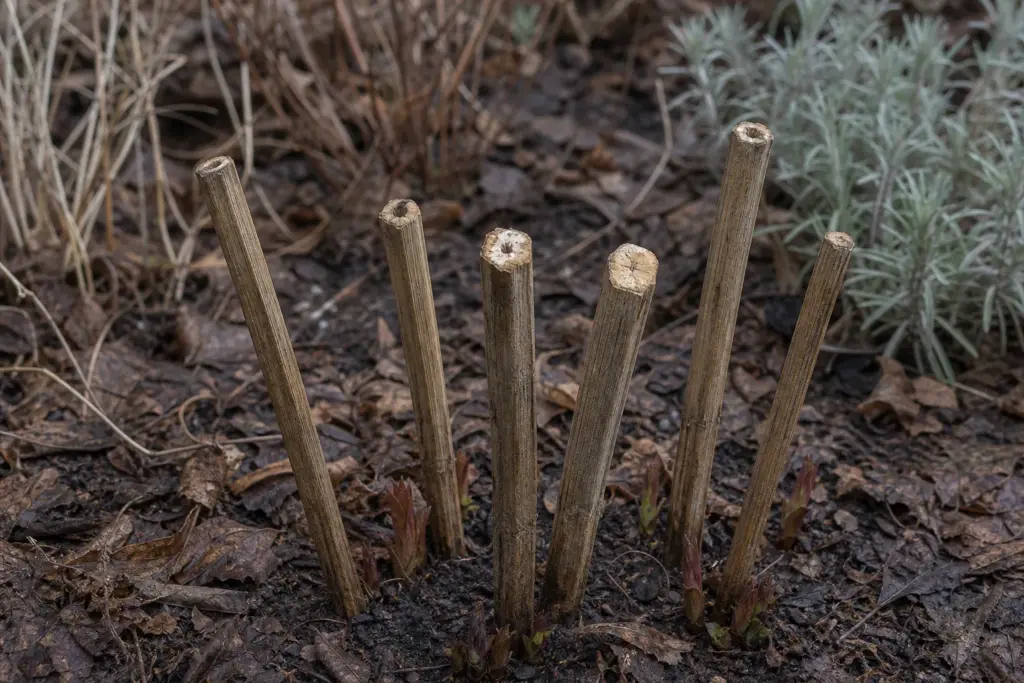
Some native bees nest in stems. Not in a cute symbolic way, but literally. A hollow or pithy stem can become a series of small rooms, each provisioned for the next generation. When every stalk is cut flush to the ground and hauled away, that architecture disappears.
North Carolina State Extension gives a useful compromise for pollinator gardens: trim perennial stems in their first winter, leaving upright stubs that are roughly 12 to 24 inches tall, so stem-nesting bees can use them during the next growing season.3 That is a sharper tool than the usual argument. It is not saying every stem must remain forever. It is saying the timing and height of the cut matter.
This is where the usual tidy-garden defense falls apart. A gardener can still cut back floppy growth. They can still clear the path. They can still stop a border from swallowing the driveway. What they cannot claim, honestly, is that scalping every stem to the crown is always the responsible option.
Seed heads are not shame
There is a strange embarrassment around seed heads, as if a plant that has finished flowering is now untidy by definition. This is a gardener’s mistake, not the plant’s. A seed head is the plant completing the work the flower began. It is also one of the easiest ways to keep a winter garden from becoming a blank brown sentence.
Illinois Extension points out that leaving spent flowers and seed heads can provide winter food for birds and habitat for other wildlife, while also adding winter interest to the garden.4 Coneflower, black-eyed Susan, sunflower, Joe-Pye weed, goldenrod, grasses, and many asters all have a second life after bloom if the gardener does not panic at the first sign of brown.
Will every seed head be beautiful? No. Some collapse into slime. Some lean across a path. Some belong to plants that already reseed too enthusiastically. Editing is allowed. But editing is not the same as erasing the entire late-season structure of the bed.
The disease exception is real
The laziest version of this argument says, “Just leave everything.” That is not gardening advice. That is avoidance wearing a flower crown.
If foliage was badly diseased, remove it. If vegetable vines are collapsing under late blight, powdery mildew, squash bugs, or other problems, do not turn the bed into a pathogen hotel. Purdue Extension notes that perennials affected by serious disease or insect problems should be cut back and the debris removed, not composted in place.5
Peonies with persistent botrytis, irises with borer history, mildewed phlox, and vegetable debris from a rough disease year all deserve a harder cleanup. So do leaves blocking drains, mats smothering turf, stems that are unsafe, and anything that will make the garden harder to manage rather than more alive.
The better version of messy is intentional
An intentional fall garden is not a dump. It has cleared paths, visible edges, and enough structure that the gardener can move through it without stepping on crowns or tripping over collapsed stems. It may have leaves tucked under shrubs instead of spread across the lawn. It may have seed heads standing in groups, not every stalk left exactly where gravity put it. It may have a brushy corner where cut stems and dry flower heads can decay slowly instead of being exported from the property.
Purdue Extension’s fall garden guidance makes the same broader point: dead stems can shelter beneficial insects, seed heads can feed birds, and healthy leaves can remain in garden beds where they are not smothering turf.6 The good version of fall cleanup is selective. The bad version is a reflex with a bag in its hand.
If you need a rule, use this one: remove what is diseased, dangerous, smothering, or likely to become a serious weed problem. Leave what is healthy, standing, useful, and not in the way. That single distinction will do more for the garden than a performative afternoon of making everything short.
Do not finish the job too early in spring either
The fall argument has a spring sequel. If you leave stems and leaves for winter, do not undo the benefit on the first warm Saturday in March. A few sunny hours are not the same as a season.
University of Illinois Extension recommends delaying spring garden cleanup to help native insects, noting that many overwintering insects are not ready to emerge during the first warm spells.7 In practice, that means cleaning gradually. Cut stems in bundles and set them aside for a while. Pull back leaves where new growth needs air, but do not treat the first crocus as permission to vacuum the whole garden.
The uncomfortable conclusion
A spotless fall garden is not automatically a disciplined garden. Sometimes it is just a garden edited for the wrong audience. It pleases the eye that wants proof of labor and disappoints the life that needed a place to wait out winter.
Leave the coneflower heads unless they are causing trouble. Let the grasses stand if they are not flopping into the path. Tuck leaves where they can protect soil instead of smothering turf. Cut diseased material hard and remove it. Make the garden safe and legible, but stop pretending that bare is the same as better.
The point is not to become the neighbor with the most chaotic yard on the block. The point is to stop confusing cosmetic emptiness with care. A living garden is allowed to look alive, even in October, even when alive looks brown.
References
- Iowa State University Extension: Managing Fallen Leaves and Fall Cleanup
- University of Illinois Extension: Consider Pollinators During Fall Garden Cleanup
- NC State Extension: Garden Cleanup for Pollinators, Trim Perennial Stems in Their First Winter
- University of Illinois Extension: Fall Garden Cleanup with Pollinators and Other Wildlife in Mind
- Purdue Yard and Garden: Cut Back Perennials Now or Later?
- Purdue Extension: Five Things to Avoid This Fall When Putting Your Garden to Bed
- University of Illinois Extension: Delay Spring Garden Cleanup to Encourage Native Insects