
February is when seed packets begin to feel less like storage and more like possibility. They gather on the kitchen table in little paper stacks: sweet peas, nasturtiums, morning glories, lupines, okra, perhaps a packet of saved seeds from last summer whose name is written in fading pencil. Some will sprout almost as soon as they meet warmth and moisture. Others will sit there, apparently stubborn, while the gardener wonders whether anything inside is still alive.
Often the problem is not lifelessness. It is design. A seed is built to wait, and some seeds are especially good at it. Their coats are not flimsy wrappers. They are protective architecture, controlling when water and oxygen can reach the embryo inside. Penn State Extension describes germination as depending on water, oxygen, temperature, and sometimes light, and notes that hard or thick seed coats can create physical dormancy that may be broken by soaking or scarifying the seed.1
To a gardener, scarification can sound harsher than it is. Done well, it is not punishment. It is a small invitation.
A seed coat is not just packaging
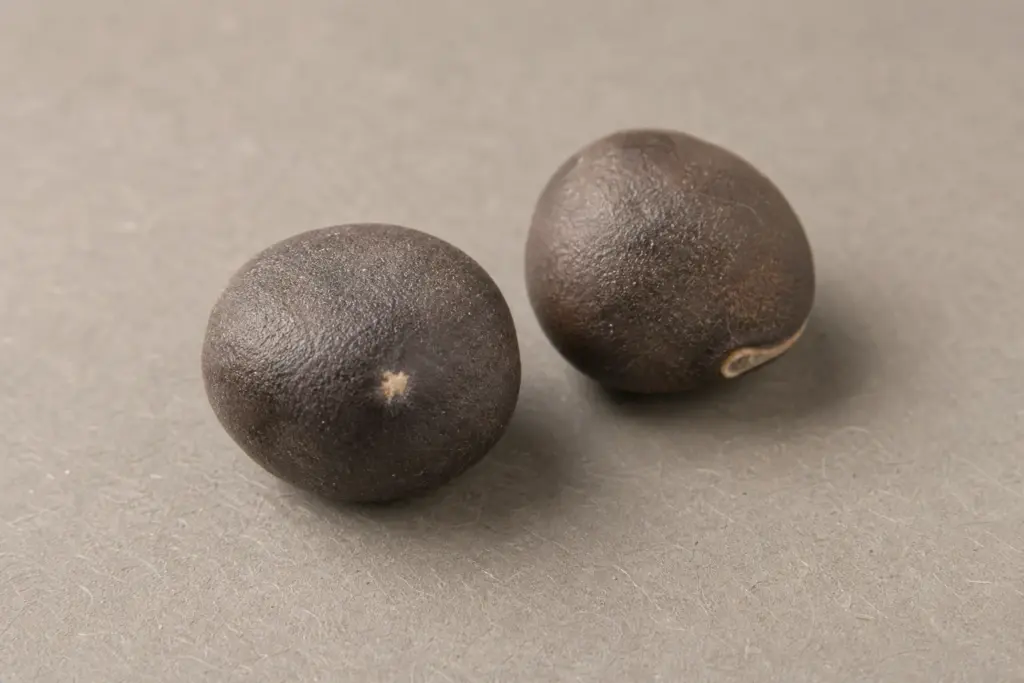
Many seeds germinate after a simple exchange: they take up water, their tissues swell, enzymes wake, and the first root begins to push outward. Hard-coated seeds complicate that exchange. UF/IFAS describes hard seeds as impervious to water, a form of physical dormancy linked to a layer of macrosclereid cells in the seed coat.2 In plain garden terms, the seed is alive but sealed.
This helps explain why two seed packets can behave so differently on the same windowsill. Lettuce, basil, tomato, and many brassicas usually need no rough treatment. Large, durable seeds such as sweet pea, some hard-seeded lupines, nasturtium, canna, morning glory, and some native perennials may benefit from a tiny breach in the coat, especially if the packet recommends it.
The trick is to think like weather, not like a machine. In nature, seed coats are worn by grit, freeze-thaw cycles, microbial action, passing through animals, soaking, drying, and sometimes heat. The gardener is imitating a long, rough journey in a very small way.
Scarification is a small invitation
Scarification means weakening, scratching, nicking, or otherwise opening the seed coat enough that water can enter. Iowa State University Extension describes several ways hard seed coats can be broken, including coarse sandpaper, a metal file, hot water treatment, and natural processes such as microbial action, animal digestion, freeze-thaw exposure, or fire.3 The New York Botanical Garden’s Mertz Library makes a useful distinction: scarification is different from stratification because it deals with penetrating a hard seed coat rather than providing a cold period.4
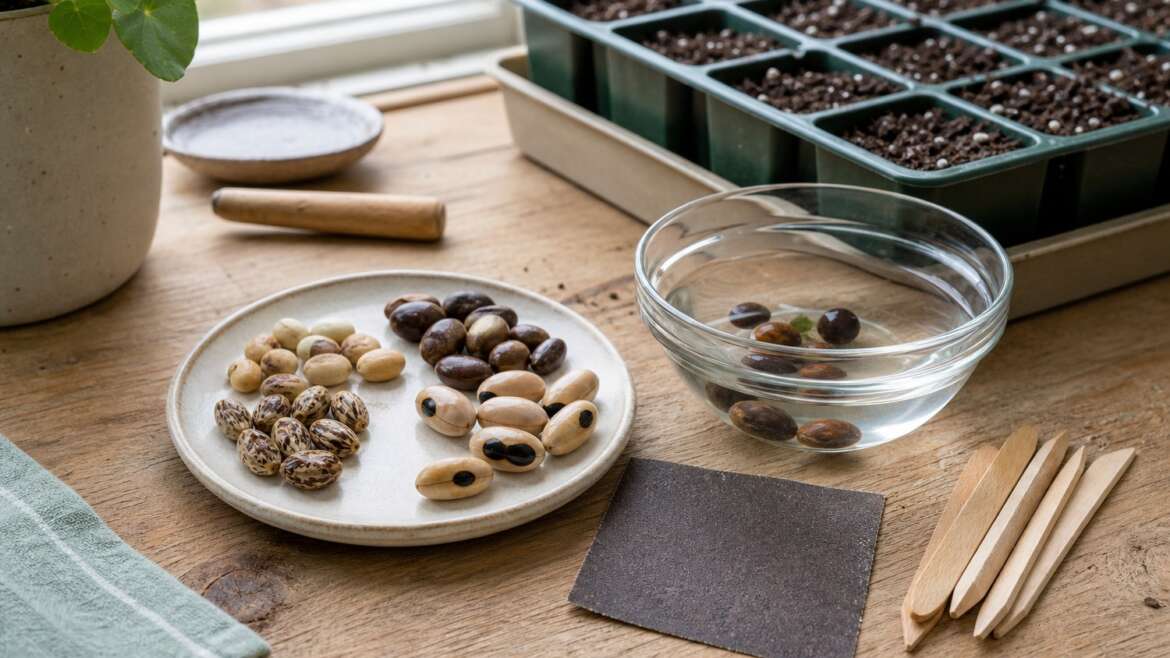
For home gardeners, the safest method is usually mechanical. Hold a large seed between your fingers and rub one spot lightly on fine or medium sandpaper until the surface just changes color. You are not trying to carve the seed open. You are trying to thin one tiny place. If you use nail clippers or a file, choose a spot away from the embryo and stop once you have breached the coat; cutting farther can injure the seed.8
Small seeds are poor candidates for heroic surgery. If you cannot hold the seed securely and see what you are doing, scarification may do more harm than good. A seed that has been crushed, split through the embryo, or stripped too deeply is not awakened. It is injured.
Soaking is useful, but not magic
Soaking and scarifying are often paired because each solves part of the same problem. Scarification gives water a doorway. Soaking lets the dry seed coat and inner tissues begin to hydrate before sowing. For many garden seeds, an overnight soak in room-temperature or slightly warm water is enough. If the seeds swell, they are telling you the coat is no longer keeping water out.
Hot-water scarification is a real horticultural method, but it should not be treated casually. UF/IFAS Gardening Solutions notes that hard seed coats can be weakened chemically, mechanically, or with hot water, and that hot water treatments may use water between 170 and 210 degrees F, though most gardeners choose mechanical methods such as a file or sandpaper.5 Unless a seed packet or species-specific source gives clear directions, warm soaking is the gentler place to begin.
Unless a species-specific protocol calls for a longer soak with regular water changes, do not leave seeds soaking for days because you forgot the jar on the counter.3 Once a seed has taken up water, it needs air as well as moisture. Stagnant water can turn a promising seed into a small fermentation experiment. Scarify, soak overnight if appropriate, then sow promptly into a moist, airy seed-starting mix.
When cold matters more than scratches
Not every dormant seed is waiting for abrasion. Some are waiting for winter. Cold stratification gives seeds a period of cool, moist conditions that mimics time spent outdoors. Iowa State University Extension explains that many tree seeds need exposure to cool, moist conditions for weeks or months, and that gardeners can stratify seed in a moist medium in the refrigerator.3
This matters because the wrong treatment can waste good seed. Scratching a seed that needs cold may not help. Chilling a seed with an impermeable coat may not help if water cannot get in. Some species, including eastern redbud, need both scarification and cold stratification.3 Others need neither. Seed packets, reputable seed company notes, and extension references are worth reading before you reach for sandpaper.
A simple late-winter routine
Start by reading the packet all the way through. If it says to nick, file, soak, or pre-chill, follow that instruction before inventing a new one. If it says the seed has been coated, pelleted, primed, or treated, do not soak or scarify unless the seller specifically recommends it. Seed treatments vary, so let the packet—not the seller’s reputation—decide whether to add another one. N.C. Cooperative Extension notes that some dormancy issues may already have been addressed in commercially purchased seed.7
For a seed that appears to need scarification, prepare only the number you plan to sow. Roughen one small spot, soak the seed overnight if recommended, and sow it the next day at the correct depth. Label the tray with the plant name and the treatment, especially if you are experimenting. A small control group of untreated seeds can teach you more than a perfect tray, because you will see whether the extra work actually mattered.
After sowing, temperature and light still count. Iowa State University Extension’s germination tables for annuals and vegetables show how much species differ in ideal germination temperature, light requirement, and days to emergence.6 A scarified seed kept cold when it wants warmth, or buried deeply when it needs light, may still fail. Scarification opens a door. It does not build the whole house.
Seeds to treat gently
The easiest seeds to scarify are large enough to handle and hard enough to resist water: sweet peas, some hard-seeded lupines, nasturtiums, morning glories, moonflowers, canna, and some woody or native species. Even then, treat each seed as a living thing rather than a craft material. A little dull spot in the coat is usually enough.
Leave very small seeds alone unless you have specific instructions. Do not scarify dust-fine seeds such as snapdragon or begonia, and do not sand seeds that are already fragile, cracked, pre-sprouted, or coated in a visible treatment layer. If the seed packet gives no special instruction and the plant is known for easy germination, sow normally.
It is also worth keeping records. Write down what you did, when you sowed, when the first seed emerged, and how many germinated. The point is not to turn the windowsill into a laboratory, though it quietly becomes one. The point is to learn which seeds in your own hands need persuasion and which prefer to be left alone.
Useful hard-seed supplies
- Gator 220-grit sandpaper sheets: fine enough for gentle mechanical scarification on large seeds without turning the job into seed surgery.
- Burpee SuperSeed seed starting tray: a reusable tray for small experiments, control groups, and labeled batches of treated seed.
- Wooden plant labels: useful for noting the seed name, sowing date, and whether a batch was soaked, nicked, chilled, or left untreated.
Final thoughts
Scarification is a satisfying little ritual because it makes germination feel less mysterious. You hold a hard seed, give it one careful mark, and offer it water. But the real lesson is restraint. Seeds have evolved many kinds of patience, and not all patience should be interrupted in the same way.
So begin with curiosity. Read the packet. Treat a few seeds, leave a few alone, and watch. If the scarified sweet peas rise first or the soaked nasturtiums swell overnight, you have not beaten nature. You have simply learned one of its doorways.
References
- Penn State Extension: Seed and seedling biology
- UF/IFAS PropG: Scarification
- Iowa State University Extension: Germination of tree seed
- New York Botanical Garden Mertz Library: What is scarification?
- UF/IFAS Gardening Solutions: Advanced seed starting
- Iowa State University Extension: Germination requirements for annuals and vegetables
- N.C. Cooperative Extension: Starting plants from seed, tips for success
- Washington State University Extension: Propagating plants from seed