
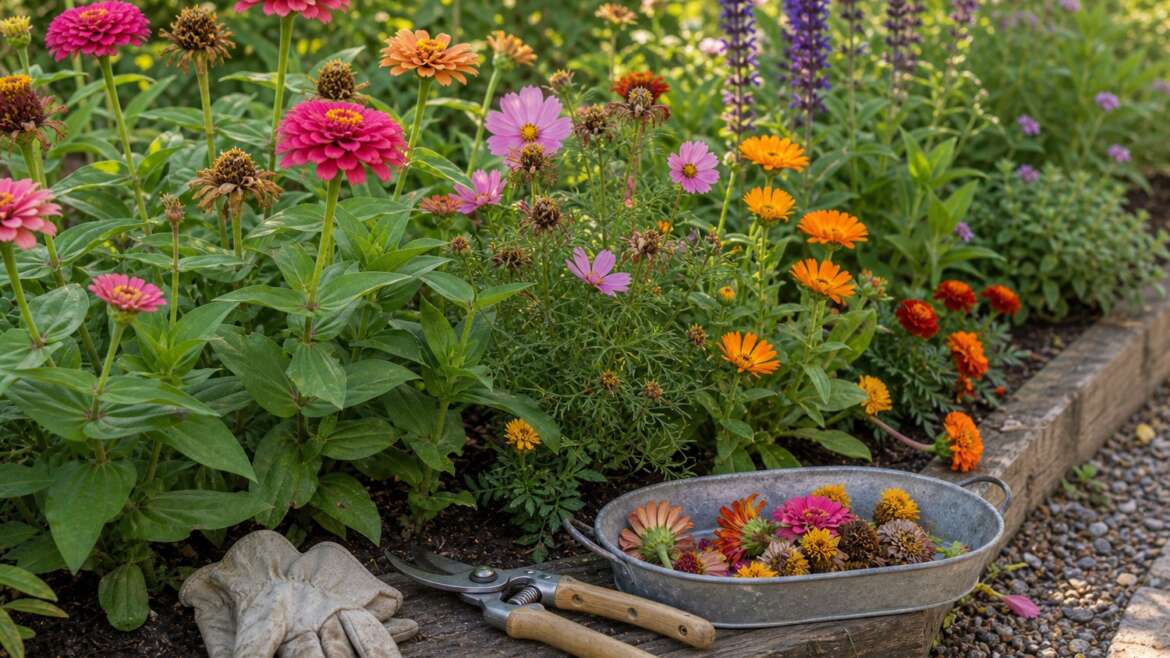
By early July, a flower border begins to show its decisions. Some stems are still in full color. Some are carrying petals that have curled, browned, and collapsed around the center. Others have already moved on, quietly swelling seed heads where a bloom used to be. The garden is not finished, but it is changing its mind.
Deadheading is the small act of interrupting that change. It means removing faded flowers before the plant spends more energy on seed. Penn State Extension defines deadheading as cutting or pinching off old or spent flowers, a practice that can help extend the flowering season.1 That sounds tidy and practical, and it is. But it is also a useful way to understand what a flower is trying to do.
A bloom is not made for our pleasure, even when it gives plenty of it. It is part of the plant’s reproductive work. When pollination succeeds and seed begins to form, many plants reduce the urgency of making more flowers. The gardener who deadheads is not simply cleaning. The gardener is changing the conversation.
A spent flower is a signal
Iowa State University Extension describes deadheading as removing spent flowers to improve appearance, encourage additional blooms, and prevent unwanted fruits or seed pods.2 That list is compact, but each part matters. A faded zinnia left in place can become seed. A marigold allowed to rot in humid weather can make the plant look tired. A petunia that keeps setting seed may slow its next flush.
Deadheading works best on plants that naturally have the capacity to keep blooming when seed formation is delayed. Annuals such as zinnias, cosmos, calendula, marigolds, geraniums, and petunias often repay the habit. Repeat-flowering roses can also benefit. Illinois Extension notes that removing spent individual blooms can encourage reblooming in plants such as marigolds and geraniums, while plants with many flowers on a stalk are usually cut once the whole stalk has finished.3
The key word is signal. A flower past its prime is telling the plant that a stage is complete. Deadheading removes that signal before the plant invests heavily in seed. The result is not infinite bloom, but often a longer, cleaner, more generous season.
Where the cut belongs
The mistake most beginners make is plucking off only the petals. That may make the plant look better for an afternoon, but the little swollen base below the petals is often where seed is forming. Mississippi State University Extension gives this advice for petunias: remove the stalk below the wilted flower as well as the flower itself so the seed-bearing portion does not remain.4
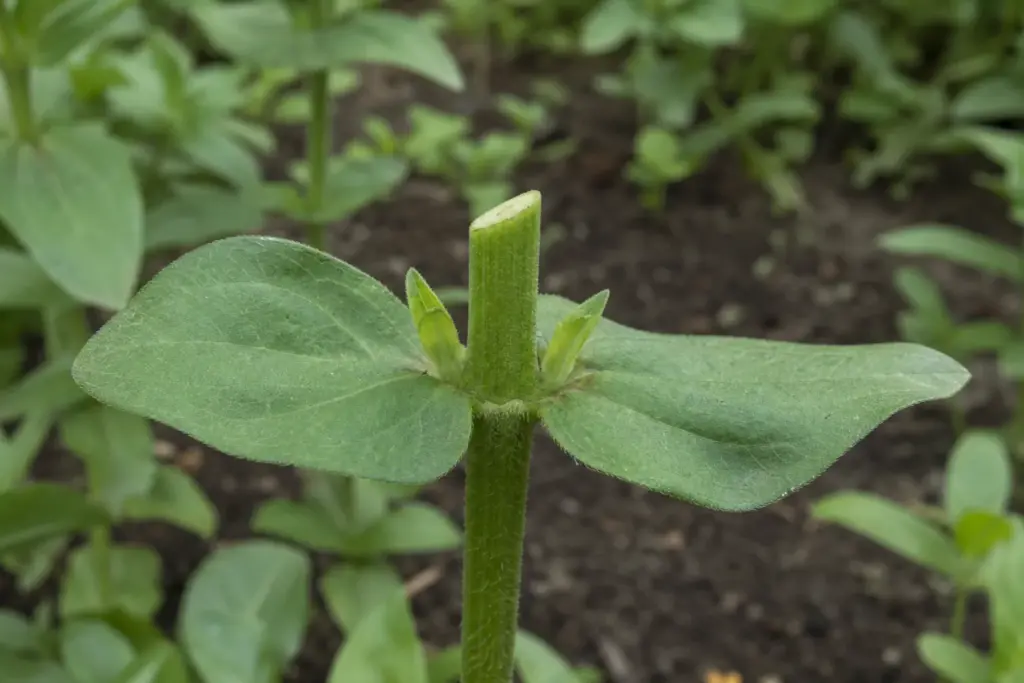
For single flowers on individual stems, follow the stem down to the first healthy leaf, side shoot, or bud and cut just above it. For daisies, cosmos, and zinnias, this usually gives the plant a cleaner shape than leaving a row of naked flower stems. For salvias, catmint, and other plants that bloom in spikes, wait until most of the spike has finished, then cut the whole spent stem back to a fresh set of leaves.2
Roses have their own habits. Illinois Extension describes dead-heading as summer pruning and gives a standard recommendation for vigorous repeat-flowering roses: cut back to an outward-facing bud above a five-leaflet or seven-leaflet leaf.5 The source also warns that this rule can remove too much foliage from weak or small plants and does not suit roses being grown for hips. The exact cut depends on rose type and vigor; if hips are part of the display, leave some faded flowers and let the fruit that follows a rose flower develop.
The flowers that repay attention
Some plants almost invite a weekly deadheading round. Iowa State Extension lists zinnias and cosmos among annuals whose faded flowers can be removed regularly to prevent seed formation and promote additional bloom.2 Calendula, marigold, coreopsis, gaillardia, scabiosa, and many container annuals can also respond well to repeated picking. New Mexico State University Extension notes that deadheaded marigolds can produce more flowers when the cuts are made early enough in the season.6
Containers are especially worth watching. A plant in a pot has limited root space, limited stored water, and often a more stressful life than a plant in the ground. If it is also carrying a full load of seed pods and rotting old blooms, it can decline quickly. A few minutes with snips can make a hanging basket or patio pot look less exhausted by the next morning.
Cut flowers and deadheading overlap beautifully. When you harvest a zinnia, cosmos, or dahlia at the right stage, you are both filling a vase and making a deadheading cut. Penn State Extension’s cut flower guidance recommends cutting a flower stem just above a new lateral flower, leaf, or bud to encourage new growth and healthy foliage.7 The vase becomes part of the pruning routine.
When to leave the seed head
Deadheading is useful, but it should not become a reflex. Some plants are worth leaving alone because their seed heads are beautiful, useful to wildlife, or needed for self-sowing. Poppies, nigella, love-in-a-mist, ornamental grasses, coneflowers, black-eyed Susans, alliums, teasel, and many native perennials can carry structure and food long after the petals fade.
University of Maryland Extension notes that in fall, stems and seed heads of herbaceous perennials and ornamental grasses can be left standing to provide seeds for birds and overwintering habitat for pollinators and other wildlife.8 That advice matters even in July because the gardener is already deciding which plants will be allowed to finish their story.
There is no contradiction here. Deadhead the annuals you want to keep blooming. Leave some seed heads on plants that feed birds, host insects, self-sow politely, or look good in winter. A garden does not need one rule for every flower. It needs judgment.
A July rhythm that works
The easiest way to deadhead is little and often. Walk the garden in the cool of morning with snips and a small tub. Remove the obvious spent blooms from annuals and containers. Cut back finished spikes. Take a few flowers for the house if you want them. Separate obviously diseased trimmings from ordinary plant waste. University of Maryland Extension recommends municipal yard-waste collection or the trash rather than home compost unless the whole material reaches a pathogen-killing temperature.8
Do not turn the task into punishment. Ten careful minutes twice a week is better than an hour of hacking once the border looks defeated. Look for new buds before you cut. Keep your blades clean. Step back often. The aim is not to erase all evidence of age, but to help the planting keep making good decisions.
By late summer, begin leaving more seed where you want birds, self-sowing, or winter structure. Deadheading is not a permanent campaign against seed. It is a seasonal edit.
Useful deadheading supplies
- VIVOSUN micro-tip gardening snips: narrow blades make it easier to reach spent blooms without cutting neighboring buds.
- Fiskars bypass pruning shears: useful for thicker flower stems, roses, and woody perennials that are too tough for small snips.
- TubTrug shallow flex tub: a light collection tub for carrying spent blooms, trimmings, and cut flowers through the border.
Final thoughts
Deadheading is one of the quietest forms of garden design. It changes the shape of a plant, the length of a bloom season, the cleanliness of a container, and sometimes the number of seeds left for later. It is small work, but it is not mindless work.
In July, the garden is full of beginnings disguised as endings. A fading flower may be the end of one bloom and the start of a seed head, a new side shoot, a vase stem, or a meal for birds months from now. The gardener’s cut decides which future is most useful. Make it clean, make it considered, and leave a few endings for the garden to keep.
References
- Penn State Extension: Pruning herbaceous plants
- Iowa State University Extension: Deadheading herbaceous ornamentals and roses
- University of Illinois Extension: Deadheading flowers and spring bulbs
- Mississippi State University Extension: How to deadhead petunias
- University of Illinois Extension: Pruning roses
- New Mexico State University Extension: Deadheading marigolds
- Penn State Extension: Growing cut flowers for joy
- University of Maryland Extension: Perennials