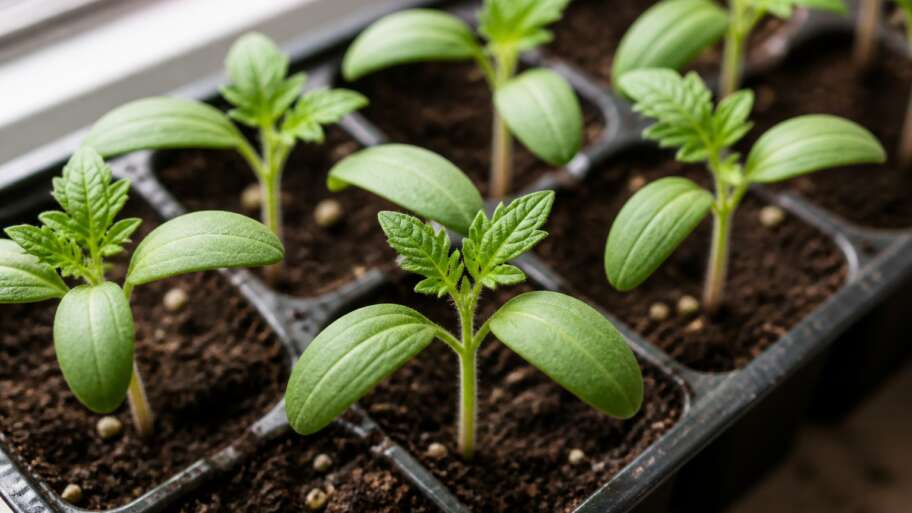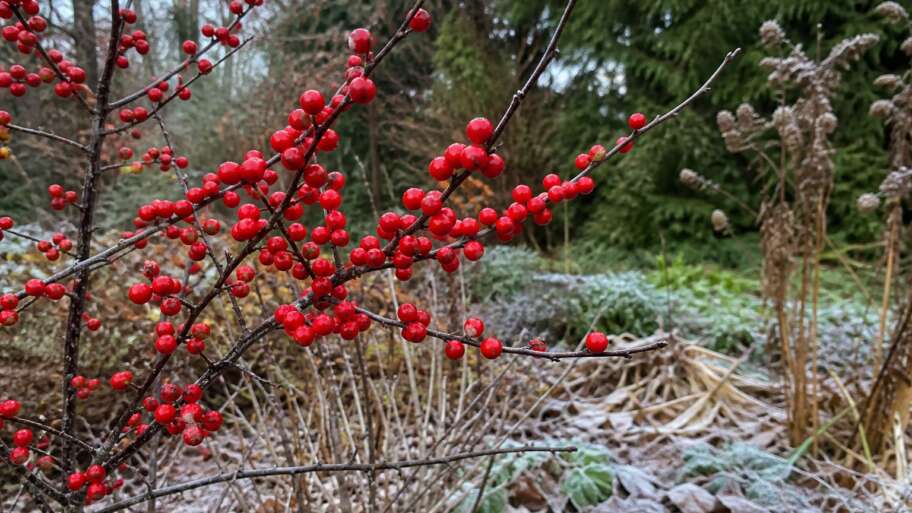

Most garden seeds are satisfied with ordinary invitations: water, air, a workable temperature, and enough contact with soil to feel that the season has turned. Beans swell. Lettuce stirs near the surface. A tomato seed, given warmth and moisture, behaves as if the world has made its intentions clear.
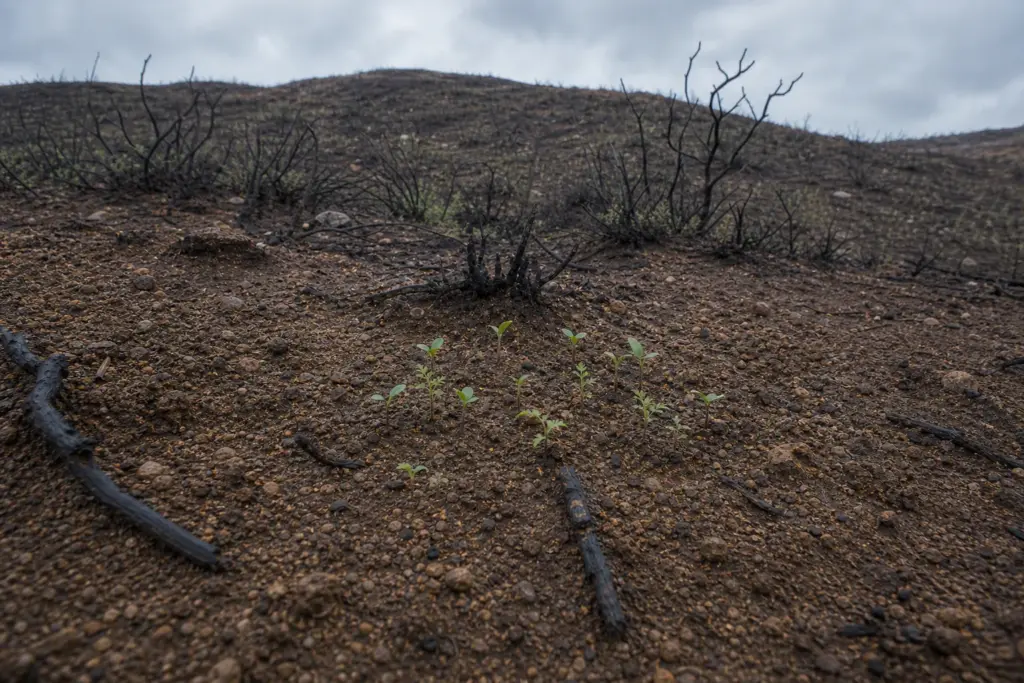
Then there are seeds that seem to be waiting for a stranger message. In fire-shaped landscapes, some seeds can sit through years of dry summers, hungry animals, shade, and competition. They do not necessarily wake because spring is pleasant. They wake because smoke has passed over the soil.
That sounds almost folkloric, but it is one of the more elegant facts in plant science. To a seed buried in chaparral, fynbos, heathland, dry woodland, or another fire-prone plant community, smoke can mean that the canopy has opened, leaf litter has been cleared, nutrients have shifted, and rain may soon carry the signal down into the seed bank. Fire, from the seed’s point of view, is not only destruction. It can also be a calendar.
Fire is not one instruction
Gardeners often compress fire into a single idea: heat. Seeds that live with fire are more particular than that. Some respond to heat because a hot pulse cracks or softens a hard seed coat. Some respond to chemicals in smoke. Some respond to charred material, changing light, nitrate pulses, reduced competition, or the simple fact that bare mineral soil is suddenly available. A global synthesis of fire-released seed dormancy treats heat and smoke as separate pathways, because each can release a different kind of dormancy in different plants.1
This matters because a packet that says “smoke treatment” is not asking for a bonfire in miniature. It is usually asking for one carefully imitated part of a post-fire landscape. Another packet might need hot water. Another might need months of cold stratification. Another might need nothing more dramatic than patience and rain. The art is not to make seed starting theatrical. The art is to understand which environmental sentence the seed is waiting to hear.
The chemistry in the haze
The best known smoke compounds are karrikins, a family of plant growth regulators discovered in smoke from burning plant material. Researchers at the University of Western Australia describe karrikins as potent dormancy-breaking signals for many species adapted to landscapes that regularly experience fire and smoke.2 They are not nutrients in the ordinary fertilizer sense. They are more like a chemical knock at the door.
One reason the discovery was so exciting is that the effect is not confined neatly to a single famous fire plant. A Plant Physiology study showed that karrikins from smoke could trigger germination in dormant Arabidopsis seeds, with the response tied into light and gibberellic acid pathways.3 Arabidopsis is not a showy chaparral shrub. It is a small research plant, useful precisely because scientists understand so much of its genetics. When such a plant responds to smoke-derived chemistry, the story becomes larger than wildfire alone.
Still, the garden lesson should stay modest. Smoke can be powerful, but it is not universal magic. The U.S. Geological Survey summarizes work on California chaparral in which smoke was highly effective for deeply dormant seed populations. The response was selective: nitrate, ammonium, and most abundant smoke gases did not stimulate the tested smoke-responsive species, although nitrogen dioxide did trigger germination in four species.4 In other words, smoke is not just dirty air. It is a complicated chemical weather report, and only some seeds are listening for it.
Why waiting can be wise
A seed that germinates at the wrong time has no second chance. For a plant growing where summer drought is severe, or where dense shrubs hold light and water hostage, immediate eagerness can be fatal. Dormancy lets the seed bank behave less like a single generation and more like a savings account. Some seeds wait near the surface. Others settle deeper. Some are eaten, some decay, and some remain viable long enough to meet the right disturbance.
Fire changes the odds. It can remove shade, consume litter, expose patches of soil, and reduce the plants that would otherwise outcompete seedlings in their first weeks. Then, in many Mediterranean-climate regions, the first reliable rains arrive after the dry season. A smoke-responsive seed is not being mystical. It is using chemistry as evidence that the surrounding world has briefly become more favorable.1
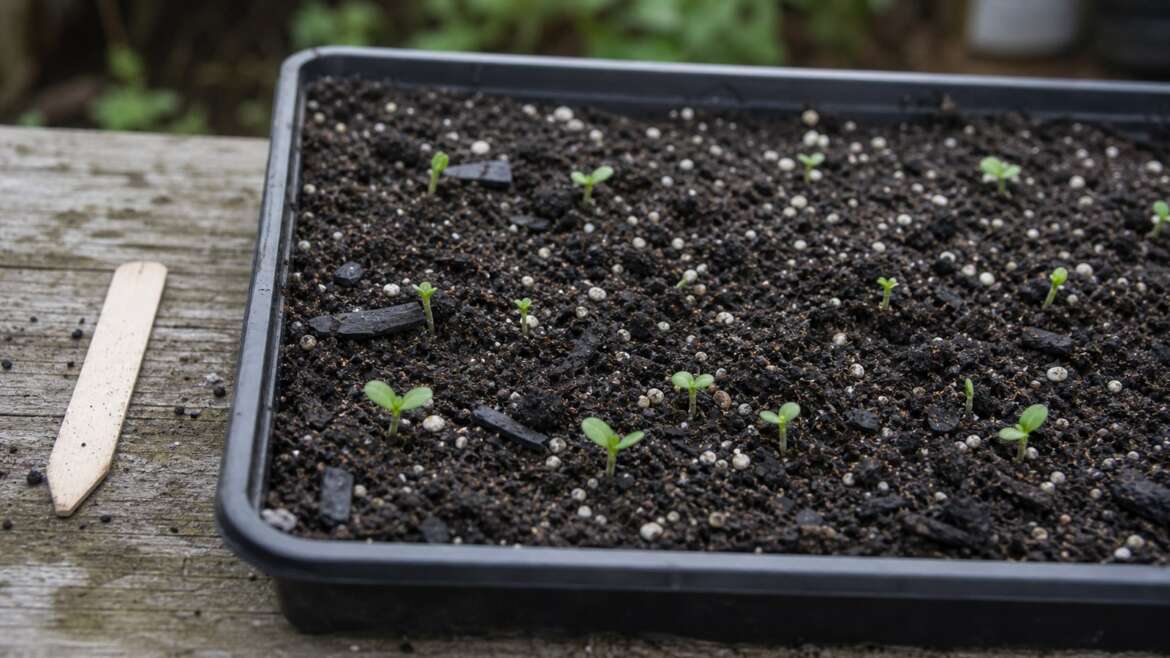
This is also why smoke treatment can feel erratic in a home seed tray. We are borrowing one cue from a larger event. If the species also needs cold, warmth, light, darkness, after-ripening, scarification, or a specific rhythm of wetting and drying, smoke alone may do very little; cold stratification, for example, imitates a different seasonal cue. UF/IFAS notes that some seeds need chilling or heat before dormancy ends, and that these pre-germination requirements vary by species.5 Smoke is a key, not the whole lock.
What this means at the potting bench
The practical version begins with restraint. Do not smoke-treat every seed because the idea is interesting. Start with plants whose seed packet, nursery guide, native plant society, or propagation reference specifically mentions smoke, charate, dry heat, hot water, or post-fire germination. Some proteas, leucadendrons, ericas, Australian and South African wildflowers, and selected California chaparral species are classic candidates. Many ordinary garden annuals are not.
If you are trying a smoke treatment, divide the seed. Treat one small batch and leave another batch untreated, then sow both under the same conditions. Label the date, species, source, treatment, and sowing medium. This turns a hopeful ritual into an experiment. Even if nothing happens, you have learned more than you would from treating every seed and waiting in confusion.
Native plant growers use several methods. The California Native Plant Society’s San Diego chapter describes fire, charate, liquid smoke, and dry heat as special treatments for fire followers, while also warning that few species need them and that results can be hard to reproduce.6 Commercial smoke-primer papers are convenient when available. Diluted smoke-water is another approach. Some growers use diluted culinary liquid smoke, but formulations and concentrations vary, so use it only when a species-specific propagation source names an appropriate product and dilution, and reserve trial material for common seed with an untreated control.
After treatment, sow into a clean, fine seed-starting mix with good contact and steady moisture. Cover only as deeply as the species requires. Keep the tray evenly damp, not swampy. If the plant comes from a winter-rainfall climate, the seed may prefer cool outdoor conditions rather than a cozy indoor heat mat. If it comes from a warm-season plant community, gentle bottom warmth may help. The smoke cue may open the door, but temperature and moisture still decide whether the seedling can walk through it.
What smoke is not
Smoke treatment is not the same as adding wood ash to a seed tray. Ash can change soil chemistry sharply, especially pH and soluble salts. Oregon State University Extension advises using fireplace ash sparingly in gardens and warns that heavy applications can damage plants and soil.7 A dusting of charred material may be part of some traditional or specialist propagation methods, but a thick gray blanket over seedlings is more likely to cause trouble than insight.
It is also not a shortcut around seed quality. Old seed, poorly stored seed, immature seed, and seed collected from plants that never developed viable embryos may not respond to the finest treatment in the world. Nor is smoke a substitute for local ecology. A prairie species that needs cold stratification may ignore smoke. A woodland perennial may need a year of warm and cold cycles. A vegetable bred for quick germination may simply germinate when watered, which is exactly what gardeners have selected it to do.
Most important, smoke treatment is not an excuse to disturb wild plant populations casually. Buy from reputable native seed suppliers, collect only where it is legal and ethical, and leave rare species alone unless you are part of a conservation project. The point is not to turn wildness into a tray of trophies. The point is to notice how precisely plants have learned their own landscapes.
A good first experiment
Choose one species with documented smoke responsiveness and enough seed to spare. Prepare two small, identical trays. Treat one tray according to the seed supplier’s directions and leave the other untreated. Keep them side by side, with the same light, moisture, and temperature. Photograph them once a week. Count germination, but also watch vigor, damping off, and whether the seedlings grow evenly after they emerge.
The most satisfying result is not always a tray packed with seedlings. Sometimes the satisfying result is a difference you can read: the treated seeds start earlier, or more evenly, or after a rain-wet week outdoors. Sometimes the control germinates just as well, which tells you the treatment was unnecessary for that seed lot. In both cases, the seed tray becomes a small conversation with the plant’s history.
Useful smoke-germination supplies
- Burpee SuperSeed 36-cell seed starting tray: a reusable tray that makes it easy to keep treated and untreated batches separate.
- Bootstrap Farmer 1020 trays with humidity dome: useful for larger comparison sowings where steady moisture matters.
- VIVOSUN seedling heat mat: helpful only when the species wants warm germination conditions after treatment.
- Midwest Hearth seed starter potting soil: a clean, fine-textured mix for small germination trials.
Final thoughts
Smoke-cued germination changes the way a garden seed tray feels. It makes the surface of the soil less ordinary. Beneath that dark mix may be a seed carrying instructions from a place where fire, rain, ash, open light, and bare ground have shaped life for longer than any gardener has been taking notes.
That is the pleasure of this kind of propagation. It is practical, but not merely practical. A smoke-treated seed is not being forced awake by a trick. It is being offered a familiar piece of its world, translated into the small language of a tray. When it germinates, the green shoot is not only new growth. It is memory becoming leaf.
References
- Biological Reviews: Fire-released seed dormancy, a global synthesis
- University of Western Australia: Karrikins, a new family of plant growth regulators in smoke
- Plant Physiology: Karrikins discovered in smoke trigger Arabidopsis seed germination
- U.S. Geological Survey: Smoke-induced seed germination in California chaparral
- UF/IFAS Gardening Solutions: Advanced seed starting
- California Native Plant Society, San Diego chapter: Seed germination and propagation technique overview
- Oregon State University Extension: Use fireplace ash sparingly to boost garden soil