
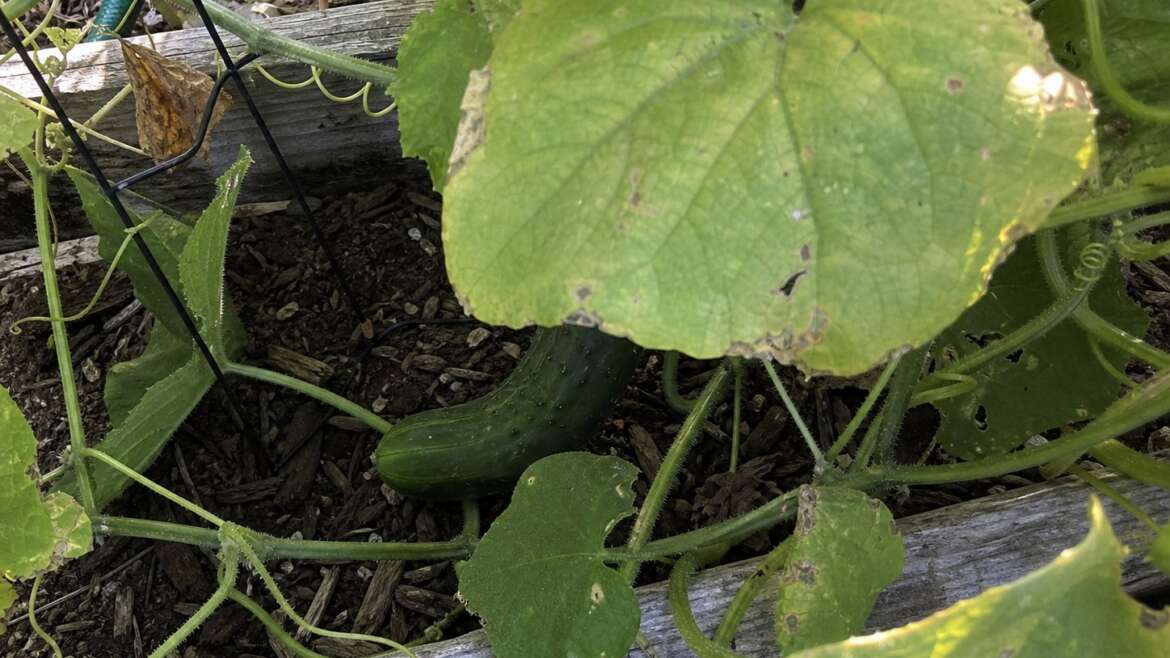
A bitter cucumber is one of August’s sharper disappointments. The vine looks vigorous. The fruit is firm, green, and cool in the hand. Then the first slice tastes less like summer and more like warning.
The flavor can seem mysterious because the fruit may look perfectly healthy. There is no rot, no obvious disease, no insect tunnel, no sunken scar. Often the bitterness is strongest near the stem end, or just under the skin, and the center of the cucumber still looks as pale and innocent as any salad ever promised.
That bitter edge is not your imagination. Cucumbers can produce bitter compounds called cucurbitacins, and the garden conditions of late summer can push those compounds into places where we notice them. A bitter cucumber is a chemistry lesson disguised as a snack.
The compound behind the taste
The bitterness in cucumbers comes from cucurbitacins, compounds found in cucurbits. Purdue Extension describes cucurbitacin as a bitter compound that may occur in cucumber fruit as well as in the plant’s foliage.1 Alabama Extension explains that higher concentrations create more intense bitterness, and that the trait is genetically controlled but often triggered by environmental stress.2
In wild cucurbits, those compounds are chemical defenses. A 2014 paper in Science describes cucurbitacins as bitter triterpenoids that discourage most pests. The researchers identified distinct regulators of bitterness in cucumber leaves and fruit, and showed how domestication selected non-bitter fruit.3
Cultivated cucumbers are supposed to keep most of that bitterness out of the fruit we eat. The leaves, stems, and roots may still carry the plant’s chemical defenses, but good eating cucumbers usually keep the fruit mild. Stress can blur that neat separation.
Why heat makes it worse
August is when cucumbers often meet the conditions they dislike most: hot days, dry soil, tired roots, and sometimes a plant that is still being asked to produce heavily after weeks of work. Purdue notes that bitterness tends to be more prominent when plants are stressed by low moisture, high temperatures, or poor nutrition.1
That does not mean every hot day produces bitter fruit. High daytime temperatures, sharp temperature changes, low or uneven moisture, unsuitable soil conditions, pests, and disease can all contribute, and the response varies among plants and cultivars.2 Heat is one possible stressor, not a switch that guarantees bitterness.
The confusing part is that the same vine can produce both good and bitter cucumbers. Bitterness can vary from fruit to fruit and even within a single cucumber.2 The garden is not a factory. It is a series of small microclimates, and each fruit is shaped by where and when it developed.
The stem end tells the truth first
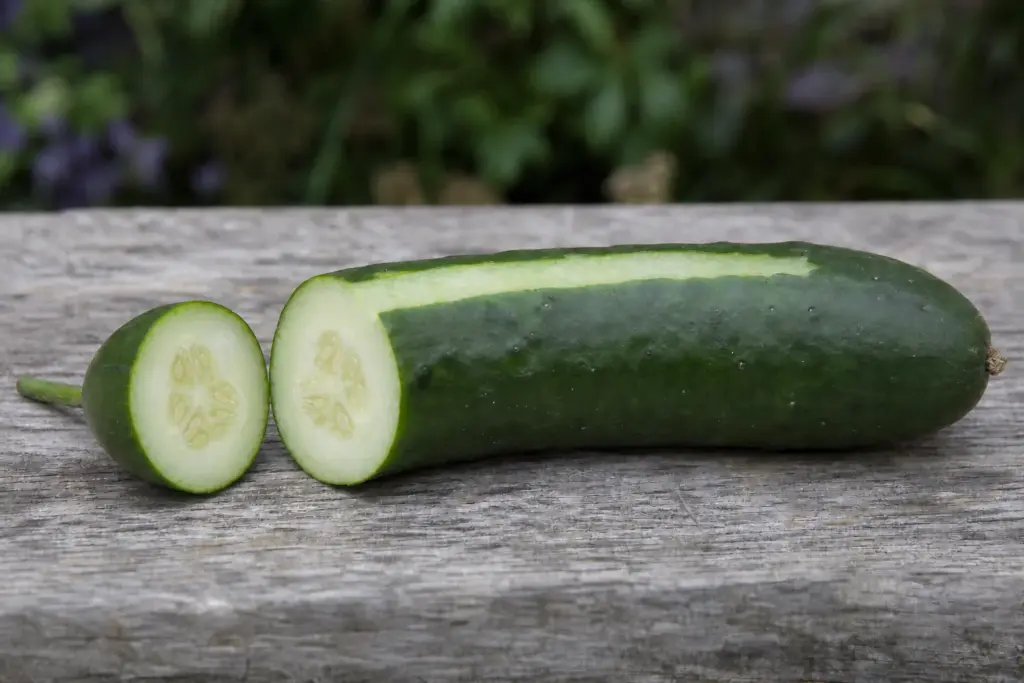
Bitterness is often concentrated where the fruit attaches to the vine. Kansas State University notes that cucurbitacins B and C give rise to the bitter taste, and that much of the bitterness is found in and just under the skin, often near the stem end.4 University of Georgia Extension makes the same practical point: the bitter compounds are more likely to concentrate at the stem end and in or just under the skin.5
Older extension advice notes that cutting off the stem end and peeling the fruit may reduce bitterness when it is confined to those tissues.14 That is a description of where the compounds may be concentrated, not a guarantee that the rest of a bitter fruit is safe.
Current Pacific Northwest guidance is more conservative: do not eat a cucumber or other cucurbit fruit if it has noticeable bitterness. High cucurbitacin levels can cause gastrointestinal illness, and an affected fruit may look completely normal.6 If a cut slice tastes bitter, stop tasting and discard the fruit rather than trying to mask the flavor.
It is not squash pollen’s fault
A persistent garden myth says cucumbers turn bitter because they cross-pollinated with squash, melons, or gourds nearby. That sounds plausible because all these plants belong to the cucurbit family, and the garden can look like one tangle of vines by August. But it is not how that season’s fruit works.
Kansas State University states that bitter cucumber fruit is not the result of cucumbers cross-pollinating with squash or melons, because those plants cannot cross-pollinate with one another.4 Even when compatible cucumber varieties cross, pollination changes the genetics inside the seed, not the flavor of the fruit flesh already developing on the mother plant.
Saved seed is a different question. A cucumber grown next year from seed that crossed with another compatible cucumber can inherit different traits; Pacific Northwest guidance specifically cautions about cucurbitacin risk in fruit grown from outcrossed home-saved seed.6 That still does not make a neighboring pumpkin responsible for this summer’s bitter cucumber.
Water steady, not dramatic
Cucumber roots are relatively shallow, so moisture swings can arrive quickly. A vine may look fine in the morning, wilt in the afternoon, recover overnight, and still be living through repeated stress. Clemson Extension recommends uniform moisture throughout the growing season.7 The goal is not occasional hero watering but steadier moisture in the active root zone.
Mulch is one of the least glamorous and most useful tools here. Kansas State recommends mulch to conserve moisture and keep roots cooler during hot, dry weather.4 A layer of straw, shredded leaves, composted bark, or another suitable organic mulch can slow evaporation and soften soil temperature swings; leave a little space around the stem rather than packing wet material against it.
Drip irrigation or a soaker hose can help because it delivers water to the soil and is easier to run consistently. Clemson recommends watering at the base of the plant, while Oregon State notes that drip irrigation and soaker hoses reduce water lost to evaporation.78 Check the soil beneath the mulch rather than watering by the clock: drainage, weather, bed depth, and soil texture all change how long moisture lasts.
Harvest before the fruit gets old
Overgrown cucumbers are rarely improved by patience. As cucumbers mature, seeds enlarge, skin toughens, and the fruit often becomes less pleasant. Clemson Extension advises frequent harvest and removing oversized fruit because mature cucumbers can slow continued production.7
Pick slicing cucumbers while they are still firm, green, and appropriately sized for the variety. For many garden slicers, that means harvesting before the fruit becomes swollen and yellowing. Pickling cucumbers should be harvested smaller. If you are not sure, taste younger fruit from the same vine and compare.
Frequent harvest also lets you catch bitterness early. If the newest fruits taste good but older ones are bitter at the stem end, size and timing may be part of the problem. If every new fruit is bitter, discard the affected fruit and investigate plant stress and variety choice.
Choose gentler varieties
Variety choice matters. Some cucumbers are bred to be less bitter or are sold as burpless, bitter-free, or low-cucurbitacin types. Iowa State University Extension recommends bitter-free cultivars such as ‘Sweet Slice’ and ‘Sweet Success’ to avoid bitter fruit.9
Seed catalogs can be optimistic, but your own garden records are better. If one variety turns bitter every August while another stays sweet under the same mulch, water, and trellis, believe the harvest. Next year, grow more of the forgiving one.
This is especially important in hot-summer gardens, containers, raised beds that dry quickly, and exposed sites where vines sit in reflected heat. A cucumber variety that performs beautifully in a cool coastal garden may behave differently against a hot fence.
What to do with a bitter harvest
Use a small cut slice only as a check. If you notice bitterness, stop tasting and discard that cucumber. Do not pickle it or try to cover the flavor with salt, vinegar, yogurt, herbs, or garlic. The Pacific Northwest guidance applies even when the bitterness seems mild because cucurbitacin concentration is not visible from the outside.6
Do the same with an unusually bitter zucchini, squash, melon, or other cucurbit fruit. Seek medical advice if someone develops significant vomiting, abdominal pain, or diarrhea after eating bitter cucurbit fruit.6 The flavor is a useful warning, not a challenge for the cook.
Then adjust the vine’s conditions rather than reflexively fertilizing during a heat wave; Oregon State advises against fertilizing plants during extreme heat.8 Check moisture beneath the mulch, harvest before fruit becomes oversized, and watch the next round. Where scorching exposure is part of the problem, temporary, well-ventilated shade can reduce the heat load, but keep shade cloth raised above the foliage so air can move.
Useful cucumber-stress supplies
- Rain Bird GARDENKIT raised-bed drip kit: useful for delivering water at soil level and keeping cucumber roots more evenly moist.
- 40% garden shade cloth, 10 × 20 feet: useful as short-term, elevated shade during severe heat in exposed beds or container gardens; leave room for airflow.
- Heavy-duty cucumber trellis netting, 32.8 × 6.6 feet: keeps vines off the ground, improves access for frequent harvesting, and can improve airflow when vines are not overcrowded.
Final thoughts
A bitter cucumber is not a personal insult from the garden, though it can taste like one. It is the result of chemistry, genetics, and growing conditions. Heat may matter. Water may matter. Variety and the age of the fruit matter. The stem end often tells the story first, but any noticeable bitterness is reason to discard the fruit.
The useful response is steadiness rather than superstition. Grow varieties that stay mild in your climate, mulch the bed, water before the root zone is dry, and harvest before fruit becomes oversized. Then notice what the next fruit and the next season tell you. A vine that made one bitter cucumber during a heat wave may still produce good fruit after its conditions improve.
References
- Purdue Extension: Cucumbers Bitter During Hot, Dry Weather
- Alabama Cooperative Extension System: Bitter Cukes
- Shang et al., Science: Biosynthesis, regulation, and domestication of bitterness in cucumber
- Kansas State University: Bitter Cucumbers
- University of Georgia CAES: Don’t Let Bitterness Rob Cukes of Flavor
- Pacific Northwest Pest Management Handbooks: Cucumber, Toxic Cucumber
- Clemson Cooperative Extension: Cucumber
- Oregon State University Extension: How to Protect Yourself and Your Plants During Extreme Heat
- Iowa State University Extension: Why Are Some of My Cucumbers Bitter?