

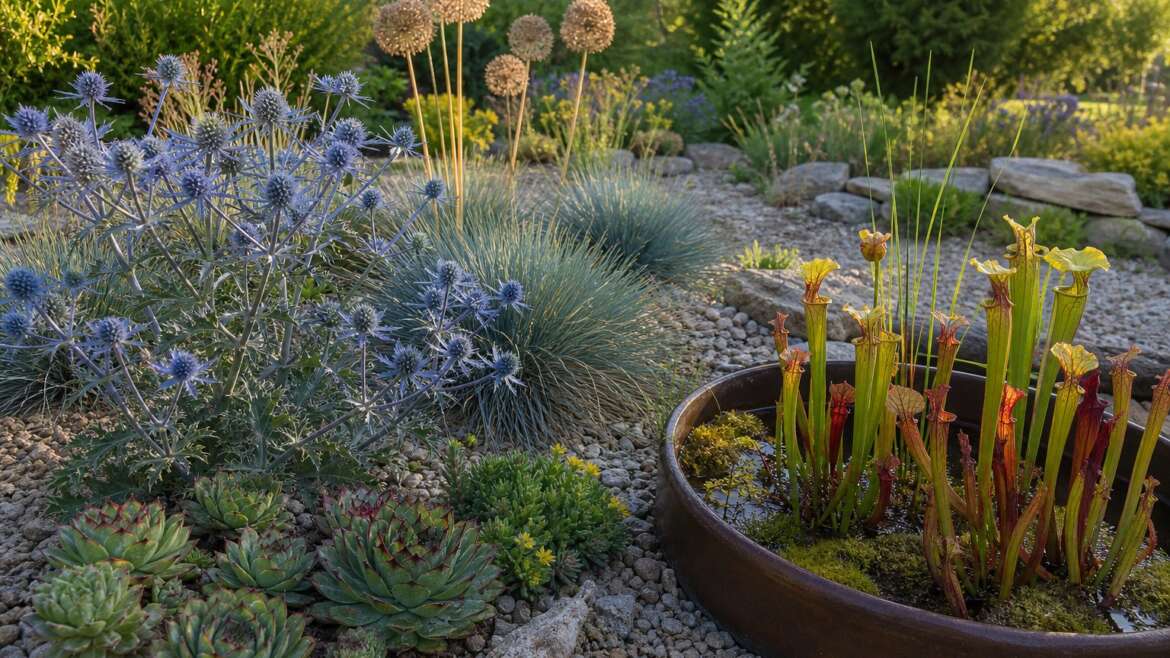
The most convincing alien garden is usually made from earthly plants. A pitcher plant can look like a creature. Sea holly can look forged from blue metal. Some succulents make tight geometric rosettes; allium seed heads hover like little satellites; cardoon, yucca, contorted willow, and blue fescue can all look briefly as if they have arrived from another atmosphere.
The trick is not to collect every strange plant you can find. The trick is to make the strangeness believable. If you are still sketching the wider scene, start with the design frame in how to build a sci-fi garden from earthly plants; this article is the plant-list conversation that comes after that first pass.
The plant still has to belong. UF IFAS describes successful plant selection as a compromise between the science of growing plants and the desire for artistic expression.1 That sentence should be pinned to every themed planting plan. Weird is not enough. A plant that wants wet, acidic bog soil will not become tougher because the design mood is interstellar.
Strangeness comes from contrast
A single unusual plant reads more clearly when the plants around it are quieter. Put a spiky blue eryngium in a haze of fine grass and it looks sculptural. Put ten unrelated oddities together and the eye gives up. Contrast also keeps maintenance honest. Plants with similar water, light, and soil needs can share a bed; plants with incompatible needs should be given different stages.
Pitcher plants are a good example. NC State Extension notes that Sarracenia prefer full sun and moist to wet acidic soils, are sensitive to dissolved salts, and should not be fertilized or fed scraps.2 They can look wonderfully strange, but only in a bog container or bed built for that kind of plant. They do not belong in a dry gravel garden next to sedum.
Dry-world aliens
For hot, open, well-drained places, choose plants whose strangeness is already tied to drought adaptation. Sedums tolerate rocky, poor, well-drained soils, and their succulent leaves make them drought tolerant.3 Sea holly is another useful plant for this mood: NC State describes it as tolerant of poor or dry soil, with spiny foliage and unusual flowers that attract butterflies.4 These plants look unusual because they have solved real environmental problems.
Repeat them in drifts rather than collecting one of everything. A low mat of sedum under three upright grasses can look more convincing than a crowded novelty bed. Leave gravel, stone, or dark mulch visible in small amounts so the forms have breathing room. If your site naturally wants this drier palette, the same discipline behind designing a xeriscape that feels alive applies here: group plants by water need first, then make the scene dramatic.
Wet-world aliens
If the garden fantasy leans toward swamp, use a container bog, half barrel, or lined miniature wetland rather than watering an ordinary border into sickness. Bog plants need consistent moisture and the right chemistry. Mississippi State Extension notes that bog plants generally need at least six hours of sun and moist, acidic soil during the growing season.5 That is a specific habitat, not a decorative afterthought.
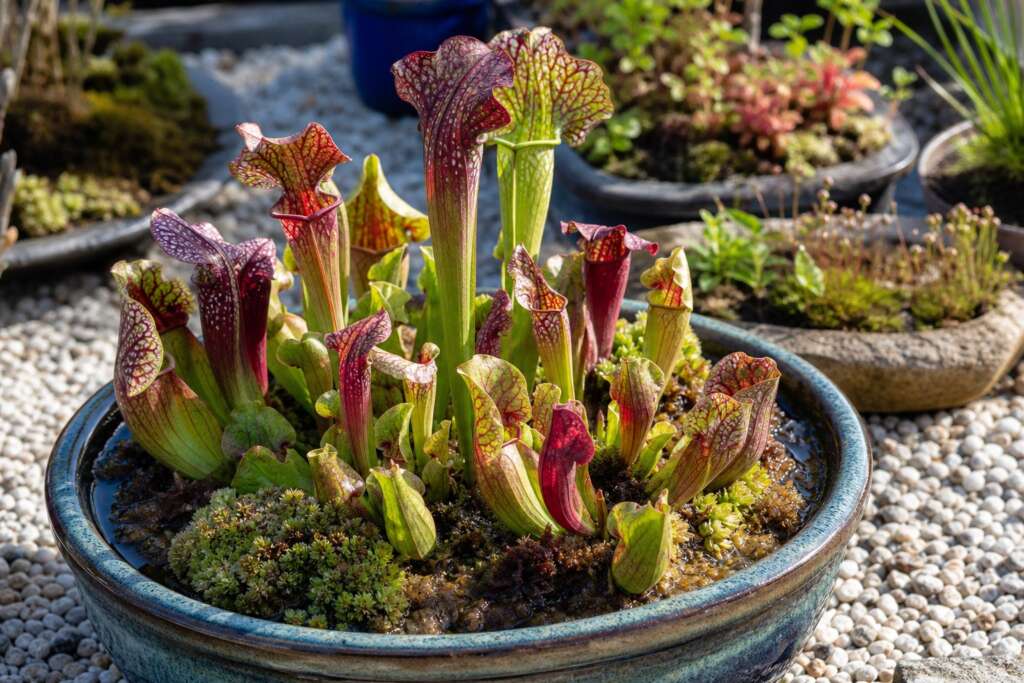
For a deeper setup, the guide to carnivorous plant gardening goes further into small-bog culture for pitcher plants, sundews, and flytraps. The important point here is simpler: do not treat carnivorous plants as props. Their oddness comes from a habitat where ordinary soil fertility is low, water quality matters, and their leaves have taken on work that most leaves never attempt.
Make the pattern readable
Alien-looking plants work best when the garden has a small vocabulary. Choose two or three repeated traits: silver-blue foliage, vertical spikes, rounded seed heads, black stems, low rosettes, or glossy pitcher forms. Then repeat those traits at different heights. A blue fescue clump, a sea holly flower, and a blue-green sedum can echo each other without pretending to be the same plant.
Hardscape can help, but it should not do all the acting. A dark gravel path, one rusted steel edge, a smooth boulder, or a simple reflective bowl can make plant shapes feel sharper. Too many metallic objects, glowing ornaments, and novelty figures pull attention away from the living material. The plants are already strange. Let them be the main event.
The pleasure of alien-looking plants is that they reveal how strange adaptation already is. Succulence, spines, wax, pitchers, silver hairs, rolled leaves, and architectural seed heads are not costumes. They are plant solutions. A good sci-fi planting lets those solutions become visible without asking the plant to live outside its own rules.