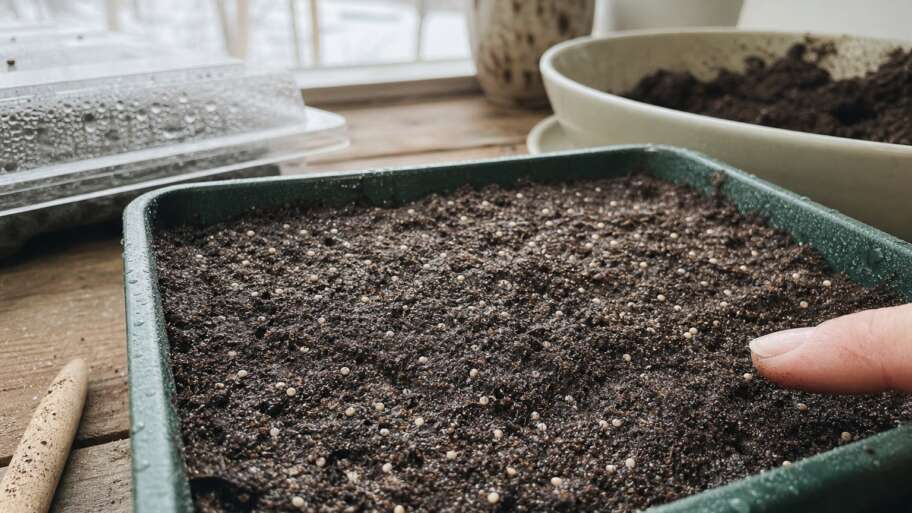

On a January afternoon, the smallest seeds on the bench can feel like the most uncertain ones. Lettuce seed looks almost weightless. Petunia and begonia seeds are closer to dust than to anything a gardener can confidently place. Then the packet gives an instruction that seems to go against every planting instinct: press into the surface, do not cover. Gardeners…
Plant Guides
Close looks at garden and houseplants: their identifying features, growth habits, uses, limitations, and site-specific care.
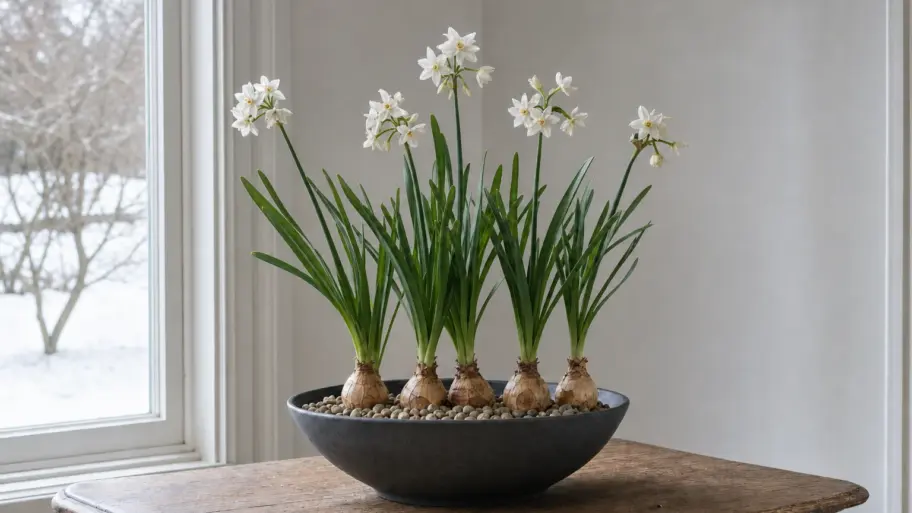
On Christmas morning, a bowl of paperwhites can look as if someone has smuggled April onto the windowsill. Outside, the garden may be resting under frost, mulch, or a thin layer of snow. Inside, bare tan bulbs sit in white pebbles and throw up green blades, then clusters of starry flowers so bright they almost make the room feel newly…
Read more about The Christmas bulbs that bloom in a bowl of stones
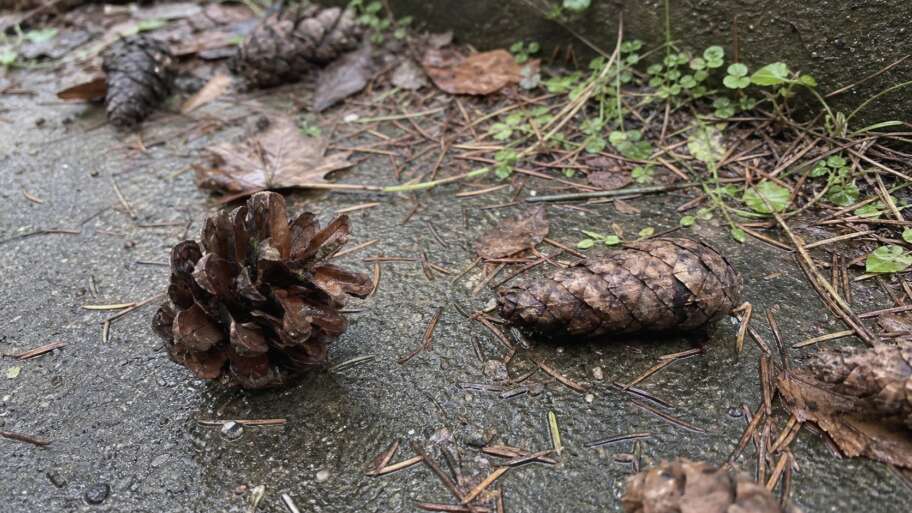
A pine cone on a December path can look like a small piece of carved weather. On a dry afternoon, its scales flare outward and cast little shadows. After rain, the same cone tightens into a darker, neater shape, as if it has tucked itself away from the cold. It is tempting to read this as a kind of plant…
Read more about Why pine cones open and close with the weather
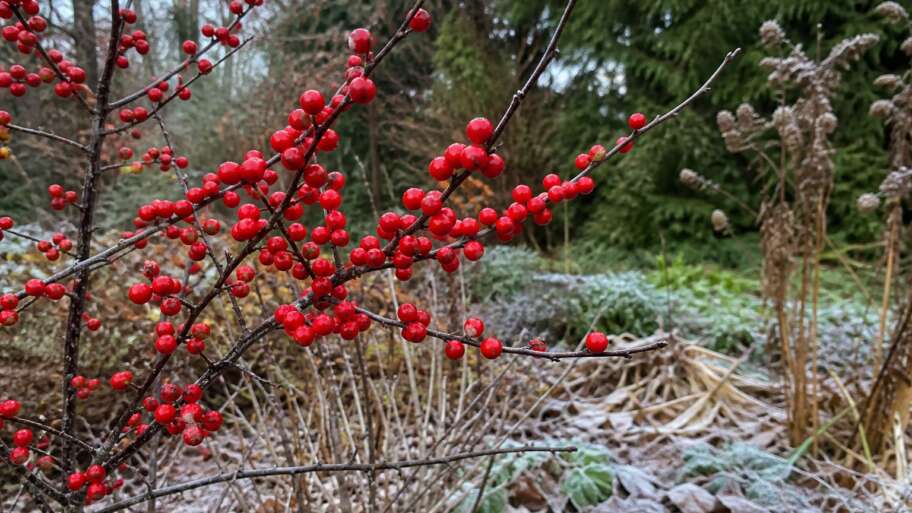
By early December, most shrubs have stopped trying to impress anyone. Their leaves have dropped, their flowers are old news, and their summer shape has been reduced to twigs. Then winterberry comes into view as if the garden has been saving a secret. The leaves fall away, and the stems are left strung with red fruit. It is a strange…
Read more about Why winterberry looks brighter after the leaves fall
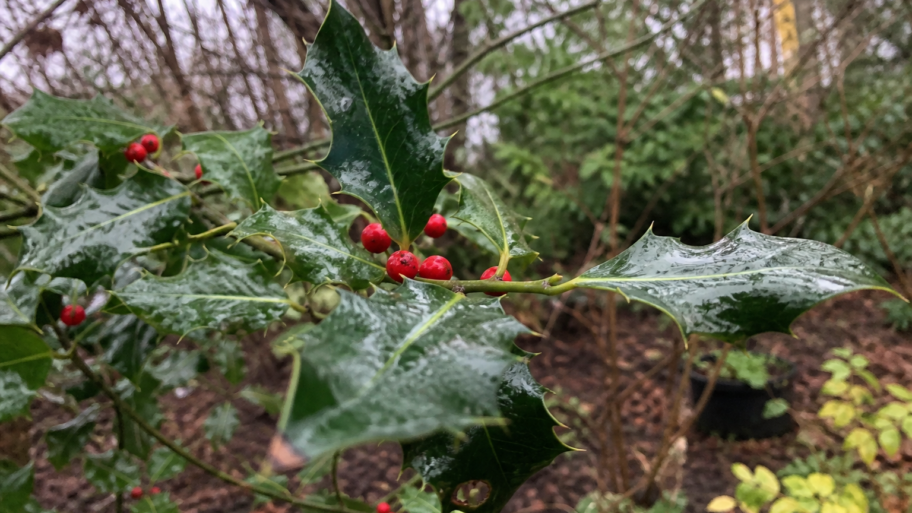
A holly branch in December seems, at first, to be one of the garden’s simplest statements. Dark glossy leaves. Red berries. A shape sharp enough to belong to winter. Then you look more closely and the certainty begins to loosen. One leaf has a dramatic ring of points. Another, only a few inches away, is almost smooth. A third looks…
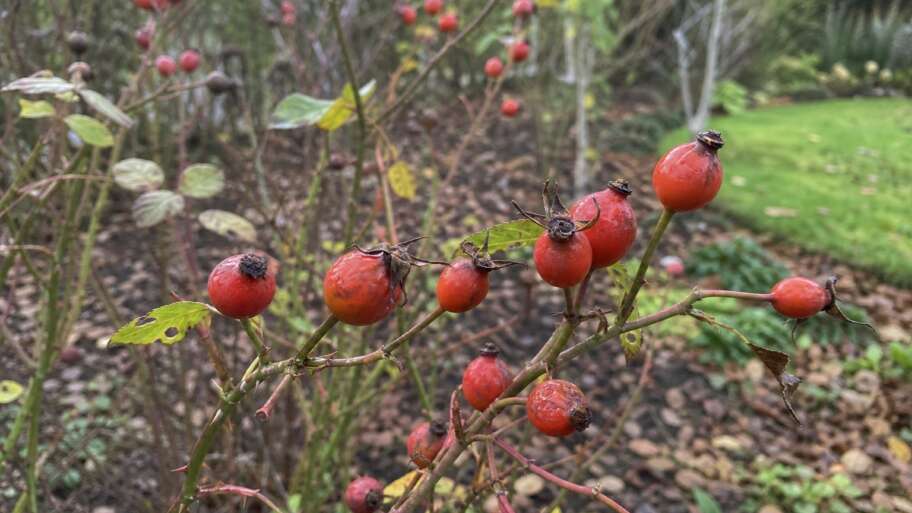
By late November, roses have mostly lost their usual language. The petals are gone. The leaves are tired or already fallen. Canes that looked romantic in June have become thorny lines against a quieter garden. Then, where a flower once opened, a small red or orange fruit remains. Rose hips are easy to miss if you think of roses only…
A carrot harvest has a way of making the soil confess. You loosen the row, pull what should be a clean orange taper, and out comes something with knees. One root has divided into two legs. Another has wrapped itself around a pebble. A third looks as if it tried to become a hand before remembering it was dinner. Forked…
By late October, the pumpkin patch begins to feel less like a vine and more like a collection of objects the garden is almost ready to release. The leaves have thinned. The vines are tired and scratched with mildew. The fruit, which spent summer swelling quietly under broad leaves, now sits in the open with a dull orange weight that…
Planting garlic in autumn feels a little like hiding dinner from yourself. You break a head apart, press the cloves into cooling soil, cover the bed, and then walk away just as the rest of the garden is slowing down. There is no instant green reward. No seed leaves. No tidy row of hopeful seedlings. Just papery cloves buried point-up…
By the end of September, a tomatillo plant can look as if it has been quietly making decorations while the tomatoes were taking all the attention. The plant sprawls through its cage, lifts yellow flowers in the leaf forks, and hangs little green lanterns from the stems. Some are tight and empty-feeling. Some are papery and swollen. Some have split…