
Why some leaves are cut into perfect circles

Why some leaves are cut into perfect circles

By late July, a rose leaf can look as if someone has touched it with a miniature punch. The edges are not shredded. The center is not speckled. Instead, neat half-moons have vanished from the margins, each one as clean as a bite taken by a very tidy pair of scissors. It is easy to read this as damage, because…

Read more

The short morning life of a squash blossom

The short morning life of a squash blossom

A squash blossom is not a flower that lingers. It opens like a little lantern in the cool part of the morning, spends its best hours in the company of bees, and by afternoon begins to fold, soften, and give itself back to the plant. If you walk the vegetable garden at breakfast, the flowers look generous. If you wait…

Read more

A summer bed that cooks its weeds

A summer bed that cooks its weeds

Soil solarization is gardening’s most disciplined use of a hot spell. Instead of fighting July heat, you borrow it. A bed is watered deeply, covered tightly with clear plastic, and left under the sun until the upper soil becomes hot enough to weaken weeds, weed seeds, some soilborne diseases, and certain pests. It looks almost too simple: bare soil, plastic,…

Read more

The small cuts that keep flowers blooming

The small cuts that keep flowers blooming

By early July, a flower border begins to show its decisions. Some stems are still in full color. Some are carrying petals that have curled, browned, and collapsed around the center. Others have already moved on, quietly swelling seed heads where a bloom used to be. The garden is not finished, but it is changing its mind. Deadheading is the…

Read more

How climbing plants find a handhold

How climbing plants find a handhold

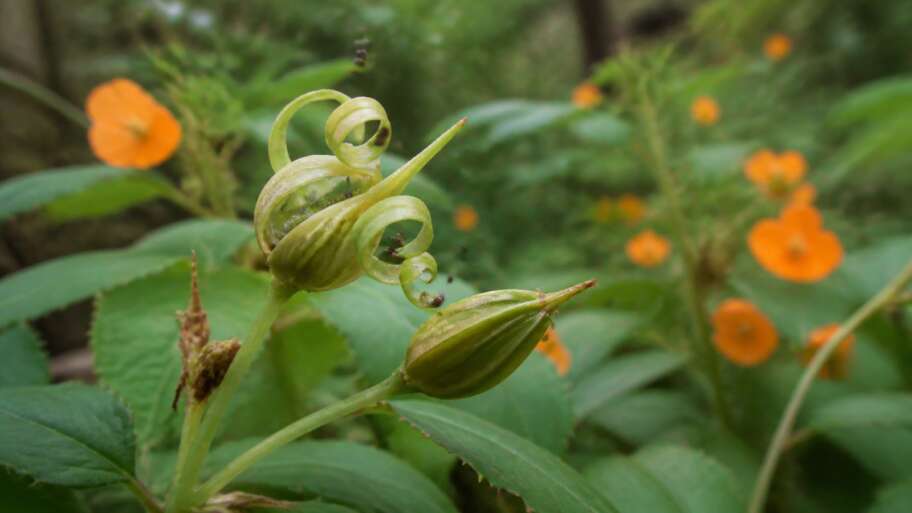
A climbing plant begins with an apparent problem: it wants light, but it has not paid the woody price of a tree. Instead of building a trunk, it borrows the garden. A pea finds netting. A cucumber finds twine. A clematis catches a wire with a curling leafstalk. A grapevine reaches, touches, tightens, and turns a fence into a ladder.…

Read more

Why leaves bead with water at dawn

Why leaves bead with water at dawn

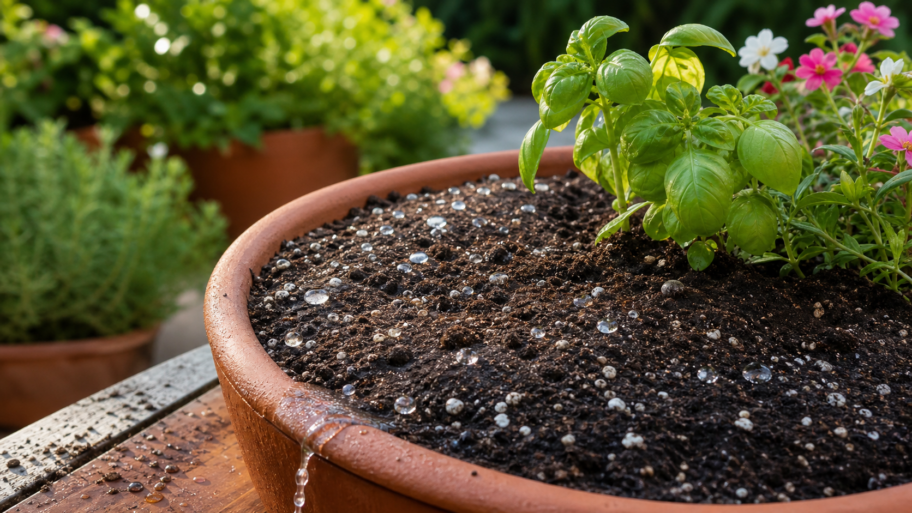
Some mornings, a garden looks as if it has been arranged by someone with a jeweler’s patience. Tiny droplets sit on the teeth of strawberry leaves. Beans carry clear beads at the very tips of their young leaflets. Grass blades hold a bright point of water where each blade narrows to a tip. The pattern is too neat to be…

Read more

The quiet physics of an olla garden

The quiet physics of an olla garden

An olla is one of the quietest irrigation tools a gardener can use. It has no timer, no spray pattern, no little plastic emitters to unclog. It is simply an unglazed clay pot, buried in the soil and filled with water, asking the ground around it a patient question: are you thirsty yet? When the surrounding soil is dry, water…

Read more

The edible edge: growing nasturtiums with purpose

The edible edge: growing nasturtiums with purpose

A nasturtium does not behave like a polite border annual. It sprawls, loops, leans over timber, climbs if you help it, and drops bright flowers into the vegetable garden as if the lettuces and beans were waiting for punctuation. That informality is part of its usefulness. The plant softens hard edges, feeds the eye, feeds the table, and quietly makes…

Read more

When plants tell time: phenology for gardeners

When plants tell time: phenology for gardeners

Every spring has two calendars. One hangs on the wall and moves forward one square at a time. The other opens unevenly in the garden: snowdrops first, then maple bloom, then forsythia, then the first lilac flowers, then the moment when peas stop sulking and beans begin to make sense. Gardeners get into trouble when they trust only the first…

Read more