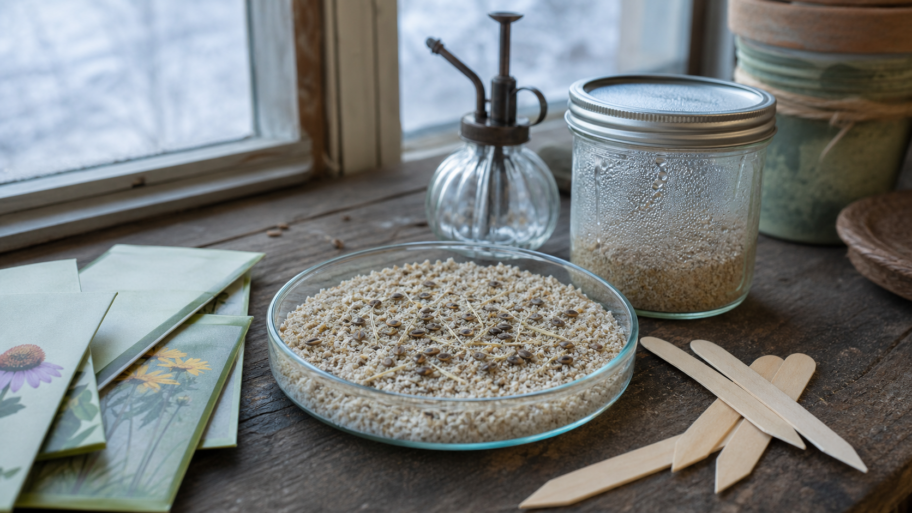

A mossarium is a garden reduced to its most intimate scale: a pane of glass, a few spoonfuls of substrate, a soft green colony of moss, and enough moisture to make a miniature weather system. It looks decorative, almost like a living object from a cabinet of curiosities, but it is also a small lesson in plant biology. Unlike a…
A balcony garden is not a small backyard lifted into the air. It is its own climate: brighter or shadier than expected, windier than the street below, quick to dry, and limited by weight, drainage, rules, and reach. Once you accept that, the space becomes much easier to plant well. The best balcony gardens do not begin with a shopping…
Edible flowers can make a plate look effortless, which is why they are easy to misuse. A handful of petals scattered over everything is not cooking. It is confusion in color. The better approach is quieter: know the flower, know the flavor, use the edible part, and let the dish still taste like itself. Flowers are plant organs, not decorative…
An edible flower garden should earn its place twice. It should look alive in the border, and it should make sense in the kitchen. If it only photographs well, it is decoration. If it only produces petals but weakens the planting around it, it is a crop without a garden. The best version does both jobs quietly. Think of the…
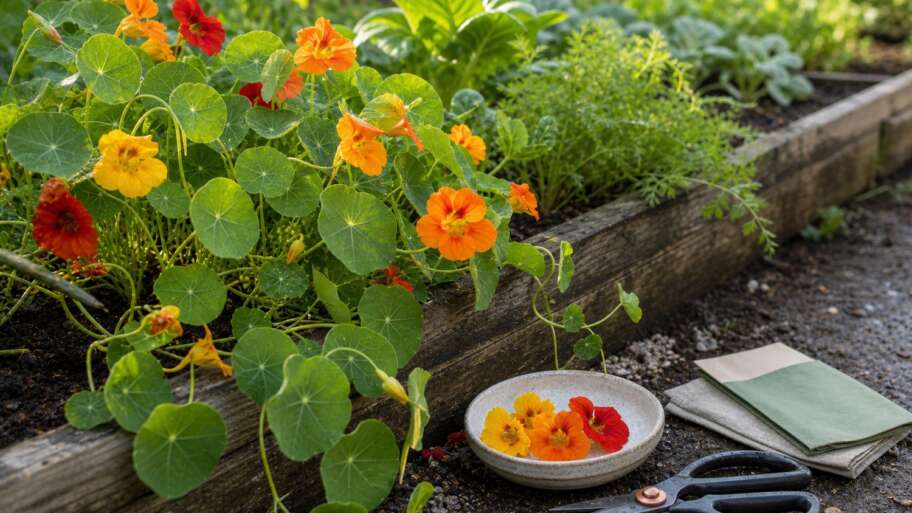
Edible flowers are often treated as decoration first and food second. That is backwards. A flower belongs on the plate only after it has belonged in the garden: correctly identified, grown without unsafe chemicals, harvested cleanly, and understood as an ingredient with flavor rather than confetti. When grown well, edible flowers bring more than color. Nasturtiums are peppery. Calendula petals…
A garden does not cure the mind. That is too neat, and too heavy a burden to place on soil. What a garden can do is offer a reliable set of conditions the mind often responds to well: light, repetition, modest physical work, sensory detail, seasonal change, and the quiet evidence that living things are still doing their work. That…
A calming garden is not made by buying calming things. It is made by reducing friction between a person and the living world. The path is easy to enter. The seat is actually comfortable. The plants invite touch, scent, sound, and seasonal attention without demanding constant rescue. The garden does not perform serenity. It supports it. That support can be…
A carnivorous plant garden is not a horror movie in miniature. It is a wetland problem solved by leaves. Venus flytraps, sundews, and pitcher plants still photosynthesize. They still need light more than drama. What makes them strange is that they evolved in places where the soil gives very little back. The United States Botanic Garden summarizes the basic rule…
A medicinal herb garden should be cared for like a serious kitchen garden, not a cabinet of promises. The plants may have long histories of human use, but in the soil they still need the ordinary things: light, drainage, spacing, water, and protection from disease. NC State Extension’s Homegrown program discusses medicinal plants such as echinacea as garden and landscape…
A living mural has a glamorous first week. The pattern is sharp, the foliage is tight, and every small plant seems to know its assigned color. The harder part begins after the photograph, when roots start exploring, leaves grow at different speeds, and one dry pocket can turn a crisp design into a missing tile. The point is not only…