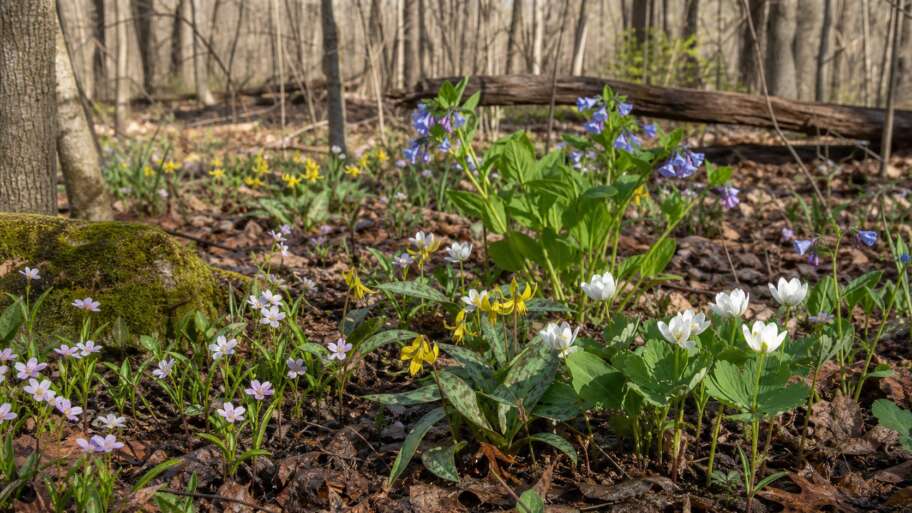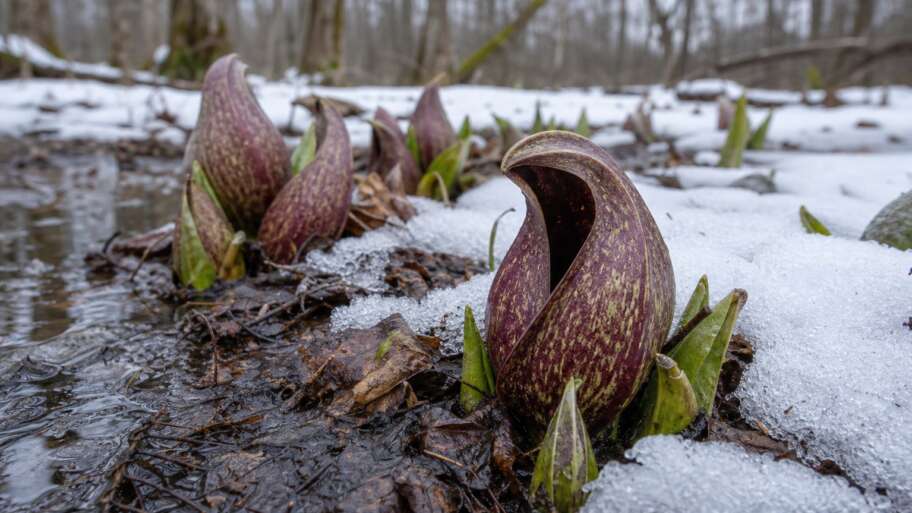

Before the woodland has much color to offer, eastern skunk cabbage is already making weather of its own. It rises from wet leaf litter while snow still lingers in the shaded hollows, often with a clean melted ring around each maroon hood. Look closely and it does not resemble cabbage at all. It looks more like a small, mottled lantern…
Plant Guides
Close looks at garden and houseplants: their identifying features, growth habits, uses, limitations, and site-specific care.
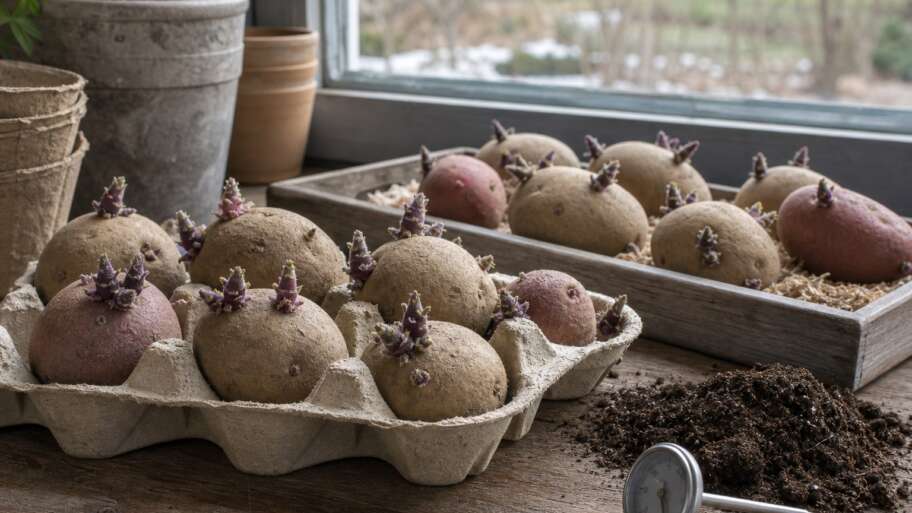
A seed potato in February looks like a small argument against winter. It sits in a carton on a cool windowsill, still mostly tuber, but with blunt purple nubs beginning to rise from its eyes. Outside, the soil may be wet, cold, and not remotely ready. Inside the potato, spring has already begun negotiating. This quiet pre-sprouting is often called…
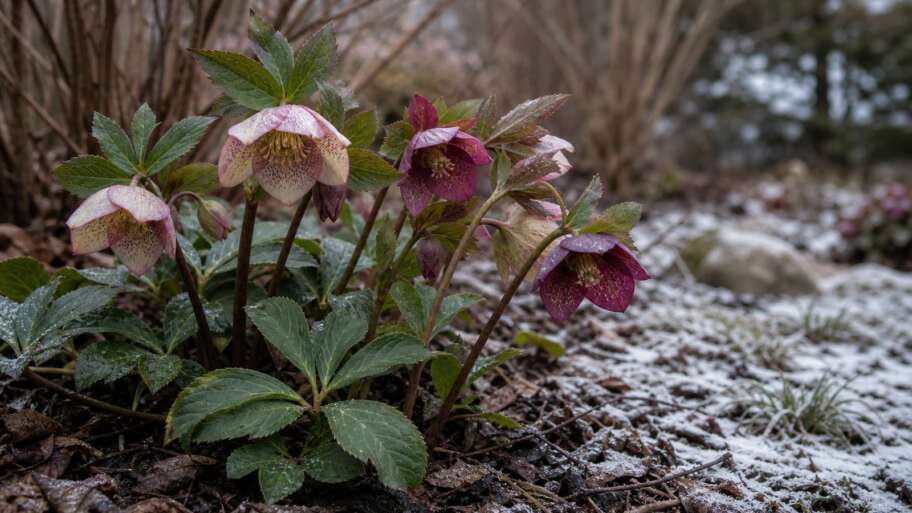
February is not a generous month in most gardens. It gives you mud, flattened leaves, and a few green shoots that may or may not mean spring is serious. Then a hellebore opens, and the whole scene becomes more interesting. It is not an easy flower in the theatrical sense. Hellebores make you stoop. Their blooms tilt toward the soil…
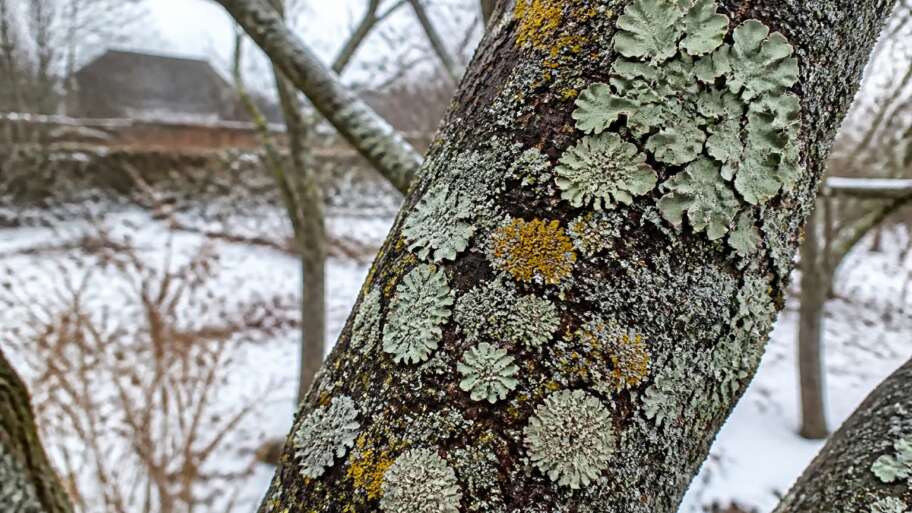
January makes tree bark readable. The leaves are gone, the herbaceous border has collapsed into stems and seed heads, and the garden has stopped distracting us with flowers. What remains is quieter but not empty: twigs, buds, bark plates, old pruning cuts, and pale islands of green, gray, yellow, and blue-green spreading across trunks like weather maps. Those patches are…
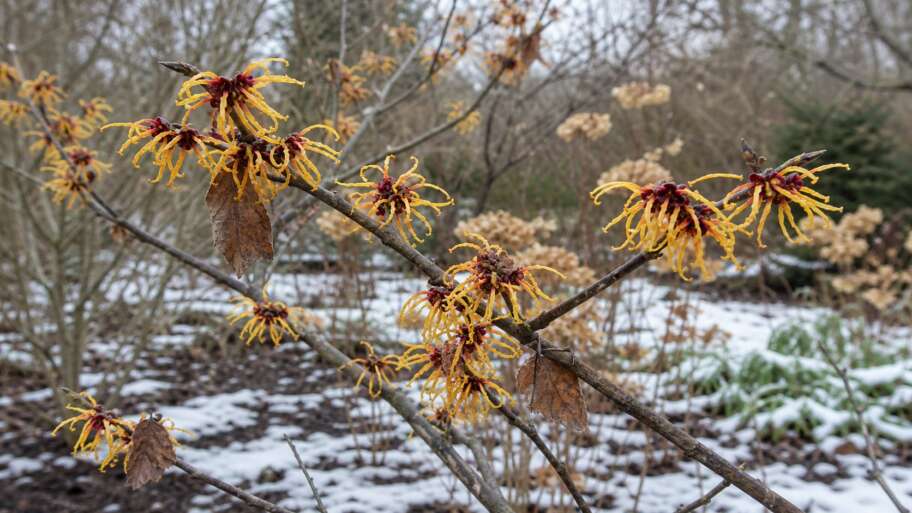
In January, a flowering shrub can feel almost unreasonable. The garden is mostly structure: bark, seed heads, mulch, stone, the green insistence of evergreens. Then witch hazel opens on bare wood. Its flowers do not arrive as soft spring cups or summer trumpets. They arrive as thin ribbons, yellow or copper or red, curling and uncurling in the cold like…
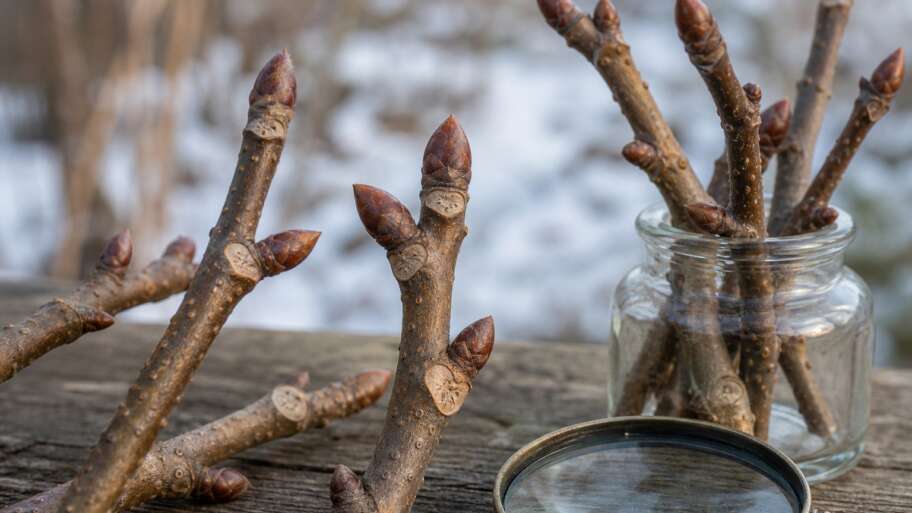
In January, a deciduous shrub can look as if it has been reduced to punctuation: lines, dots, scars, angles, and small brown commas at the tips of twigs. The leaves are gone. The flowers are months away. The garden seems to have removed every clue except shape. Look closer. A bare twig is not empty. It is labeled. Every bud…
On the last day of the year, a garden can look as if it has been reduced to essentials. Soil, bark, seed heads, paths, the quiet architecture of shrubs. Then a stand of red-twig dogwood catches the low light and refuses to behave like background. The stems are leafless, but they are not dull. They burn red against snow, frost,…
By late December, a houseplant can look both present and paused. The pothos is still green. The snake plant still stands like a row of quiet blades. The fern still catches light with all its small hands. Nothing has died, exactly, but the room has changed around them. The window is colder. The sun leaves early. The heater dries the…
In December, a garden becomes very honest. The flowers have stopped covering weak structure. Herbaceous stems have collapsed or turned to seed. Deciduous trees have taken their color down to bark, bud, and branch. Then the evergreens begin to look almost improbable: pine, spruce, yew, holly, boxwood, rhododendron, juniper. They stand in the cold with leaves still attached, as if…
A late-autumn garden in a cold-winter climate can look settled after the first hard frosts. The stems have gone quiet. Leaves are pressed flat by rain. The soil darkens, firms, and seems to have closed the season. Then, one morning, a perennial appears to be sitting too high, its crown pushed above the bed as if the ground has exhaled…