
Maya horticulture is often reduced to a picture of maize in a clearing, but the better word is relationship. A milpa was not simply a field carved out of forest and then forgotten. It was part of a cycle of annual crops, useful trees, managed regrowth, soil memory, and household knowledge. The forest edge was not the opposite of the garden; it was one of the garden’s tools.
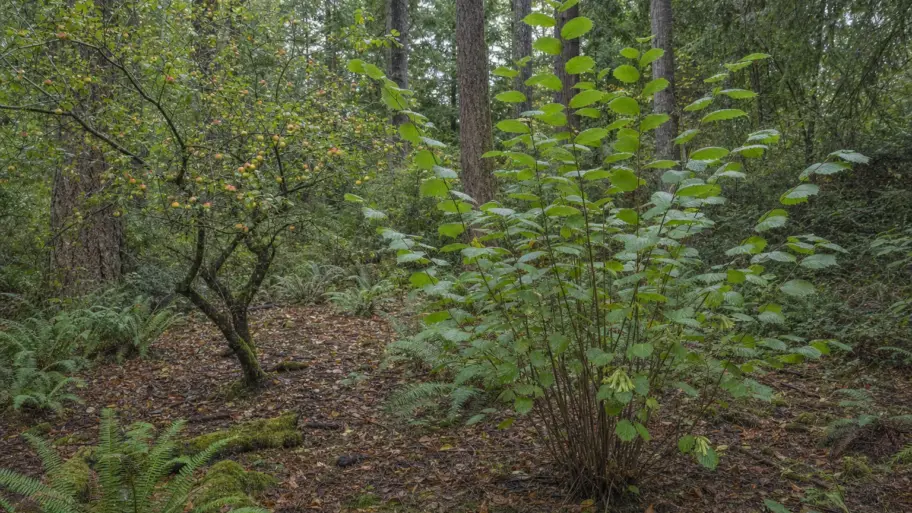
The MesoAmerican Research Center at UC Santa Barbara describes the Maya milpa as a rotation of annual crops with managed stages of shrubs and trees, eventually returning to closed forest if the cycle is allowed to continue.1 That point matters because fallow is easily misunderstood as abandonment. In a managed cycle, regrowth restores cover and becomes another productive stage rather than an empty interval.
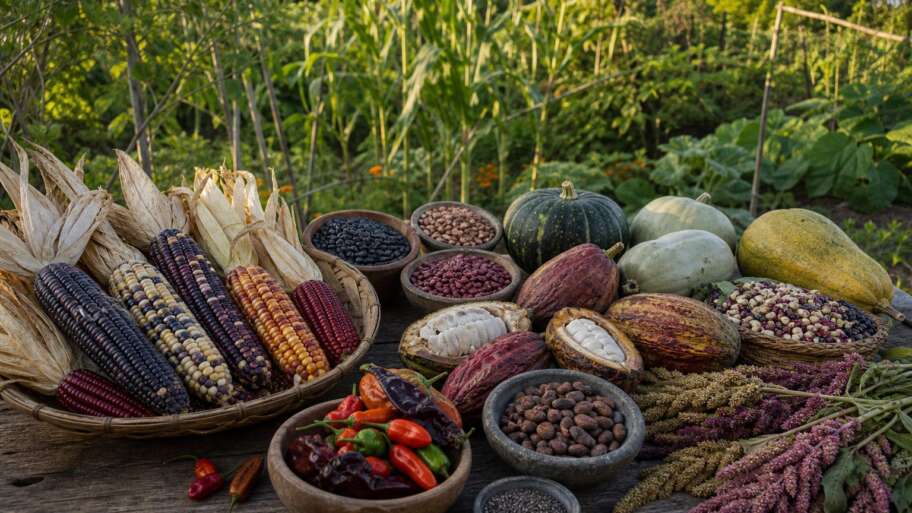
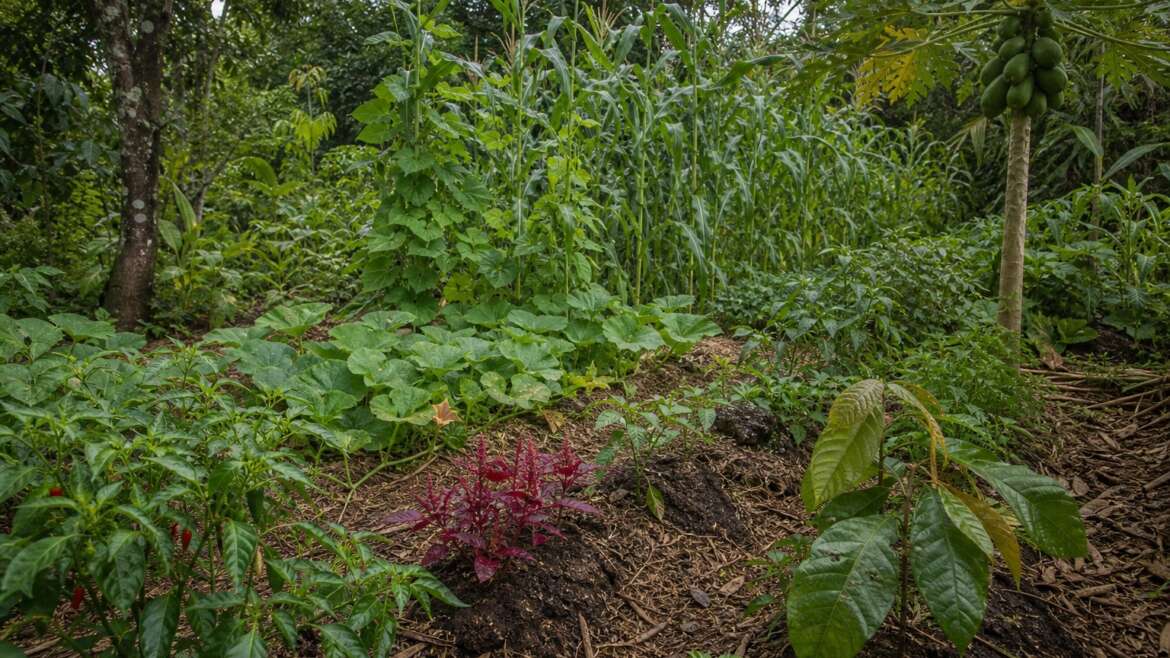
Maize, beans, and squash are a familiar milpa combination, but they are not a universal recipe. “Three Sisters” is a culturally specific name associated especially with Indigenous traditions in North America; the USDA’s history traces both its cultural meanings and the familiar agronomic shorthand.2 A survey of small farms in Guatemala’s Western Highlands found many milpa combinations, including common or faba beans, squash, potatoes, vegetables, and fruit trees, shaped by elevation, soils, diets, markets, and farmers’ choices.3
More than slash and burn
Fire has been used in parts of the cycle, but the label “slash-and-burn” stops the story at the clearing. On the UCSB account, an opening is intercropped and then passes through managed shrub and tree stages toward closed forest; the recovery period is essential to that sequence.1 The skill lies in timing, selection, and restraint. A field is not judged only by what it yields in the first season, but by what cover and useful growth are allowed to return.
Ancient Maya agriculture also varied beyond the milpa cycle. A 2019 study combined airborne lidar, environmental evidence, and radiocarbon dates to document extensive ancient wetland field complexes beneath the forest canopy in northern Belize.4 Most of the dated activity belonged to the Late and Terminal Classic periods, with evidence outside that range as well. This is not another universal Maya template; it shows that farmers modified wetland settings as well as upland openings in particular places and periods.
The useful correction is not that the Maya had one perfect technique. Productive landscapes were assembled through decisions about crops, fallow, useful trees, wetland conditions, and household access. A milpa cycle or wetland field complex belongs to a community, an ecology, and a time. Those differences are evidence, not noise.
What a home gardener can borrow
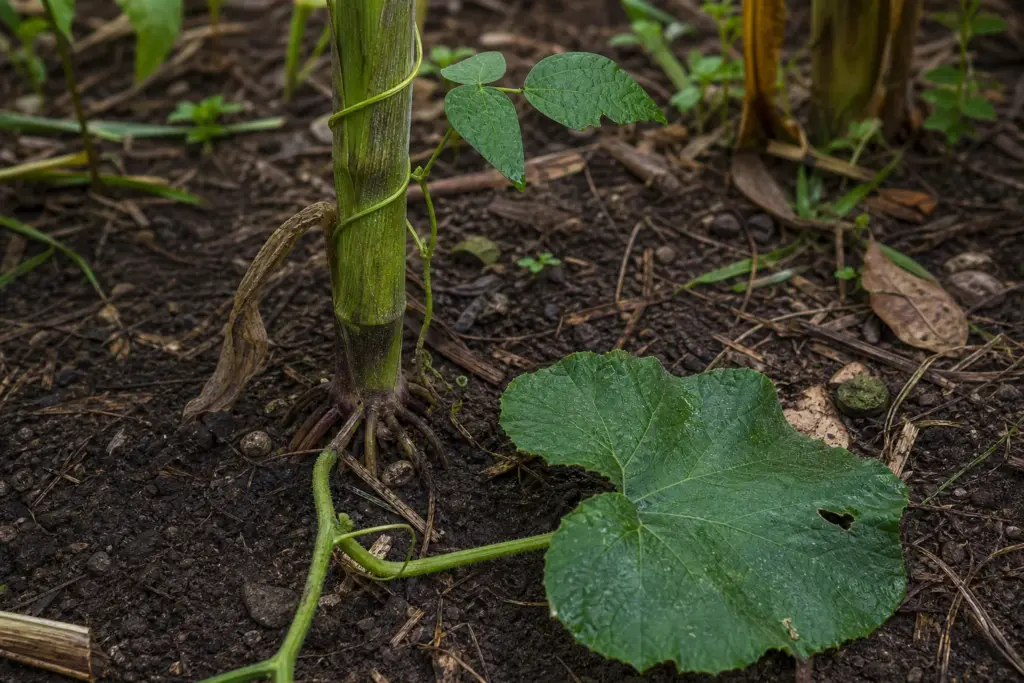
The practical lesson is succession, not a fixed companion-planting diagram. Plant annuals with a plan for what comes next, and match each crop to the site. If you try maize, climbing beans, and squash together, plan for support strong enough to carry mature bean vines and enough room for squash not to swamp its neighbours. Washington State University Extension notes that the plants can perform different physical functions without proving that the combination will improve yield or soil in every home garden.5 Our closer guide to testing garden-scale lessons from the milpa covers variety, sowing time, density, and support in more detail.
In a temperate garden, the exact crop list and calendar will not translate automatically. Frost, the length of the warm season, and the space available may rule out part of the planting. The relationship can still prompt useful experiments: a tall annual, a climber on suitable support, a broad-leaved ground cover, nearby shrubs, and leaf mulch that protects bare soil. That is an analogy to test locally, not an authentic reconstruction of Maya knowledge.
The milpa is not a shortcut to effortless abundance. It is a reminder that a garden can be productive for more than one season when the gardener designs for change instead of fighting it.
References
- Milpa Cycle. MesoAmerican Research Center, University of California, Santa Barbara.
- The Three Sisters of Indigenous American Agriculture. USDA National Agricultural Library.
- Santiago Lopez-Ridaura et al., “Maize intercropping in the milpa system: diversity, extent and importance for nutritional security in the Western Highlands of Guatemala”. Scientific Reports, 2021.
- Timothy Beach et al., “Ancient Maya wetland fields revealed under tropical forest canopy from laser scanning and multiproxy evidence”. Proceedings of the National Academy of Sciences, 2019.
- Linda Chalker-Scott, Gardening with Companion Plants. Washington State University Extension.