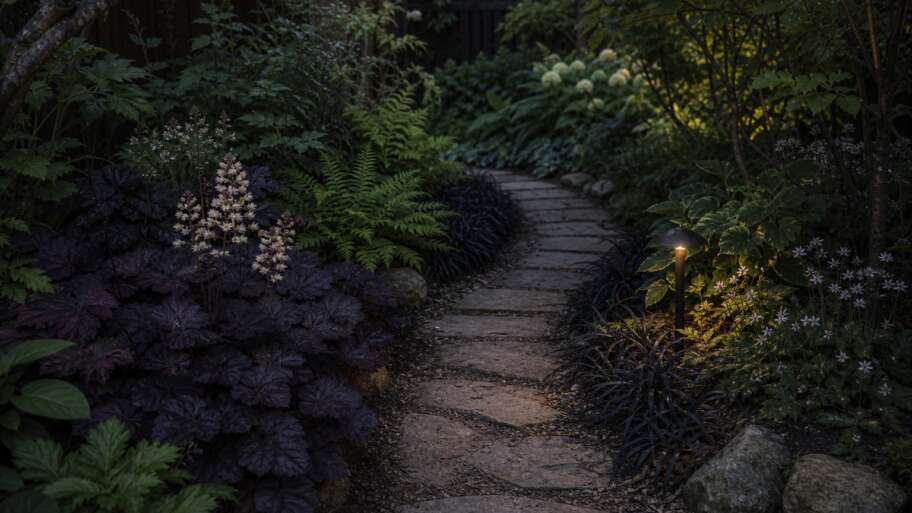

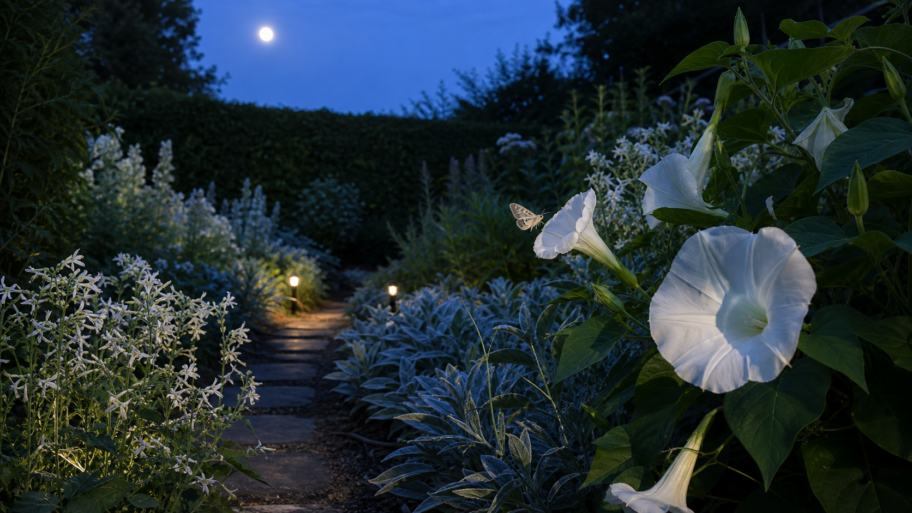
A garden does not go dark all at once. First the reds lose their heat. Then the blues and purples fold into shadow. What remains visible is shape, pale color, scent, and movement: a white flower catching the last sky, a silver leaf holding a little moonlight, a moth taking the path that bees worked a few hours earlier. That…
A shadow garden should invite a person forward, not trap them in a theme. Mystery works when the eye cannot see everything at once: a bending path, a pale flower beyond dark leaves, a bench partly hidden by fern, a sound of water before the basin appears. The mistake is to buy only dark plants and expect atmosphere to arrive.…
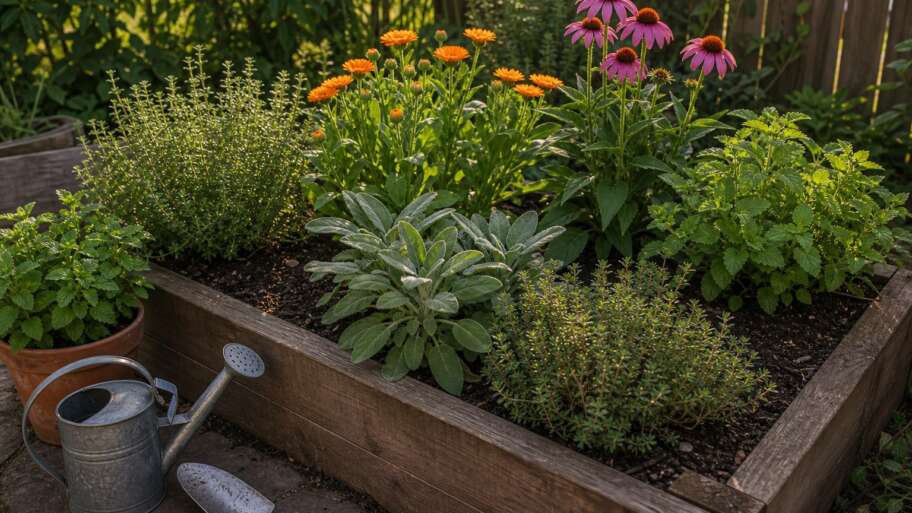
A medicinal herb garden can be a beautiful and useful part of a home landscape, but it should begin with honesty. Growing chamomile, calendula, mint, sage, or echinacea does not make a person a clinician. It makes a person a gardener with plants that have histories, flavors, fragrances, and sometimes biologically active compounds. MedlinePlus cautions that herbal medicines are not…
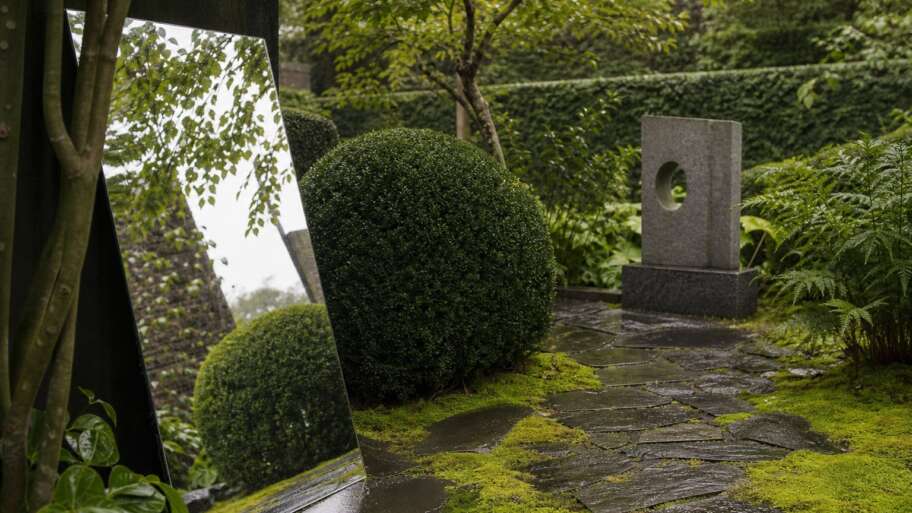
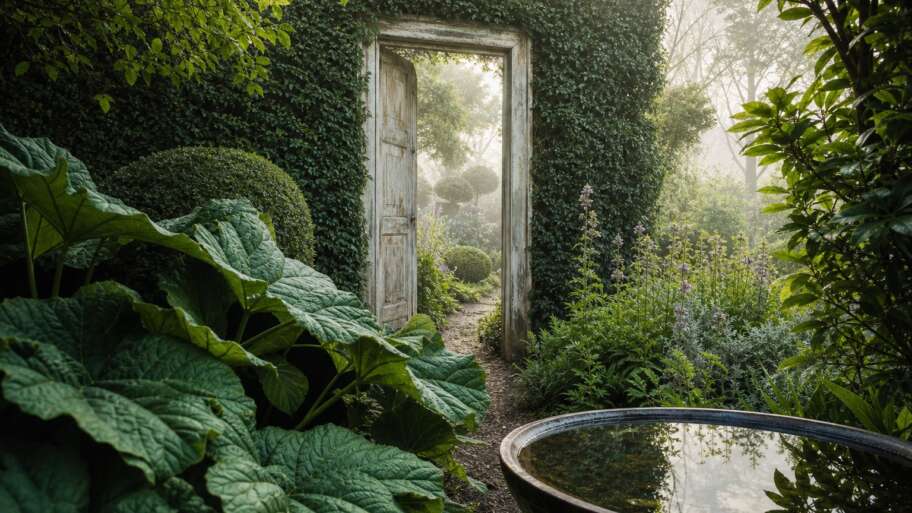
A surrealist garden is easy to imagine and harder to maintain. Mirrors, odd thresholds, tilted objects, clipped forms, unexpected scale, and dreamlike plantings can make a small space feel charged with possibility. Then leaves fall into the reflective pool, a vine eats the sculpture, and the mossy path becomes slick enough to argue with your ankles. Surrealism itself was never…
A surrealist garden begins with a useful contradiction. It should feel dreamlike, but it has to be built from real materials and living plants. A stair that leads nowhere may be delightful in a drawing. In a garden, it must also drain, hold weight, avoid becoming a hazard, and have a reason to exist when the flowers are gone. The…