
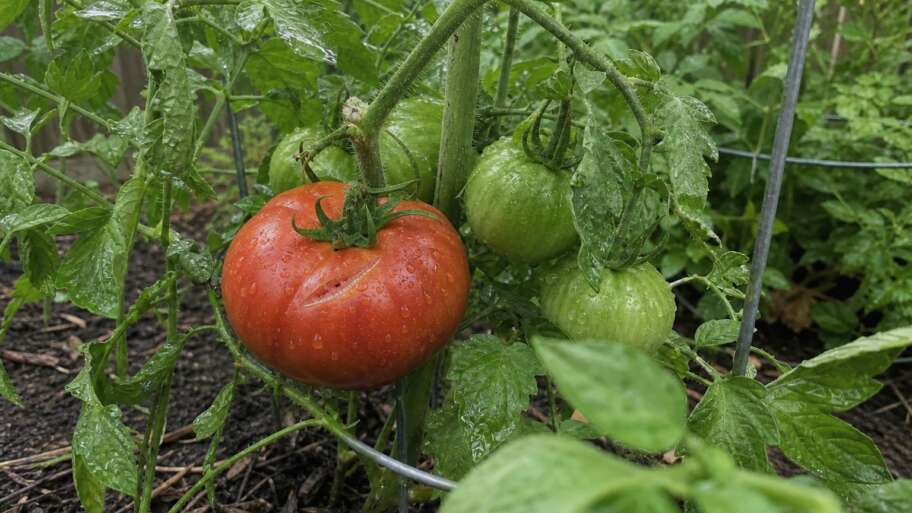
A split tomato has a disappointing kind of drama. Yesterday it was almost perfect, heavy on the vine and beginning to color. Then a night of rain passes through, the garden smells rich and washed, and the tomato is suddenly open along one side, its skin pulled apart like a seam that could not hold. It can feel like rot,…
rain
The first rain after a dry spell changes a garden before the soil is visibly wet. A smell rises from the path, the mulched beds, the cracks between paving stones, and the dark places under shrubs. It is clean and earthy at once, familiar enough to feel emotional, but not vague at all. The garden is releasing chemistry. Gardeners often…
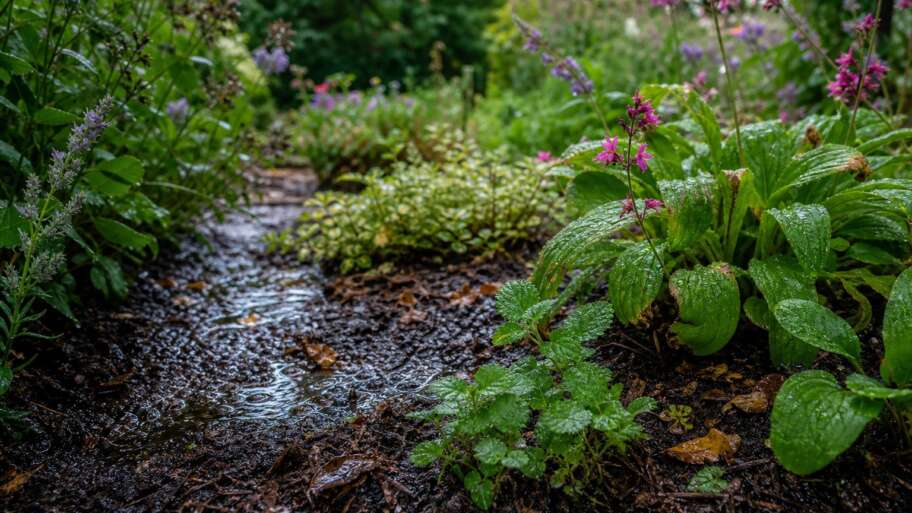
A rain garden proves itself after rain, not on planting day. The first storm shows where water really enters, where mulch floats, where sediment collects, and whether the basin drains in a reasonable time. That is not failure. It is the garden handing you its first maintenance list. The US Environmental Protection Agency describes a rain garden as a shallow,…
Read more about Rain garden maintenance after the first storm
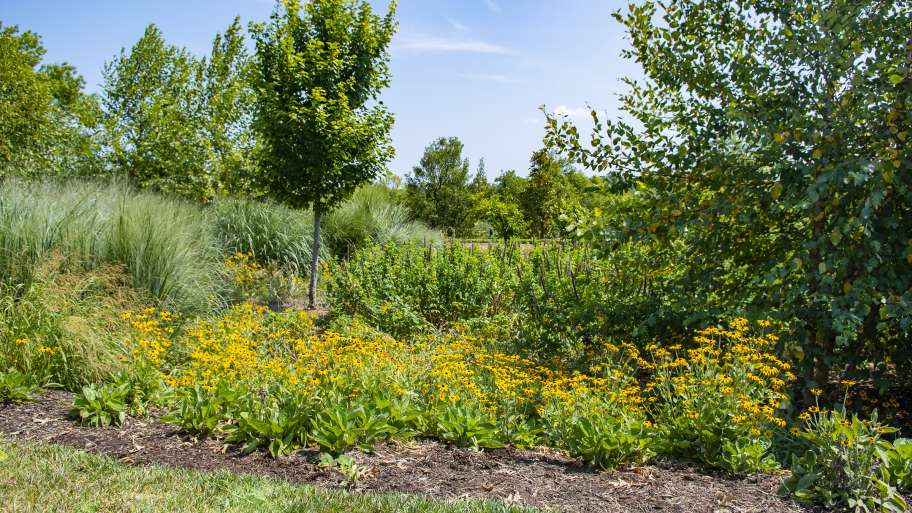
Planting a rain garden is not just choosing flowers that tolerate wet feet. A rain garden has zones. The center may hold water briefly after storms. The side slopes may be moist only for a few hours. The upper rim can dry like an ordinary border. A good planting plan reads those zones before it reads the plant catalog. The…
Read more about Planting a rain garden that drains, flowers, and feeds wildlife
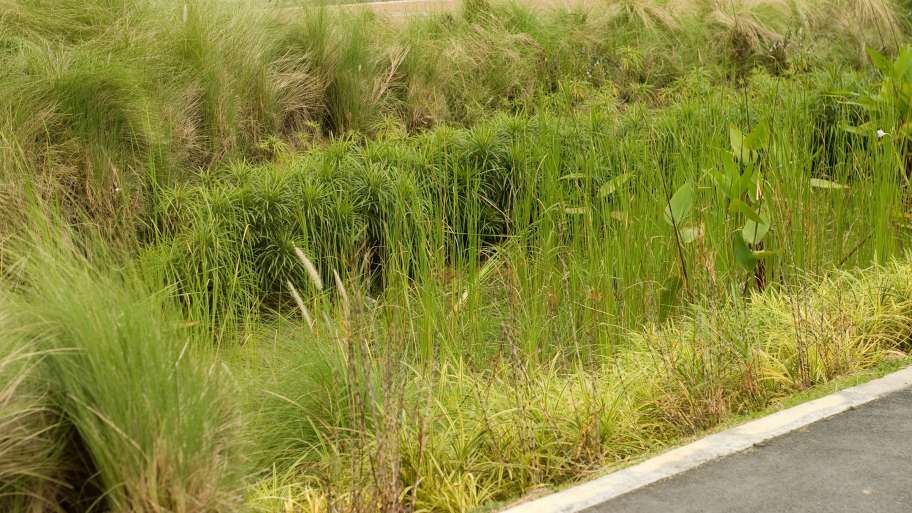
A rain garden begins with a problem that is easy to ignore: water leaving a roof, driveway, patio, or compacted lawn too quickly. It runs across hard surfaces, carries sediment and pollutants, and joins the nearest drain or low spot. A rain garden does not make the rain disappear. It asks the water to slow down and enter the soil.…
Read more about Rain gardens, from runoff problem to planted basin