
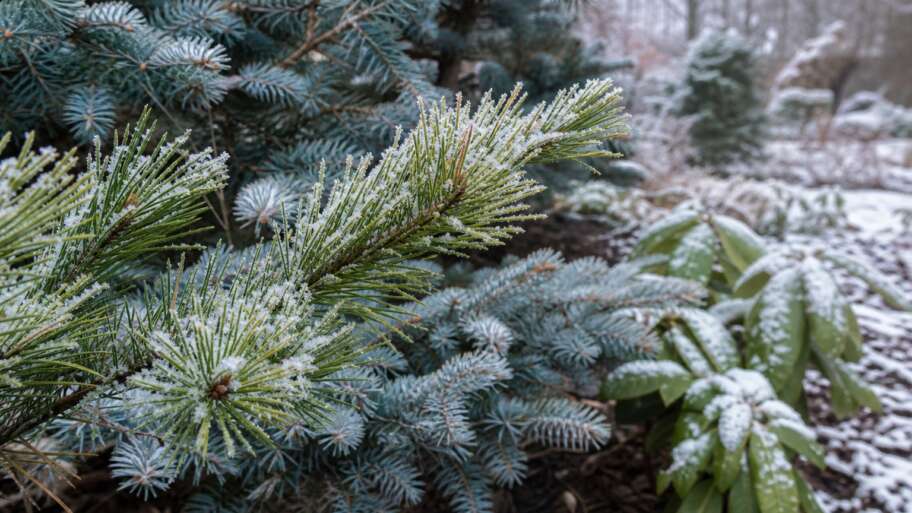
In December, a garden becomes very honest. The flowers have stopped covering weak structure. Herbaceous stems have collapsed or turned to seed. Deciduous trees have taken their color down to bark, bud, and branch. Then the evergreens begin to look almost improbable: pine, spruce, yew, holly, boxwood, rhododendron, juniper. They stand in the cold with leaves still attached, as if…
water
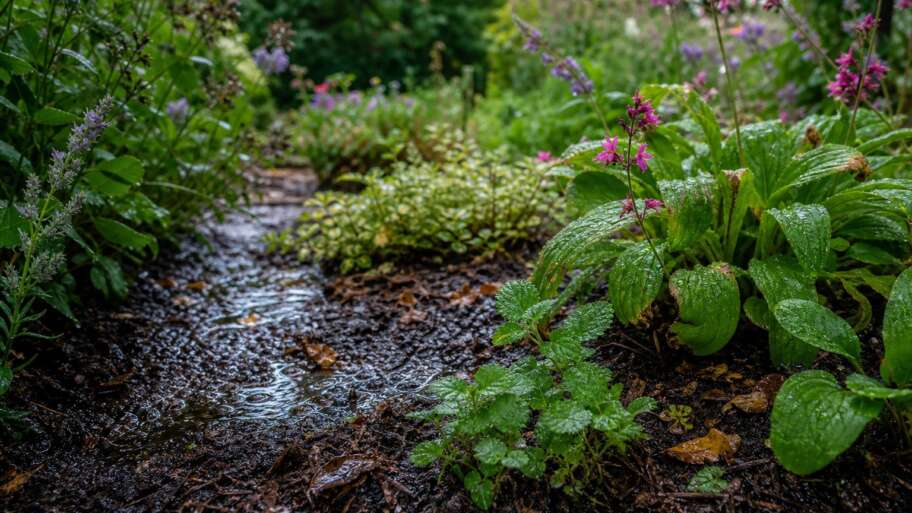
The first rain after a dry spell changes a garden before the soil is visibly wet. A smell rises from the path, the mulched beds, the cracks between paving stones, and the dark places under shrubs. It is clean and earthy at once, familiar enough to feel emotional, but not vague at all. The garden is releasing chemistry. Gardeners often…
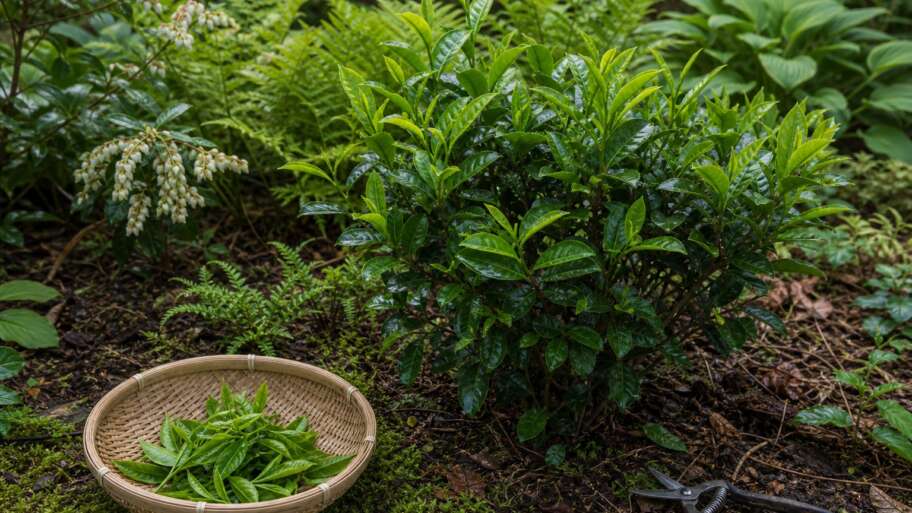
A tea garden can mean two different things. It can be a garden of herbs for infusions: mint, chamomile, lemon balm, anise hyssop, and lemon verbena. Or it can mean growing the actual tea plant, Camellia sinensis, whose leaves become green, black, white, and oolong tea. The two overlap in the cup, but not in the garden. Camellia sinensis is…
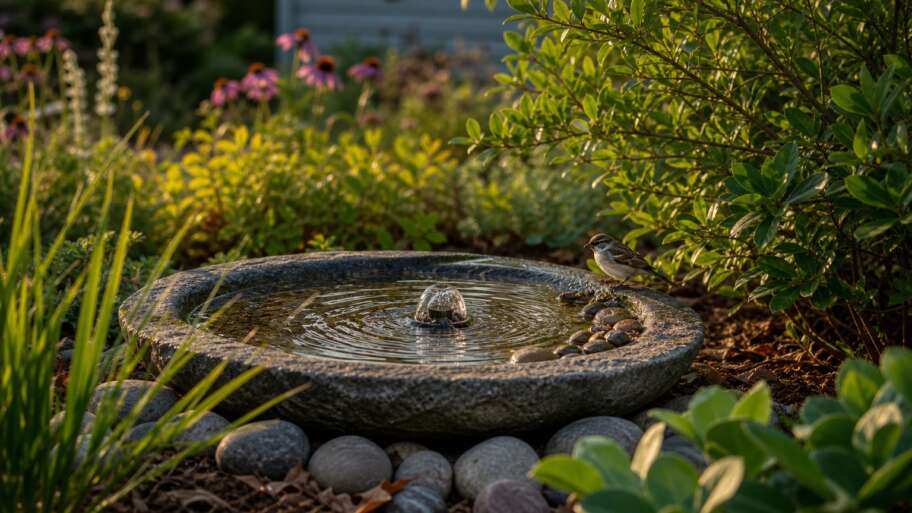
A useful bird bath is shallow, clean, visible, and tied into cover and planting. The best water feature works like habitat maintenance, not garden decoration.
Read more about Water is the bird feature your garden cannot fake
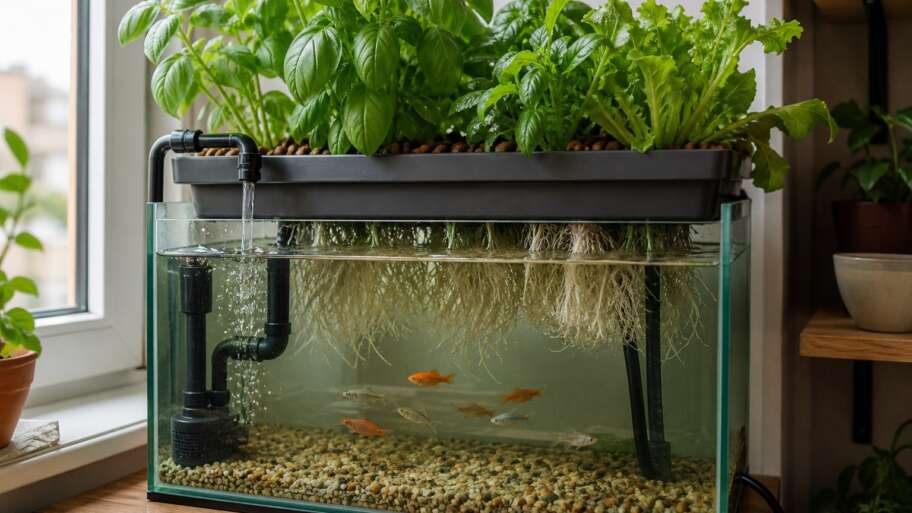
Apartment aquaponics is a living loop of fish, plants, bacteria, water chemistry, pumps, light, and patient observation.
Read more about Apartment aquaponics, with the fish and bacteria included
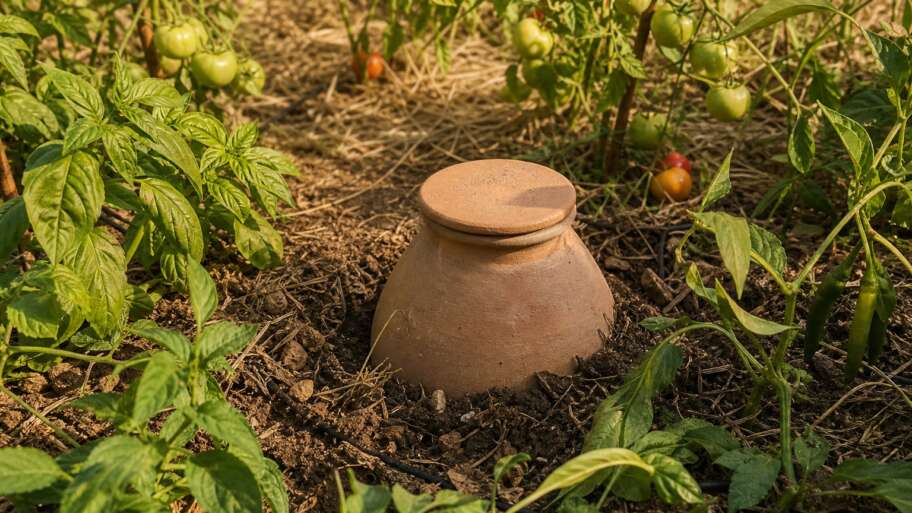
Ollas deserve their quiet reputation. A buried unglazed clay pot can water a small root zone slowly, below the soil surface, with very little equipment. That is useful. It is also easy to exaggerate. The best way to use an olla is to treat it as a practical irrigation tool, not as a spell against drought. University of Arizona Cooperative…
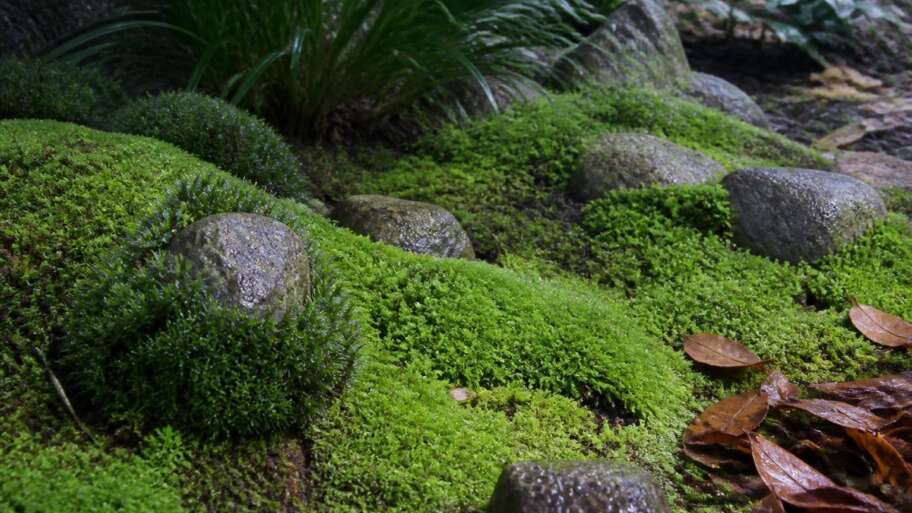
A moss garden looks quiet, but it is not asking to be ignored. It asks for a different kind of attention than a lawn or perennial border. The work is less about mowing, feeding, and deadheading, and more about moisture, debris, light, surface contact, and patience. Mosses are bryophytes, nonvascular plants without true roots. Instead, rhizoids anchor them to soil,…
Read more about Moss care for a garden that wants to stay small
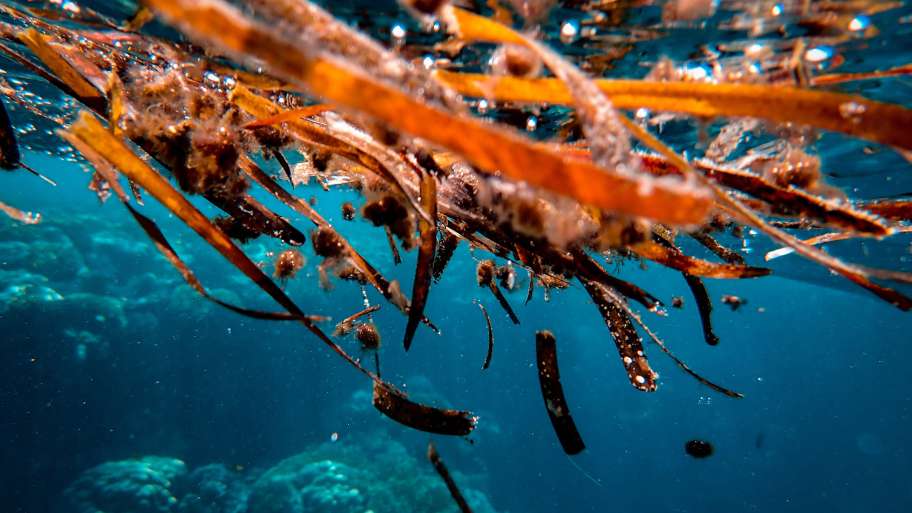
Seaweed farming sounds like gardening turned sideways. There are seedlings, lines, seasons, pests, harvest windows, and a constant negotiation with weather. But it is not simply underwater vegetable gardening. The farmer is working in public water, with currents, permits, navigation, marine life, and a crop that has no roots in soil. The last point is more than a botanical curiosity.…
Read more about Seaweed farming, explained for gardeners on land
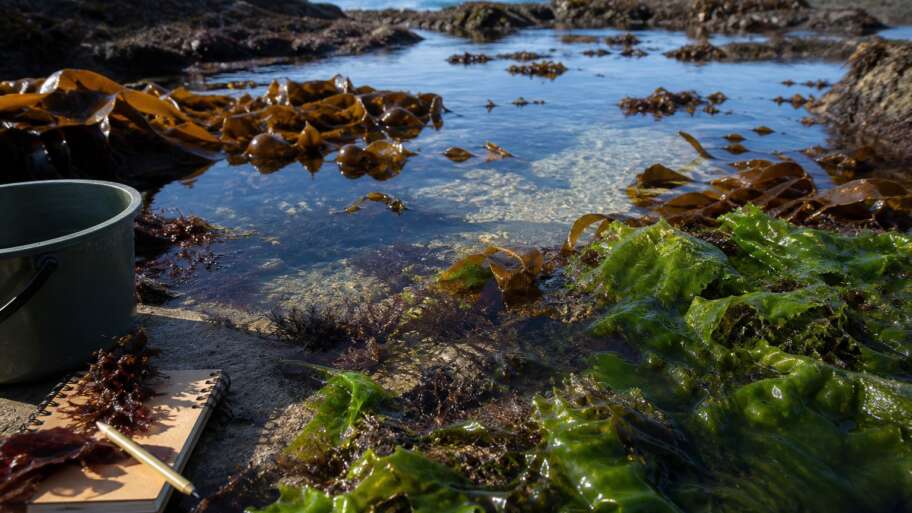
The phrase seaweed gardening can be misleading. It suggests a tray on a windowsill, a bucket of seawater, or a tidy underwater bed that behaves like lettuce. Real seaweed belongs first to the coast. It lives in tides, light gradients, currents, salinity, temperature, and marine food webs. To understand it as a gardener, begin there. Seaweeds are marine macroalgae rather…
Read more about Seaweed gardening starts with the coast, not a pot
A rain garden proves itself after rain, not on planting day. The first storm shows where water really enters, where mulch floats, where sediment collects, and whether the basin drains in a reasonable time. That is not failure. It is the garden handing you its first maintenance list. The US Environmental Protection Agency describes a rain garden as a shallow,…
Read more about Rain garden maintenance after the first storm