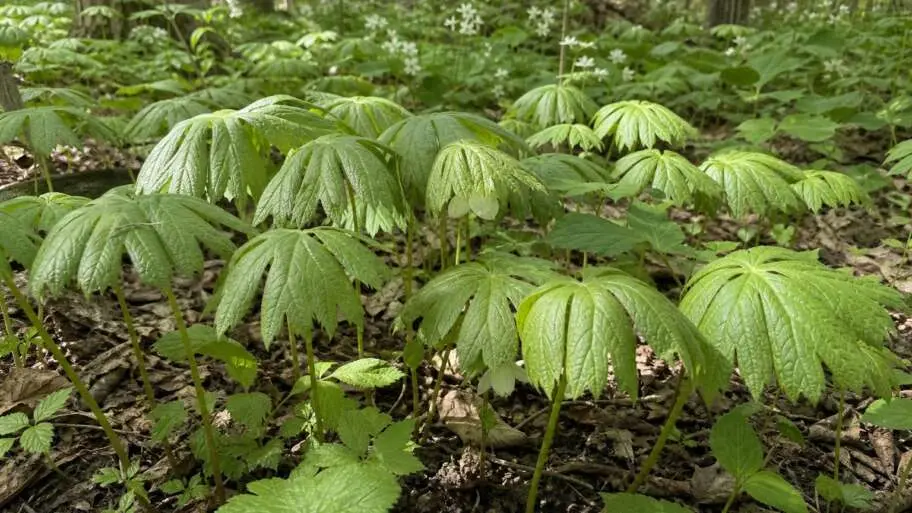

The mayapple hides its flower under an umbrella

The mayapple hides its flower under an umbrella

By early May, a mayapple patch can look less like a group of wildflowers and more like a small green weather event. Smooth stems rise from the leaf litter, each one holding a pale, lobed leaf like an umbrella that has just opened after rain. The effect is so architectural that it is easy to miss the plant’s real trick:…

Read more

Why maple sap runs before the leaves

Why maple sap runs before the leaves

On a cold February morning, a maple with a bucket on it can sound more awake than the rest of the garden. The beds are still flat. The lawn is patched with old snow. The buds on the branches look tight and undecided. Then, from a small metal spout in the bark, a clear drop gathers, falls, and ticks against…

Read more

Why rhododendron leaves curl in the cold

Why rhododendron leaves curl in the cold

On a January morning, a rhododendron can look as if it has lost its nerve. Yesterday the leaves were broad, glossy, and almost tropical in their confidence. Today they hang like narrow green cigars, each one drooping from the twig and curled along its length as if the whole shrub has tightened itself against the cold. It is an alarming…

Read more

The brown dots under fern leaves are not pests

The brown dots under fern leaves are not pests

On a January windowsill, a fern can look like the most innocent plant in the house. Green fronds, soft shadows, a pot that asks mostly for humidity and restraint. Then you turn one frond over and find rows of brown dots underneath. They can look alarming if you were not expecting them. The dots may be round, rusty, tan, black,…

Read more

Why fruit trees count winter before they bloom

Why fruit trees count winter before they bloom

On a cold January morning, a fruit tree can look almost empty. The leaves are gone, the grass is flattened, and the branch tips seem to be holding nothing more interesting than brown dots. It is easy to walk past an apple, peach, plum, cherry, pear, or blueberry and think the garden has become a diagram of waiting. But those…

Read more

The green thief in the winter tree

The green thief in the winter tree

By the last morning of the year, a deciduous tree has usually stopped pretending. The leaves are gone. The soft green noise of summer has fallen away. Every fork, scar, old pruning cut, and awkward branch angle is suddenly visible against the winter sky. That is when the green clump looks most suspicious. High in an apple, poplar, maple, hawthorn,…

Read more

The garden below the waterline

The garden below the waterline

Most winter garden work happens above ground: cutting back blackened stems, emptying pots, gathering leaves, pretending the hose should have been put away last week. But one of the strangest small gardens you can keep is almost entirely hidden from that view. It sits in a tub, a half barrel, or a small pond, and its leaves do their work…

Read more

The silk inside a milkweed pod

The silk inside a milkweed pod

By early October, a milkweed pod can look as if it is holding its breath. The green has faded toward gray. The skin has toughened. A seam that was almost invisible in August begins to lift, and inside the pod is a compressed little weather system: brown seeds packed like shingles, each one tied to a white silk sail. The…

Read more

Why mushrooms rise overnight after autumn rain

Why mushrooms rise overnight after autumn rain

After a night of October rain, a garden bed can look as if someone has quietly moved in furniture. Yesterday there was only dark mulch under the asters, a few yellow leaves, and the damp edge of the path. This morning, a cluster of pale caps is standing there on thin stems, glossy with rain, arranged with the confidence of…

Read more