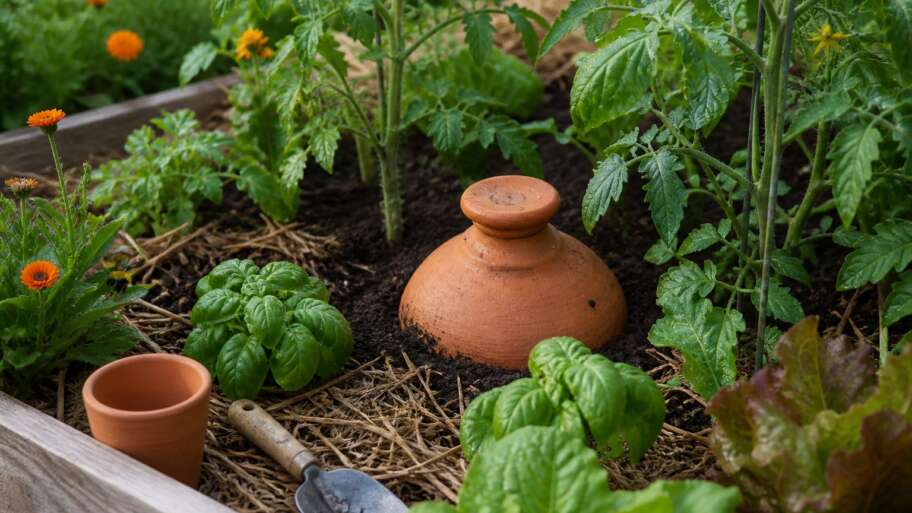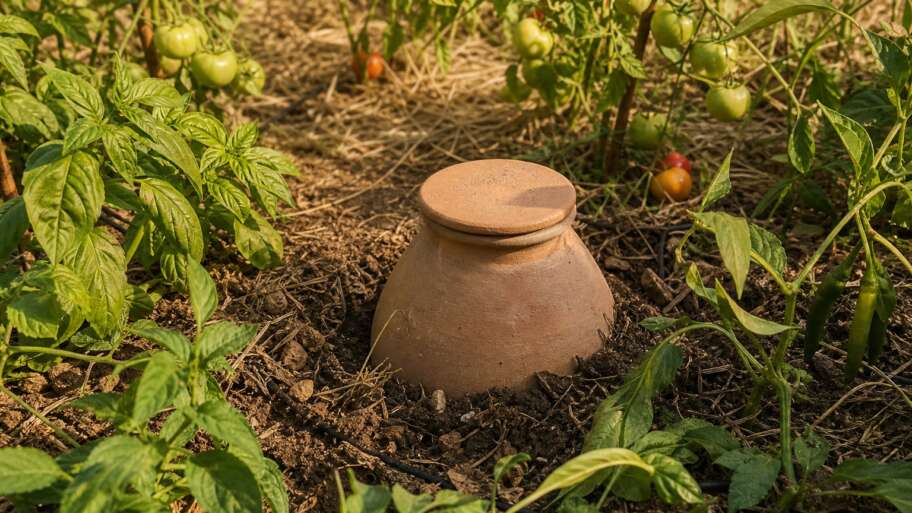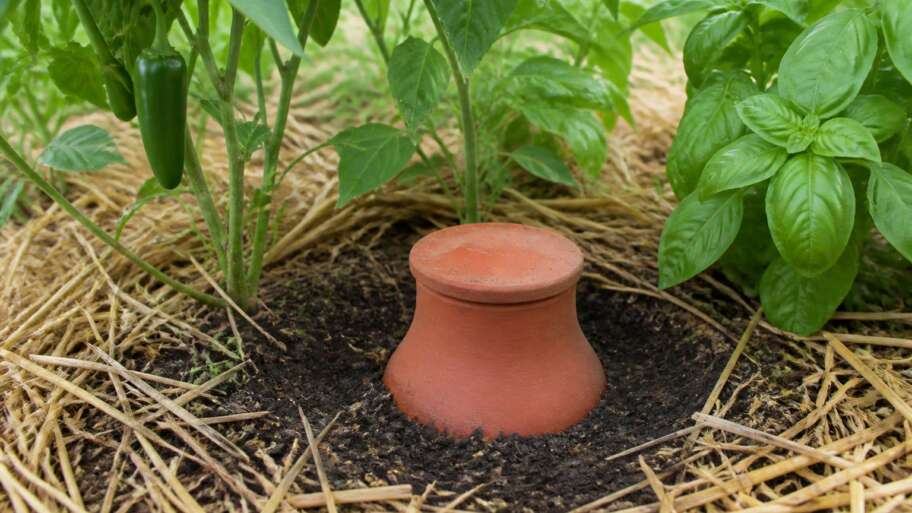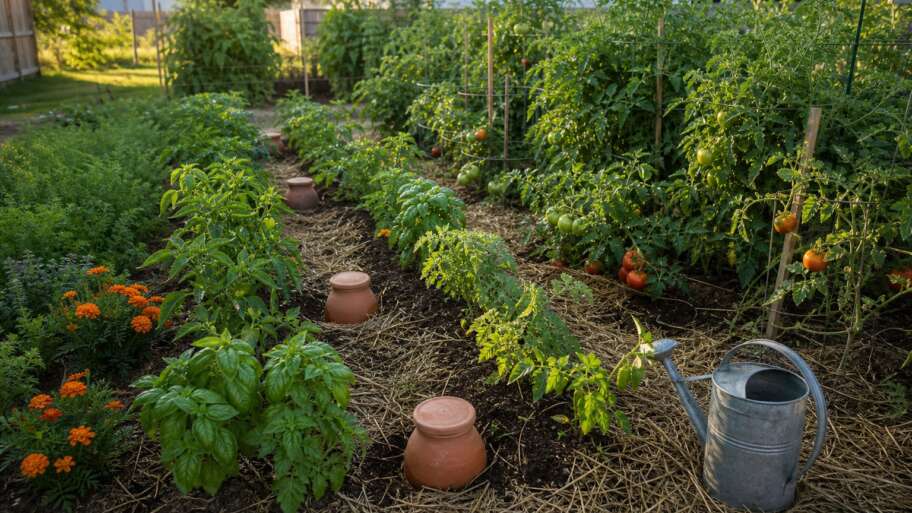

An olla is one of the quietest irrigation tools a gardener can use. It has no timer, no spray pattern, no little plastic emitters to unclog. It is simply an unglazed clay pot, buried in the soil and filled with water, asking the ground around it a patient question: are you thirsty yet? When the surrounding soil is dry, water…
Ollas deserve their quiet reputation. A buried unglazed clay pot can water a small root zone slowly, below the soil surface, with very little equipment. That is useful. It is also easy to exaggerate. The best way to use an olla is to treat it as a practical irrigation tool, not as a spell against drought. University of Arizona Cooperative…
Olla irrigation looks almost too simple to explain. A clay pot is buried in the soil, filled with water, and covered. The garden seems to water itself. But the quietness is the point. The system works because porous clay, soil moisture, and plant roots create a local gradient that changes as the soil dries and wets. University of Arizona Cooperative…
An olla is a humble irrigation device: an unglazed clay vessel buried in soil, filled with water, and covered. Its usefulness comes from the material. Unglazed clay is porous, so water can move slowly through the wall when the surrounding soil is dry enough to pull it outward. The method is old, low-tech, and still sensible at small scale. University…
A rain garden proves itself after rain, not on planting day. The first storm shows where water really enters, where mulch floats, where sediment collects, and whether the basin drains in a reasonable time. That is not failure. It is the garden handing you its first maintenance list. EPA describes rain gardens as shallow, planted depressions that collect runoff and…
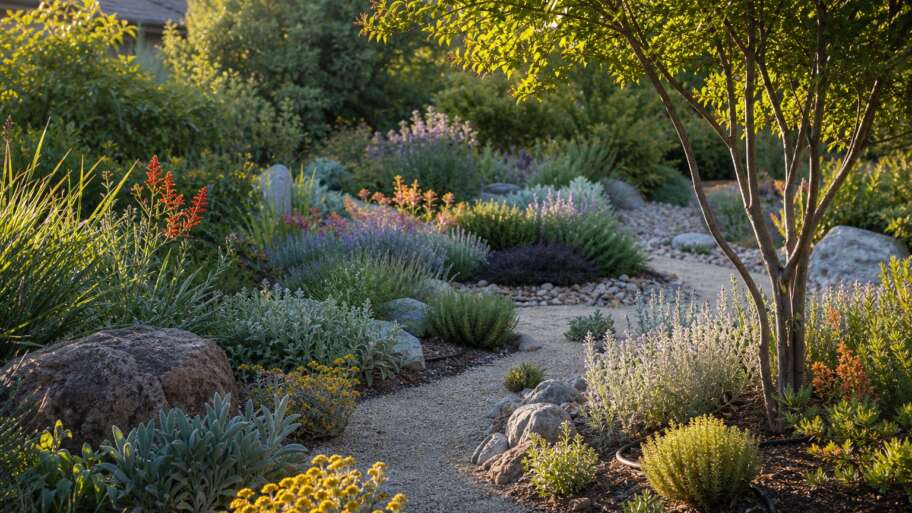
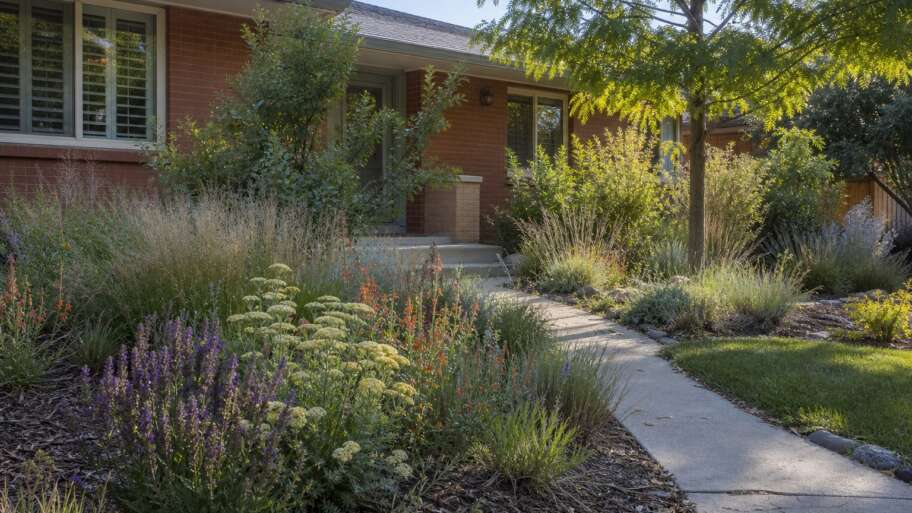
The least interesting xeriscape is a yard that looks punished for needing less water. A good xeriscape feels alive. It has shade, bloom, scent, movement, seasonal seed heads, and enough open ground for the plants to read clearly. The water savings come from design discipline, not from removing pleasure. Colorado State University PlantTalk describes xeriscaping as a water-conserving approach built…
Xeriscaping has suffered from a bad photograph: a house surrounded by gravel, a few lonely plants, and the faint feeling that the garden has been erased. That is not the idea. Xeriscaping is a method for designing landscapes that use water carefully. It can be spare, lush, modern, wild, edible, or pollinator-rich. What it cannot be is careless about water.…