
A bird bath can look like a finishing touch, the small object added after the planting, paths, and furniture are already in place. Birds read it differently. To them, water is not ornament. It is drinking water, bathing water, feather care, heat relief, and sometimes the only reason a bird bothers to inspect a garden that has no feeder at all.
That is also why water is easy to get wrong. A pedestal bowl can be handsome and still be too deep, too exposed, too slippery, or too dirty. A little terracotta saucer on the ground can be humble and still work beautifully if it is shallow, clean, visible, and close to the rest of the habitat.
Penn State Extension notes that birds use water for drinking and bathing, and that a bird bath should be shallow, no more than 2 to 3 inches deep at the deepest point.1 That one measurement explains a surprising amount. A small songbird is not looking for a miniature swimming pool. It is looking for a safe edge, sure footing, and water it can enter without being swallowed by the bowl.
Start with the bird’s body, not the ornament
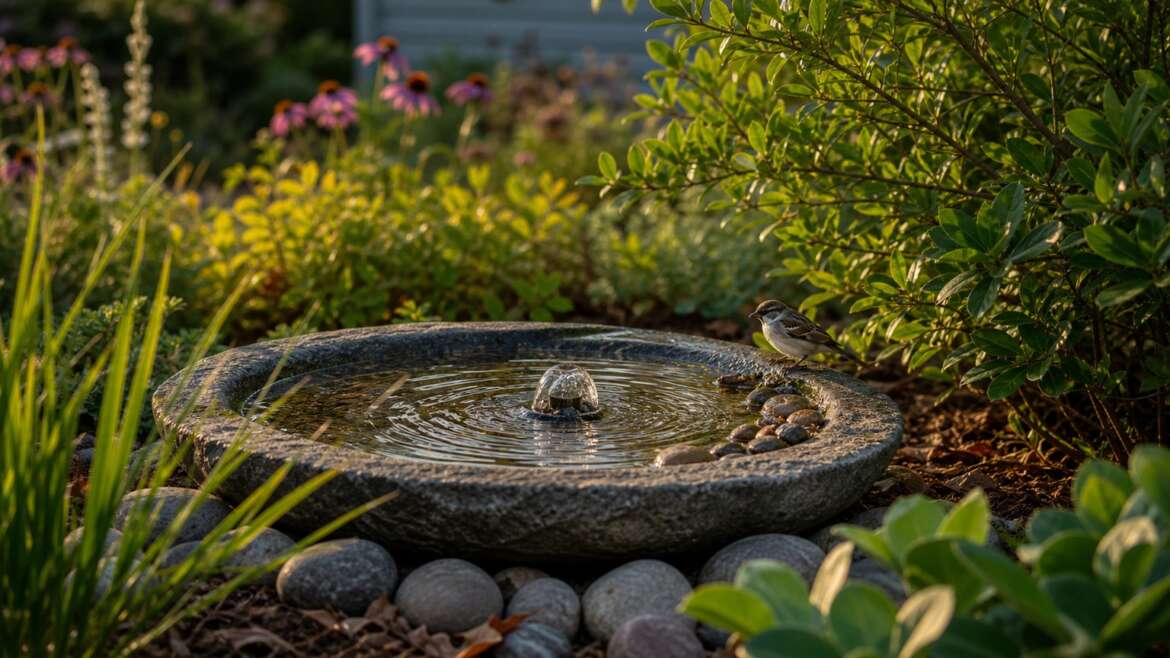
The best bird water usually has a gentle gradient. A broad basin with a shallow edge is better than a steep-sided formal bowl. A rough surface is better than glazed slickness. Flat stones, a brick, or a sloped piece of natural rock can turn a plain basin into a set of usable depths, giving smaller birds a place to stand while larger birds can use the slightly deeper middle.
If the bath you already own is too deep, do not throw it away immediately. Add clean stones or a shallow insert so the usable water is near the surface. The goal is not to fill every vessel to the rim. The goal is to make a safe shoreline.
Ground-level water can feel more natural because wild birds often use puddles, stream edges, and damp low places. It can also be riskier if cats or other ground predators have easy access. A pedestal bath can reduce some ground pressure but may become an exposed stage. Neither height is automatically right. The right placement depends on visibility, escape routes, and maintenance.
Make approach and escape part of the design
A useful bath is neither hidden in a shrub nor marooned in the open. Birds need enough open space to see trouble coming, but they also need cover close enough to reach quickly. Dense shrubs pressed directly against the bath can hide predators. A bare lawn with no nearby branch or thicket can make small birds feel exposed.
Think in short flights. A bird should be able to land nearby, inspect the water, bathe, shake out, and retreat without crossing a dangerous distance. The shelter side of that same design problem is covered in Shelter is the bird garden’s quiet architecture: twiggy shrubs, evergreen pockets, brush piles, and layered planting do more work than a lonely birdhouse.
Do not place the bath directly under feeders or messy branches if you can avoid it. Seed hulls, droppings, petals, and leaf litter will foul the water faster. Nearby cover is good. Falling debris directly into the basin is a chore disguised as habitat.
Movement helps, but it should not take over
Birds notice sound and sparkle. A slow drip, a small bubbler, or a solar wiggler can make water easier to find and may keep the surface fresher. It does not need to be theatrical. A hard fountain jet can make bathing awkward, and a deep splashing pot may waste more water than it helps.
For small gardens, a drip into a shallow saucer is often enough. For larger gardens, a recirculating basin can work if it is easy to clean and if the pump intake is protected from leaves. If the feature is so complicated that you postpone maintenance, it has already failed the birds, no matter how good it looks after installation.
Cleanliness is the real feature
Clean water is habitat maintenance. Audubon recommends scrubbing bird baths with a solution of nine parts water to one part vinegar, avoiding synthetic soaps and cleansers, and refilling the water every other day.2 The vinegar ratio is simple enough to become routine: dump, scrub, rinse well, refill.
That routine matters because birds stand in the same water they drink from. Mud, droppings, algae, decomposing leaves, and seed debris can accumulate quickly, especially in warm weather. Stagnant water also invites mosquitoes. A small bath cleaned often is better than a grand basin that becomes cloudy because it is heavy, awkward, or hidden at the far end of the garden.
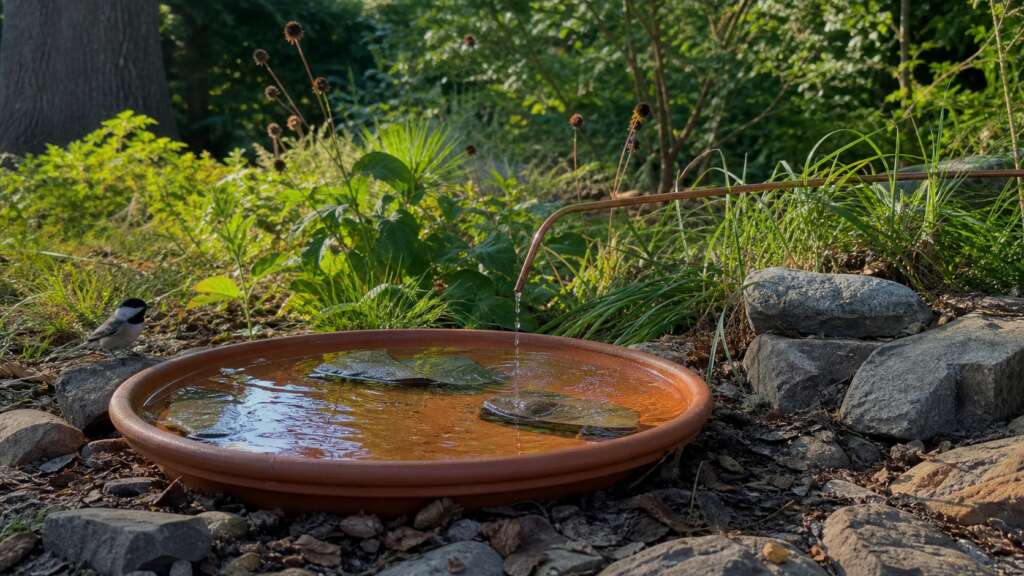
Design for the person who will maintain it on a tired Tuesday evening. Put the bath where a hose or watering can can reach it. Choose a basin that can be lifted or tipped. Avoid porous, deeply textured surfaces if you know you will not scrub them often. A bird bath is not a sculpture that happens to hold water. It is a dish that wildlife drinks from.
Place water inside a habitat network
Water works best when it belongs to a larger pattern. Audubon describes bird-friendly yards in terms of locally native plants that provide insects, berries, nectar, seeds, and refuge.3 The bath is one station in that route, not the whole garden.
If the planting side still feels vague, How to make a garden genuinely useful for birds gives the broader blueprint: food across seasons, insect life for nestlings, cover from weather and predators, and safer garden care. Water is the visible part, but the surrounding plants decide whether birds can use it calmly.
Seedheads near the bath can bring finches and sparrows. Berrying shrubs can make winter movement through the garden more worthwhile. Leaf litter supports insects, and insects support many birds, especially during nesting season. A small basin beside layered planting becomes part of a living circuit. The same basin in clipped turf becomes a stop with no reason to linger.
Winter water is useful, but only if it stays safe
In cold climates, open water can become scarce when snow covers the ground and shallow sources freeze. A heated bird bath can help, provided it is made for outdoor use, kept clean, and placed where cords are protected. The heater only solves freezing. It does not solve dirt, predator pressure, or poor placement.
Cornell Lab of Ornithology gives one winter rule that should be treated as absolute: never add antifreeze to a bird bath, and do not use glycerin either, because it can mat feathers and leave birds vulnerable to hypothermia.4 If water cannot be kept open safely, it is better to let it freeze than to turn it into a chemical shortcut.
Amenities that matter more than novelty
Bird amenities do not have to be elaborate. A shallow dish with stones matters. A clean edge matters. A branch or shrub within a quick retreat matters. A second small basin in a different part of the garden may be more useful than one expensive showpiece, because it reduces crowding and gives timid birds another option.
If you build a pond, design exits. Shallow shelves, sloped stones, and planted margins help birds and other small animals drink without becoming trapped. Avoid steep, slick sides. Avoid deep water right at the edge. A pond can serve far more wildlife than a bird bath, but only if its edges behave like habitat rather than a hard container.
Also resist the urge to solve bird gardening by shopping only for objects. A bath, a feeder, a house, and a decorative perch can all be useful in the right place, but they cannot compensate for a garden that offers no cover, no insects, no seeds, and no quiet places to land. The feature is the invitation. The habitat is the reason birds accept it.
The useful test
A good bird water feature passes a plain test. Can a small bird stand safely? Can it see danger? Can it reach cover without diving into an ambush? Can the gardener clean and refill the basin before it turns foul? Does the surrounding planting give birds a reason to return?
If the answer is yes, the feature does not need to be grand. It may be a saucer, a stone, a drip, and a shrub. The birds will not care that it was sold as a finishing touch. They will care that it behaves like water they can trust.