
A bird garden is often judged by the birds we can see: a cardinal on a seedhead, a wren in the shrub, a goldfinch working over coneflowers. Shelter is less showy. It is the dense twig, the evergreen pocket, the brush pile, the grass clump, and the nest box placed well enough to be useful without becoming an easy target.
That makes shelter the quiet architecture of a bird-friendly garden. It is the route a chickadee can take from a seedhead to a shrub without crossing open lawn. It is the place a sparrow can dive when a hawk passes over. It is the winter pocket where wind is broken before it reaches feathers. If you are building from scratch, think of this as the shelter chapter of a genuinely useful bird garden, not a separate decoration project.
The National Wildlife Federation describes wildlife habitat around food, water, cover, places to raise young, and sustainable gardening practices.1 For birds, those pieces overlap. A shrub can hide a bird, feed it with berries, hold insects for nestlings, and give a pair a place to place a nest. A yard with one feeder and nowhere to disappear is not a sanctuary. It is a dining table in the open.
Start with living cover
Plants should do most of the shelter work. Shrubs, small trees, grasses, vines, evergreens, and leaf litter create cover that works outside the nesting season, long after a box is empty. They soften wind, interrupt sightlines for predators, hold insect life, and let birds move through the garden in short protected hops instead of long exposed flights.
Native plants are usually the strongest foundation because they fit local soils, climate, and wildlife relationships. NC State Extension notes that native plants developed with local conditions and are important to pollinators, insects, birds, mammals, and other wildlife.2 The word “native” still needs a place attached to it. A plant that belongs in a coastal plain may not be the right choice for a dry upland garden, even if both are inside the same country.
Build the garden vertically. A canopy tree gives height and lookout space. A small tree or large shrub creates the middle layer. Dense shrubs, ferns, grasses, and perennials protect the lower garden. Leaf litter feeds decomposers and insects, then gives ground-foraging birds something to search. An evergreen or two can matter disproportionately in winter, when deciduous cover vanishes and the garden suddenly has fewer walls.
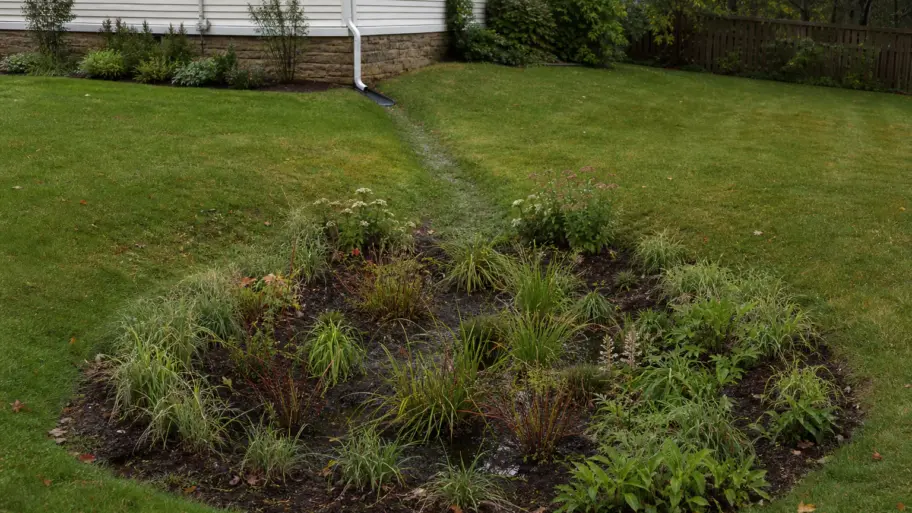
The best shelter is not a single hedge along the property line. It is a chain of safe places: a shrub island near a perennial bed, a conifer near a seating area, grasses around a rain garden, a brush pile at the back of a border, and a few seedheads left standing. Birds read that pattern as a map.
Use nest boxes with restraint
Nest boxes are most useful for cavity-nesting birds: bluebirds, chickadees, wrens, nuthatches, tree swallows, some owls, and a few others depending on region and habitat. They are not universal housing. Cardinals, goldfinches, hummingbirds, doves, and many warblers are not waiting for a little wooden house. They build in vegetation, on branches, on ledges, or in other natural structures.
Cornell’s NestWatch puts the emphasis in the right place: match the box to the bird that actually uses cavities, with the correct entrance size, interior dimensions, placement, and habitat.3 A decorative birdhouse can be charming and still be biologically useless. Worse, it can invite predators, competitors, overheating, or damp nests if it is badly designed.
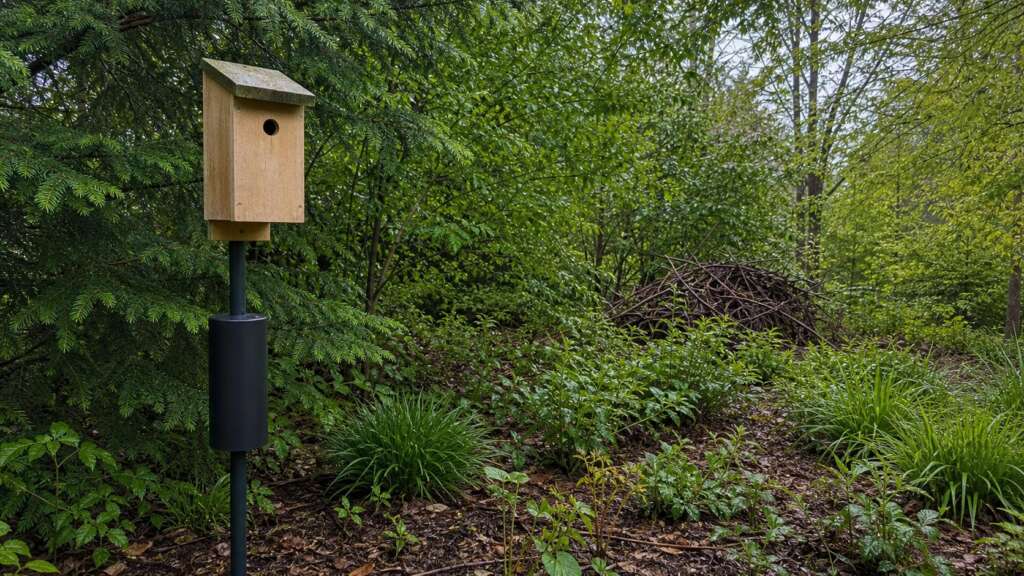
A good nest box is plain, sturdy, and boring in all the right ways. NestWatch’s checklist includes untreated wood, drainage, ventilation, thick walls, an extended sloped roof, easy access for cleaning or monitoring, a predator guard, no outside perches, and mounting on a metal pole.4 The perch is the classic mistake. Birds that use boxes do not need it, but predators and competitors can use it.
Placement matters as much as the box. Keep the entrance out of the usual direction of hard weather when possible, but follow species guidance first. Use a baffle on the pole. Do not mount boxes on trees or fence posts where climbing animals get a direct route. Do not tuck a box into a brush pile. Brush piles are excellent cover elsewhere in the garden, but beside a nest box they can become a ladder.
Clean boxes only when it is appropriate for the species and season. If you monitor nests, follow a protocol rather than peeking for entertainment. NestWatch’s code of conduct explains when to avoid visits, how disturbance can harm eggs and young, and that laws in the United States, Canada, and Mexico protect native birds, nests, and eggs except under valid permits.5 The gardener’s job is to reduce stress, not turn nesting into a show.
Brush piles and old stems count
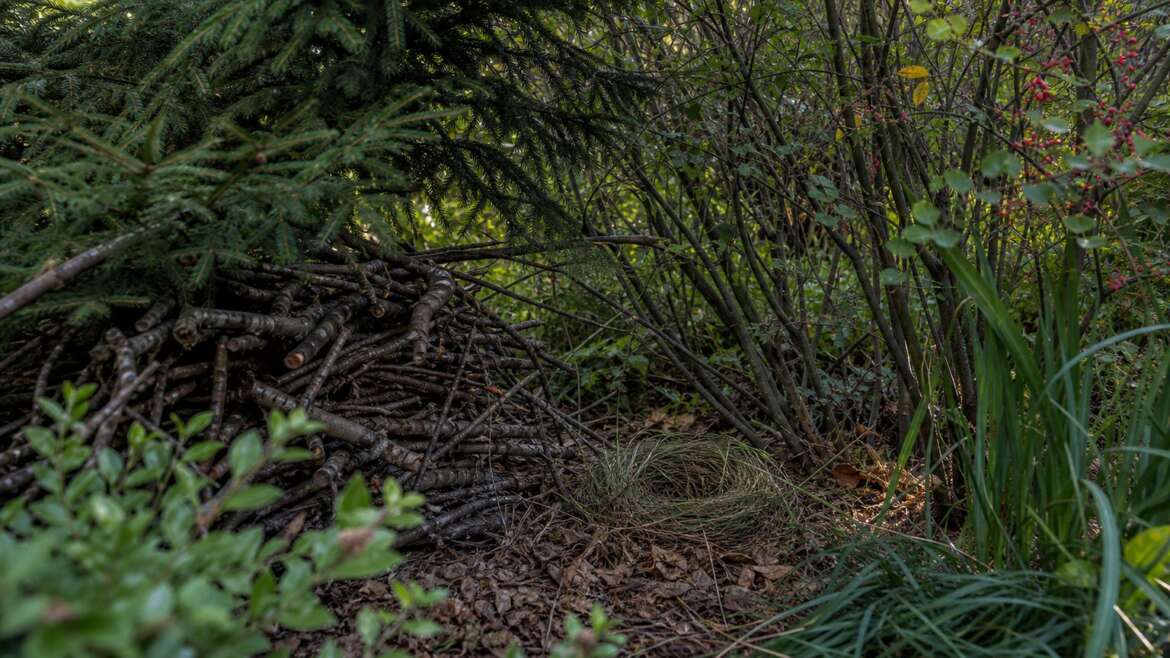
A tidy garden can be poor shelter. A small brush pile at the back of a border gives wrens, sparrows, towhees, juncos, and other small birds a place to dive when danger passes overhead. It also makes use of prunings that would otherwise leave the garden entirely. Start with thicker branches on the bottom, add smaller twiggy material above, and leave a few openings rather than crushing the pile into a solid mound.
Standing stems count too. Seedheads feed birds. Hollow or pithy stems can shelter overwintering insects. Leaf litter protects soil life and creates foraging places. This is the same logic behind the argument that a spotless fall garden is often less alive than it looks. Clean what is diseased, slippery, or truly in the way. Leave some structure where it can do work.
The trick is to make untidiness intentional. Put brush piles where they will not hide rats against a building, block airflow around disease-prone plants, or give outdoor cats a blind beside a feeder. Let old stems stand in groups rather than as one collapsing tangle across a path. A habitat garden can be generous without becoming careless.
Shelter should not create traps
Birds need escape cover near food and water, but “near” is not the same as “hidden inside.” A feeder tucked deep into shrubbery can put birds within reach of an ambush. A bird bath surrounded by tall cover may feel safe to the gardener and dangerous to a bird that has to drop its guard while bathing. Aim for a short dash to cover, with enough open space around feeders and baths for birds to see what is coming.
Outdoor cats change the whole risk calculation. American Bird Conservancy’s indoor-cats guidance puts the practical point plainly: keeping cats indoors protects birds and also keeps cats safer.6 Planting can reduce some risks, but it cannot make a free-roaming predator harmless. If cats visit your yard, avoid creating dense ambush points beside the places birds must pause.
Windows are another hidden edge of shelter design. Dense planting reflected in glass can look like more habitat, and birds may fly toward it. Where strikes occur, treat the outside of the glass with closely spaced visible markings. Birds Connect Seattle recommends the 2 x 2 rule for decals and markings: keep marks no more than 2 inches apart vertically or horizontally, especially for small birds.7 A beautiful shrub outside a dangerous window is not wrong, but the glass needs to stop pretending it is sky.
A simple shelter plan
If the garden is mostly lawn, begin with one layered island instead of trying to redesign everything at once. Plant a small tree or large shrub, add two or three denser shrubs, underplant with grasses or perennials, and mulch with leaves rather than bare bark alone. Let the island connect visually to another piece of cover: a hedge, a fence-line planting, a conifer, or a brush pile.
If you add a nest box, choose the target bird first and build backward from its needs. If you add a brush pile, place it where it helps birds escape without helping predators climb into a nest box. If you leave stems, leave them where they look deliberate. The pattern is simple: more layers, fewer exposed crossings, safer nesting choices, less chemical disturbance, and enough restraint to let the garden keep some of its useful roughness.
A bird sanctuary is not made by buying every bird object in the garden center. It is made by shaping a place where a bird can feed, hide, nest, bathe, and survive a bad afternoon. Shelter is the part we notice least when it works. The birds notice first.
References
- National Wildlife Federation: Habitat Essentials
- NC State Extension Gardener Handbook: Native Plants
- Cornell NestWatch: Right Bird, Right House
- Cornell NestWatch: Features of a Good Birdhouse
- Cornell NestWatch: Code of Conduct
- American Bird Conservancy: Keep Cats Indoors
- Birds Connect Seattle: How to Stop Birds from Hitting Windows