
A shelf of dried herbs can look reassuring: jars, labels, petals, leaves, the quiet satisfaction of summer kept for later. But a home herb harvest deserves clear language. Dried mint for tea is one thing. A home preparation that claims to treat illness is another.
That distinction does not make the harvest less useful. It tells us what kind of care the material needs. MedlinePlus notes that herbs may be used for scent, flavor, or therapeutic purposes, but “natural” does not guarantee safety; some herbs can cause harm or interact with medicines.1 Good preparation begins before the drying rack, with an identified plant and an honest intended use.
Begin with identity and intended use
Only harvest a plant you can identify confidently, including the part you mean to use. Common names are not enough when similar names belong to different plants. Write down the botanical name while the living plant is in front of you, then confirm that the intended part—leaf, flower, seed, bark, or root—is appropriate for the intended culinary use. Colorado State University Extension advises using scientific names for edible flowers and leaving an uncertain plant uneaten.2
Source matters too. Skip diseased or insect-damaged material, plants treated with a product not labeled for that edible crop, florist or nursery flowers not grown for eating, roadside plants, and anything exposed to pet waste, floodwater, or fresh manure. An attractive flower is not automatically an edible one, and an edible species is not automatically clean enough to harvest.
Decide whether the batch is a culinary herb, an ingredient for a familiar beverage, or something you hope will affect symptoms. That last purpose calls for reliable, plant-specific evidence and a conversation with a qualified clinician, not a more confident label. If you are still choosing what to grow, our guide to an evidence-first medicinal herb garden starts with the same distinction.
Dry culinary herbs as food
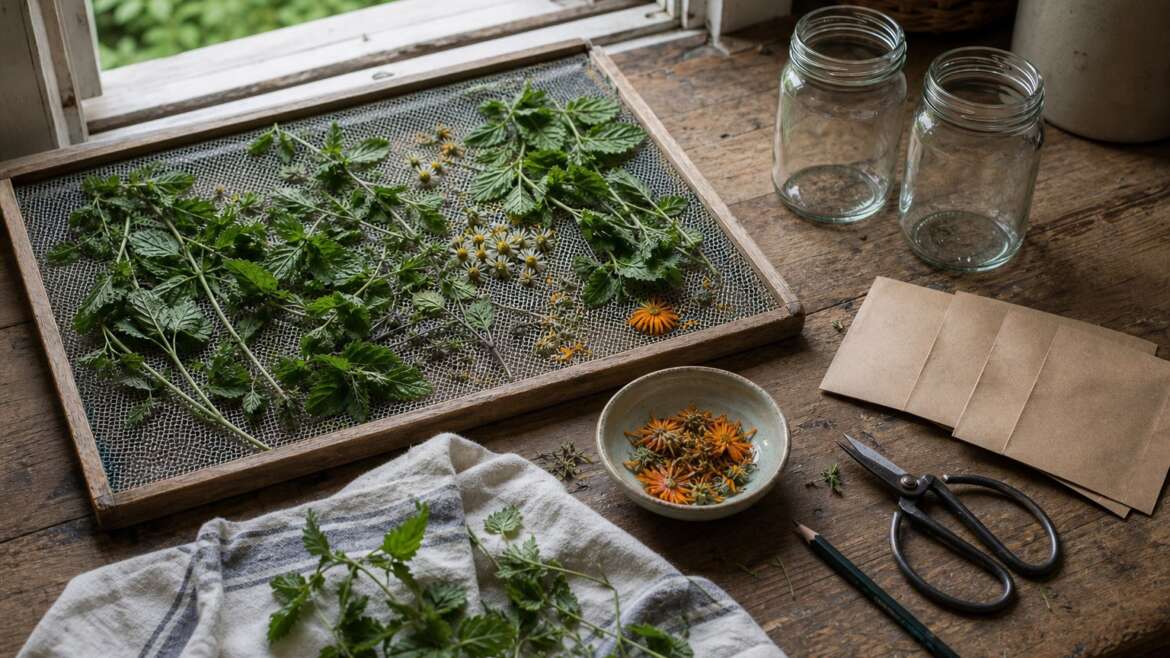
Harvest sound material after surface moisture has dried. Keep different plants separate and label them at once; once leaves are brown-green and brittle, several species can look remarkably alike. Oregon State University Extension recommends rinsing herbs in cool water, shaking off excess moisture, and discarding bruised, soiled, or imperfect leaves and stems.3
Dry in small, loose batches with steady air movement. Sturdy herbs such as thyme, sage, and rosemary are relatively easy to air-dry. High-moisture leaves, including mint, lemon balm, basil, and tarragon, can mold if drying is slow; a temperature-controlled dehydrator may be the more dependable choice in humid weather. Follow the appliance instructions rather than improvising high heat, which drives off aroma as well as water.
Test the thickest pieces, not merely the crisp-looking surface. Properly dried leaves crumble easily and stems break when bent. If a stem remains pliable or a flower head feels cool and damp inside, return the batch to the dryer. Packing warm or incompletely dried herbs into a sealed jar traps moisture. If condensation, mustiness, webbing, or visible mold appears later, discard the affected batch rather than picking out the suspicious pieces.
A label is part of the safety system
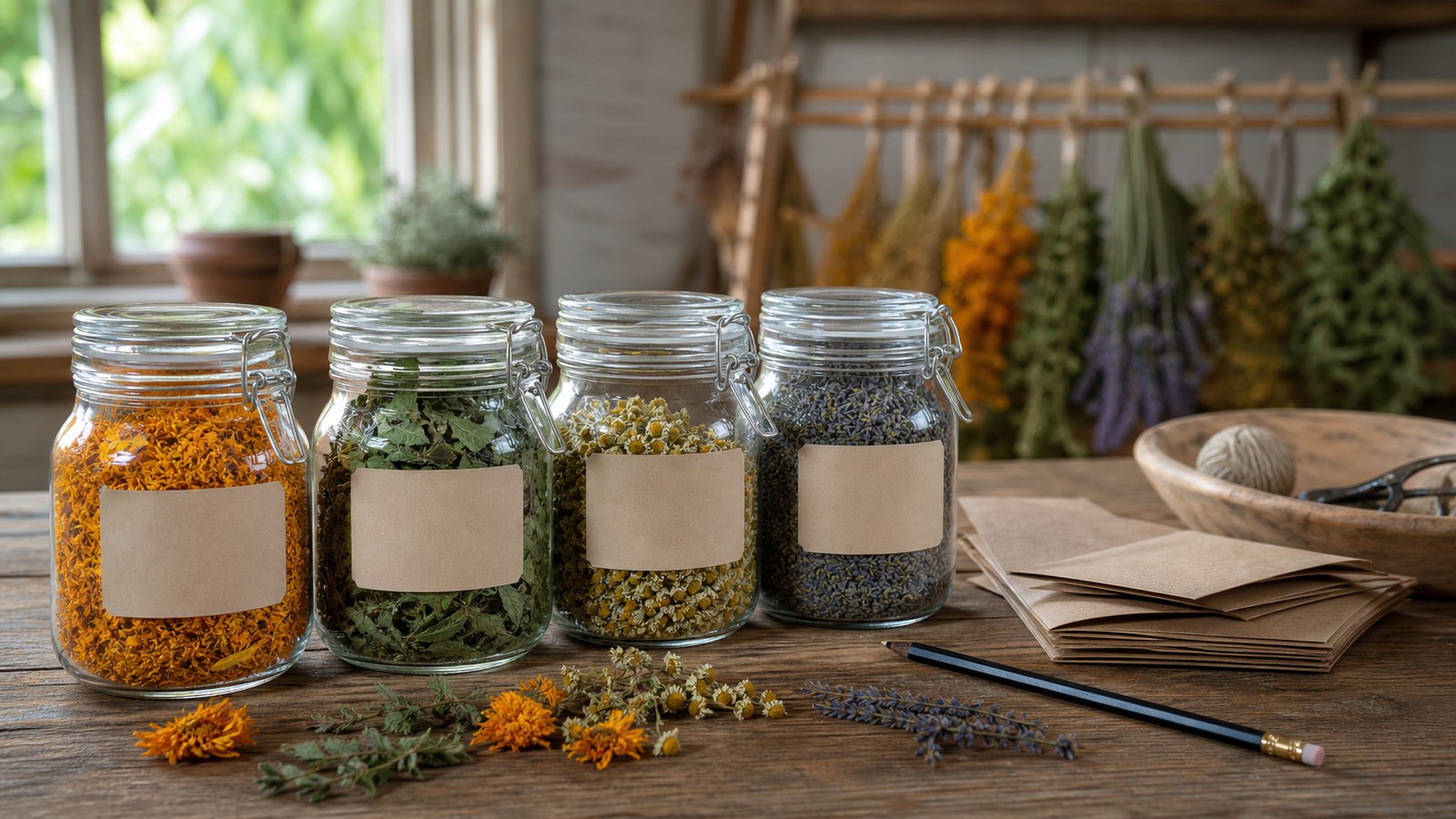
Use a clean, dry, airtight container. Record the common and botanical names, plant part, harvest date, source or garden bed, and intended use. Add a drying date if it differs from the harvest date. A jar labeled simply “sleep tea” conceals the very information needed to check identity, age, interactions, or a later reaction.
Store dried herbs away from heat, moisture, and direct light. Keeping leaves and seeds whole until use slows the loss of aroma; OSU Extension recommends a cool, dark, dry location and says properly stored dried culinary herbs retain their best flavor for roughly six months to one year.3 That is a flavor guide, not permission to keep a questionable jar. Unknown, damp, moldy, pest-damaged, or rancid-smelling material belongs in the compost or waste bin.
Small batches are easier to inspect and finish while they are still good. Put the oldest clearly labeled jar at the front, and note what you actually use. A modest shelf of recognizable herbs is more valuable than a crowded archive of forgotten mixtures.
Tea, tincture, oil, and salve are not interchangeable
Preparation changes what reaches the finished product and how concentrated it may be. An FDA educational guide describes tea as botanicals steeped in boiling water, a tincture as plant material soaked in alcohol and water, and an extract as material treated with a chosen liquid and sometimes concentrated further.4 An infused oil transfers oil-soluble material into a carrier oil; a salve is a topical product made by thickening such an oil. These forms are not dose-for-dose substitutes.
This article therefore does not offer one universal tincture ratio, salve formula, or “medicinal” dose. Plant chemistry, plant part, solvent, concentration, route of use, and the individual all matter. For a familiar food herb intended as a beverage, keep the mixture simple enough to identify and taste in a small cup; our approach to blending garden herbs for tea explains why a restrained blend is easier to evaluate.
Treat herbs in oil as a food-safety problem
Oil deserves special caution. Herbs are low-acid foods, and submerging them in oil creates the oxygen-poor conditions in which Clostridium botulinum can grow if the other conditions are favorable.5 The oil can look and smell normal while still being unsafe: the Centers for Disease Control and Prevention warns that botulinum toxin cannot be seen, smelled, or tasted.6 Dry-looking herbs do not make an improvised room-temperature infusion safe.
Oregon State University Extension says research-tested acidification directions exist for only certain home-infused oils and must be followed exactly. It directs home preservers to refrigerate all other herb-and-vegetable oils—including mixtures made with dried herbs—and use them within four days, or freeze them for longer storage.5 Label the preparation date and discard date. Do not treat a decorative bottle on a sunny shelf as preserved food.
Health claims change the responsibility
Traditional use can be culturally and historically important, but it is not the same as demonstrated effectiveness for a particular condition. Even commercial dietary supplements are regulated differently from prescription and over-the-counter drugs. FDA does not review them for effectiveness before they enter the market, and products described as natural can still interact with medicines or be unsafe for some medical conditions.7 A home jar has no standardization or quality testing to make its strength predictable.
Ask a clinician or pharmacist before using an herb or supplement to affect symptoms, especially if you take medicines, have a medical condition, or expect surgery. Pregnancy, breastfeeding, and childhood require particular caution because many supplements have not been tested in those groups.8 Stop using a preparation and seek appropriate help after an unexpected reaction. Do not delay diagnosis or replace prescribed care with a garden product.
Build a shelf you can audit
A sensible harvest record is plain: what the plant was, which part you collected, where and when it grew, how it was dried, what you made, and when you made it. Clean equipment and careful notes cannot prove that a remedy works, but they can prevent several avoidable errors—mixed identities, hidden age, damp storage, and forgotten ingredients.
The most useful home herb practice is modest. Dry identified mint for a familiar tea. Keep sage and thyme for cooking. Preserve fragrance and flavor without turning them into promises. A careful herb shelf is not less satisfying; it is safer, cleaner, and much more useful.
References
- MedlinePlus: Herbal Medicine
- Colorado State University Extension: Edible Flowers
- Oregon State University Extension Service: Drying Herbs
- U.S. Food and Drug Administration: Examining Dietary Supplements (PDF, p. 59)
- Oregon State University Extension Service: Herbs and Vegetables in Oil
- Centers for Disease Control and Prevention: Botulism Prevention
- U.S. Food and Drug Administration: Mixing Medications and Dietary Supplements Can Endanger Your Health
- National Center for Complementary and Integrative Health: Dietary and Herbal Supplements