
A sci-fi garden does not need fake alien plants. It needs earthly plants arranged so their strangest traits become easy to see: blue needles, silver leaves, black edging plants, dry seed heads, glassy grasses, spiny rosettes, and paths that bend just out of sight. The trick is not to make the yard look artificial. The trick is to make familiar botany feel newly discovered.
That sounds whimsical, but the best version is disciplined. Landscape design starts with a living site that changes as plants grow, weather shifts, and people use the space. UF IFAS describes line, form, color, texture, and visual weight as the visual qualities designers use to organize plants and hardscape.1 A sci-fi mood comes from those same old tools, pushed toward mystery.
Start with the planet you actually have
Before buying every strange-looking plant in the catalog, stand in the garden and ask what world is already there. Is it hot, dry, and exposed? Cool and shaded? Damp in winter? Windy? Baked by reflected heat? UF IFAS’s “right plant, right place” guidance starts with a site inventory: sun and shade, dry and wet areas, soil type, wind, circulation routes, views, and the practical activities the space has to support.2 The theme should follow that inventory, not fight it.
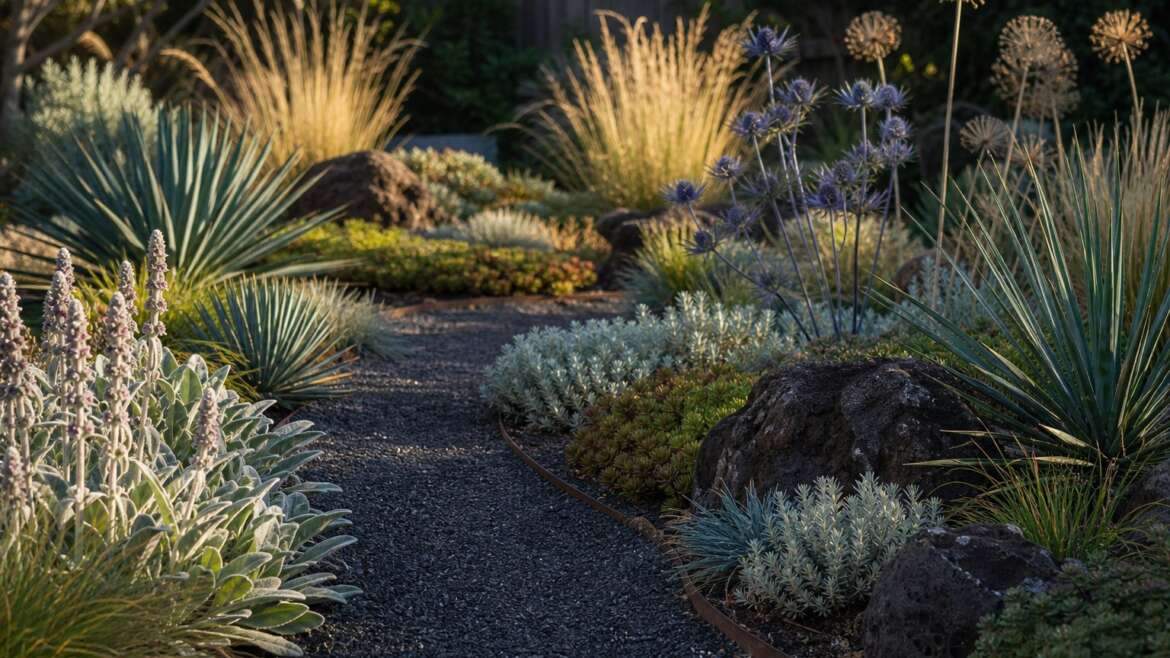
A sunny, free-draining garden can lean into a dry mineral world: dark gravel, steel edging, sedum, thyme, blue fescue, sea holly, yucca, santolina, and ornamental grasses. A cool shadow garden can feel more like a forest moon: ferns, mossy stone, heuchera, black mondo grass where it is hardy, pale trunks, and a narrow path that disappears behind foliage. A wet idea, such as pitcher plants, should be handled honestly. Sarracenia can be wonderfully alien-looking, but NC State Extension lists it as a high-maintenance carnivorous perennial for acidic, moist to occasionally wet conditions, often in sun or part shade.3 In many gardens, that means a dedicated bog container rather than a normal mixed border.
If you want a plant-by-plant shortlist after this design frame, the Soil Sages article Alien-looking plants that still belong in real soil is the natural companion. Use it after deciding what kind of world your site can actually support.
Draw the flight path
Line is the first special effect. UF IFAS notes that lines in a landscape can control movement of the eye and body, with curved lines slowing the eye and adding mystery by hiding views.1 That is exactly what a speculative garden needs. A straight path can feel like a landing strip. A tight curve can feel like an airlock. A low wall, a strip of black mondo grass, a run of rusted steel, or the edge between gravel and planting can all steer attention before a single flower opens.
Keep the path practical. Guests should be able to walk it without guessing where their feet belong. Make steps visible. Keep spiky plants back from knees and ankles. Use mystery in the view, not in the footing.
Build a palette, not a collection
Themed gardens often fail because they collect instead of compose. A dozen strange plants in a small bed create noise. Three strong plant ideas, repeated well, create atmosphere. Think in layers:
- Ground plane: sedum mats, creeping thyme, gravel, low moss, or a clipped cushion plant that makes the soil read as one surface.
- Vertical signal: upright grasses, iris leaves, yucca, cardoon, fennel stems, or a tight columnar shrub.
- Focal oddity: sea holly, allium seed heads, a contorted branch, a single glazed pot, a pale trunk, or one carnivorous-plant container.
- Seasonal trace: seed heads left standing, winter grass plumes, frost on silver foliage, or spring shoots emerging through dark mulch.
Repetition is what makes the scene believable. One allium seed head is a novelty. Seven seed heads, spaced through a drift of grasses, become a signal. One silver plant can look accidental. Silver repeated along a path becomes moonlit even at noon.
Use color like low gravity
A sci-fi garden does not need neon. It usually works better with a restrained palette: silver, blue-green, charcoal, bone white, rust, and small flashes of violet or acid green. Color is temporary in most gardens, so let foliage, seed heads, bark, stone, and path material carry the mood when flowers are absent.
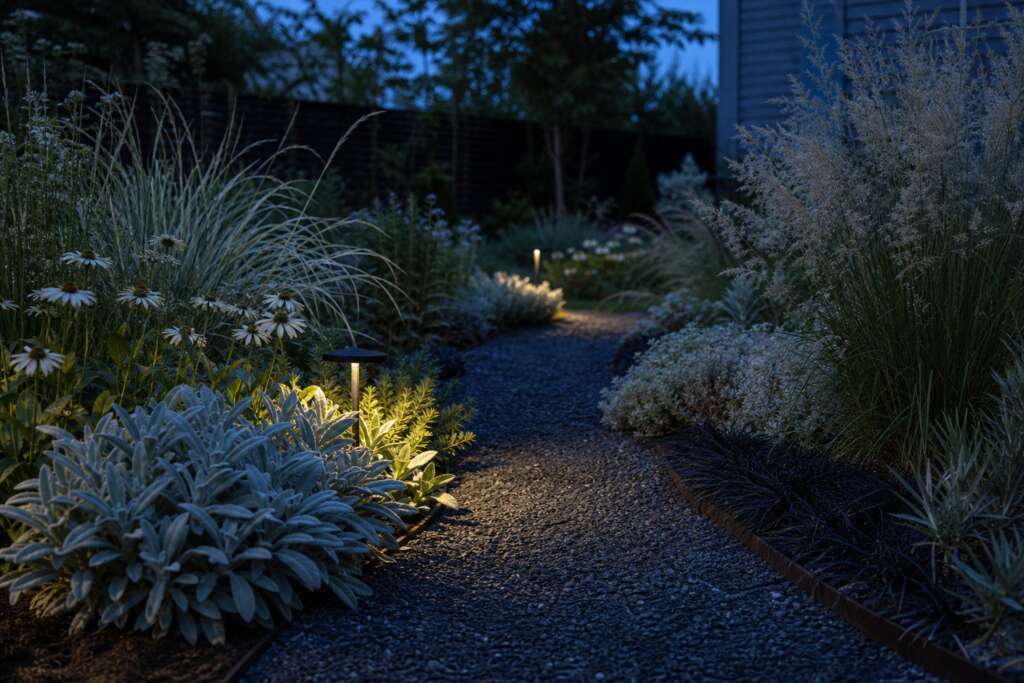
If the garden is meant to be used in the evening, borrow from moon-garden design. Pale foliage and white flowers remain visible after reds and purples sink into dusk, while scent and movement start to matter more. Soil Sages has a fuller treatment in Moon Gardens: Designing a Garden That Wakes After Dusk; for a sci-fi garden, the same ideas can make the space feel quietly planetary rather than theatrical.
Make the future weatherproof
Props age faster than plants. Plastic planets, painted foam, and delicate ornaments may look fun for a week and tired by the next storm. Stone, steel, ceramic, rot-resistant wood, gravel, and living structure are more convincing because they can take weather. They also give the plants something calm to push against.
Design maintenance from the beginning. Leave room to prune. Keep aggressive spreaders away from slow sculptural plants. Group plants by water need. Do not hide irrigation fittings under fragile decorations. If the garden needs mulch, choose one that supports the mood and the soil: mineral mulch for dry plants, leaf mold or bark for woodland plants, and no ordinary compost dumped into a carnivorous bog pot.
Scale matters too. A patio may need only one large container, a dark saucer of gravel, a repeated silver plant, and a single upright form. A larger border can handle a sequence of rooms. The larger the gesture, the simpler the plant list should be.
Light it like a garden, not a film set
Night lighting is where sci-fi gardens can go wrong. Too much light flattens the mystery and can spill into neighboring yards and habitat. DarkSky International’s outdoor-lighting principles are a useful check: light only where and when it is needed, aim it carefully downward, keep it no brighter than necessary, control it with timers or motion sensors, and choose warmer color where possible.4
In practice, that means a few low, shielded path lights are better than uplighting every plant. Let darkness remain part of the design. A silver leaf is more interesting when it appears, disappears, and appears again as someone walks.
Three simple starter worlds
For a dry sunny bed, try dark gravel, weathered steel edging, sedum, blue fescue, lamb’s ear, sea holly, yucca, and allium seed heads. Keep irrigation modest and drainage sharp.
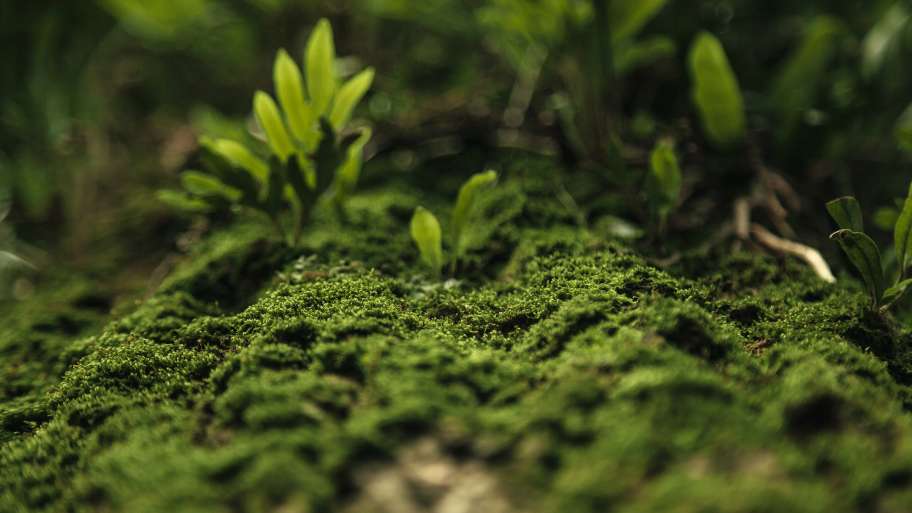
For a cool shadow bed, try ferns, mossy stone, heuchera, black mondo grass where hardy, pale hellebores, and a narrow path that turns behind a shrub. The drama comes from contrast, not from making everything black.
For a small patio, try one large matte container with a sculptural plant, a shallow tray of gravel or stone, a repeated silver-leaved spiller, and one warm low light. The smaller the space, the more important restraint becomes.
Let botany carry the fiction
The real reward is not making a yard look like a movie set. It is noticing how much speculative beauty is already present in plants. A seed head can be an antenna. A rosette can be a satellite. A fern unfurling can look older than language. Build the frame, match the plants to the site, and let the living things do what they were already doing.