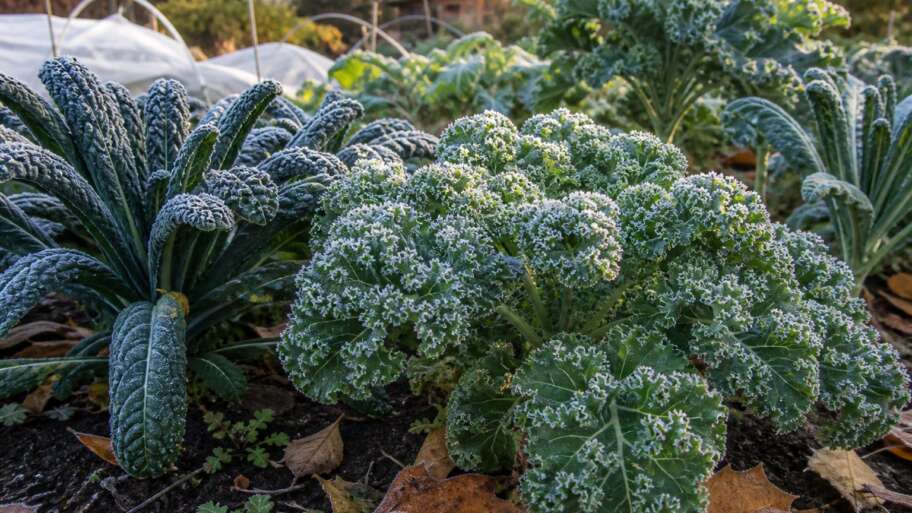

Kale looks almost theatrical after the first real frost. The leaves are darker than they were in September, their ruffled edges traced with white, their surfaces stiffened just enough to catch the low morning light. A gardener who does not know the plant might think the crop has been damaged. A gardener who has eaten from the bed before and…
Edible Garden
Vegetables, herbs, fruit, and edible flowers—from cultivation and harvest to thoughtful food-safety context.
By early September, a vegetable bed can look oddly exposed. The tomatoes may still be standing, but the first cleared spaces have begun to appear: a row where beans finished, a square where onions came out, the tired patch where cucumbers finally gave up. The garden is not empty, but it has begun opening little windows of bare soil. That…
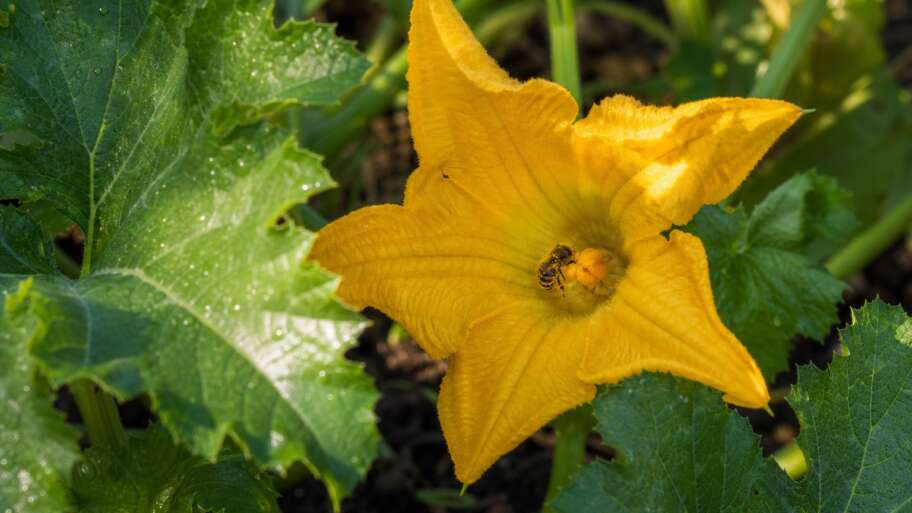
A squash blossom is not a flower that lingers. It opens like a little lantern in the cool part of the morning, spends its best hours in the company of bees, and by afternoon begins to fold, soften, and give itself back to the plant. If you walk the vegetable garden at breakfast, the flowers look generous. If you wait…
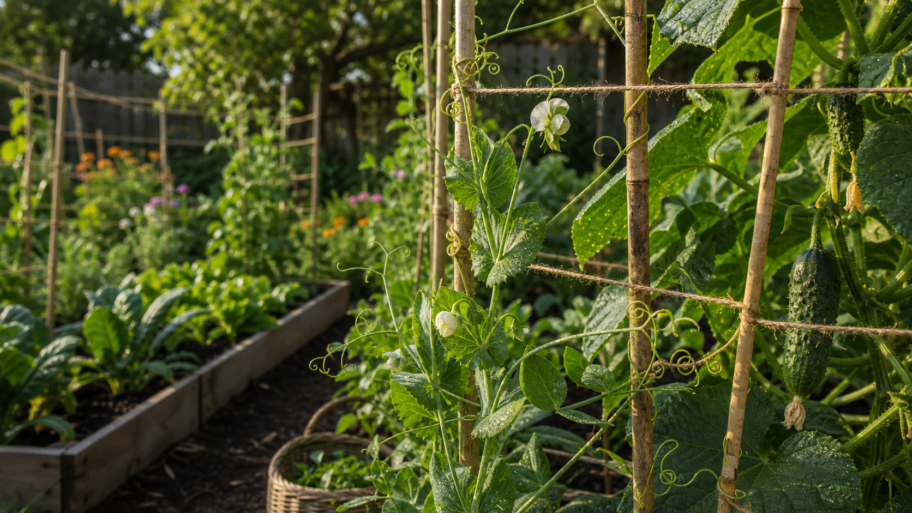
A climbing plant begins with an apparent problem: it wants light, but it has not paid the full woody price of a tree. Rather than relying on a self-supporting trunk, it borrows the garden. A pea finds netting. A cucumber finds twine. A clematis catches a wire with a curling leafstalk. A grapevine reaches, touches, tightens, and turns a fence…
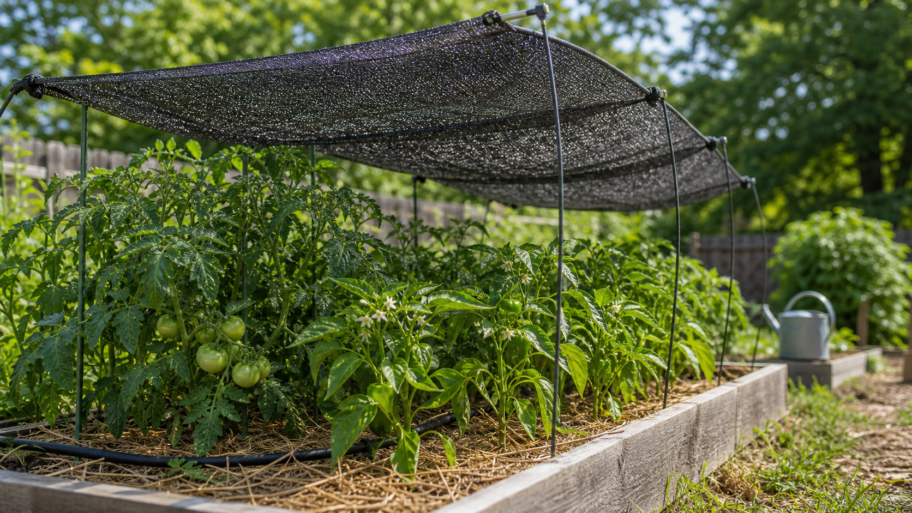
Gardeners are taught to chase sun. Six hours for tomatoes, full sun for peppers, the brightest bed for basil, the open border for flowers that sulk in shade. This is good advice until it is not. By midsummer, especially in a heat wave, full sun can stop being a gift and become an argument the plant is losing. Shade cloth…
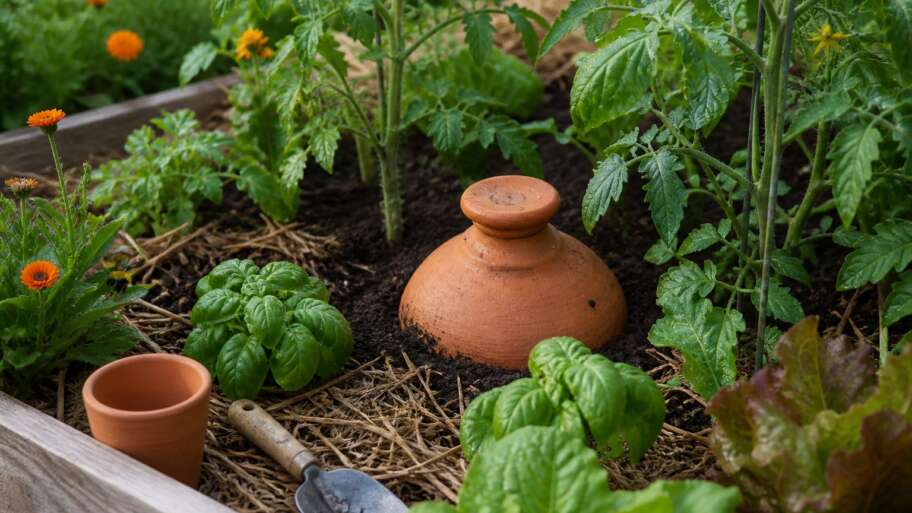
An olla is one of the quietest irrigation tools a gardener can use. It has no timer, no spray pattern, no little plastic emitters to unclog. It is simply an unglazed clay pot, buried in the soil and filled with water, asking the ground around it a patient question: are you thirsty yet? When the surrounding soil dries, water moves…
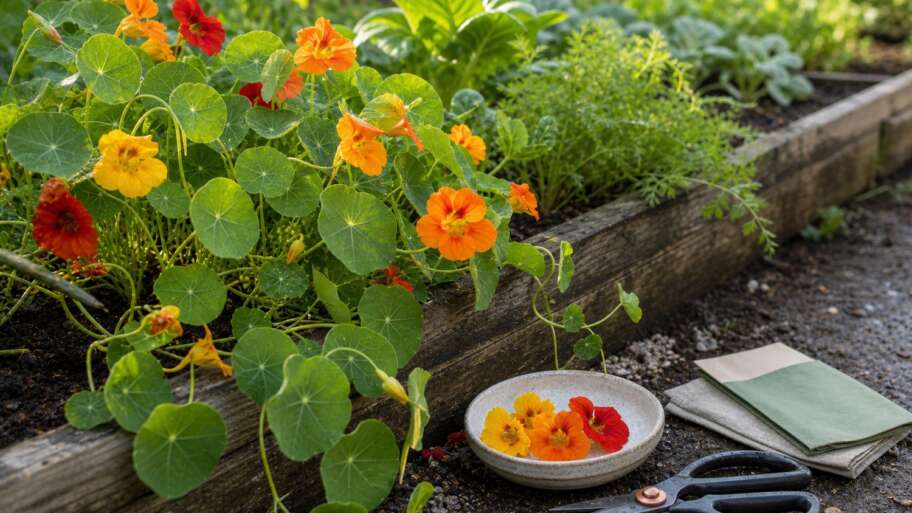
A nasturtium does not behave like a polite border annual. It sprawls, loops, leans over timber, climbs if you help it, and drops bright flowers into the vegetable garden as if the lettuces and beans were waiting for punctuation. That informality is part of its usefulness. The plant softens hard edges, feeds the eye, feeds the table, and quietly makes…
Read more about The edible edge: growing nasturtiums with purpose
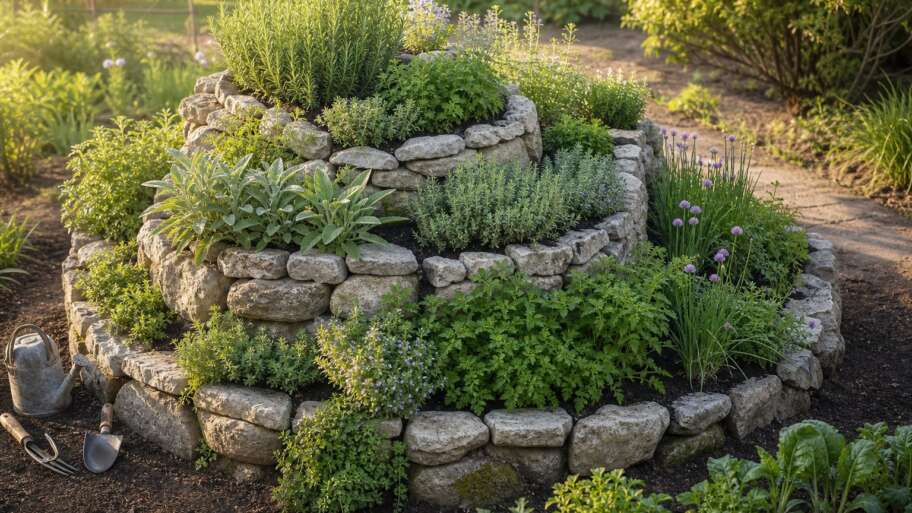
An herb spiral is a garden bed that has learned to coil. Instead of spreading a kitchen herb garden across a flat rectangle, it stacks the planting area into a small rising spiral, usually held in place with stone, brick, or reclaimed pavers. The result looks charming, but the charm is not the point. The shape makes the bed behave…
Read more about Herb Spirals: Growing Flavor in a Tiny Climate Machine
An espalier is a fruit tree taught to draw a line. Instead of letting an apple or pear become a rounded little cloud of branches, the gardener trains it flat against a wall, fence, or freestanding wire frame. The result is part orchard, part architecture: a tree with a trunk like a spine and fruiting arms laid out in deliberate…
Read more about Espalier: Training Fruit Trees into Living Geometry
A balcony garden is not a small backyard lifted into the air. It is its own climate: brighter or shadier than expected, windier than the street below, quick to dry, and limited by weight, drainage, rules, and reach. Once you accept that, the space becomes much easier to plant well. The best balcony gardens do not begin with a shopping…
Read more about Balcony gardening, where the sky becomes a microclimate