
A dark garden is easy to imagine and harder to maintain. The first season is all drama: black leaves, red stems, silver seed heads, pale flowers in shadow. By the second season, the garden starts asking ordinary questions. Is the soil too wet? Is the path disappearing? Are the dark plants vanishing into shade instead of creating contrast?
The Royal Horticultural Society’s advice on dark foliage is useful because it treats dark plants as design plants, not props. Dark leaves create contrast, depth, and drama, but they need the right setting to read clearly.1 A dark garden survives when horticulture keeps doing the work after the mood board fades.
Keep contrast alive
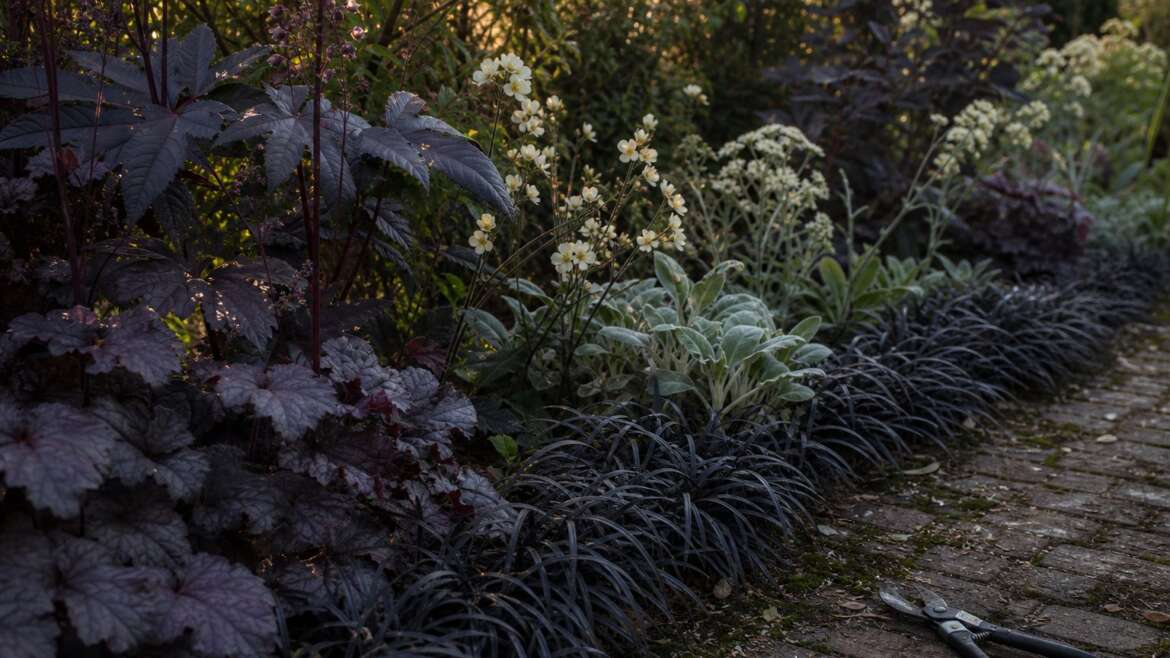
Near-black foliage is most visible when it has something to push against. Pale gravel, weathered stone, silver foliage, white flowers, golden grasses, and glossy green leaves can all make dark plants sharper. If every plant is burgundy or purple-black, the border becomes a flat shadow. Contrast is not a betrayal of the theme; it is what lets the theme be seen.
Repeat dark plants in small groups rather than scattering one of each. A ribbon of black mondo grass, a mound of dark heuchera, a smoke bush, or a red-leaved sedum can create rhythm. Then interrupt the rhythm with pale bloom, fern texture, or a light path edge. The eye needs relief.
Watch the real growing conditions
Dark foliage does not exempt a plant from ordinary needs. Some dark plants need sun to color well. Others scorch in too much heat. Black mondo grass, for example, is described by NC State Extension as an evergreen groundcover with nearly black leaves that prefers fertile, moist, slightly acidic, well-drained soil in part sun to part shade.2 Put it in baking dry soil and the design problem becomes a plant-health problem.

Moisture is especially important in a border with stone, gravel, or dense roots from trees. Mulch lightly where appropriate, use drip irrigation if hand watering is inconsistent, and group plants with similar water needs. A gothic-looking border that mixes bog lovers, dry-shade survivors, and thirsty container plants will not stay coherent for long.
Do not let the theme override safety
Some dramatic plants are poisonous. White baneberry, also called doll’s eyes, has unforgettable pale berries, but NC State Extension notes that all parts are poisonous, especially berries and roots, and advises caution where children and pets have access.3 Castor bean has dark tropical foliage but highly poisonous seeds. Foxgloves, monkshood, hellebores, and many other atmospheric plants also deserve respect.
The solution is not fear. It is placement, labeling, and restraint. Keep hazardous plants away from play areas, edible beds, and casual cutting gardens. Wear gloves when pruning irritant or toxic plants. Do not include a plant simply because it looks dramatic if the site is wrong for the people who use it.
Use lighting sparingly
A dark garden often tempts people into heavy night lighting, but too much light erases darkness and can affect wildlife. RHS guidance on garden lighting notes effects on glow worms, bats, robins, moths, and migrating birds, and recommends keeping some dark areas, aiming lights downward, and using timers or motion sensors where lighting is necessary.4 The goal is enough light to walk safely, not enough light to flatten the whole border.
Low, warm path lights can be useful near steps, water, or uneven paving. Shield them. Keep them out of shrubs. Let moonlight, pale flowers, and reflective leaves do some of the work. Mystery needs actual shadow.
Maintenance is the mood
A dark garden deteriorates quickly when edges blur. Cut back collapsed foliage. Divide tired clumps. Remove green reversions from black mondo grass if they spoil the intended effect. Refresh pale gravel or stepping stones so they still provide contrast. Prune shrubs so they frame views rather than swallowing them.
Leave some seedheads and winter structure, but choose them. Decay can be beautiful; neglect usually is not. The best dark borders feel aged, not abandoned. They have compost under the drama, clear paths through the mystery, and enough care that the plants can keep performing without becoming a costume.