
Mosaiculture is what happens when planting design gets close enough to become an image. In the exhibition-scale version, thousands of plants may be arranged on metal frameworks to make monumental living sculpture.1 In a home garden, the idea can be quieter: a low bed, a framed panel, a container, or a courtyard strip where leaves behave like pixels and the whole thing reads as a pattern from a chosen viewpoint.
That sounds like painting, but plants are not paint. A burgundy patch sprawls. A silver edge gets woolly. A flower opens, steals attention for ten days, then leaves a gap. One plant sulks in heat while its neighbor doubles in size. The useful shift is to stop asking, “What colors do I want?” and start asking, “Which living materials can hold this mark?”
University of Florida IFAS describes plant color, texture, form, and size as major design characteristics, and it also stresses growth rate and maintenance when selecting plants.2 In mosaiculture, those qualities are not just decorative. They decide whether the drawing is still legible after rain, heat, trimming, and a month of growth.
Start with foliage, not flowers
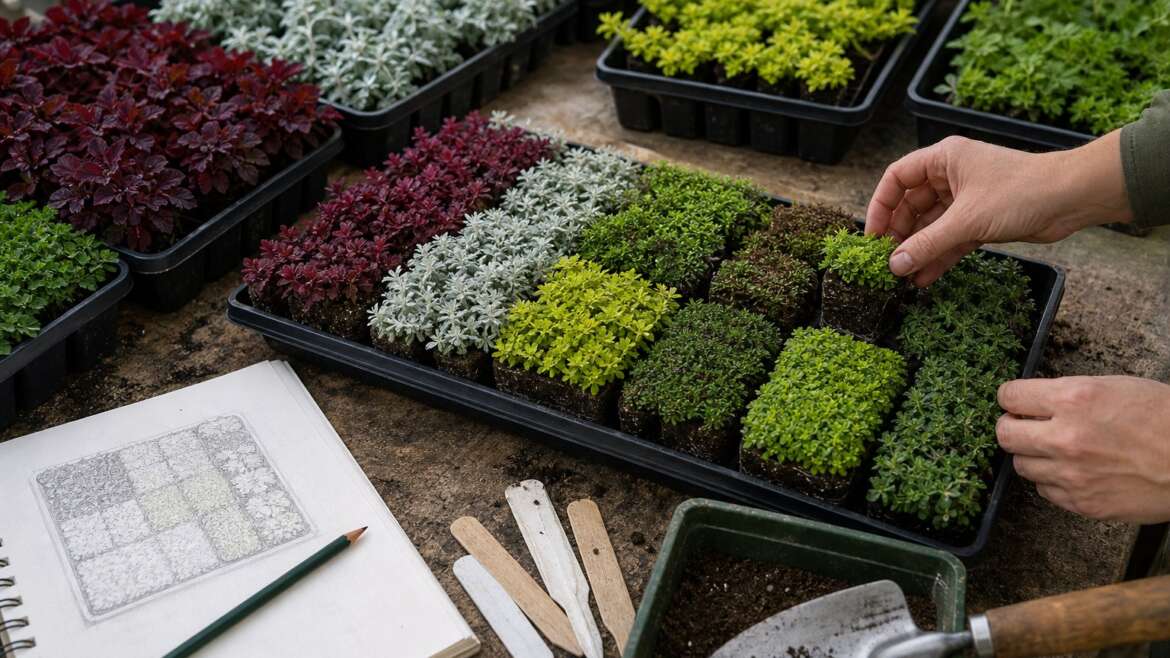
Flowers can be wonderful accents, but they are unreliable pixels. They open, fade, deadhead, seed, and disappear. Foliage is usually the steadier design material. Alternanthera, ajuga, sedum, santolina, small-leaved thyme, coleus, dusty miller, heuchera, and compact grasses can hold color or texture longer than most blooms. The exact list should follow your climate, light, irrigation, and tolerance for clipping.
A plant palette also needs shared pace. A slow silver plant beside a fast burgundy trailer will not stay a neat border without constant cutting. Put plants with similar growth rates next to one another, and use the pushier plants where trimming access is easy. A mosaic often fails not because the drawing was bad, but because the maintenance path was never designed.
Design from the viewing distance
A pattern that looks lively from two feet away may vanish from across a courtyard. NC State Extension’s landscape design guidance emphasizes principles such as simplicity, repetition, line, variety, and harmony.3 Mosaiculture depends on the same principles, only compressed. Use larger color fields for distant views, reserve fine texture for places where people can come close, and make the main line of the design strong enough to survive imperfect growth.
Test the design at the distance where it will actually be seen. Step back from trays of plants. Squint at the drawing. Photograph a sample arrangement in the real light. If the contrast disappears in a phone photo from across the path, it will probably disappear for visitors too.
Prepare the surface like a planting site
A flat horizontal mosaic needs the same things any good planting needs: drainage, a root zone that does not dry out immediately, and a watering plan that reaches the whole pattern. A vertical panel asks for more engineering. Royal Horticultural Society guidance on green walls notes that living wall systems often use modules, growing media, and irrigation, and that plants should match the available light and moisture.4
Small living pictures also expose every bump and dry edge. That is why the surface matters before the first plant goes in. The same logic shows up in designing a moss garden that looks grown, not placed: when the plants are low and close-textured, the ground plane becomes part of the design rather than a neutral background.
Make edges easy to keep
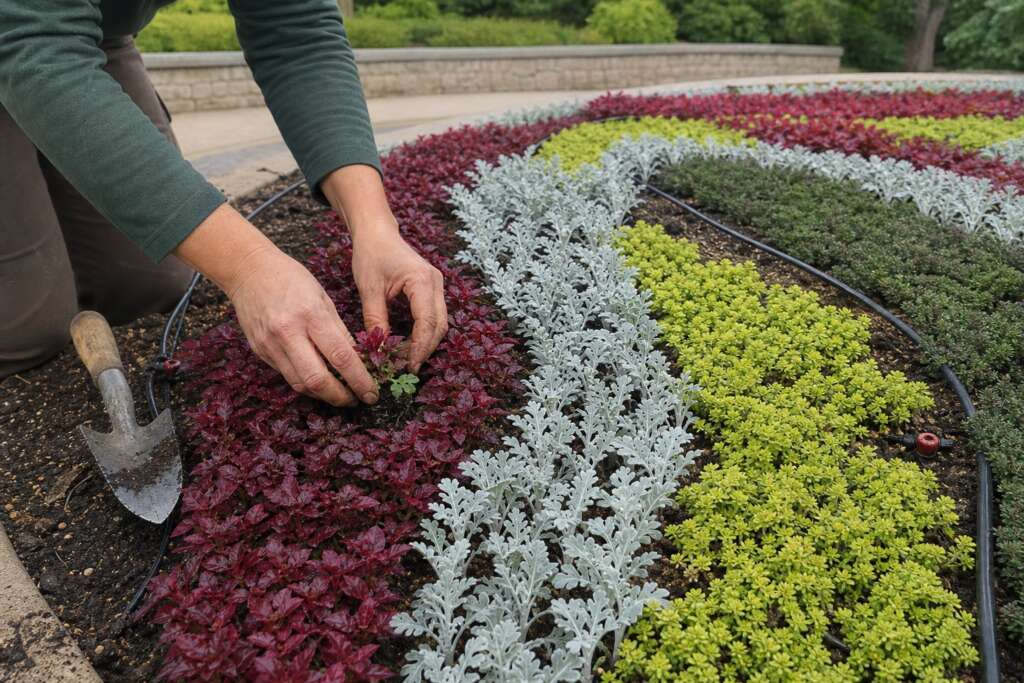
Crisp edges can come from plant contrast, clipping, or a hidden physical divider in the planting medium. The best choice depends on the scale. A broad wave of silver beside burgundy can be held by trimming. A thin line in a small emblem may need a plant that naturally stays narrow, or a divider that stops one color from swallowing the next.
Do not make every part of the design equally detailed. Give the eye one or two strong shapes, then let secondary textures support them. Too many colors at the same scale turn into static. Two or three disciplined contrasts usually read better than a dozen plants shouting at once.
Leave room for correction
A good mosaiculture plan includes the unromantic parts: spare plants, a trimming schedule, access to the back or top of the structure, and a decision about what happens when one color fails. The best designs are not rigid. They are sturdy enough to survive editing.
If that sounds more like maintenance than art, that is exactly the point. Living pictures stay readable only when care is built into the design. The same principle applies to ordinary beds: garden maintenance gets faster when the work is visible, reachable, and planned before the plants are already in trouble.
So begin with the drawing, but do not trust it too much. Let the plants correct it. Choose foliage that can hold a mark, size the pattern for the viewer, prepare the root zone, and give yourself permission to trim, swap, and simplify. Mosaiculture works best when it is treated less like a finished picture and more like a living one that keeps negotiating with the season.