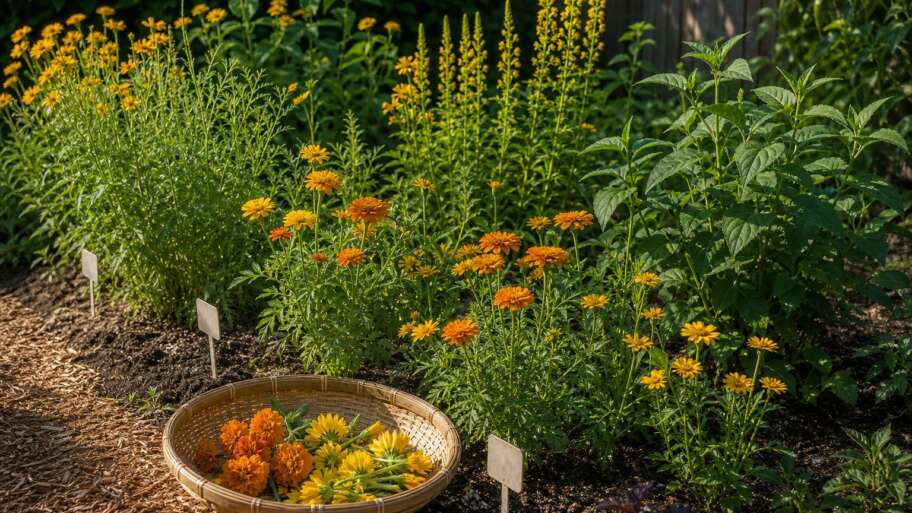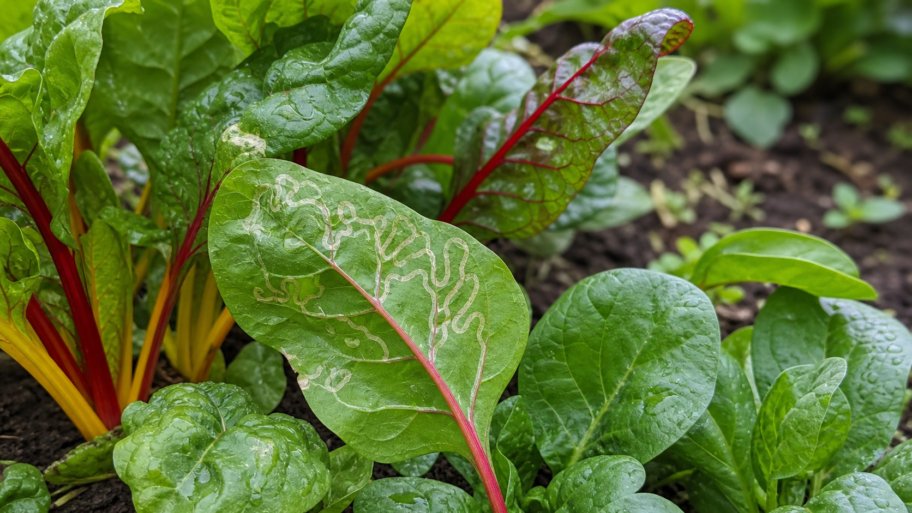

A bioluminescent garden is not a substitute for path lighting. It is a pact with living organisms that only show themselves under the right conditions: a green thread inside wet wood, a petunia bud that reads after your eyes adjust, or a saltwater culture that flashes only when it is gently disturbed. If you want reliable illumination, use a shielded fixture. If you want a reason to step outside after rain and let the night become visible, biology can give you something stranger.
The trick is to stop designing it like a light installation. NOAA describes bioluminescence as light produced by chemical reactions inside living organisms, commonly involving luciferin, oxygen, and an enzyme such as luciferase.1 In a garden, that means the glow is an ecological symptom, not a switch. You are managing habitat, darkness, timing, and expectations.
If you are still deciding where the feature belongs, start with the companion piece Designing a Bioluminescent Garden: What Actually Works. This article is the care manual for after you have chosen the dark corner.
Choose a real source of glow
The word ?bioluminescent? gets stretched online until it includes glow paint, solar ornaments, edited photographs, and plants dusted with phosphorescent powder. Those can be decorative, but they are not living light. For a factual garden article, there are three realistic categories to discuss: fungi in decaying wood, genetically engineered glowing ornamentals where they are legally sold, and contained cultures of marine dinoflagellates.
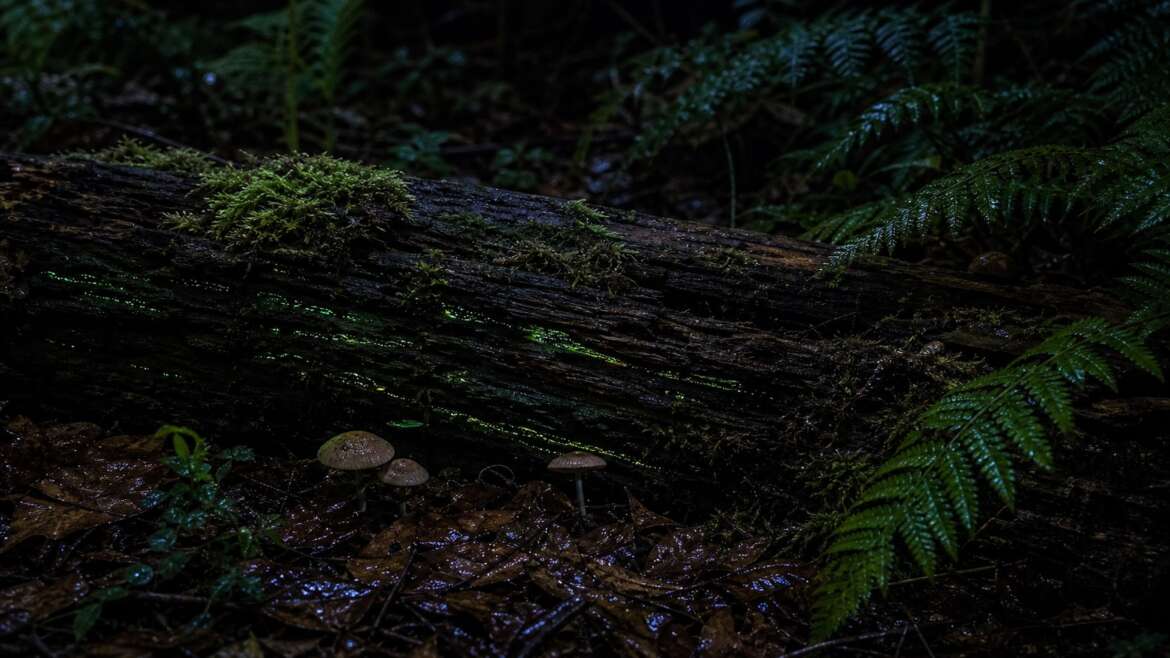
Fungal foxfire is the most garden-shaped option. Cornell?s mycology writing describes foxfire as the glow from bioluminescent fungi in wood, and University of Georgia reporting notes that the mycelium in rotting wood often glows more noticeably than the mushroom itself.23 That makes a ?glowing log? less like a novelty lamp and more like a small decomposition project.
Bioluminescent petunias are real now, but they need a careful sentence. In the United States, Light Bio?s Firefly Petunia is sold as a live genetically engineered plant, and USDA APHIS issued a regulatory status review response for the modified petunia.45 As of 2026, RHS notes that it is not available in the UK and that UK and EU rules would require regulatory approval and consultation before introduction.6 Treat availability as jurisdiction-specific, and do not trust seed listings that promise the same plant.
Dinoflagellates belong in a container, not in a garden pond. These marine microorganisms can glow blue-green when mechanically stimulated during the dark part of their cycle, but they need saltwater culture conditions and a regular light-dark rhythm. UC San Diego?s Latz Laboratory recommends a 12-hour light and 12-hour dark cycle and demonstrating the glow at least two hours into the dark cycle.7 They are a windowsill or covered-patio curiosity, not something to pour outdoors.
Care begins with darkness
The honest route to a stronger-looking glow is not forcing the organism harder. It is making the surrounding scene darker. A faint green fungal glow that vanishes under a porch light may become visible after ten minutes of dark adaptation. A glowing petunia that looks disappointing under a streetlamp may make more sense in a sheltered pot away from white LEDs.
Use night lighting the way a good museum uses labels: only where needed, low, shielded, and aimed away from the subject. Warm path lights are safer than total darkness on steps, but keep them out of the sightline. Dark foliage, damp bark, and matte stone make better backgrounds than pale gravel or glossy paving, which bounce stray light back into your eyes.
This is also where ?vibrant? has to be redefined. A bioluminescent garden is vibrant because it is alive and conditional, not because it floods the border with color. Your best tool may be a chair placed far enough from house lights that you can sit still and let the scene come up slowly.
Keep foxfire wood damp, airy, and separate from structures
A fungal display needs moisture, oxygen, shade, and food. The food is the wood. Use a defined piece of decaying hardwood in a shaded bed, a stump corner, or a contained observation box. Do not tuck rotting wood against siding, deck posts, fences, or stored lumber. The goal is habitat in the garden, not rot migrating into things you paid for.
A useful setup is boring in daylight: a partially buried log, leaf litter, moss at the edges, and nearby plants that keep the air humid without sealing everything shut. A fallen log is already a nursery for mosses, fungi, seedlings, and insects; How nurse logs turn fallen wood into a garden nursery explains why that slow, wet wood can be more like infrastructure than mess.
Water the area like you would a shade planting, not like a bog. Even moisture is helpful; standing water and sour, anaerobic conditions are not. After hot dry weather, expect the glow to fade. After soaking rain followed by a mild, dark evening, check again. Keep a small notebook or phone note with rain, temperature, moonlight, watering, and what you actually saw. The pattern is part of the pleasure.
Use containers for anything that needs babysitting
If you are experimenting with colonized wood, a covered container gives you more control than the open border. It should hold humidity, but it should not be permanently airtight. Bioluminescent reactions and fungal metabolism need oxygen. A clear lidded box with small air exchange, damp bark, and a removable tray is easier to observe and safer to keep away from house timbers than a mystery log tucked behind the shed.
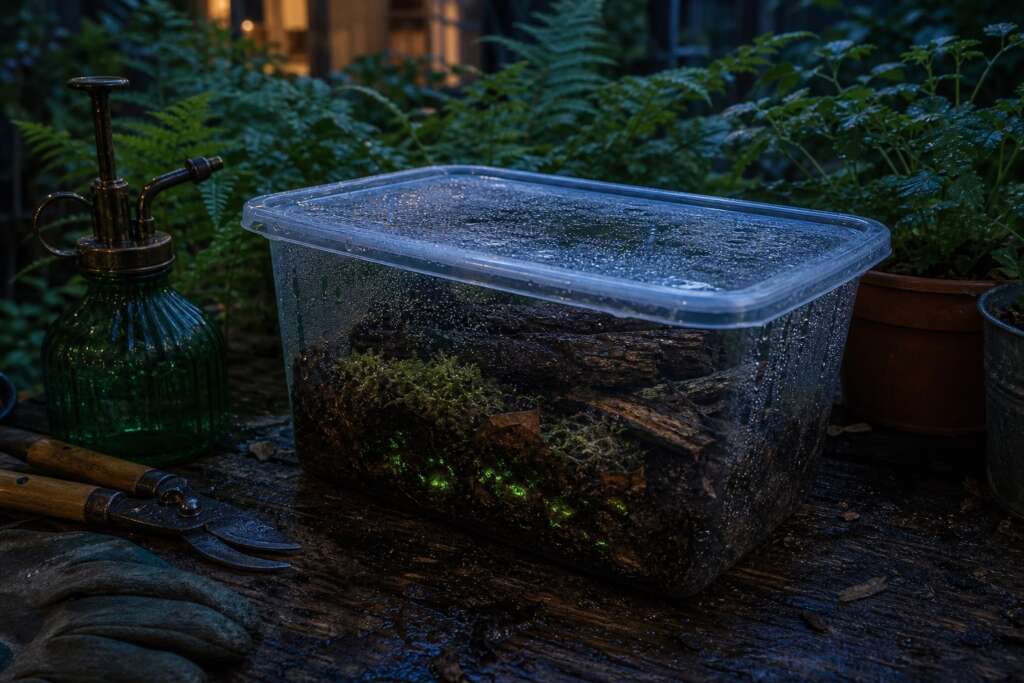
Containers are also the right place for dinoflagellates. Keep cultures in their own vessels, follow supplier or lab care instructions, and never dump them into ponds, streams, rain barrels, or aquariums with animals. The light is usually a brief flash when the water is swirled, not a continuous glow. That makes it fascinating, but it also means it belongs beside the garden rather than loose inside it.
Care for glowing petunias like living petunias, not solar lights
A Firefly Petunia does not ?charge? in the sun the way a phosphorescent object does. Its light comes from engineered metabolism based on the fungal bioluminescence pathway, a line of research that showed plants can be made autonomously luminescent by linking plant caffeic acid metabolism to fungal light chemistry.8 The practical lesson is simple: keep the plant healthy, then view it in darkness.
Grow it as a petunia: bright light for plant vigor, free-draining potting mix, regular watering without waterlogging, and enough feeding to support new growth. Then give the display a dark viewing location. New buds and active growth may read better than older, tired tissue, so routine petunia care still matters. Deadhead if needed, pinch or prune for shape, and do not let the plant collapse into drought stress just because the main event happens at night.
Because this is a genetically engineered ornamental, keep the legal and ethical side tidy. Buy from authorized channels in regions where it is allowed. Do not import, sell, mail, or share plant material into places where the rules are unclear. Do not represent ordinary seeds as bioluminescent petunia seed. A real glowing plant is interesting enough without smuggling folklore into the pot.
Avoid the common mistakes
- Do not brighten the scene with white light. You will erase the very glow you are trying to see.
- Do not release cultures outdoors. Marine dinoflagellates and purchased biological material belong in controlled containers unless a qualified local authority says otherwise.
- Do not eat or casually handle unknown mushrooms. A glowing or non-glowing mushroom is not automatically safe.
- Do not promise sustainable lighting. Today?s living glow is a wonder, a teaching tool, and sometimes an ornamental novelty. It is not a practical replacement for lamps.
- Do not sterilize the whole corner. Leaf litter, damp wood, moss, and fungi are part of the system, as long as they are kept away from buildings and paths where they would cause damage or slipping.
A simple observation routine
Visit after rain, after irrigation, and after several dry days. Compare moonless nights with bright moonlight. Sit with lights off for ten minutes before deciding nothing is happening. Use a red or very dim warm light if you need to move safely, and aim it down. Photographing the glow may require a long exposure, but do not let the camera teach you to expect what the eye cannot see.
The most satisfying bioluminescent garden is small enough to care for closely. One log, one pot, one culture vessel, one dark bench. The biology is not there to perform on command. It is there to make the garden feel less finished and more alive.
References
- NOAA National Ocean Service: What is bioluminescence?
- Cornell Mushroom Blog: This Bark Glows in the Dark
- University of Georgia Field Report: Fox-fire makes forests glow
- USDA APHIS: Regulatory Status Review response for Light Bio petunia
- Light Bio: Firefly Petunia FAQs
- RHS: Firefly Petunia availability and regulation notes
- UC San Diego Latz Laboratory: Dinoflagellate culturing
- Nature Biotechnology: Plants with genetically encoded autoluminescence