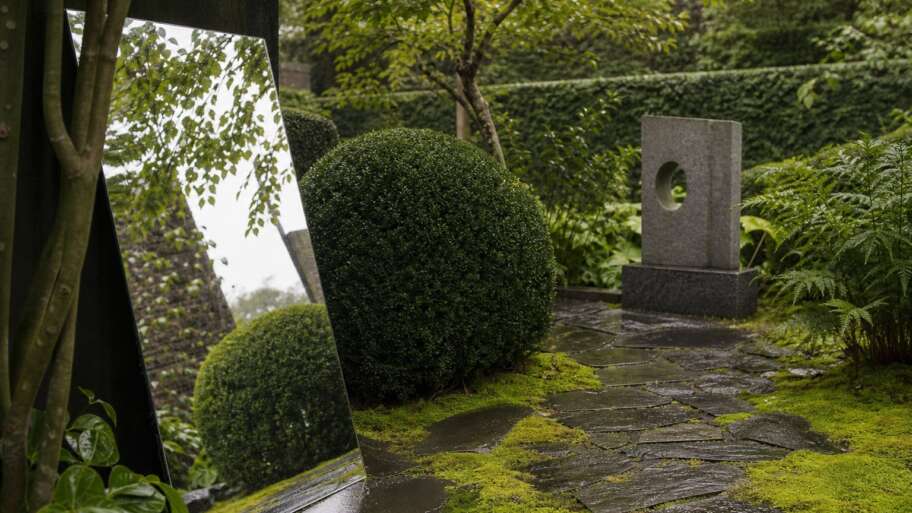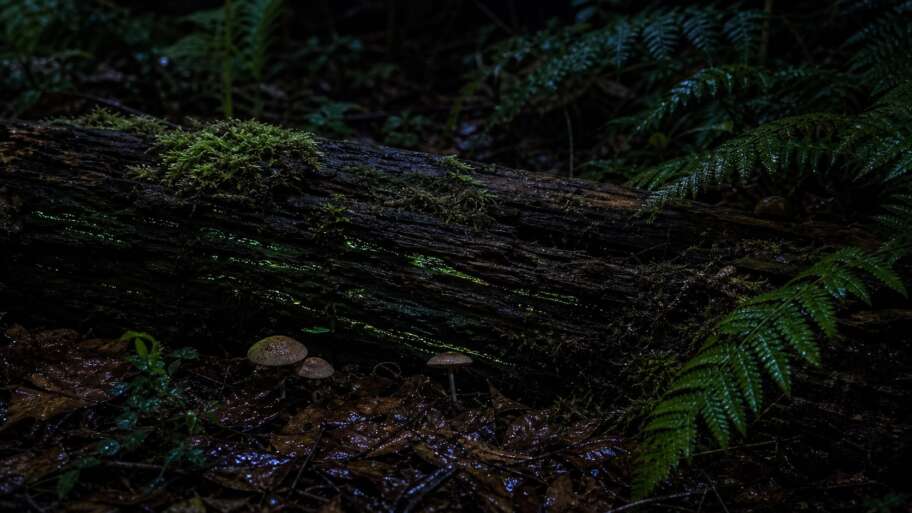

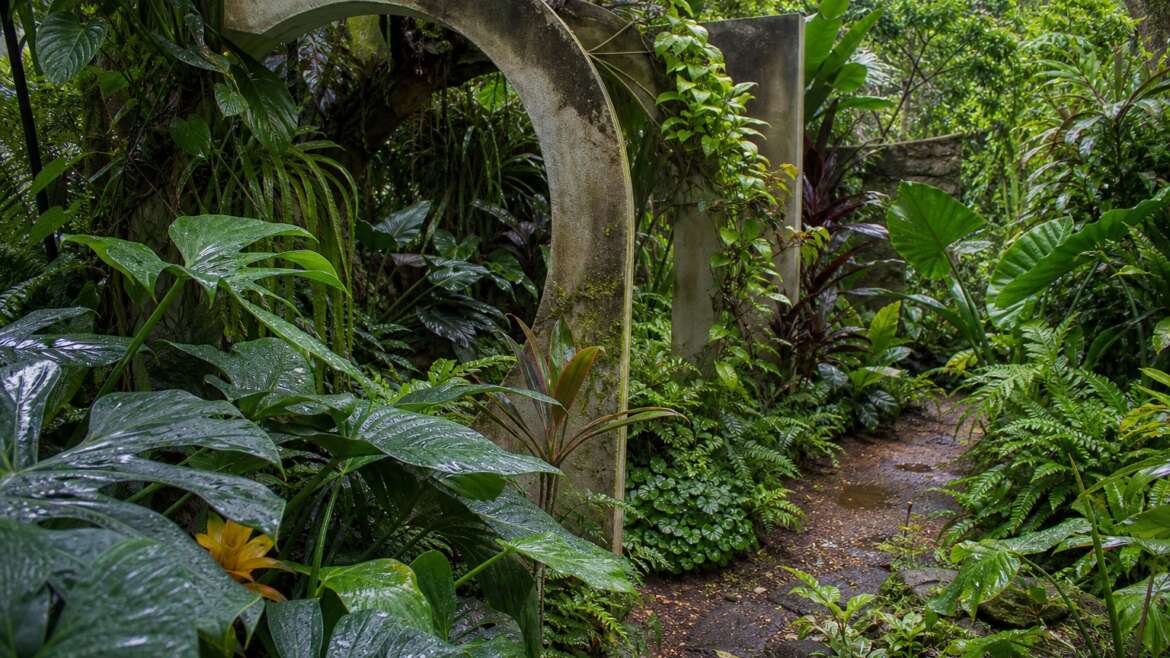
A surrealist garden is not simply a weird garden. It is a garden where the familiar becomes unstable. A staircase rises into leaves and stops. A doorway frames nothing but sky. A clipped shrub looks too deliberate beside a plant that seems to have arrived from a dream. The effect can be playful, uneasy, beautiful, or all three at once.
Surrealism began as a literary and artistic movement in the early twentieth century. The Victoria and Albert Museum traces its name to 1917 and its emergence as a movement to André Breton’s use of the term in 1924. Surrealist artists used dreams, the unconscious, irrational associations, and automatic methods to disturb ordinary ways of seeing.1 Gardeners do not need to imitate a painting, but that history helps distinguish a dream garden from a collection of novelty props.
Why gardens suit surrealism
Gardens already blur control and accident. A gardener lays out paths, plants, prunes, and edits, while roots, weather, fallen leaves, and self-sown seedlings keep revising the plan. That makes a garden a natural place for surrealist tension. The built object can be precise while a vine ignores precision. A still pool can promise depth while reflecting a branch only inches above it. A path can suggest a destination while ending at a mossy wall.
The useful design tool here is juxtaposition: bringing familiar things together in a relationship that feels briefly impossible. The V&A describes Surrealist objects made from existing things whose bizarre combinations forced new meanings.1 Outdoors, the contrast must also survive weather and growth. Smooth clipped foliage beside a ragged grass can hold the idea for years; an indoor chair dissolving under rain is merely waste.
Begin with one unsettling rule
Write one sentence before buying an object: the formal route will be interrupted by growth; the garden boundary will appear to open; a familiar seat will seem too small for its setting. A rule gives every decision a test. If an arch, plant, mirror, or stone strengthens the same contradiction, it belongs. If it introduces a second unrelated joke, leave it out. One lucid disturbance is stranger than a border full of competing surprises.
Thresholds are especially effective because visitors expect them to lead somewhere. A freestanding frame can isolate a sliver of sky. A gap in a hedge can reveal an object rather than another path. Steps can turn slightly out of view, allowing foliage to hide the answer. Before construction, check the effect from the direction people will actually approach. A mystery that is visible only from the compost bin is not yet a composition.
Use scale with similar restraint. A single small chair beneath a mature tree can make the trunk feel monumental. One oversized leaf beside a rigid low wall can make the masonry seem miniature. Repeat a shape quietly elsewhere—a round clipped shrub answering a circular opening, for example—so the strange element has a visual echo rather than the loneliness of a dropped prop. For a practical sequence from routes to focal points, see the guide to creating a surrealist garden without losing the plants.
Borrow the principle of Las Pozas, not its scale
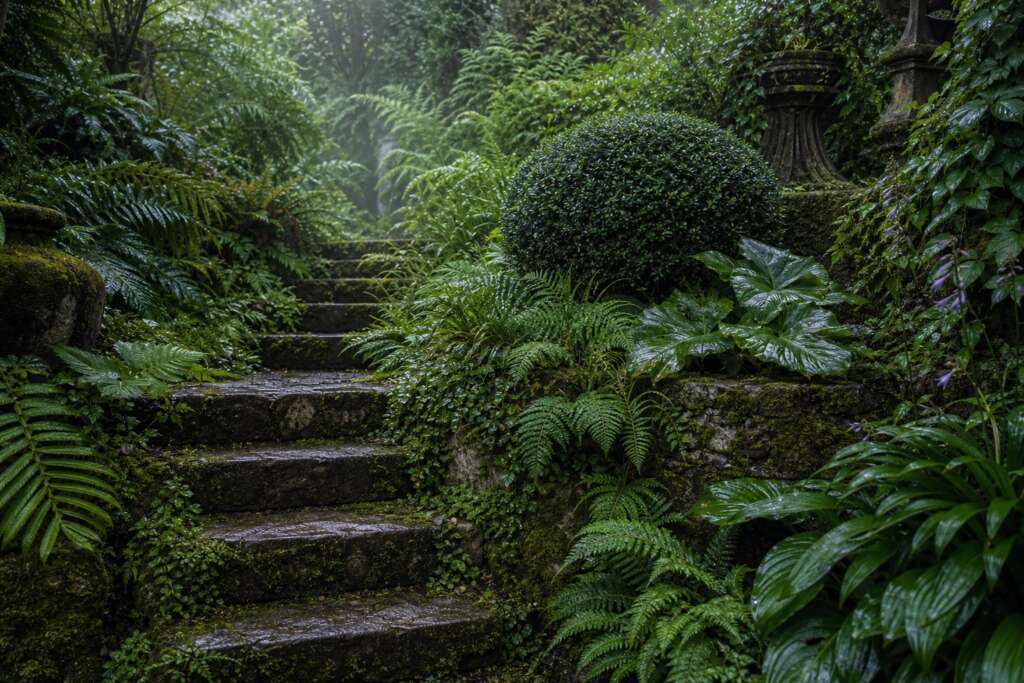
Edward James’s Las Pozas in Xilitla, Mexico, is the unavoidable garden reference. Its official site describes James as a British poet, artist, and patron of Surrealism, and the garden as a fusion of the organic and artificial, the jungle and concrete. Its architecture draws on orchids and the vegetation of the Huasteca Potosina; doors open to nothing, stairs rise without an ordinary destination, and concrete flowers meet living ones.2
The transferable lesson is not to copy monumental concrete forms. It is to let construction and vegetation change the reading of each other. In a small shaded garden, one plain opening can frame the restless outline of ferns. A low wall can disappear under a carefully placed curtain of foliage. A narrow rill can make a heavy stone appear to interrupt moving water. These are modest interventions, but they create the same negotiation between deliberate form and living growth.
Time can finish part of the composition, provided it is not used as an excuse for neglect. Weathered stone, softened edges, and an occasional self-sown plant may make an object feel discovered rather than installed yesterday. Trapped moisture, loose masonry, blocked drainage, and a slippery walking surface do not add poetic age. They are maintenance problems wearing a picturesque costume.
Put horticulture underneath the illusion
A dream garden still begins with an ordinary site inventory. University of Florida IFAS recommends recording sun and shade, wet and dry areas, soil, views, wind, circulation routes, spatial dimensions, and architectural features before selecting plants. It also asks designers to consider function, appearance, and environmental requirements together.3 Those constraints do not weaken the concept; they decide which version of it can remain alive.
Choose plant behavior as deliberately as flower color. Fine leaves can make a nearby object look heavier. Broad leaves can erase the scale of a small enclosure. Upright grasses register every breeze beside still masonry, while a weeping branch can partially veil a view. Then check mature height and width, root space, hardiness, drainage, and light. UF/IFAS notes that plant proportions change with age and that sprawling vines are poor choices beside paths when constant trimming is needed for safety.3
Design for more than the week of peak bloom. In winter, a frame may become clearer after deciduous leaves fall; in summer, the same view may disappear behind growth. Seed heads, bark, evergreen mass, shadow, and the sound of dry leaves can carry the idea through quieter seasons. Photograph the important sight lines at several points in the year. The record will show whether pruning should reveal the composition or whether seasonal concealment is part of it.
Keep the mystery out of the hazard list
Surrealist design can misdirect the eye without misdirecting the foot. Keep real level changes legible, routes stable, exits obvious, and objects securely supported. Do not depend on darkness, loose paving, sharp materials, or a concealed drop to create unease. A stair that appears to lead nowhere can still have consistent treads and a safe stopping point. The visitor should question the scene, not the load-bearing capacity.
Every illusion also needs a care route. Leave access to drains, fixings, plant crowns, and the back of reflective surfaces. Decide how a vine will be removed from a joint before encouraging it to cover the structure. The companion article on keeping a surrealist garden alive after the dream covers mirrors, materials, lighting, and seasonal inspection in more detail.
Edit until the garden stops explaining itself
Stand at the entrance and remove, in imagination, one element at a time. If the scene becomes stronger without an object, the object is probably explaining the joke. If the oddity vanishes when a shrub is removed, that plant is structural rather than filler. This kind of editing protects both clarity and personality. It also leaves room for the garden’s own accidents to matter.
The best dream gardens feel as if they were unearthed rather than installed all at once. They have memory, shadow, and a few unanswered questions. They make the visitor wonder whether the garden is a place, a thought, or both.