
A homegrown spice is not just a dried thing in a jar. It is a leaf, seed, flower, bark, root, rhizome, or fruit caught at a particular moment. Harvest too early and the flavor is thin. Harvest too late and the plant may have already spent what you wanted to save. Dry too slowly and you invite mold. Dry too hot and the aroma can flatten before it reaches the kitchen.
That is why storage starts in the garden, not in the pantry. NC State Extension’s herb guidance puts the basic rule plainly: foliage herbs are generally best before flowering, seed crops should be collected as pods shift from green toward brown or gray but before they shatter, and flowers are usually gathered just before full bloom.1 The jar is only the last step.
If you are still deciding what belongs in the bed, start with climate rather than wishful thinking. Some spice plants are easy annuals, some are Mediterranean shrubs, and some are tropical perennials that need containers or winter shelter; the companion piece on growing spices by matching plant to climate is useful before you plan the harvest. In small gardens, placement matters too. A sunny, sharp-draining shoulder and a cooler, moister foot, like the zones in an herb spiral, can make the difference between thyme that tastes concentrated and parsley that sulks in dry soil.
Harvest the part you actually want
Kitchen language can be loose. We call basil an herb, coriander seed a spice, and dill both an herb and a spice depending on whether we mean the leaves or the seed. The plant does not care about those categories. It cares about flowering, seed ripening, dormancy, stress, and the weather on harvest day.
For leafy herbs such as basil, oregano, mint, thyme, sage, and marjoram, harvest when the plant has enough foliage to keep growing. Morning is usually best after the dew has dried and before the day turns hot; University of Minnesota Extension notes that mid-morning is when herb oil content is high, while excess water slows drying.2 Use clean scissors or pruners. Take sprigs, not ragged handfuls. Avoid dusty, diseased, or insect-chewed material unless you are willing to sort it immediately.
For leafy annuals, do not wait politely while the plant bolts. Once basil, cilantro, or dill begins changing from leaf production to flowering and seed, the leaf texture and flavor often change with it. You can still use the plant, but you are now harvesting a different stage. Pinching leafy shoots while they are tender is not just tidying. It keeps the plant in the job you want it to do.
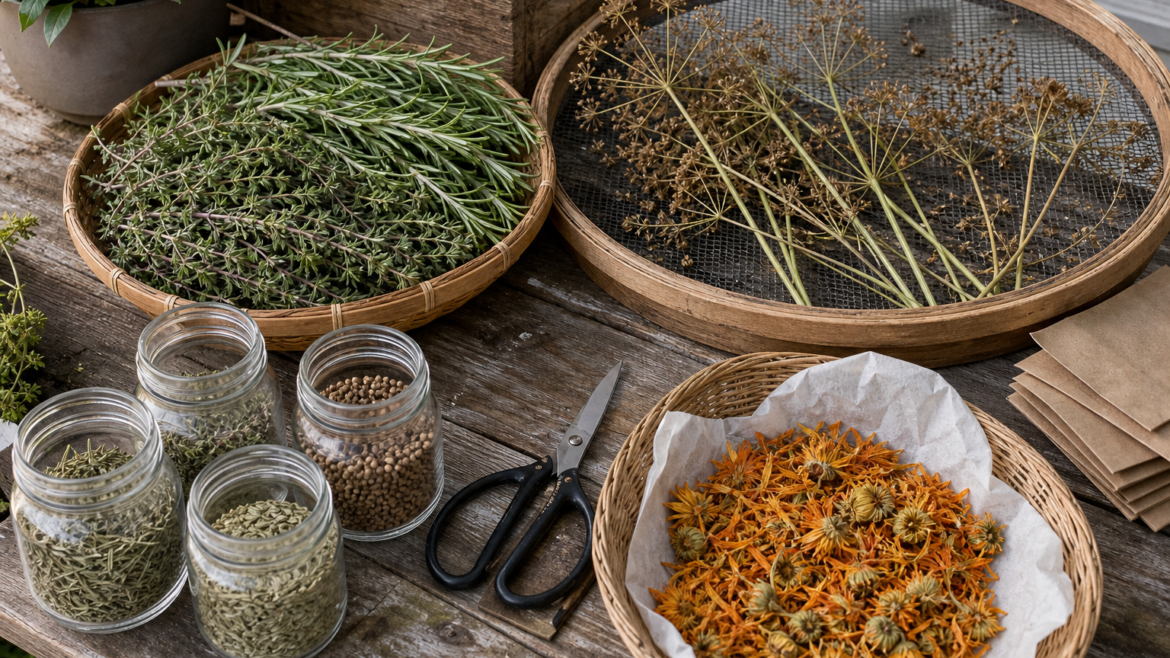
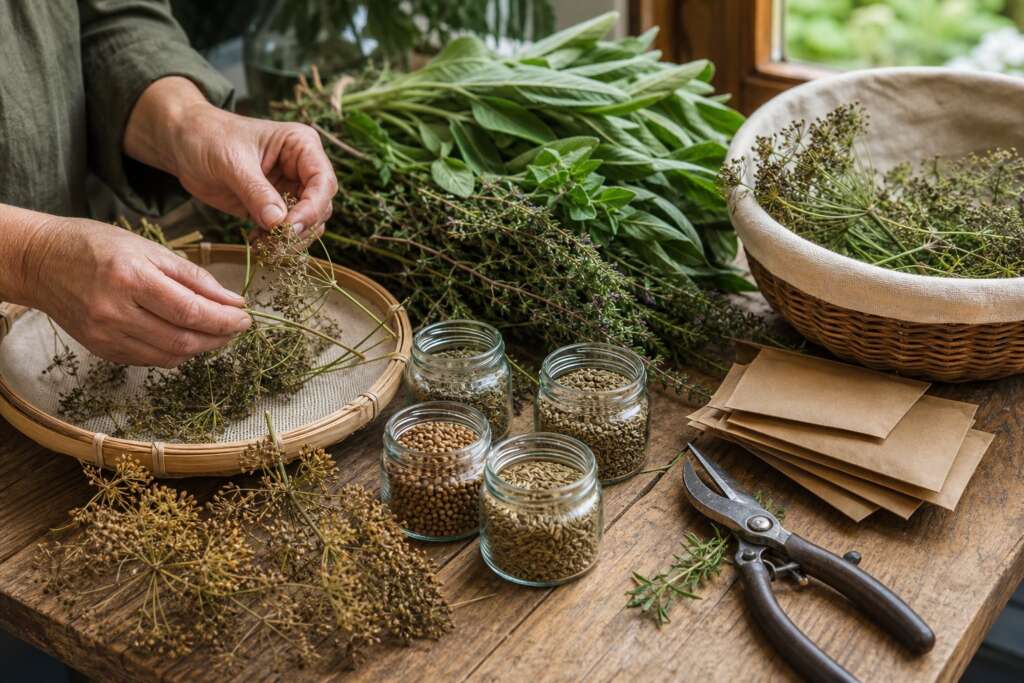
For seeds, patience and timing matter more than speed. Coriander, dill, fennel, celery, anise, and caraway should be watched as the seedheads dry and change color. If you wait until every seed is fully dry outdoors, wind, birds, or gravity may get the first harvest. Cut the seedheads when most seeds are mature and place them upside down in a paper bag or over a clean tray. Punching a few holes in a paper bag improves airflow while catching the seeds as they fall.
For edible flowers, collect only plants you can identify confidently and that have not been treated with unsuitable sprays. Pick when the flowers are newly open or just before full bloom, depending on the plant and use. Chamomile, calendula, borage, lavender, and rose petals all punish rough handling; pile them deeply in a basket and the lower flowers bruise, heat, and fade.
Roots and rhizomes follow a different rhythm. Ginger, turmeric, horseradish, and similar crops are not dry pantry spices at harvest. They are moist storage organs. UF/IFAS notes that edible ginger is harvested as a rhizome, often in fall or when tops die back, and can be refrigerated or frozen after drying in shade.4 If you want a shelf-stable dried spice, slice thinly and dry thoroughly before storing.
Dry gently, then dry completely
Drying is not a race. The goal is to remove moisture while keeping as much aroma, color, and texture as you reasonably can. Direct sun may look wholesome, but UV light and dew can reduce quality in many herbs, and damp nights can undo daytime progress. Shade, airflow, low humidity, and small batches are more reliable than picturesque bundles in a hot window.
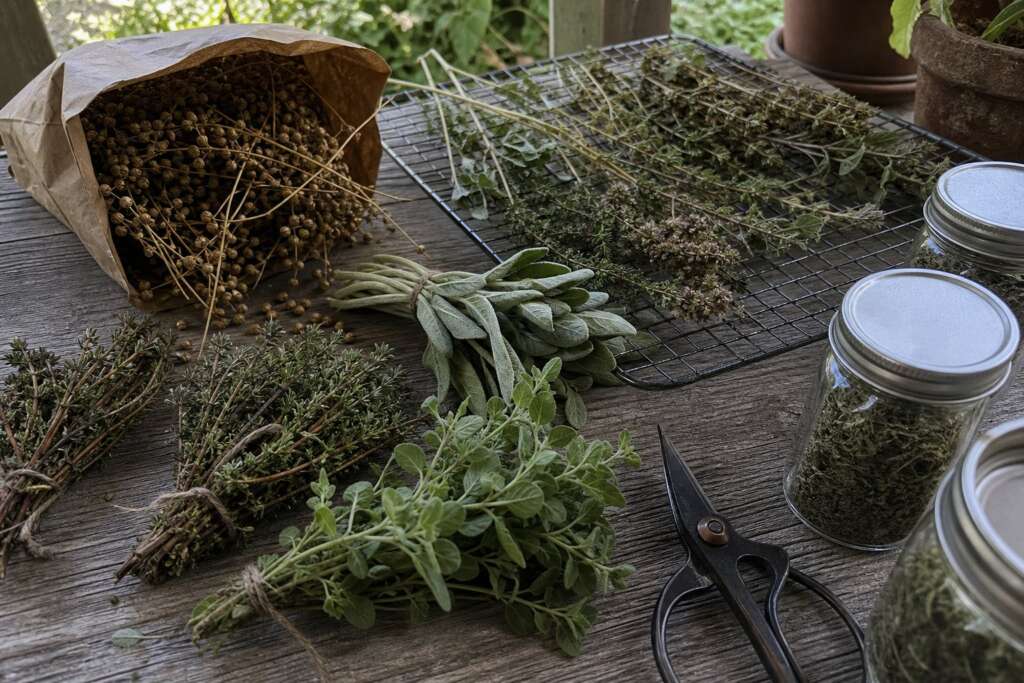
Air drying works well for many sturdy, low-moisture herbs. Tie small, loose bundles and hang them in a warm, dry, dark, well-ventilated place, or spread leaves in a single layer on screens. Do not heap them on a solid tray and hope for the best. The leaves on top may crisp while the underside stays limp. A screen, rack, or mesh surface lets air reach both sides.
Moister herbs such as basil, mint, tarragon, and lemon balm can mold or discolor if the room is humid or the bundles are too fat. For those, use smaller batches, strip some leaves onto racks, or use a food dehydrator set according to the manufacturer’s directions. A conventional oven can work only if it can hold a very low temperature; otherwise it is easy to cook the herb instead of drying it.
Seeds need their own aftercare. Once the seedheads are cut, let them finish drying in a paper bag, on screens, or on a clean tray where they will not blow away. Rub or thresh them only when dry, then winnow out chaff. A few bits of chaff are harmless in a home jar, but damp chaff is not. If anything feels cool, leathery, or flexible rather than crisp and dry, give it more time.
The best test is physical. Leaves should crumble easily. Seedheads should release seeds without tearing. Thin slices of rhizome should snap or feel hard rather than bend. If a sealed test jar fogs with condensation after a day, the spice is not ready for storage. Empty it, dry the batch longer, and wash and dry the jar before trying again.
Store for flavor, not forever
Once the harvest is dry, the enemies are simple: heat, light, air, and moisture. Store dried herbs, seeds, roots, and spice blends in clean airtight containers in a cool, dark, dry cupboard. The shelf beside the stove is convenient, but it is one of the worst places for aroma. So is a sunny windowsill. Label each jar with the plant and the harvest year, because dried leaves can look surprisingly alike by February.
Leave leaves whole when you can. Keep seeds whole until cooking. Store dried ginger or turmeric in slices and grind only small amounts. Crushing increases surface area, which makes flavor easier to release in a pan but also easier to lose in storage. A whole coriander seed is a better little vault than a jar of coriander dust.
Do not confuse safe storage with peak flavor. Many well-dried herbs can keep for about a year under good conditions, and some seeds or roots remain useful longer, but the question is not whether they are still technically present. The question is whether they still smell like themselves. Open the jar. If the aroma is faint, use more, toast gently if appropriate, or compost the tired remainder and make room for the next harvest.
Check the jars during the first week. If you see moisture, clumping, mold, or any stale or off odor, do not argue with it. Re-dry immediately if the problem is only moisture in an otherwise clean batch; discard anything moldy. Homegrown spices should make the cupboard feel more alive, not more suspicious.
One preservation trap to avoid
Dried spices belong in the pantry. Fresh herbs and garlic packed in oil do not. The National Center for Home Food Preservation warns that garlic-in-oil mixtures stored at room temperature can support botulism risk; their guidance is to make garlic-in-oil fresh, refrigerate it at 40 F or lower for no more than four days, or freeze it for longer storage.3 The same caution is a useful mental model for fresh herb oils: oil blocks air, fresh plant material brings moisture, and a pretty bottle on the counter is not a safe preservation method.
The simplest spice cabinet is usually the best one. Harvest the plant part at its flavorful stage. Dry it gently, but all the way. Store it whole, dark, cool, dry, and labeled. Then use it with some confidence, knowing the jar still carries a real piece of the garden rather than a faded souvenir of it.