
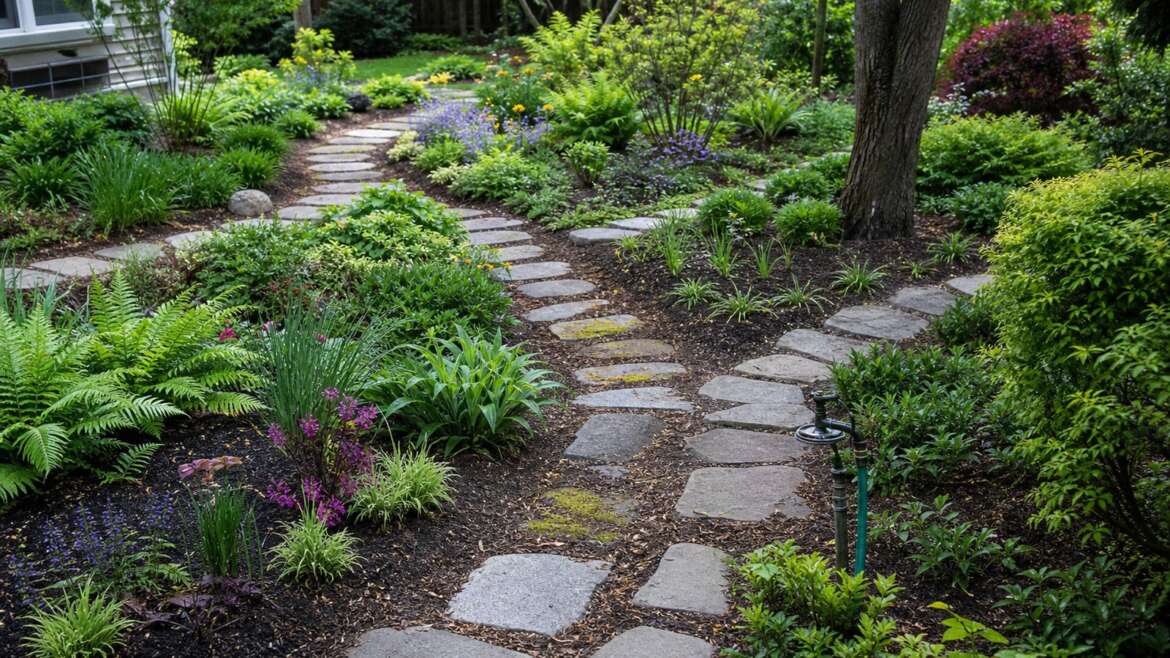
A game-inspired garden can be wonderful in its first season. The ferny corner looks like a hidden level, the stepping stones imply a quest, and the bright flowers seem to mark a point of arrival. Then July arrives. The path narrows under weeds, the containers dry twice a day, and the dramatic border begins to look less like a designed world than an abandoned one.
The cure is not more decoration. It is maintenance design. Clemson Extension puts the point plainly: there is no such thing as a maintenance-free landscape, but planning, plant selection, design, and timely care can reduce the work needed to keep a garden attractive.1 A themed garden follows the same rule. The theme can be imaginative; the maintenance cannot be imaginary.
If you are still shaping the world itself, start with designing a game-inspired garden that still works. This piece is the next layer: how to keep that little landscape readable once plants grow, weather changes, and real life gets busy.
Build the routine into the map
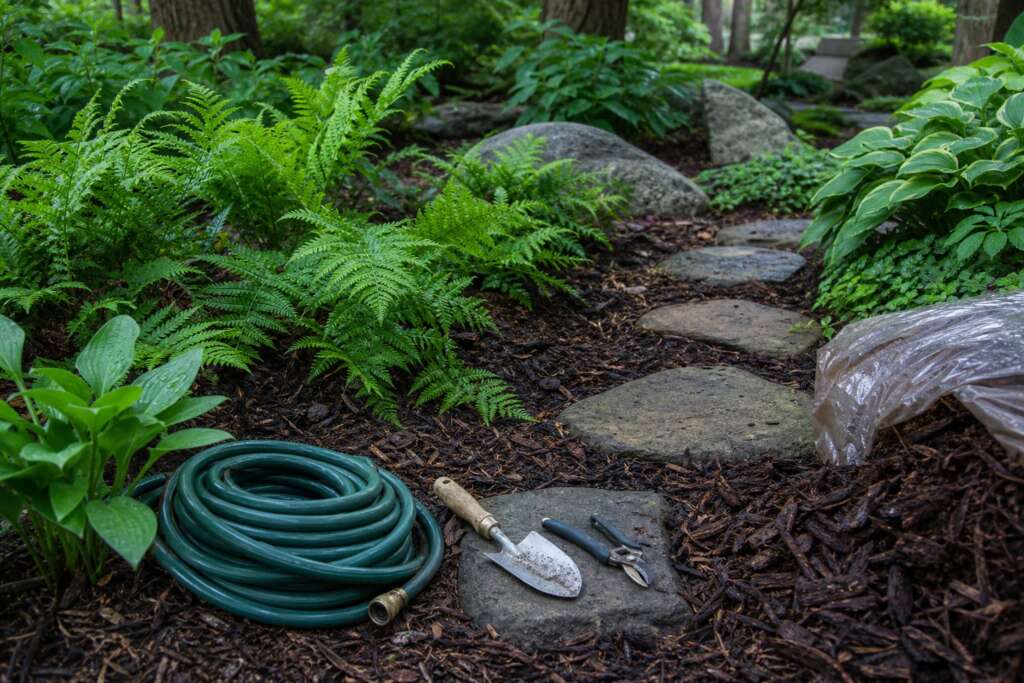
Games are good at routes. They lead you to resources, checkpoints, and safe places without making the player stop every ten seconds to decode the map. A garden can borrow that logic. Put the hose where watering actually happens. Keep pruners near the roses, not in a garage across the yard. Make paths wide enough for the work you will need to do. Leave stepping access into deep beds so weeding and editing do not require a full-body negotiation with the border.
Mulch is one of the least glamorous but most useful upgrades. University of Minnesota Extension notes that proper mulching reduces weeds, improves moisture retention, and reduces work associated with tillage and watering.2 In a fantasy woodland bed, mulch can also look like forest floor. Function and mood can be the same object. Keep it spread over open soil, refresh it before weeds own the gaps, and pull it back from plant crowns and woody stems so the plants do not sit against a damp collar.
Plant for the level you actually have
If the theme wants lushness but the site is hot, dry, and exposed, do not fill it with thirsty shade plants and hope the story carries them. Translate the feeling instead. Use grasses, silver foliage, drought-tolerant perennials, stone, and tough shrubs to make a rugged ruin rather than a misty forest. UF IFAS reminds gardeners that right plant, right place reduces pruning, irrigation, fertilizer, and pesticide needs once plants are established.3 That is the difference between a garden you visit and a garden you constantly rescue.
The same idea applies to containers, which are often the first things to fail in a themed garden. Pots are excellent for color, props, and small scenes, but they dry faster than in-ground beds. Group thirsty containers near a water source. Use larger pots where possible. Reserve tiny containers for plants that can tolerate the pressure, or treat them as short-term seasonal set pieces rather than permanent characters.
Watch before you spray
Pest management should be slower and more observant than the dramatic theme might suggest. UC IPM describes integrated pest management as an ecosystem-based strategy that uses monitoring and thresholds before management actions are taken.4 A few chewed leaves do not break the spell. Random pesticide use can do more damage to the living system than the pest did, especially if the pest was temporary or the plant was already under stress from water, heat, crowding, or poor placement.
Make observation part of the game. Look under leaves while watering. Notice which plant always wilts first. Check whether the same path edge keeps disappearing. The small clues are useful because they appear before the failure becomes theatrical. A garden that is watched carefully needs fewer heroic interventions.
Make small quests, not boss fights
The useful maintenance list is short, seasonal, and repeatable: spring edit, early summer mulch check, midsummer watering audit, late-summer pruning restraint, autumn cleanup, winter structure review. That rhythm keeps the garden from turning every visit into a rescue mission. For the broader version of this habit, how to make garden maintenance faster without making it frantic is a good companion: the point is not speed for its own sake, but regular work done before it becomes heavy.
Also build in permission to edit the theme. If a plant swallows a stepping stone, divide it or move the stone. If a once-dramatic object becomes clutter, remove it. If a path no longer leads anywhere useful, change the path. Real gardens are not fixed maps. They are living systems with props, weather, roots, pests, shade, and a gardener whose attention changes from month to month.
The secret is that the most convincing imaginary gardens are maintained like real ones. They have accessible paths, healthy soil, sensible plants, and a gardener who notices small failures early. The magic survives because the ordinary work has somewhere to go.