
Imagine being handed a garden brief from the underworld: a black wood, a burning plain, and a note that says, “make it beautiful by spring.” It sounds comic until you meet the ordinary versions of that assignment: the driveway strip that bakes in reflected heat, the slope that sheds water, the compacted verge beside a path, or the dry shade beneath an old tree. Difficult gardens are real. They just do not need theatrical rescue. They need diagnosis.
Dante’s seventh circle gives the metaphor a useful shape: a dark wood and a plain of burning sand sit in the same terrible landscape.1 In a garden, those are not two names for the same failure. Deep shade limits light. Reflected heat increases water demand. Compaction restricts roots. A windy corner dries leaves faster than the soil test alone would predict. The plants that can cope with one pressure may collapse under another.
Start with diagnosis, not drama
Before buying plants, watch the place for a day. Count not just how many hours of sun it receives, but when those hours happen. Morning sun and late afternoon sun are not equal. A pale wall, paving, gravel, or metal fence can make a bed hotter than the air temperature suggests. A roof overhang can create dry shade even in a rainy climate. Tree roots can turn a promising woodland corner into a quiet competition for water and nutrients.
University of Florida IFAS recommends beginning landscape design with site inventory: soil, drainage, climate, sun and shade patterns, existing vegetation, and microclimates.2 That inventory is not paperwork. It is the difference between choosing plants for the garden you wish you had and choosing plants for the garden that is actually there.
Heat wants different plants than shade
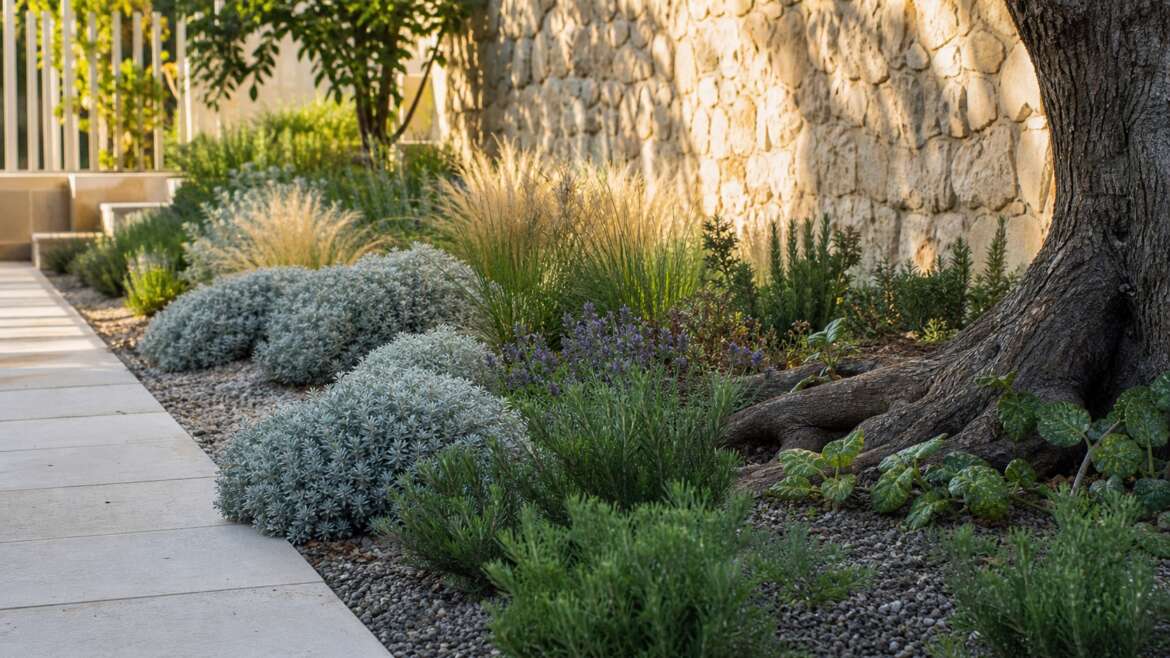
The hot edge asks for plants that can slow water loss, tolerate bright light, and recover from dry spells. The Royal Horticultural Society notes that silver or gray-green leaves can reflect strong sun, while fine hairs can help trap moisture around plant tissues.5 Lavender, santolina, thyme, sedum, prairie grasses, and many native dryland plants use different strategies, though the right palette depends on climate, soil, and winter hardiness.
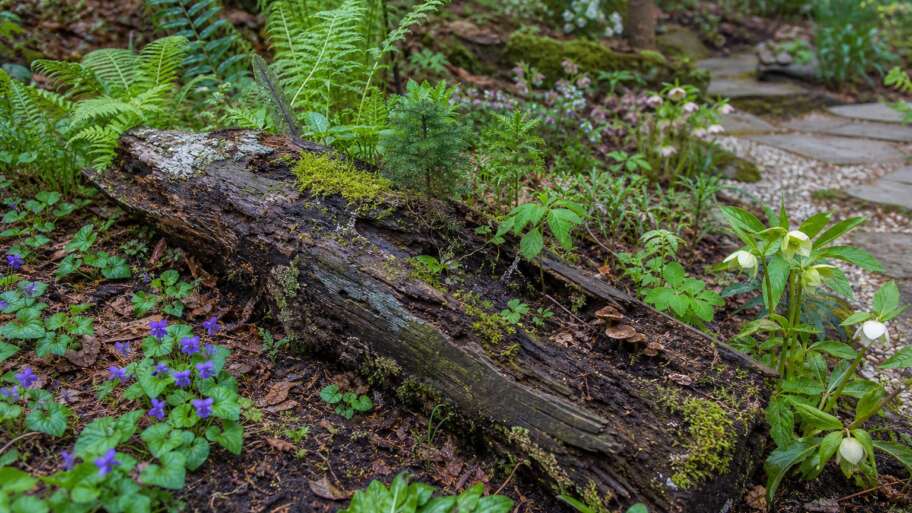
Shade asks a different question. Woodland plants often trade heat armor for broad, efficient foliage that catches scattered light. In moist shade, that can be generous and green. Beneath mature trees, however, dense canopy and competing roots can make dry shade one of the hardest garden conditions.6 Plant smaller specimens, disturb roots as little as possible, and think in terms of leaf texture, groundcovers, spring ephemerals, and quiet repetition. If you want a small case study in woodland strategy, the way mayapple hides its flower under an umbrella is a good reminder that shade plants often win by placement, timing, and leaf architecture rather than by shouting.
Fix what can be fixed
Some difficult sites are difficult because the soil has been abused. Foot traffic, construction, parking, repeated wheelbarrow routes, and working soil when it is wet can press particles together until pore space is lost. Compacted soil drains and infiltrates water more slowly, exchanges gases less readily, and forces roots to work harder to enter the soil.3 A plant does not experience that as a moral challenge. It experiences it as a shortage of air, water movement, and usable rooting space.
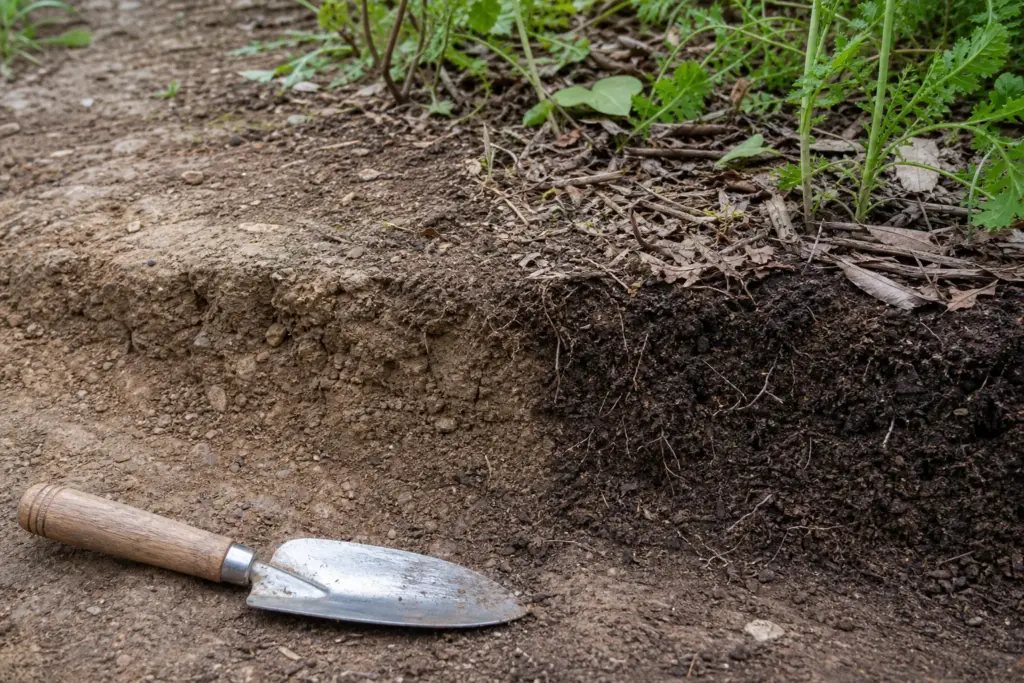
The cure is usually less dramatic than a full excavation. Keep feet on paths or stepping stones. Loosen small areas carefully where roots will not be damaged. Use compost as a surface top-dressing where appropriate rather than creating one rich planting pocket in otherwise poor soil. Add organic mulch to protect the surface, moderate temperature swings, reduce evaporation, and suppress weeds.4 Leave a clear ring around trunks and keep mulch away from crowns and stems.
One warning matters in spring: wet soil is easy to ruin. If a bed shines, smears, or clods into heavy lumps, wait. Soil Sages has a deeper look at that seasonal trap in why wet spring soil should be left alone, but the short version is simple: patience can be better soil care than effort.
Respect what cannot be fixed
Other conditions are better accepted than fought. You can shade a wall with a vine, but you may not turn a south-facing paved courtyard into a cool woodland without constant irrigation. You can improve the surface beneath a mature tree, but you should not bury its roots under a deep new layer of soil or hack through them to install thirsty perennials. The most humane design is often the one that stops arguing with the site.
Acceptance does not mean neglect. Even resilient plants need establishment water. A drought-tolerant shrub is not drought-tolerant on the afternoon it leaves the nursery pot. Water deeply and less often, check the root zone rather than the surface only, and group plants with similar moisture needs so one thirsty favorite does not dictate irrigation for the whole bed.
Make survivors look intentional
The visual mistake in difficult gardens is panic planting. One plant survives, then another unrelated survivor is added, then a third, until the bed becomes a collection of apologies. Design principles matter more, not less, when the site is hard. NC State Extension describes unity, rhythm, scale, balance, and accent as basic landscape design concepts.7 On a harsh site, those ideas turn restraint into beauty.
Repeat a small set of plants. Use grasses to catch light, low shrubs to hold structure, and groundcovers to make the soil surface look deliberate. Let form and texture carry the planting when flowers are brief. A dry bed with repeated silver mounds, fine grasses, and a clear edge reads as design. The same bed filled with random failures reads as defeat.
The real underworld lesson
A difficult garden is not cursed. It is specific. It has a particular pattern of light, water, heat, wind, soil structure, roots, and human traffic. Once you name those forces, the planting becomes less mysterious. The underworld gardener’s trick is not magic. It is attention: diagnose the pressure, improve what honestly can be improved, choose plants with the right adaptations, and compose the result so resilience looks like intention.
References
- Danteworlds: Circle 7
- University of Florida IFAS: Landscape Design: Ten Important Things to Consider
- Utah State University Extension: Solutions to Soil Problems—Soil Structure (Compaction)
- University of Maryland Extension: Fruit Plant Care
- Royal Horticultural Society: Drought-resistant plants
- Penn State Extension: Underplanting Trees—Respect the Roots
- NC State Extension Gardener Handbook: Landscape Design