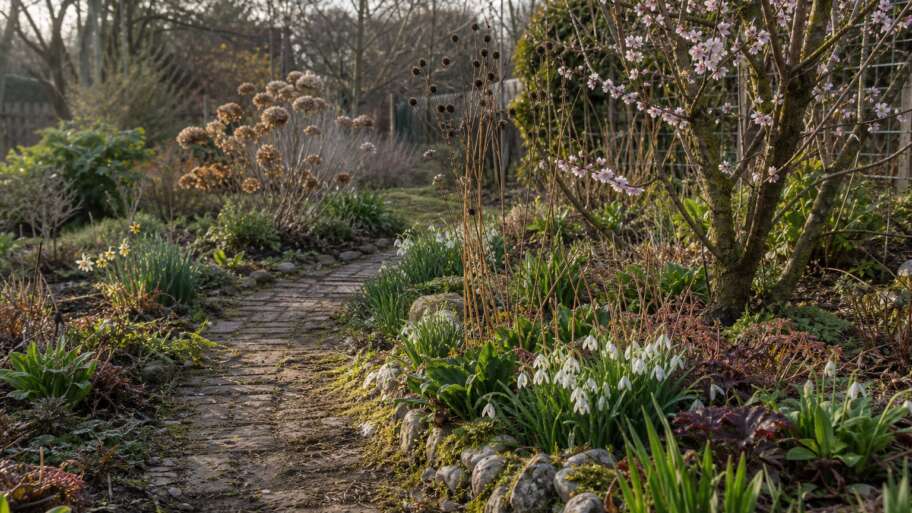

A lush landscape does not have to be a high-maintenance one. The secret is not finding plants that never grow, weeds that never germinate, or irrigation that reads your mind. The secret is designing density, water, access, and plant choice so the garden spends less time in crisis.
Clemson Cooperative Extension is direct about the premise: no landscape is maintenance-free, but planning, design, plant selection, and timely care can reduce the amount of work needed.1 A lush garden can be efficient when its fullness is planned rather than accidental.
Design around the work that repeats
Before buying another plant, notice what repeatedly steals time. Perhaps the hose catches on three corners, one bed dries before the rest, weeds vanish behind a shrub until they seed, or a path edge must be rescued every month. These are design clues. Write down the recurring task, where it happens, and why it is awkward. A five-minute correction to access or layout can remove a small irritation from every future visit.
Keep frequently used tools near the work, but do not turn the garden into a depot. One hose connection that reaches cleanly, one stable place for a watering can, and one route wide enough for the tools you actually use are more valuable than a shed full of gadgets. The companion guide to short, regular maintenance rounds explains how visible, reachable jobs stay small.
Put mature size on the plan
A plant label’s mature spread is not empty space; it is the plant’s future working room. UF/IFAS recommends matching plants to soil, light, water, climate, and mature size. Once established, a good match can require less corrective pruning, irrigation, fertilizer, and pesticide.2 Site fit matters more than a plant being advertised as “easy.” A sun-loving shrub in shade or a moisture-lover under thirsty tree roots is likely to make its mismatch your routine.
Build fullness in layers rather than by squeezing large plants together. A small tree or tall shrub can make the upper frame, medium shrubs can carry winter structure, and perennials or sedges can close the lower gaps. Leave room for air movement and access at maturity. If two plants will have to be cut into cubes simply to coexist, the plan has borrowed lushness from the future and left you the bill.
Water by zones, then check the result
Group plants with similar water needs and similar exposure on the same irrigation zone. The US Environmental Protection Agency calls these groups hydrozones and advises accounting for plant type, sun or shade, and the kind of irrigation used.3 A newly planted border, established shrubs, and a dry-adapted herb bed should not be forced onto one schedule merely because they share a property.
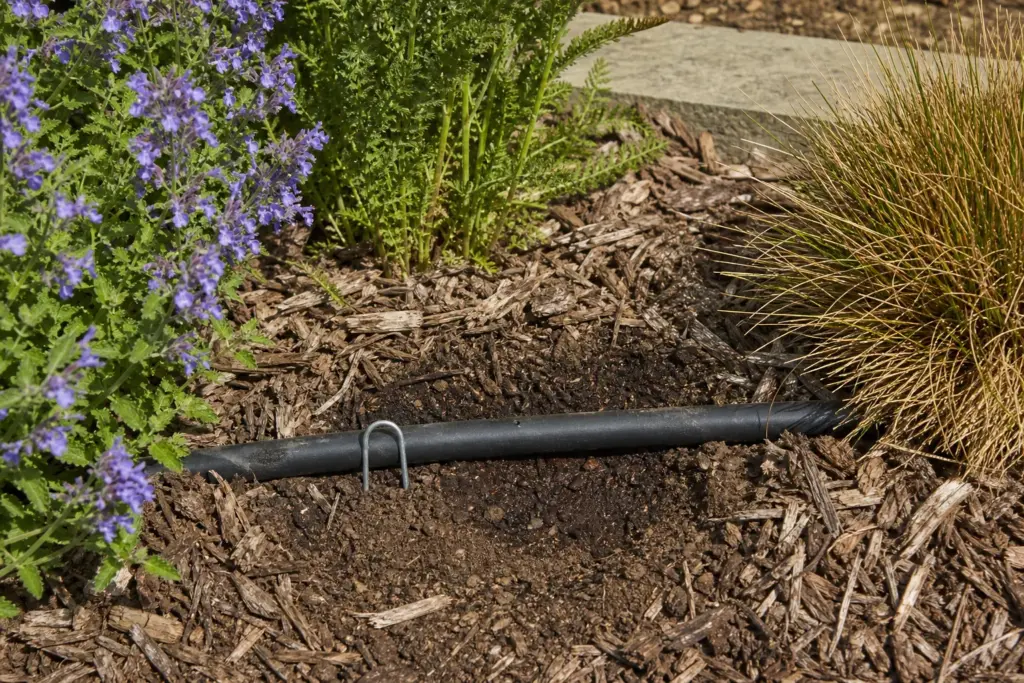
A timer is a hypothesis, not proof that roots received water. Run each zone while you are awake to see it. Look for a split line, clogged emitter, sprinkler aimed at paving, runoff, or a dry root ball surrounded by damp soil. Check moisture below the surface, then adjust for rain, heat, plant growth, and season. EPA WaterSense recommends regular inspection and seasonal schedule changes rather than leaving a controller untouched.3
Drip tubing, hand watering, and buried clay pots can each suit particular beds; none is automatically effortless. If a small, intensively planted area is a possible match for porous clay, the explanation of how olla irrigation responds to drying soil covers both its mechanism and its limits.
Cover soil without creating a thicket
Open soil invites weed seedlings and loses moisture readily, but “cover everything” is not a license to plant the fastest spreader available. University of Maryland Extension notes that well-matched groundcovers can suppress weeds and reduce erosion, while aggressive choices may become weeds in the garden or nearby habitat. Close spacing covers ground sooner, but poor air circulation and competition can create other problems.4
Choose a ground layer from the actual site: sun, soil moisture, drainage, foot traffic, competition from tree roots, browsing pressure, and local invasive-plant guidance. A mixture of compatible species can give the planting more than one season and reduce the chance that a single pest or weather event makes one continuous hole. Establishment is still work. Remove perennial weeds first, water young plants as needed, and keep temporary mulch between them until they begin to meet.
Use mulch as a bridge, not a monument
Mulch protects the gaps while plants are young. It can impede weeds, slow evaporation, moderate soil temperature, and keep mowers away from bark. Depth depends on material and drainage; for landscape trees, Penn State Extension recommends roughly 2 to 4 inches of organic mulch, less on poorly drained soil, with the root flare visible and the trunk kept clear.5 Measure what is already present before adding a ceremonial new layer each spring.
In perennial beds, keep mulch off crowns and do not bury low foliage. Pull established weeds before spreading it; mulch is much better at discouraging new seedlings than stopping a perennial weed growing from an underground root or rhizome. As groundcovers close, reduce repeated applications where the living layer is doing the job. The aim is protected soil, not permanently visible bark chips.
Landscape fabric beneath organic mulch often sounds like a permanent shortcut. It is not. Illinois Extension explains that new weed seeds eventually arrive in decomposing material above the fabric, where roots can penetrate it and become difficult to remove.6 Fabric can have specialized uses, but installing it throughout a changing perennial bed makes division, replanting, and future soil work harder. Do not add it simply because weeding exists.
Make access part of the lushness
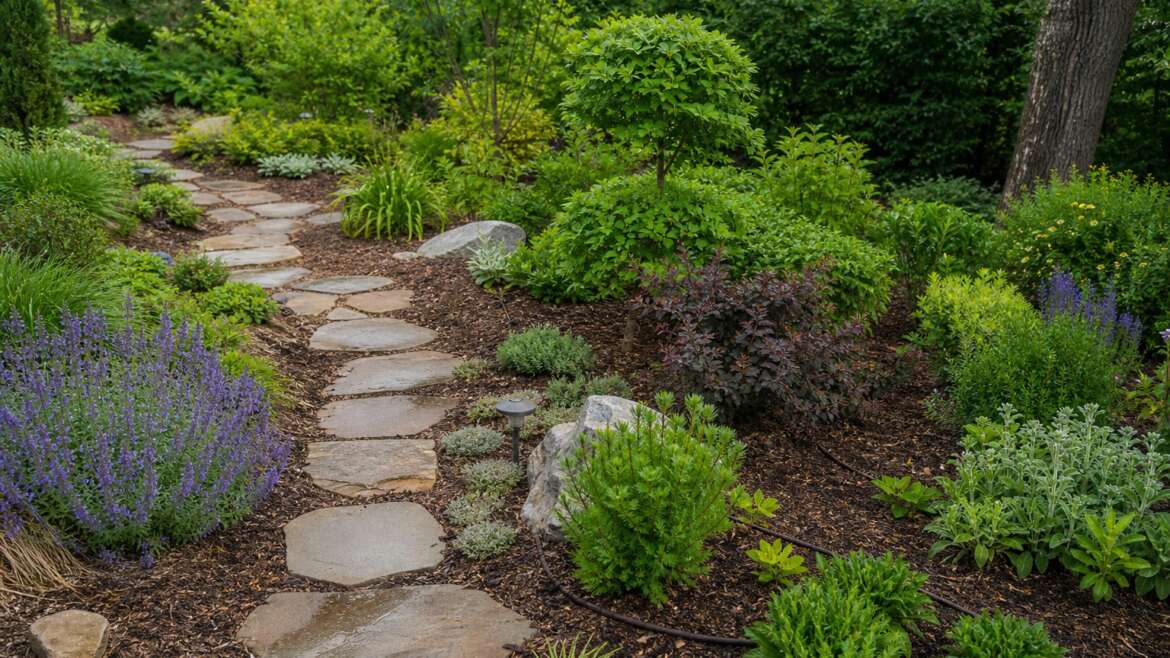
A full border still needs a way in. Add flat stepping stones, a narrow service strip at the back, or deliberate gaps between sturdy plants. The route should reach taps, valves, drains, tree trunks, and the rear of deep beds without requiring a jump or a sacrifice of stems. If a wheelbarrow is part of the routine, test its turn before the planting fills out. Maintenance access can disappear visually while remaining physically useful.
Edges also decide how much work spreads. A stable, mowable boundary can keep turf and groundcover from negotiating the same strip every week. Avoid intricate outlines that multiply trimming unless their shape earns the effort. One generous curve is often calmer to look at and faster to maintain than a dozen small bays.
Simplify the palette, not the ecology
Repeating a manageable set of plants makes their needs easier to learn and creates visual abundance without collecting one of everything. Repetition does not require a monoculture. Use several site-suited species with different forms and seasons, then repeat them in drifts. You gain a coherent picture while retaining variation that can support wildlife and make the planting less dependent on one plant’s success.
Be honest about ornamental habits. A plant that seeds into every joint, flops across the path, or needs staking each year may still be worth growing, but put it where that behavior is useful or limit it to a smaller patch. “Low maintenance” is not a moral category. It is a match between a plant’s behavior and the amount and kind of work you enjoy.
Work early and leave some evidence of life
Small, timely work is usually faster than rescue. Pull a weed while the soil is moist and before it seeds. Redirect a young branch before it blocks the path. Repair one leaking connection before the surrounding plants adapt to a flood. Keep a short seasonal list based on what this garden actually does, not a universal calendar copied from another climate.
Efficiency also comes from deciding what can remain. Seed heads can feed birds and carry winter structure. Fallen leaves can rest beneath compatible shrubs where they do not smother small plants, block drains, or make paving slippery. A chewed leaf is not automatically a task. The neatest possible garden and the easiest healthy garden are rarely the same place.
The best lush landscapes feel generous, not overstuffed. They are full because the plants fit, the soil is covered, water is organized, and maintenance routes exist. That is how a garden can look abundant without consuming every free hour.
References
- Clemson Cooperative Extension: Low-Maintenance Landscape Ideas
- University of Florida IFAS: Right Plant, Right Place
- US Environmental Protection Agency: Watering Tips
- University of Maryland Extension: Groundcovers
- Penn State Extension: Mulching Landscape Trees
- Illinois Extension: The Disadvantages of Landscape Fabric