
A quick garden makeover is possible. A mature garden is not. That difference matters. You can clean a line, mulch a bed, add containers, set a path, plant a few strong shrubs, and make a tired corner feel intentional in a weekend. What you cannot do is skip establishment, root growth, soil correction, and seasonal adjustment.
Clemson Extension explains that low-maintenance landscapes begin with planning: reading site conditions, sun and shade, existing plants, drainage, and problem areas before choosing what to change.1 That advice matters even when the project is fast—especially then. A rushed makeover without a site read often creates new work disguised as improvement.
Read the site before you shop
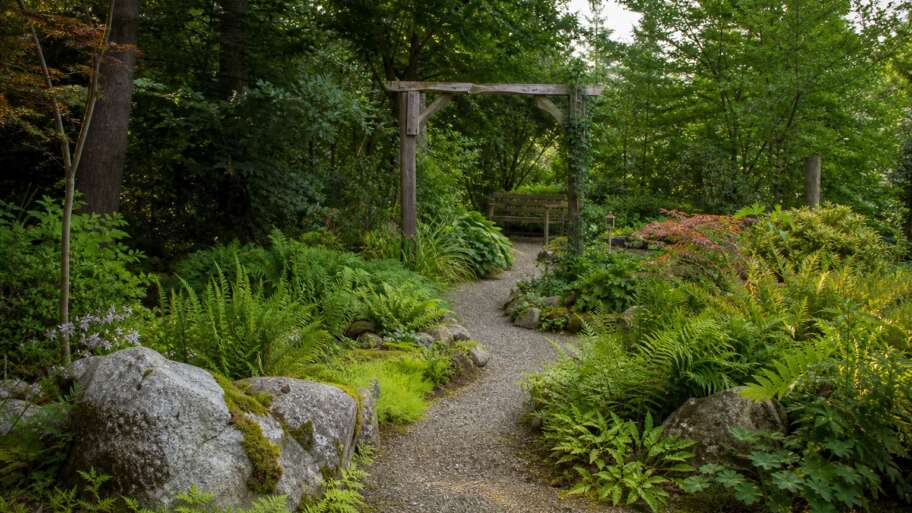
Start from the places where the garden is actually seen and used: the kitchen window, back door, gate, chair, compost route, and hose connection. Notice where feet already travel, where rain lingers, where afternoon sun lands, and which existing plants are doing well without negotiation. A shaded mossy corner may be an asset. A worn shortcut may be telling you where a path belongs.
Choose one practical outcome for the weekend. It might be a dry route to the shed, a comfortable place for one chair, a clearer entrance, or a bed that finally looks connected to the house. “Make it beautiful” invites a cart full of unrelated objects. “Make the gate easy to reach in wet weather” gives every decision a test.
Start with subtraction, not erasure
Remove what is dead, invasive, broken, or constantly in the way—but identify plants before pulling or cutting them. Edge one bed. Clear one path. Lift cracked pots and spent annuals. Prune only what you can identify and only at a suitable time for that plant. The fastest transformation is often revealing structure that was already there.
Do not strip the garden bare for neatness. Existing shade, established shrubs, useful volunteer plants, old stones, and well-worn routes may be the best parts of the design. A mature shrub has roots, scale, and habitat value that a new three-gallon plant cannot replace by Monday. The goal is not a blank slate. It is a clearer one.
Make reversible changes first when you are uncertain. Move a container, lay out a chair, or mark a proposed bed edge with a hose and live with it for a day. You can still dig later. It is harder to put a healthy shrub, a buried cable, or the natural drainage pattern back where it was.
Give the space one legible line
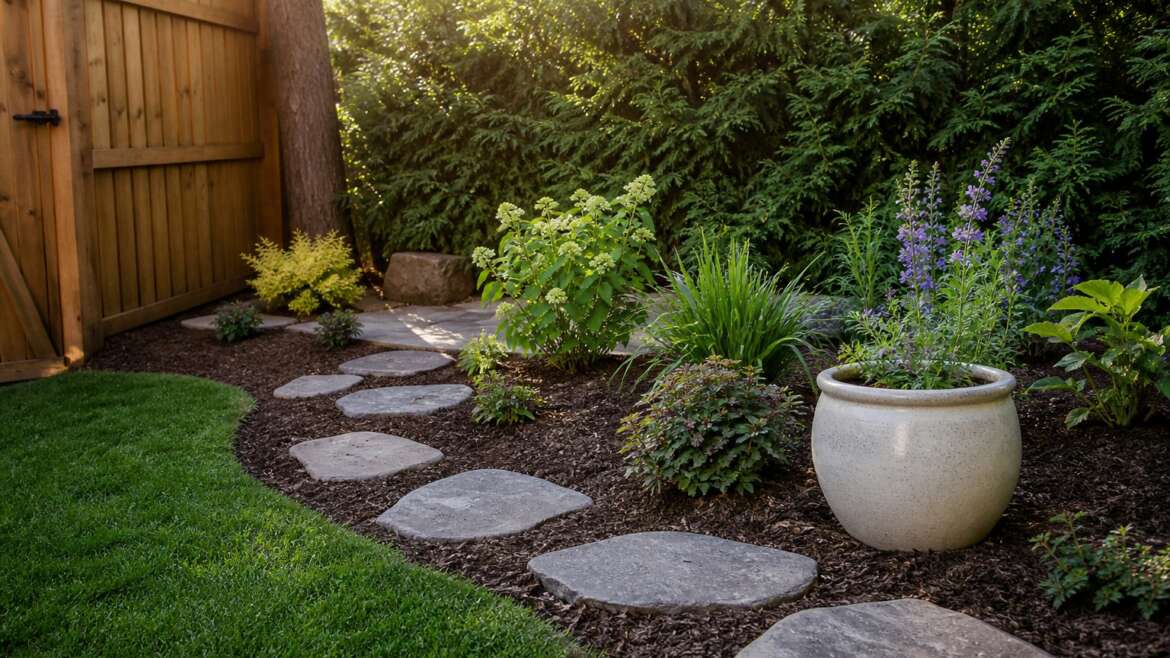
Paths and bed edges create immediate order because they direct both the eye and the body. University of Florida IFAS describes line as a tool that defines spaces, controls movement, and connects plant beds with hardscape.2 One continuous edge or clearly placed route usually does more than six new ornaments. Keep the geometry suited to the house and garden rather than adding curves simply because curves feel “garden-like.”
Use stable, level materials where people step, and watch where the finished surface sends rain. A few stepping stones across a planted area are different from a patio, retaining wall, or drainage project; the latter may need excavation, a proper base, and local professional advice. Fast should describe the scope, not the willingness to ignore safety or water movement.
Protect roots and soil during the rush
A makeover can damage the ground it is meant to improve. Oregon State University Extension advises never tilling wet soil because it can become cloddy and compacted; workable soil should crumble rather than hold together as a mud ball.3 If a bed is sticky underfoot, work from the edge and postpone digging. The deeper reason wet spring soil should be left alone is that roots need the pore space that trampling and tillage can collapse.
Keep wheelbarrows, bags of material, and repeated footsteps out of established root zones as much as the site allows. Do not run a tiller simply to make dark, fluffy-looking soil for a photograph. Disturb only the area needed for the chosen change, and use existing paths or temporary boards for access. Soil structure is slow to build and quick to smear.
Plant for the third summer
Containers and annuals can supply color now; permanent plants should be chosen for the site they will occupy later. UF/IFAS recommends a site inventory that includes sun and shade, wet and dry areas, soil, circulation, wind, and available space, then matching plants to those conditions and their intended function.4 Mature size matters because an appealing young shrub can become a pruning problem when placed against a path or window.
Resist crowding the bed to make it look finished on installation day. Give woody plants and long-lived perennials their realistic spread, then cover the temporary gaps with an appropriate mulch or genuinely short-lived fillers. Repeating a small plant palette can make a young bed feel coherent without pretending it is already full. Leave enough access to water and weed while roots establish.
“Native,” “drought-tolerant,” and “low-maintenance” are not interchangeable labels. A locally native wetland plant will not become drought-tolerant beside a hot wall, and a drought-adapted plant can still fail in waterlogged clay. Check regional hardiness, light, soil moisture, drainage, mature form, and local invasive guidance rather than buying by slogan.
Treat establishment as part of the design
The job is not finished when the nursery pot is empty. University of Maryland Extension advises watering new trees and shrubs thoroughly after planting, then checking soil moisture and adjusting to plant type, soil texture, weather, and whether the plant is new or established.5 That is more reliable than a universal calendar. Check the root ball as well as nearby soil; the two materials can dry at different rates.
Allow time and budget for this quiet phase. Keep labels or a simple planting record, learn how water enters the root zone, and inspect after wind or heavy rain. If the makeover happens in autumn, root growth can continue after the visible garden has begun to slow, but the useful planting window depends on climate, species, soil temperature, drainage, and how soon the ground freezes.
Finish with mulch, not camouflage
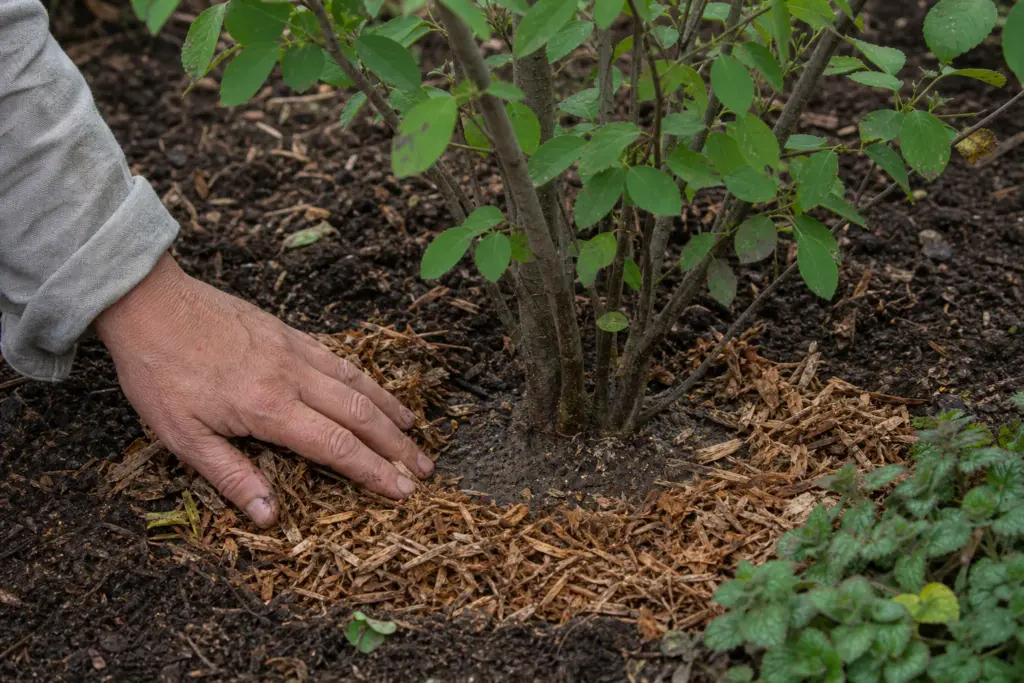
Mulch can visually join old and new planting while doing real work. Oregon State University Extension reports that organic mulch can reduce surface evaporation and runoff, limit many young weeds, and protect soil from compaction by rain and foot traffic.6 Use a material and depth suited to the planting and local fire conditions, and keep it from piling against trunks, stems, and crowns.
It is a cover, not a cure. Mulch does not correct a buried root flare, poor drainage, compacted subsoil, an aggressive perennial weed, or a plant in the wrong exposure. Water through it once and check that moisture reached the soil. A neat brown surface can hide the same problem that was there before the makeover.
Return after the reveal
Photograph the finished corner, then come back after a hard rain and again after a dry week. Look for rocking stones, puddles, washed mulch, wilting transplants, and the route people actually take. These are not signs that the project failed. They are the site answering the first draft.
A fast garden makeover should feel like a first draft with roots. Make the space useful now, but leave room for plants to mature and for the gardener to learn what the site actually wants. Speed is valuable only when it does not mortgage the next five seasons.
References
- Clemson Cooperative Extension: Low-Maintenance Landscape Ideas
- University of Florida IFAS: Basic Principles of Landscape Design
- Oregon State University Extension: Growing Your Own
- University of Florida IFAS: Right Plant, Right Place
- University of Maryland Extension: Watering Trees and Shrubs
- Oregon State University Extension: Mulching Woody Ornamentals with Organic Materials