
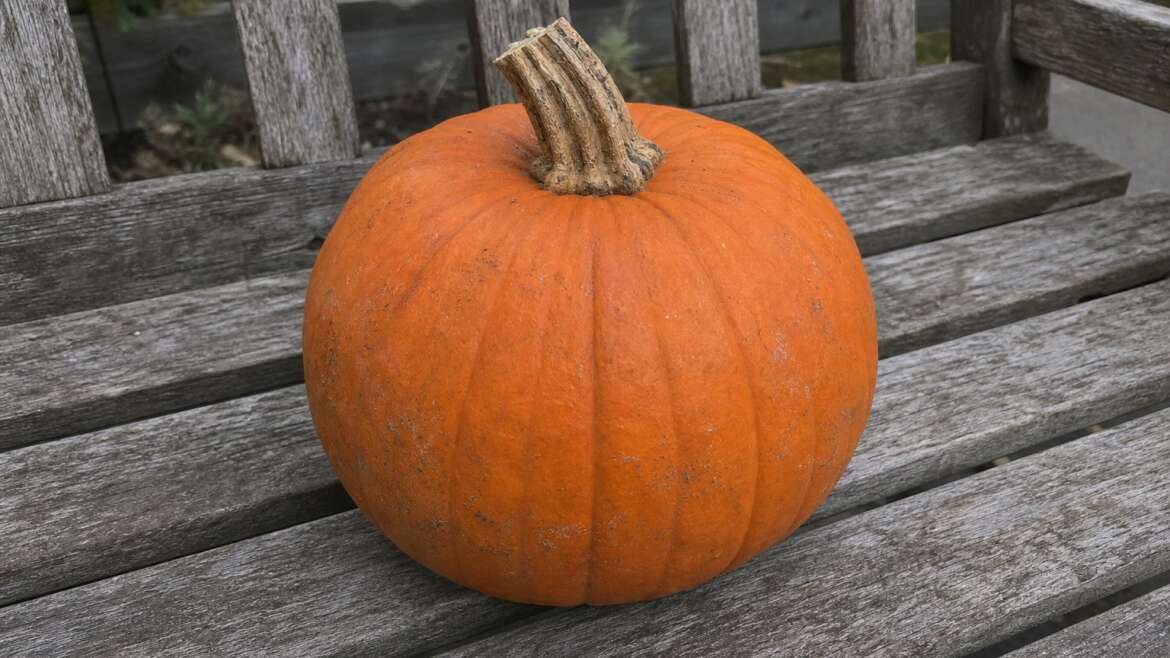
By late October, the pumpkin patch begins to feel less like a vine and more like a collection of objects the garden is almost ready to release. The leaves have thinned. The vines are tired and scratched with mildew. The fruit, which spent summer swelling quietly under broad leaves, now sits in the open with a dull orange weight that seems already half removed from the plant.
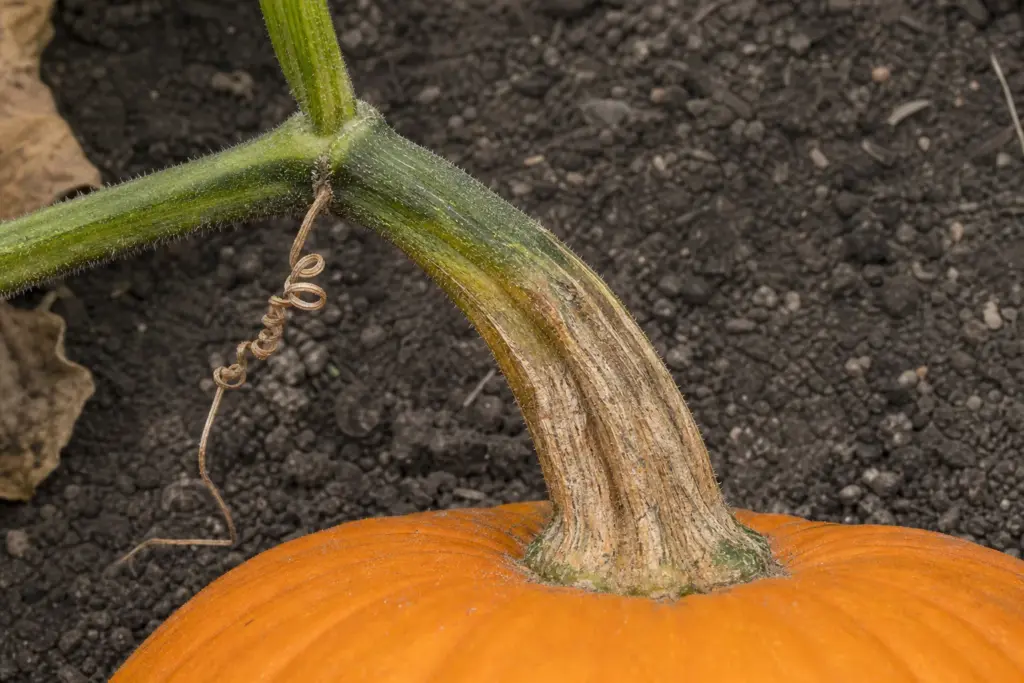
Then there is the stem. A young pumpkin stem is green, ridged, and alive with the same watery urgency as the vine. A mature one looks different. It becomes tan, brown, grooved, dry, sometimes almost carved. It seems too serious for such a cheerful fruit, a rough little piece of wood attached to all that orange.
Gardeners often treat the stem as a handle. It looks like one. It is centered. It gives the pumpkin a pleasing finish. But the stem is not decoration, and it is not really a handle. It is the pumpkin’s old connection to the vine, hardened into a harvest signal and, if you leave it intact, a useful barrier against decay.
The stem is the old lifeline
Botanically, a pumpkin is a fruit, even if we treat it like a vegetable in the kitchen and a seasonal object on the porch. Illinois Extension notes that pumpkins are cucurbits, related to squash, cucumbers, melons, and gourds, and that the plants we casually call pumpkins may belong to several Cucurbita species, especially Cucurbita pepo, C. maxima, and C. moschata.1 Before that fruit begins to swell, pollination has to succeed; the short morning life of a squash blossom explains why this earlier stage is so time-sensitive.
The stem at the top of the fruit is the peduncle, the stalk that connected the developing pumpkin to the rest of the plant. For weeks it formed the living connection through which the fruit received resources from the vine.2 It was plumbing before it became sculpture.
Near maturity, that connection changes visibly. The rind hardens while the stem loses green, shrinks, and develops corky tissue. What was green and flexible becomes drier and firmer.
This change is not merely cosmetic. South Dakota State University Extension describes stem corking as the loss of green and the development of brown, woody stripes where the stem joins the fruit. It notes that corking can be as good as, or better than, the fingernail test for judging maturity in pumpkins and winter squash.2
What corking tells you
Stem corking is the point when the pumpkin begins to look less attached to summer. The green fades. The ridges become dry and tan. The stem may shrink slightly. In some varieties it becomes sharply angular and hard. In others it turns rounded, thick, and corky. Either way, the change says that the fruit is approaching the end of its work on the vine.
SDSU Extension explains that a shrinking, corked stem indicates the fruit is beginning to separate itself from the vine and is no longer receiving much energy from the plant. Once corking has begun, leaving the fruit on the vine does not improve quality or storage life, and may make it more vulnerable to rots.2
That last part matters in a real garden. The romantic idea is to leave pumpkins out until Halloween, or until the vines collapse completely. Sometimes that works. Sometimes October becomes wet, cold, and fungal. A pumpkin that was mature two weeks ago may not become better by staying in the mud. It may simply become a better target for decay.
Color helps, but it is not the whole story. A good orange color is useful for many ornamental pumpkins, but some winter squash and pumpkins reach their mature color before they are at their best eating quality. SDSU Extension notes, for example, that butternut squash can turn tan two to three weeks before ideal harvest time.2 The stem and rind usually tell a better combined story than color alone.
Not every pumpkin stem is the same
One reason pumpkin stems are so interesting is that they are not uniform across the pumpkins we grow. The word pumpkin is more cultural than botanical. A round orange carving pumpkin, a giant exhibition pumpkin, a butternut-type processing pumpkin, and a blue-gray heirloom squash may sit together in an autumn display, but their stems can tell you they are not the same kind of plant.
Illinois Extension describes differences among pumpkin groups: some C. maxima types have soft, spongy, or corky stems without ridges or enlargement next to the fruit, while C. moschata types often have deeply ridged stems enlarged where they meet the fruit.3 If you have ever noticed that a butternut squash has a different attachment from a jack-o’-lantern pumpkin, you were seeing real taxonomy in the produce bin.
This also explains why some stems seem like handsome handles and others seem almost useless for carrying. The classic carving pumpkin often has a firm, ridged stem that looks made for the hand. A giant pumpkin may have a softer, less handle-like stem. A butternut or cheese pumpkin may have a broad, ridged attachment that flares into the fruit. These differences are not failures. They are signatures.
For a gardener, the practical lesson is simple: learn the stem of the variety you are growing. Some mature stems become strongly corked and brown. Some remain less theatrical. Compare young fruit and older fruit on the same plant. The change matters more than the shape alone.
The rind has to finish too
A woody stem is one half of the harvest decision. The rind is the other. The familiar test is to press a thumbnail gently against the skin. A mature pumpkin or winter squash should resist denting. Illinois Extension recommends harvesting pumpkins before temperatures drop below freezing, keeping 1 to 3 inches of stem, and handling the fruit without breaking the stem.4
Think of the rind as a living storage wall. As the pumpkin matures, the skin toughens and becomes less easy for water, fungi, and bacteria to enter. A soft rind may still color beautifully, but it will not store as well. A hard rind, paired with a corked stem, means the fruit has reached the durable stage that autumn asks of it.
The vine itself can mislead you. Dead vines do not always mean mature fruit. SDSU Extension warns that vine death may result from disease or drought rather than full maturity.2 A pumpkin on a dead vine should be checked carefully, not assumed ready. Likewise, a living vine does not mean the pumpkin must stay outside forever if the stem is corked, the rind is hard, and cold rain is coming.
How to cut without inviting rot
The stem matters most after harvest because it guards one of the fruit’s most vulnerable points. A pumpkin with its stem torn out has a wound right where moisture and decay organisms can enter. Illinois Extension gives the blunt version of the advice: choose pumpkins with stems, but never carry a pumpkin by the stem, because a broken stem creates a wound that can lead to rot.1
Use pruners, a sharp knife, or loppers for thick stems. Do not twist the fruit from the vine. Leave a few inches of stem if the variety allows it. Oregon State University Extension recommends cutting pumpkins and squash from the vine with 2 to 4 inches of stem attached, and notes that pumpkins without stems do not store well.5
After cutting, carry the pumpkin from below. Support it with both hands or in a crate. This feels less ceremonial than lifting it by the stem, but it respects the biology. The stem is a plug and a history, not a suitcase handle.
Inspect as you harvest. Set aside fruit with a missing stem or superficial harvest damage for prompt use if it remains firm and sound. Fruit with active softening, mold, leaking, or spreading rot should be discarded rather than put into storage.57 The best keepers are mature, intact, unbruised fruit with sound stems and hard rinds.
Curing is not ripening magic
Curing is often described as if it ripens pumpkins after harvest, but that is not quite the right way to think about it. A pumpkin should be mature before you rely on curing. Curing is more like a controlled drying and healing period. It helps toughen the rind, dry the stem, and close small surface injuries before storage.
Illinois Extension recommends curing pumpkins at 80 to 85 degrees Fahrenheit with good air circulation for 10 to 14 days; depending on the weather, the setup can be outdoors or inside.4 Oregon State University Extension similarly recommends dry warmth, around 80 to 85 degrees Fahrenheit, for several days to help heal small cuts and harden the rind.5
The word dry is doing important work. A pumpkin left in damp grass is not curing. It is waiting in a rot nursery. If the weather is mild and sunny, cure fruit on boards, straw, mesh trays, or another surface that allows air around the bottom. If rain is steady, move the fruit under cover. Good curing feels less like storage and more like giving the pumpkin a clean place to finish sealing itself.
Not every squash wants the same treatment. Acorn squash, for example, is often handled differently from long-keeping winter squash. But for most pumpkins and many winter squash, curing is the bridge between harvest and storage. The stem becomes drier. The rind becomes tougher. The fruit becomes less like a fresh-picked vegetable and more like a pantry crop.
Cool is not the same as cold
Once cured, pumpkins want conditions that can seem slightly counterintuitive. They do not want to be warm and damp, but they also do not want a refrigerator-cold corner. Utah State University Extension gives 50 to 60 degrees Fahrenheit and 50 to 70 percent relative humidity as optimal for pumpkins and winter squash, and warns that cucurbits can suffer chilling injury below 45 degrees Fahrenheit.6
Iowa State University Extension recommends a cool, dry, well-ventilated storage location at 50 to 55 degrees Fahrenheit, with pumpkins arranged in a single layer so they do not touch. It also warns against storing pumpkins near apples, pears, and other ripening fruit because ethylene gas can shorten storage life.7
That means the porch is often a temporary display space, not real storage. A pumpkin can look perfect outside for a while, but cold nights, wet steps, and freeze-thaw cycles shorten its life. If the pumpkin is meant for eating later, bring it into a protected, ventilated space once the weather turns hard. If it is meant for display, accept that the display is spending some of its storage life.
Check stored pumpkins weekly. A single softening fruit can spread trouble by touching its neighbors or increasing local moisture. Good air movement is quiet insurance. So is the stem you left in place.
What the stem teaches
The woody pumpkin stem is a small autumn lesson in transition. It shows the moment when a fruit stops being a sink for summer growth and becomes a structure built to last into winter. The stem dries. The rind hardens. The vine loosens its claim.
It also asks gardeners to slow down. Do not harvest by calendar alone. Do not trust orange color alone. Do not wait for the whole vine to collapse if the weather is turning against you. Look at the stem where it meets the fruit. Feel the rind. Read the forecast. Cut cleanly. Carry from below.
A good pumpkin stem is not just charming. It is evidence that the plant knew how to finish. Leave it attached, and you carry a little of that finishing work into storage, onto the porch, or into the kitchen.
References
- Illinois Extension: Picking Pumpkins
- South Dakota State University Extension: Harvesting and Storing Pumpkins and Winter Squash
- University of Illinois Extension Hort Answers: Pumpkin
- Illinois Extension: Preserve your pumpkins this fall by following these simple tips
- Oregon State University Extension: Plan now to harvest and store pumpkins and winter squash
- Utah State University Extension: Cucurbit harvest and handling
- Iowa State University Extension: All about pumpkins